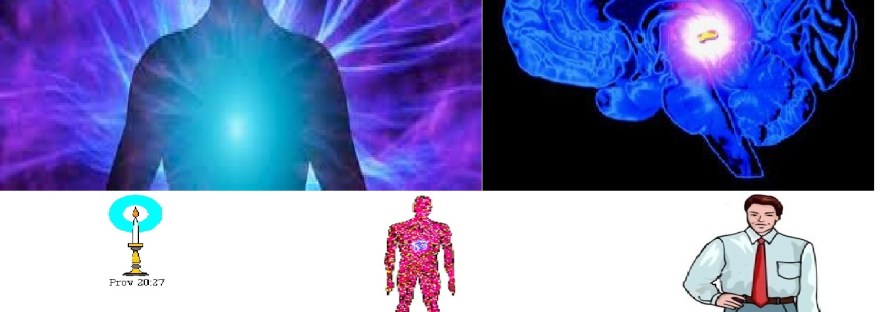
Mathew 22:37-38; Jesus replied: “‘Love the Lord your God with all your heart and with all your soul and with all your mind.’ This is the first and greatest commandment.
Deuteronomy 6:5; Love the Lord your God with all your heart and with all your soul and with all your strength.
Basically the soul is the person/life force, the heart is the inner seat of motivation. In the Bible, “soul” is translated from the Hebrew neʹphesh and the Greek psy·kheʹ. Bible usage shows the soul to be a person or an animal or the life that a person or an animal enjoys.
Soul, in religion and philosophy, the immaterial aspect or essence of a human being, that which confers individuality and humanity, often considered to be synonymous with the mind or the self.
While the two words are often used interchangeably, the primary distinction between soul and spirit in man is that the soul is the animate life, or the seat of the senses, desires, affections, and appetites. The spirit is that part of us that connects, or refuses to connect, to God.
The Bible teaches that we consist of body, soul, and spirit: “May your whole spirit, soul and body be preserved blameless at the coming of our Lord Jesus” (I Thessalonians 5:23). Our material bodies are evident, but our souls and spirits are less distinguishable.
“Good and contented souls” are instructed “to depart to the mercy of God.” They leave the body, “flowing as easily as a drop from a waterskin”; are wrapped by angels in a perfumed shroud, and are taken to the “seventh heaven,” where the record is kept. These souls, too, are then returned to their bodies.
Mind is the power of the brain whereas the soul is the power of the body. Mind is more radical. On the contrary , the soul is the spiritual essence of a person. The Mind decides the actions to fulfil desires but the soul stems desires.
The heart is the organ located in between our lungs while the mind is believed to be located in our brain; mind is the colloquial term used for the organ known as brain in biology.
Here are 9 ways on how to be spiritual and connect with God without going to church:
Slow down. …
Meditate or pray. …
Enjoy the outdoors. …
Stay open to finding God within yourself. …
Look for God in each person you meet. …
Stay open to experiencing the Spirit in unexpected places. …
Find music that touches your soul.
The link between mind, body and soul is scientific fact. Research reveals we have three separate neural pathway networks, leading to the head, the gut and the heart.
When we say heart, it usually refers to a hollow muscular organ that is responsible for maintaining circulation. Yet it could also mean ” the core of a thing /process ” ” courage ” ” emotions ” etc. Similarly, soul means ” the essence” or “the incorporeal”. The mind is used in association with thought.
Spiritually, the heart is the locus of physical and spiritual being, and represents the “central wisdom of feeling as opposed to the head-wisdom of reason” (Cooper, 82). It is compassion and understanding, life-giving and complex. It is a symbol for love.
-Romans 12:2 “Change your mind” is the central theme of Jesus’ first sermon (Matt. 4:17). Jesus challenged people to change their thinking because regardless how many times you read through the Bible, if your mind doesn’t change, you will simply impose your biases and labels on the words you read.
The heart contains far fewer neurons than the noggin, and their job is not to “think” in the way that folks have misinterpreted. They help the heart react to the various demands placed on it by the body. … So despite the presence of neurons in the heart, we can see that the heart does not have a mind of its own.
The brain controls the heart directly through the sympathetic and parasympathetic branches of the autonomic nervous system, which consists of multi-synaptic pathways from myocardial cells back to peripheral ganglionic neurons and further to central preganglionic and premotor neurons.
The heart has two distinct networks of nerves, one consisting of nerve cells within the heart and the other made up of nerves originating outside the heart. Both networks have the potential to encode, store, and retrieve memories.
Research has shown that decisions are made through a combination of both cognition and emotion but, science aside, most people tend to think one is better than the other. As for the scenario above, listening to your head may lead to more tangible success, but not following your heart increases the risk of regret.
Because the heart is the location of the human soul and life force, it is the organ of utmost importance in Aristotelian physiology. The soul or atman, credited with the ability to enliven the body, was located by ancient anatomists and philosophers in the lungs or heart, in the pineal gland (Descartes), and generally in the brain.
The search for a hypothetical soul and its location have been a subject of much speculation throughout history. In early medicine and anatomy, the location of the soul was hypothesized to be located within the body. Aristotle and Plato understood the soul as a corporeal form but closely related to the physical world. The Hippocratic Corpus chronicles the evolution of thought that the soul is located within the body and is manifested in diseased conditions. Later, Galen explicitly used Plato’s description of the corporeal soul to physical locations in the body. The logical (λογιστικός) in the brain, the spirited (θυμοειδές) in the heart, and the appetitive (ἐπιθυμητικόν) in the liver. Da Vinci had a similar approach to Galen, locating the soul, or ssenso comune, as well as the imprensiva (intellect) and memoria (memory) in different ventricles of the brain. Today neuroscientists and other fields of science that deal with the body and the mind, such as psychology, bridge the gap between what is physical and what is corporeal.
Plato, the student of Socrates and teacher to Aristotle, suggests in Timmeus that the human soul was divine in nature, and that it entered the human body after separating from a spiritual origin that it would return to upon death. Furthermore, Plato believed the soul to be a tripartite one, composed of the logos, the thymos, and the epithemitikon. In order to protect the immortal soul from contamination, the perishable souls, the thymos and the epithemitikon, were separated from the head by the neck. The thymos, responsible for feelings such as rage, bravery, and hope, was located in the chest cavity. The epithemitikon, which controlled desires and unconscious thought, was located near the umbilicus, farthest from the logos. The brain, then, was the seat of all rational thought, the logos, and the true location of the immortal and divine soul.
In De Spiritu Aristotle links the idea of pneuma and the soul directly together saying that “Pneuma is connected to the soul” that, “it is the souls primary driving force”. Aristotle in De Anima (On the Soul) suggests that organs of the body are required for the soul to interact with. Unlike Plato, Aristotle believed the soul’s existence was not separate from the human body, thus the soul could not be immortal. Similarly to Plato, however, Aristotle believed the soul is composed of three parts: the vegetative, sensitive, and rational. Growth and reproduction is a result of the vegetative soul, and is found in all organisms. The sensitive soul, however, allows for sensation and movement in humans and animals. The third, the rational, is exclusive to humans, and allows for rational thought.
In book II, Aristotle states that, the soul is the part of the human that allows its entire being, that one can’t exist without the other and they complement each other. In book III he provides an example of his theory of the soul and makes the correlation between the physical sensations of light the phaos in the body and the corporeal imaginations phantasia. Aristotle imagined the soul as in part, within the human body and in part a corporeal imagination. In Aristotle’s treatise On Youth, Old Age, Life and Death, and Respiration, Aristotle explicitly states that while the soul has a corporeal form, there is a physical area of the soul in the human body, the heart. Aristotle states the heart is the location of the 5 sensations of the body and is directly responsible for respiration and the sustenance of life. The heart is of further importance as it is all animal’s area of heating the body and blood and the creation of pneuma, or life force that animates the body. To Aristotle this explains why dead things become cold, do not breathe, and that their souls have left them. Because the heart is the location of the human soul and life force, it is the organ of utmost importance in Aristotelian physiology. Correspondingly, the heart is the first organ to appear during embryonic development.
Epicurus, with a view reflecting that of the Greek philosopher Democritus, suggested that the human soul was corporeal and composed of small particles spread out within the entire body. Epicurus believed that the separation of these small particles resulted in a loss of sensation, and consequently, death. Like Aristotle, Epicurus was of the opinion that the soul was a result of the body, making it mortal and perishable.
According to the recordings of his work, Herophilus thought that the location of the soul is in the brain, specifically in the ventricles of the brain, the 4 open cavities in the innermost parts of the brain. Herophilos describes the distinction of the soul and natures as being intertwined within the body and while are separate things, cannot exist without the other. Herophilos in his dissections discovered the differences between nerves and blood vessels. Nerves carried the pneuma or soul to animate the body and the vessels being related to nature. Following the lines tracks of the nerves through the body he saw that they all converge in the brain, and by Herophilus’ reasoning the ventricles of the brain. Of particular importance to the location of the soul was the 4th ventricle of the brain.
Herophilus observed that there existed two types of nerves, those that functioned in motor activity and those that take in sensory information. Because all nerves are a continuation of the spinal cord and the cerebellum, which are located most closely to the 4th ventricle, it stood to reason that the center of movement and perception, and thus the soul, must be located in the 4th ventricle. In his treatise, On Anatomy, pneuma was inhaled by the lungs and sent to the brain ventricles via the vessels of the body where the brain would convert it into what he called “psychic pneuma”, or the soul, and produce thought, motion, and all other animations of the body. Herophilus discovered the bumpy aspect of the walls of the ventricles of the brain that he called the choroid plexus and which was thought to be the interaction of the brain with the pneuma to create the psychic pneuma and then these were sent out via the nervous system. He further identified 8 of the cerebral nerves and tracked them to the spinal cord and throughout the body. The choroid plexus is the term still used today and are the structures that produce cerebrospinal fluid.
Galen was one of the most foundational physicians in history and is known for careful and detailed vivisection and dissections of animals that was foundational to modern medicine. Galen was known for his treatises on being both a physician and a philosopher and was well versed in the works of Plato. His medical anatomy is described through the use of Plato’s corporeal ideals of the soul. The heart was the spirited, the liver the appetitive, and the brain the logical. Later on, Galen moved to Rome where he carried out vivisections on pigs and monkeys to observe their pulmonary circulation. He was the first scientist to distinguish the physiological difference between the arteries and the veins. Galen restricted himself to the scientific explanation of blood flow and respiration.
Galen states in On Respiration and the Arteries “one must determine by dissection that the number and nature of the structures that connect the heart to the brain” and it was observed that when these nerves were cut in animals they would lose their voice and when veins were cut they would bleed, but retain their voice. Therefore, the brain does not need the heart to feel or create sensations and the heart does not need the brain to move. Galen recognized the importance of both the heart and the brain in the proper functioning of a human but saw these as two distinct systems governed separately. Therefore, there are two souls in combat, the brain representing the logical soul and driving logical being, the heart representing spirited actions of movement and impulse constantly at odds with each other and supplied by different supporting systems.
The Egyptian philosopher and father of Neo-Platonism, Plotinus’s idea of the human soul would form the foundation for the Christian view of the human soul. Like Plato, Plotinus believed that the soul resulted from an immortal being that would return to its divine source upon death. Plotinus believed in two parts of the soul, a higher level rational part and the lower level portion located in the entire body. Plotinus saw the soul as a tool of universal structure and one of two parts of the human form: body and soul. He saw the soul as what was responsible for life and for there to be existence after death, the soul could not be in the body. However, the body was necessary for the soul to exist. Therefore, there was a duality to the roles of the soul among Plotinus’ philosophy. The soul played an important role in merging with the One, the “ultimate object of desire”. Plotinus created three stages to reaching the goal of “attaining union with the One”.
Stage 1: Return to one’s true self as soul. This stage involves gaining control of your own body through Plato’s civic virtues and detachment from material goods. Here you recognize yourself as soul, “a divine reality independent of body and prior to it”.
Stage 2: Attaining the life of divine intellect. This second stage involves embracing the higher processes of the soul and abandoning the current way of thinking. Since the soul is a bridge between the human form and reaching the One, the thinking processes of the soul and its divinity will lift you closer to the One.
Stage 3: Union with the One. The final step is an abandonment of all things one has learned before. Since the One is above all knowledge, language, and reasoning; it must be a personal journey to unite.
John 17:20-26; “My prayer is not for them alone. I pray also for those who will believe in me through their message, that all of them may be one, Father, just as you are in me and I am in you. May they also be in us so that the world may believe that you have sent me. I have given them the glory that you gave me, that they may be one as we are one— I in them and you in me—so that they may be brought to complete unity. Then the world will know that you sent me and have loved them even as you have loved me. “Father, I want those you have given me to be with me where I am, and to see my glory, the glory you have given me because you loved me before the creation of the world. “Righteous Father, though the world does not know you, I know you, and they know that you have sent me. I have made you known to them, and will continue to make you known in order that the love you have for me may be in them and that I myself may be in them.”
As Plotinus himself put it: Therefore ‘it cannot be said’ or ‘written’, he says [Plato, Letter 7, 341c], but we speak and write, sending on to it and wakening from words [or explanations] towards contemplation, as if showing the way to him who wishes to see something. For teaching extends to the road and the passage, but the vision is the work of him who has decided to see.
Thomas Aquinas sought a Christian view of the soul using the ideas of Aristotle. In Aquinas’s view, the soul was incorporeal and immortal, and came about as a direct result of divine intervention from God, which typically came about during the second trimester of pregnancy. At this point, the fetus would have the ability to perceive and move, the result of being given a soul. As such, being incorporeal, though “infused” in an unknown manner to the body, and being the “form” of the body in a platonic sense, the soul has no location, and therefore cannot be “located in” the body as one locates an organ. This is the typical understanding of the soul found in the Catholic Church today.
Descartes accepted Plotinus’s perspective on the dual nature of the soul. According to Descartes, the soul conferred the ability to think; this differentiated humans from animals, who had no ability to think or even feel. However, Descartes believed that the physical body and the mind must be physically connected at some point. Descartes’ reasoning came from his observation that every structure of the brain is paired except for the pineal gland. He felt that the pineal gland must be the meeting point of the physical body and the mind, and therefore, the pineal gland must be the location of the soul.
[https://academic.oup.com/neurosurgery/article-abstract/65/4/633/2555733?redirectedFrom=fulltext
In the history of Western theological, philosophical, and scientific/medical thought, there exist 2 dominant and, in many respects, incompatible concepts of the soul: one that understands the soul to be spiritual and immortal, and another that understands the soul to be material and mortal. In both cases, the soul has been described as being located in a specific organ or anatomic structure or as pan-corporeal, pervading the entire body, and, in some instances, trans-human and even pan-cosmological. Moreover, efforts to discern the nature and location of the soul have, throughout Western history, stimulated physiological exploration as well as theoretical understanding of human anatomy. The search for the soul has, in other words, led to a deepening of our scientific knowledge regarding the physiological and, in particular, cardiovascular, and neurological nature of human beings. In addition, in virtually every period, the concept of the soul has shaped how societies thought about, evaluated, and understood the moral legitimacy of scientific and medical procedures: from performing abortions and autopsies to engaging in stem cell research and genetic engineering.
Our work enriches our shared understanding of the soul by describing some of the key formulations regarding the nature and location of the soul by philosophers, theologians, and physicians. In doing so, we are better able to appreciate the significant role that the concept of the soul has played in the development of Western scientific, medical, and spiritual life. Although ideas about the soul have changed significantly throughout Western history, the idea of the soul as being real and essential to one’s personhood has been, and remains, pervasive throughout every period of Western history.]
Can the soul of a person be metaphorically compared to a person’s shadow? Incorporeal, non-material, ethereal, immaterial, insubstantial, and intangible. Not physically located within the body, a bio-organic vehicle with specific life-expectancy, that upon its shelf-life date [physical death], decays, leaving the soul to ‘return to’ or be reabsorbed into the ONE, from whence it came, or was originally part of. But like a shadow that accompanies a person, invincible in the absence of light, but visible in the presence of light.