Blog

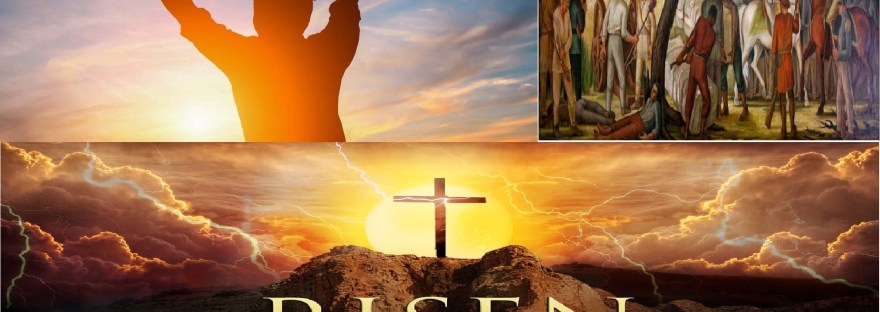
What is So Good about Good Friday?

A Good Friday Prayer

Today, God, I ask that You would teach me to mourn. Don’t let me rush to Easter Sunday too quickly. Give me grace to linger here, in the place where sorrow meets redemption. Make Your death as real to me as Your resurrection. Keep me always near the cross.

As I wait at the foot of the cross, God, reveal to me again the costliness of my sin. Don’t let me live in an imaginary world where Easter’s happy ending makes my selfishness irrelevant. Remind me that Your all-consuming grace came at a highest price. Forgive me for the times I’ve lived as if sin is no big deal, as if Good Friday never really happened.

Fill me with the joy and sorrow and reverence and gratitude that befit a Good Friday funeral: joy for Your victory, sorrow for Your death, reverence for Your holiness, gratitude for Your grace. Don’t let me settle for just one of those emotions at the expense of the others. Give me a heart big enough to hold them all in tension. Make me bold enough to search after a truth that’s really true, not just a truth that fits easily in the palm of my hand.

Give me eyes, God, to see the triumph of the cross. Even when all seems lost, even as I mourn Your death, remind me that You conquered the grave by sneaking inside of it and unraveling it from the inside out. In the midst of defeat and disappointment, sing songs of victory over me. Turn my world on its head so I can recognize the upside-down Kingdom of God at work.

Jesus, You tell me to take up my cross and follow You. Today more than ever, I remember what a weighty invitation that is. You won by dying—and it’s only by dying that I can follow in Your footsteps. It’s only by dying that I’ll ever truly come alive.

Teach me, God, to mourn and celebrate Your death. Then take me by the hand, lead me into my own death, and teach me to mourn and celebrate that death too. Amen. ~ written by Gregory Coles

Good Friday Bible Verses

Romans 5:6-10 – “You see, at just the right time, when we were still powerless, Christ died for the ungodly. Very rarely will anyone die for a righteous person, though for a good person someone might possibly dare to die. But God demonstrates his own love for us in this: While we were still sinners, Christ died for us. Since we have now been justified by his blood, how much more shall we be saved from God’s wrath through him! For if, while we were God’s enemies, we were reconciled to him through the death of his Son, how much more, having been reconciled, shall we be saved through his life!”

1 Peter 2:24 – “He himself bore our sins” in his body on the cross, so that we might die to sins and live for righteousness; “by his wounds you have been healed.”

Isaiah 53:3-5 – “He was despised and rejected by mankind, a man of suffering, and familiar with pain. Like one from whom people hide their faces he was despised, and we held him in low esteem. Surely, he took up our pain and bore our suffering, yet we considered him punished by God, stricken by him, and afflicted. But he was pierced for our transgressions, he was crushed for our iniquities; the punishment that brought us peace was on him, and by his wounds we are healed.”

Slavery and Freedom

Romans 6:18; “You have been set free from sin and have become slaves to righteousness.”

The correlation between Passover and the Passion week.

Slavery is the state of being a slave. The practice or system of owning slaves. A condition compared to that of a slave in respect of exhausting labour or restricted freedom. Slavery and enslavement are both the state and the condition of being a slave, who is someone forbidden to quit their service for another person, while treated as property. A slave is a person who is the legal property of another and is forced to obey them. Man has sinned [Adam], put otherwise, man has been metaphorically enslaved by sin. Since man can not exist without sin, man is in bondage. Sin is the master. The desires of the flesh is in control of man. Whatever controls a person, is the master of the person [Romans 6:14].

[The drawings on the walls of a temple in Egypt, show the Hebrews, the people of Moses, long before he was commanded by God to deliver them from slavery. The drawings make it quite clear who was in charge. Here, a big, strong Egyptian demonstrates his power over grovelling slaves.

But who were these people in thrall to the Egyptians? The Bible describes them as nomads who ended up wandering onto Egyptian territory, where they were made the slaves of the Egyptian state. Today, historians agree that Moses’ people were the descendants of these slaves. And here is the evidence for their supposition. On blocks of stone found on the Sinai peninsula, we can see carvings that resemble the Hebrew script – they are quite different to the hieroglyphs of the Egyptians. The writing provides evidence of an independent culture, and several historians believe that the images carved in the stone prove that these people were the slaves of the Egyptians. And this is also the story that the Bible tells. Hebrew people laboured in their droves to build the spectacular pyramids. Because the slaves were an invaluable work force, it was in the state’s best interests to keep them alive. But they were made very much aware who wielded the power. Moses was one of these workers. He, and a chance event, changed history.

The Bible describes how Moses sees one of his comrades being beaten by an Egyptian guard. In a burst of fury, Moses kills the guard, later burying the body in the sandy soil. Moses has to flee for his life. Putting 400 kilometres between himself and the scene of his crime, he ends up in the Sinai mountains. He lived here for years, taking a wife. Ten years later, the Bible tells us, he returns. He has been commanded to confront the Pharaoh and release his people from their bondage. https://www.britannica.com/video/179508/Israelites-Overview-Moses-slavery%5D

The heartless Pharaoh still refused to free the Israelite slaves. So God, brought about one last plague, which was so terrible that it was certain to persuade Pharaoh to let his slaves go. That night, God sent the angel of death to kill the firstborn sons of the Egyptians. [Exodus 11:1-10; Exodus 12:1-36] Exodus 12:27; Passover sacrifice to the Lord, who passed over the houses of the Israelites in Egypt and spared our homes when he struck down the Egyptians.

The Exodus: It tells of their departure from Egypt, the revelations at biblical Mount Sinai, and their wanderings in the wilderness up to the borders of Canaan. Its message is that the Israelites were delivered from slavery by Yahweh their god, and therefore belong to him by covenant.

Passover, Hebrew Pesaḥ or Pesach, in Judaism, holiday commemorating the Hebrews’ liberation from slavery in Egypt and the “passing over” of the forces of destruction, or the sparing of the firstborn of the Israelites, when the Lord “smote the land of Egypt” on the eve of the Exodus.

The resurrection established Jesus as the Son of God and is cited as proof that God will righteously judge the world. … Easter is linked to Passover and the Exodus from Egypt recorded in the Old Testament through the Last Supper, sufferings, and crucifixion of Jesus that preceded the resurrection. Good Friday is a Christian holiday commemorating the crucifixion of Jesus and his death at Calvary. It is observed during Holy Week as part of the Paschal Triduum on the Friday preceding Easter Sunday, and may coincide with the Jewish observance of Passover. The Paschal Triduum or Easter Triduum, Holy Triduum, or Easter Triduum, or the Three Days, is the period of three days that begins with the liturgy on the evening of Maundy Thursday, reaches its high point in the Easter Vigil, and closes with evening prayer on Easter Sunday.

Freedom

When a person is ‘born again’, born of the Spirit, John 3:3; Jesus replied, “Very truly I tell you, no one can see the kingdom of God unless they are born again; John 3:5-6; Jesus answered, “Very truly I tell you, no one can enter the kingdom of God unless they are born of water and the Spirit. Flesh gives birth to flesh, but the Spirit gives birth to spirit; such a person is set free from the bondage to the flesh. Sin, death no longer have control over such a person. This freedom from sin, means unity with the Father, submission to the Will of the Father, beholden to the Father. The flesh of such a person is no longer in control, but the Spirit is in control. The climax of the rescue mission of God is the crucifixion and resurrection of our Lord Jesus Christ, the Messiah, our Redeemer, our Saviour, our Liberty. John 12:31-32; Now is the time for judgment on this world; now the prince of this world will be driven out. And I, when I am lifted up from the earth, will draw all people to myself.”

John 12:44-46; Then Jesus cried out, “Whoever believes in me does not believe in me only, but in the one who sent me. The one who looks at me is seeing the one who sent me. I have come into the world as a light, so that no one who believes in me should stay in darkness. John 5:24-29; “Very truly I tell you, whoever hears my word and believes him who sent me has eternal life and will not be judged but has crossed over from death to life. Very truly I tell you, a time is coming and has now come when the dead will hear the voice of the Son of God and those who hear will live. For as the Father has life in himself, so he has granted the Son also to have life in himself. And he has given him authority to judge because he is the Son of Man. “Do not be amazed at this, for a time is coming when all who are in their graves will hear his voice and come out—those who have done what is good will rise to live, and those who have done what is evil will rise to be condemned.

Galatians 5:13; “For you were called to freedom, brothers. Only do not use your freedom as an opportunity for the flesh, but through love serve one another.” 2 Corinthians 3:17; “Now the Lord is the Spirit, and where the Spirit of the Lord is, there is freedom.” John 8:32; “And you will know the truth, and the truth will set you free.” 1 Peter 2:16-17; “Live as people who are free, not using your freedom as a cover-up for evil, but living as servants of God. Honour everyone. Love the brotherhood. Fear God. Honour the emperor.” Psalm 118:5; “Out of my distress I called on the Lord; the Lord answered me and set me free.” Isaiah 61:1; “The Spirit of the Lord God is upon me, Because the Lord has anointed me to bring good news to the afflicted; He has sent me to bind up the broken-hearted, to proclaim liberty to captives and freedom to prisoners.” John 8:36; “So if the Son sets you free, you will be free indeed.” Romans 6:18; “You have been set free from sin and have become slaves to righteousness.” Romans 8:2; “For the law of the Spirit of life has set you free in Christ Jesus from the law of sin and death.” Romans 8:21; “That the creation itself will be set free from its bondage to corruption and obtain the freedom of the glory of the children of God.”

1 Corinthians 9:19; “For though I am free from all, I have made myself a servant to all, that I might win more of them.” Romans 6:22; “But now that you have been set free from sin and have become slaves of God, the fruit you get leads to sanctification and its end, eternal life.” Romans 6:14; “For sin will have no dominion over you, since you are not under law but under grace.” 1 Corinthians 7:22; “For he who was called in the Lord as a slave is a freedman of the Lord. Likewise he who was free when called is a slave of Christ.” Ephesians 2:8; “For by grace you have been saved through faith. And this is not your own doing; it is the gift of God.” Acts 13:39; “And by him everyone who believes is freed from everything from which you could not be freed by the law of Moses.” 1 Corinthians 6:12; “ ‘I have the right to do anything,’ you say—but not everything is beneficial. ‘I have the right to do anything’—but I will not be mastered by anything. Psalm 119:45; “I will walk about in freedom, for I have sought out your precepts.” Psalm 118:5; “From my distress I called upon the Lord; the Lord answered me and set me in a large place.”

Hebrews 2:14-15; “Since the children have flesh and blood, he too shared in their humanity so that by his death he might break the power of him who holds the power of death—that is, the devil— and free those who all their lives were held in slavery by their fear of death.”

Palm Sunday and Jesus wept

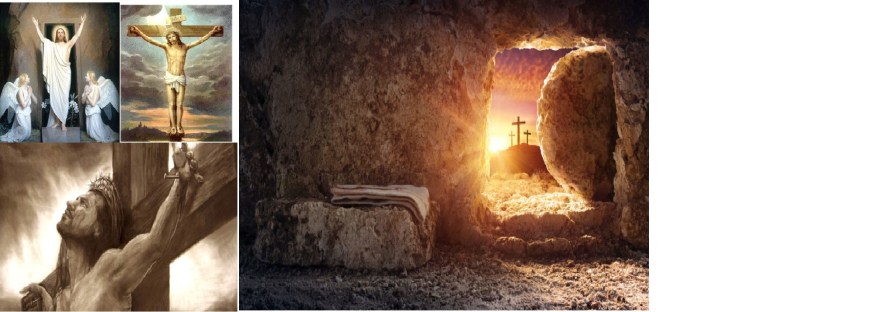
Palm Sunday can sound like a joyous celebration if we tell the story a certain way. There’s a big crowd waving palm branches, shouting “hosanna.” Jesus rides in on a donkey—his triumphal entry. Then, we get our kids to relay the scene on stage at church. It’s cute and fun and we all leave feeling like we just participated in something historical. But we missed one major part of the story… Jesus weeping.

That’s right. After this huge, spontaneous celebration erupts in his honor, Jesus sobs. There must have been something going on behind the scenes that we didn’t catch. It most likely has to do with Jesus seeing straight through to people’s hearts and motives—because he is always doing that. So, let’s retell the story and see where we went wrong.

THE CROWD

The route Jesus took, the donkey he rode, the season of Passover… all of these details pointed to one thing: Jesus is the Messiah. The Mount of Olives is the predicted location for the Messiah’s appearance (Zech. 14:4-5). Oftentimes, kings would procure donkeys to ride into a city—a sign of humble authority. Passover celebrates the Israelites freedom from slavery in Egypt…and the Jews deeply desired to be freed from Rome by a messiah, or savior.

So, the crowd (who has been ready to thrust Jesus into a throne for quite some time) worship him like a king. The disciples lay down their cloaks, making the modern-day equivalent of a red carpet. The crowd makes a huge, political spectacle by waving palm branches and shouting “Hosanna.” They want a revolt. They want Jesus to rise up and overthrow the Roman government. And they are going to be thoroughly disappointed.

THE RELIGIOUS RULERS

These men have been rolling their eyes at Jesus since the first day of his ministry. When their rules and guidelines are challenged by Jesus, they never stop to consider if their ideology is wrong. Instead, they are disgusted by Jesus’ rise to popularity, especially among the sick, poor, and outsiders. This day is a little different, though.

Passover often stirred up strong political hopes in common people. In the past, thousands of traveling Jews crowded the streets of Jerusalem leading to tension and revolts. Once, Archelaus unleashed his troops during Passover, killing 3,000 people (First Century Study Bible Notes). Rome did not appreciate the uproar. The religious rulers are afraid of this happening again. Surely, Rome would be furious of Jesus’ Messianic claims. So, they yell to Jesus: “Teacher, rebuke your disciples!”— Luke 19:39

Basically: Tell these people to stop calling you the Messiah! But Jesus refuses. Instead, Jesus says: “I tell you, if these were silent, the very stones would cry out.”— Luke 19:40 It’s true. Jesus claims to be the Messiah. And even if the people didn’t proclaim it, the earth would. So, the religious rulers believe they have no other choice than to capture him and turn him into the Roman authorities.

JESUS + AGENDAS

Next, as Jesus approaches Jerusalem, he begins to weep. And when he drew near and saw the city, he wept over it, saying, “Would that you, even you, had known on this day the things that make for peace! But now they are hidden from your eyes. For the days will come upon you, when your enemies will set up a barricade around you and surround you and hem you in on every side and tear you down to the ground, you and your children within you. And they will not leave one stone upon another in you, because you did not know the time of your visitation.” — Luke 19:41-44

Here, we see Jesus’ prophecy of the destruction of Jerusalem. He was very aware that 1) he was not going to fulfill the crowd’s Messianic hopes and that 2) these hopes would turn to violence. That’s exactly what happened in AD 66-73. Both the crowd and the Pharisees are applying their agendas to Jesus. The crowd wants the Messiah to be a strong, powerful war leader. The Pharisees want the Messiah to be like them—perfect, set apart, and untouchable. Neither have it figured out.

Jesus is a strong, powerful savior. He is also perfect and set apart. But he doesn’t save the world through violence or requiring people to reach his standards. Jesus touches the sick, eats dinner with sinners, and allows himself to be beaten and murdered. He is the opposite of everyone’s expectations. So, he weeps. Because of the Jew’s agendas, they cannot see him for who he is, and they kill him for it.

OUR AGENDAS

I find it somewhat ironic when we wave palm branches at church. The last thing I want to be is a person in the crowd on that day, seeking after my own idea of who Jesus is. So, let’s use Palm Sunday as a reminder to evaluate ourselves. As we approach Good Friday, I encourage you to examine your expectations of God. Here are a few questions I’m asking myself:

Is there any expectation I have of God that, if left unfulfilled, would challenge who I believe Him to be?

Do I envision Jesus being proud of me for following all the rules, even at the cost of loving others?

Would I follow Jesus into dark alleys and dilapidated neighborhoods to care for others?

Do I picture Jesus agreeing with all my political stances? Why?

Do I expect Jesus to always destroy my enemies to keep me safe?

Who do I believe Jesus to be—while he is flipping tables, touching lepers, being beaten, and even dead?

And most importantly: WHO DOES JESUS SAY THAT HE IS?

We will never know…

…if we would have been part of the crowd that would worship Jesus one day and crucify him the next. But we can know if we are willing to spend our lives seeking him for who he is, and not who we want him to be.

2,000-Year-Old Biblical Scroll Fragments Unearthed in Dead Sea Cave

by John Paluska

Two dozen biblical scroll fragments from the book of Zechariah were recently unearthed in a Dead Sea Cave in Israel. The fragments are believed to be 2,000 years old and were recovered as a part of a rescue mission to recover all the artifacts in the cave. Greek translations of the books of Zechariah and Nahum from the Book of the Twelve Minor Prophets and are written in two scribal hands. Only the name of God is written in Hebrew in the texts. Zechariah 8:16–17, as well as verses from Nahum 1:5–6.

One of the fragments reads from Zechariah 8:16-18 stating, “These are the things you are to do: Speak the truth to one another, render true and perfect justice in your gates. And do not contrive evil against one another, and do not love perjury, because all those are things that I hate – declares the Lord.” On the new fragments, as well as in the Greek translation scroll discovered by Aharoni, only the name of God appears in Hebrew. It is written in the Paleo-Hebrew script used during the First Temple period, as well as by some adherents of the Bar Kochba revolt (132–136 CE), including on coinage, and in the Qumran community.

According to a press release obtained by the Jerusalem Post, the purpose of the dig was to collect these artifacts and any others found before robbers come in and excavate on their own to sell the artifacts on the black market. The director of the Israel Antiquities Authority, Israel Hasson, explained that “The aim of this national initiative is to rescue these rare and important heritage assets from the robbers’ clutches. The newly discovered scroll fragments are a wake-up call to the state. Resources must be allocated for the completion of this historically important operation. We must ensure that we recover all the data that has not yet been discovered in the caves, before the robbers do. Some things are beyond value.”

In addition to the scroll fragments, Along with the “new” biblical scroll fragments from the Books of the Minor Prophets, the team excavated a huge 10,500-year-old perfectly preserved woven basket — the oldest complete basket in the world — and a 6,000-year-old mummified skeleton of a child, tucked into its blanket for a final sleep. The Israel Antiquities Authority partnered with the Archaeology Department of the Civil Administration to conduct the dig. The funding came from the Ministry of Jerusalem Affairs and Heritage.

Apparently, these areas have a problem with looters who steal artifacts. The Israel Antiquities Authority’s head of the Theft Prevention Unit told The Times Of Israel, “For years we chased after antiquities looters. We finally decided to pre-empt the thieves and try reaching the artifacts before they were removed from the ground and the cave.”

References: John Paluska has been a contributor for Christian Headlines since 2016 and is the founder of The Washington Gazette, a news outlet he relaunched in 2019 as a response to the constant distribution of fake news.

https://www.timesofisrael.com/bible-scroll-fragments-among-dazzling-artifacts-found-in-dead-sea-cave-of-horror/