There is are differences between a person’ perception of who he is and the perception of those who have had or have relationships with him, such as superiors, peers, subordinates, friends, rivals, colleagues, disgruntled relations, spouse(s), ex-spouse, children, parent and extended family relations. A person and any of the above-mentioned relations have a biased perception of the identity of the individual.
Human nature is naturally self-consumed. We strain our necks for approval and avidly practice comparison, lacking the outward flipped perspective required to understand who we really are. The pre-requisite of our identity can be found in godly priorities. By aligning our everyday lives to biblical truth, we set our internal GPS to His will. Through Scripture, creation, and purposefully placed people, we begin to discover who God says we are.
The story of the Prodigal Son spotlights God’s love for us. Like the father who chose to welcome his son home despite the son’s mistakes, God so welcomes us. Although He knew we would forever fall short, He chooses to love us without end. His only Son, Jesus, died sacrificially to leave heaven’s door swung wide open eternally. Greg Morse wrote beautifully of the prodigal’s return: “The wayward son braces himself for a slap but receives an embrace.” God says we are:
…loved (John 3:16)
…His (1 John 3:1)
…worthy (Zephaniah 3:17)
…purposed (Jeremiah 29:11)
Who Is God?
What does the Bible say about God? To know who God says we are, we must first understand who He is. The Prodigal Son’s story highlights God’s great love for us alongside the choice to receive it. Our Father and Creator, well aware of who we are, desires a genuine and personal relationship with us. The three things God says about Himself in Exodus 3:13-15 are:
“I Am Who I Am” (3:14a)
“I Am has sent me to you” (3:14b)
“This is my name forever [Yahweh]” (3:15)
God does not need anything from us. Sovereign and omnipotent, He is all-knowing and in control. John Piper wrote, “Nothing is more basic, and nothing is more ultimate than the fact that God is.” Love, justice, righteousness, forgiveness, and wisdom contribute to His character.
Once we understand who He is, the utterance of His spoken name carries the proper weight of significance. John Piper emphatically stated, “It’s almost always translated ‘LORD’ (all caps) in the English Bible. But the Hebrew would be pronounced something like ‘Yahweh,’ (or the short form Yah, which you hear every time you sing ‘hallelu-jah,’ ‘praise Yahweh’), or every time you see ‘Lord’ in the English Bible you should think: This is a proper name (like Peter or James or John) built out of the word for ‘I Am’ and reminding us each time that God absolutely is.”
Who Am I According to God’s Word?
What does the Bible say about my identity? God, who spoke the world into existence, wants to talk to us. We are woven into the tapestry of all He has created. Being made in His image explains our innate desire for something more than ourselves. We’re built to seek and live life in communion with Him and are called to fulfill a unique purpose. All-knowing, just, and perfect, His will for our lives reflects the loving Father that He is. The pain and consequential suffering in this world are unavoidable, but never trump God’s desire and ability to work all things for our good.
Perhaps “redeemed” is the best way to describe how God sees us. Dave Burchett wrote that redemption: “is the truth I have to remind myself just about every day. The fight has already been won. Yet I too often live as if my self-effort is required to make up for past struggles and efforts. That I need to earn the grace that is already mine.”
Surely, the prodigal son had to remind himself that his father’s reaction was not a dream. Day after day, when he embraced the comfort of his home and family restored, he surely remembered the fate he deserved. Ephesians 1:7 proclaims, “In him we have redemption through his blood, the forgiveness of sins, in accordance with the riches of God’s grace.” Redemption is a releasing effected by payment of ransom.
Who are we in God’s eyes? Liberated, loved, and redeemed for who we are . . . right now. Jesus took every sin we would ever commit to the cross with Him. Nothing can negate His perfect sacrifice for our eternal freedom.
What Does God Think about Me?
In Isaiah 43:1b, we are reminded: “I have called you by name; you are mine.” God shaped us as a potter does clay (The NIV Cultural Backgrounds Study Bible). God has not only created us but formed us and called us to serve Him in specific ways, tailored to each life.
“With man this is impossible, but with God all things are possible” (Matthew 19:25-26)
In the context of the above verse, “man” in the original Greek text defines the difference between God and man. The significance of Jesus’ word choice is palpable:
It distinguishes us as human beings but separates us from plants and animals, God and Christ, and from angels. He’s speaking specifically to who WE are and of weaknesses that we specifically possess and, therefore, lead us to sin.
The way Jesus addressed man conveys a notion of contempt or disdainful pity, reminiscent of our underserved gift of His grace. We purposefully sin. It’s not by accident and God doesn’t feel sorry for us because of our bent toward sin. He forgives us and loves us despite it.
“Man,” or more specifically people as the NASB translation reads, are two-fold in nature: body and soul …the corrupt and the true Christian conformed to the nature of God.
Impossible leaves us to consider the sealed fate of our eternal state if not for Christ’s sacrifice. We are powerless to change who we are, but through salvation, we are grafted by His strength the opportunity to submit our will for His way.
John Rinehart wrote in “What God Thinks About You,” that we are valuable, new, Spirit-filled, being transformed, and representative of Him. The VOICE translation of Isaiah 43:1 beautifully reminds us: “Remember who created you, O Jacob? Who shaped you, O Israel? See, you have nothing to fear. I, who made you, will take you back. I have chosen you, named you as My own.” An impossible love for man, but not for God.
Who Am I in Jesus Christ?
In Jesus Christ, I am possible. Specifically, I am powerful, mighty, strong, and able. “Then who in the world can be saved?” the disciples asked Jesus. The NIV Study Bible Notes explain that “salvation is totally the work of God.” Ephesians 2:8-9 says, “God saved you by his grace when you believed. And you can’t take credit for this; it is a gift from God. Salvation is not a reward for the good things we have done, so none of us can boast about it.”
An excerpt from John Rinehard’s, “What God Thinks About You,” brought scriptural clarity to the truth of who we are in Jesus Christ:
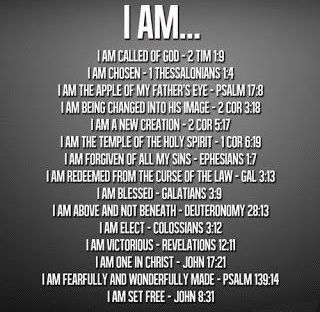
“You are no longer darkness, but light in my Son. Walk as children of light (Ephesians 5:8). You are the light of the world, a city set on a hill (Matthew 5:14). I have called you (2 Peter 1:3). I have chosen you (Revelation 17:14). You are now a saint, a servant, a steward, and a soldier (Romans 1:7; Acts 26:16; 1 Peter 4:10; 2 Timothy 2:3). You are a witness and a worker (Acts 1:8; Ephesians 2:10). Through Jesus you are victorious (1 Corinthians 15:57). You have a glorious future (Romans 8:18). You are a citizen of heaven (Philippians 3:20). You are an ambassador for my Son (2 Corinthians 5:20).”
How Can God Love Me?
God can love us because He is Love.
“I have given them the glory that you gave me, that they may be one as we are one – I in them and you in me – so that they may be brought to complete unity. Then the world will know that you send me and have loved them even as you have loved me” (John 17:22-23).
John, Jesus’ closest friend on this earth, may have understood who God says we are more than anyone. He witnessed Jesus’ life lived out in perfect love. God can love us because He is love.
“God’s love is not sparing us suffering and death. His love is mainly showing us and giving us himself in his glory.”-John Piper, “How to Know God Loves You.”
What Does God See When He Looks at Me?
“My sheep listen to my voice; I know them, and they follow me. I give them eternal life, and they shall never perish; no one can snatch them out of my hand” (John 10:27-28).
God sees the perfect creation He intended but knows we always fall short. As we go along life’s journey in pursuit of Christ, He will help us recognize our true reflection through our daily pursuit of His Word. The Bible is the Living Word of God. There’s no shortcut to wisdom other than to sit with the Author of it. God purposefully places people in our lives to love us and vice versa. We can learn a lot about who He sees when He looks at us by who He has surrounded our lives with.
“By this everyone will know that you are my disciples, if you love one another” (John 13:35).
10 Bible Verses about Who I Am in God
“But God, being rich in mercy, because of His great love and with which He loved us, even when we were dead in our transgressions, made us alive together with Christ (by grace you have been saved)” (Ephesians 2:4-5 NAS).
“Know therefore that the LORD your God is God; he is the faithful God, keeping his covenant of love to a thousand generations of those who love him and keep his commandments” (Deuteronomy 7:9).
“But God demonstrates his own love for us in this: While we were still sinners, Christ died for us” (Romans 5:8).
“Before I formed you in the womb, I knew you, before you were born, I set you apart; I appointed you as a prophet to the nations” (Jeremiah 1:5).
“But you are a chosen people, a royal priesthood, a holy nation, God’s special possession, that you may declare the praises of him who called you out of the darkness into his wonderful light” (1 Peter 2:9).
“See what great love the Father has lavished on us, that we should be called children of God! And that is what we are!” (1 John 3:1a).
“But while he was still a long way off, his father saw him and felt compassion for him, and ran and embraced him and kissed him” (Luke 15:20 NAS).
“I have been crucified with Christ and I no longer live, but Christ lives in me. The life I now live in the body, I live by faith in the Son of God, who loved me and gave himself for me” (Galatians 2:20).
“We love because he first loved us” (1 John 4:19).
“‘For I know the plans I have for you,’ declares the Lord, ‘plans to prosper you and not to harm you, plans to give you hope and a future’” (Jeremiah 29:11).
We Are Who God Says We Are
Whose version of our identity should we accept? Our own biased version, or our relations’ biased version or the unbiased version of God, who says that we should come to Him as we are. Our God who knows us even before we were born, who formed us, who knows everything, from whom nothing is hidden. We are not the mistakes that threaten to define us but the biblical truth that proves our actual worth. We are created by Love to love as we walk with Love. We exist to make His name known. His desire is to walk with us along the way, blessing us, and filling our lives with more than we can ask for or imagine. Only by drawing close to Him, with a life prioritized to put Him first, will we witness the layers of who we are as He sees us.
Reference: https://www.biblestudytools.com/bible-study/topical-studies/who-does-god-say-i-am.html