Blog

Mimesis and Anti-mimesis Its application in modern-day living with Scriptural references

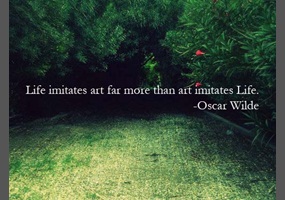
Just as art imitates life, life likewise imitates art; both are a coin but with opposite image. Life is a characteristic state or mode of living, while art is the product of human creativity that re-presents the natural existence, actions and events of human beings. Art is a very wide concept; hence it reflects in virtually every aspect of human life. Art duplicates the natural physical world, the emotional, intellectual, foolish or ignorant attributes of human characters, a notion which Aristotle described as mimesis. While mimesis is an imitation of nature and human behaviour in art and literature, anti-mimesis, according to Oscar Wilde is life’s imitation of art.

Both mimesis and anti-mimesis are philosophical states that are represented not only in human existence and actions but also in God’s. Both are reflected in:

  • Creation: Creation exemplifies mimesis: art imitating life. In the book of Genesis, chapter 1 vs 26-27, God said, ‘Let us make mankind in our image, in our likeness… So God created mankind in his own image.’ God is the artist, while man is the work of art created by God. This is a typical illustration of art imitating life. Man is art that imitates God who is the life. This is confirmed in the books of Genesis and John. Genesis 2 vs 7: ‘Then the Lord God formed a man from the dust of the ground and breathed into his nostrils the breath of life, and the man became a living being.’ John 1 vs 1-3 also affirms that God is life, for ‘In the beginning (of creation) was the Word, and the Word was with God, and the Word was God. He (Jesus who is also God) was with God in the beginning (of creation, hence God said: ‘Let us make…). Through him all things were made; without him nothing was made that has been made. In him was life, and that life was the light of all mankind.’ In the book of Isaiah, 45 vs 9, God himself categorically refer to himself as an artist: ‘Does the clay say to the potter, What are you making? Does your work say, The potter has no hands? So we can say that man is an imitation of God, a representative image of God.
  • The Birth of the Messiah: The birth of the Messiah, Jesus Christ, captures anti-mimesis: Life imitating art. Life imitates art through the birth of the Messiah which was predicted in Isaiah 9 vs 6a: ‘For to us a child is born…, and fulfilled in the Gospel of Luke 2:1-21. Verse 11 of the chapter tells us that: ‘Today in the town of David a Saviour has been born to you; he is the Messiah, the Lord.’ Life (Jesus) represents or imitates art (man) through his birth.
  • Salvation: Relatedly Salvation necessarily illustrates anti-mimesis because it is a direct consequence of The Birth of the Messiah; to us a son is given… (Isaiah 9 vs 6b) and this philosophy is further reaffirmed in the book of John 3 vs 16 that states that ‘For God so loved the world that he gave his one and only Son, that whoever believes in him shall not perish but have eternal life.’ The salvation of man from sin and the devil, cum hell would not have been possible if Jesus, who is Life had not imitated man, who is the art. This is particularly established in Hebrews 2 vs 14-17, ‘Since the children (art) have flesh and blood, he (life) too shared in their humanity so that by his death he might break the power of him who holds the power of death-that is, the devil- and free those who all their lives were held in slavery by their fear of death… For this reason he had to be made like them, fully human in every way, in order that he might become a merciful and faithful high priest in service to God, and make atonement for the sins of the people.
  • Our Daily Living: Our daily living is a depiction of mimesis; art (man) imitates life (God). God has already imitated man as shown in Salvation, and in turn expects us, the work of art, to imitate life, our God. Thus, since we are indeed created in the image of God, we are obligated to be a true imitation of God in every way, and that is why Jesus tells us in Matthew 5 vs. 48: ‘Be perfect, therefore, as your heavenly Father is perfect‘, and for us to attain this perfection in our everyday life, we must necessarily duplicate the life of Jesus for he is ‘…the way and the truth and the life’ (Jn 14 vs 6). Jesus has shown us the way to attaining, the true imitation of his life in his sermons on the mount, in Chapters 5, 6 and 7; the summary of these sermons is captured in this golden rules: ‘Love the Lord your God with all your heart and with all your soul and with all your soul and with all your strength and with all your mind; and, ‘Love your neighbour as yourself’ (Luke 10 vs 27), for ‘There is no commandment greater than these’ (Mark 12 vs 31b). ‘In fact, this is love for God: to keep his commands. And his commands are not burdensome’ (1 John 5 vs 3).  As a work of art fashioned by God, we are also obligated to exhibit the fruit of the Spirit, which ‘…is love, joy, peace, forbearance, kindness, goodness, faithfulness, gentleness and self-control. Against such things there is no law’ (Galatians 2 vs 22-23). In contrast, the law of love stipulated by God is against ‘…sexual immorality, impurity and debauchery, idolatry and witchcraft, hatred, discord, jealousy, fits of rage, selfish ambition, dissensions, factions and envy; drunkenness, orgies, and the like. I warn you, as I did before, that those who live like this will not inherit the kingdom of God (Galatians 2 vs 19-21), because they are not imitating the artist (life) who created them (art) in his own likeness. So, for art (man) to be a true representation of the life (God) that created him, our daily living must adhere to the principles of God.
  • Religion: Religion is a system of worshiping God and it pictures mimesis and anti-mimesis, that is, art imitating life on the one hand; and life imitating art on the other hand. Regarding the mimetic philosophy, some people create gods (art), an imitation of the true God. One notable instance in the Bible is found in Exodus 32; Aaron asked the people of Israel to ‘Take off’ their ‘gold earrings’, ‘So all the people took off their earrings and brought them to Aaron…and made it into an idol cast in the shape of a calf… Then they said, ‘These are your gods… We can see that gods are artistic creation by man that imitate Life (God). They are even more than twice removed from truth for they are idols, and God has said that ‘All who make idols are nothing… Those who would speak for them are blind; they are ignorant, to their own shame. Who shapes a god and cast an idol, which can profit nothing? People who do that will be put to shame; such craftsmen are only human beings. Let them all come together and take their stand; they will be brought down to terror and shame’ (Isaiah 44 vs 9-11). And of course, these craftsmen came together during the ministry of Elijah – the prophets of Baal. It was recorded in 1 Kings 18, that Elijah asked them to call on the name of their god (art) without lighting the fire. So ‘…they called on the name of Baal from morning till noon. ‘Baal answer us!’ they shouted but there was no response.’ But when Elijah called on the true God (Life) who is being imitated, who is the constant and eternal truth. ‘Then the fire of the LORD fell and burned up the sacrifice…’ This experience between Elijah, the prophet of God (Life) and the prophets of Baal (art) aptly authenticate the words of Plato, ‘all artistic creation is a form of imitation; that which really exists (in the ‘world of ideas’) is a type created by God; the concrete things man perceives in existence are shadowy representations of this ideal type.’ Thus, those who serve other gods are just imitators of the truth and as Plato rightly said imitation is twice removed from the truth. Furthermore, the veneration or worship of saints, angels (which is strictly forbidden: see Revelations 22:8-9; Revelations 19:10 and Colossians 2:18) and spiritual guides (referred to as “father in the Lord” by some religious denominations, also forbidden, see Matthew 23:9), all fall into this category. Other instances are the traditional gods worshipped by Africans: the god of Iron, the god of thunder, the goddess of the sea, amongst many others. These are just imitation of the real truth: art imitating art that is trying to imitate life; art imitating life (mimesis).
  • Media: Media expresses both mimesis and anti-mimesis. Just as there are godly nature and human behaviour captured in art and literature, there are also corruptible traits that the audiences of the media necessarily imitate in order to have a sense of belonging, even those who profess to be believers. 1 Cor 15:33 makes us to understand that evil communication corrupt good manners, so it is highly important that we take cognisance of the significance of the words and images we digest via the media in our daily living. A glance at some Nigerian films, that depict shows of prostitution, excessive show of wealth and diabolical means of acquiring it, oppressive words and acts amongst couples, to mention just a few, are being imitated in real life, an accurate representation of anti-mimesis. Rather than art echoing human behaviour, it is the other way round considering the fact that those who engage in these ills are attracted to them via the media, and consequently engage in such acts. We should bear in mind that seeking first the kingdom of God and his righteousness is a must for everyone. To seek the kingdom of God is to allow God to take absolute control of our lives in every facet; while to seek his righteousness is to live to do only those things that please him so that we can establish, and continually maintain a good and personal relationship with him. God, speaking through Prophet Isaiah informs us that he created us for the purpose of knowing that he alone is God, second, we should believe in him. Again, he adds that he created us for his glory so that our lives can show forth his praise. So when we live and speak corruptibly by imitating the bad acts and words then we are not showcasing his glory, neither are we fulfilling the purpose for which he created us. That is the reason 1 John 2:15 particularly instructs us that we should not love the world or anything in the world. If anyone loves the world, love for the father is not in them, for those who do this cannot please God because they are living according to the dictates of the flesh. Love of the world is evident in the way people, including believers imitate the actions and words expressed in the media; these are reflected in the way people talk, dress and all manner of ungodly behaviours. Even the way churches are misrepresented in these films is now duplicated in current day churches. If you are wealthy, you are recognised and honoured, whereas if you are not you are neither recognised nor honoured, which is in contrast to the word of God that tells us that favouritism is forbidden. My brothers and sisters, believers in our glorious Lord Jesus Christ must not show favouritism. Suppose a man comes into your meeting wearing a gold ring and fine clothes, and a poor man in filthy old clothes also comes in. if you show special attention to the man wearing fine clothes and say, here’s a good seat for you, but you say to the poor man, You stand there or Sit on the floor by my feet, have you not discriminated among yourselves and become judges with evil thoughts? (James 2:1-4).
  • Customs and traditions: Customs and tradition depicts anti-mimesis. Art can also be described as a system of rules or principles that facilitate the performance of certain actions. For instance, customs and traditions are stipulated artistic creation by human beings. Nevertheless, we should not imitate the ones that are contrary to God’s word While addressing the Pharisees and some of the teachers of the law, Jesus said in Mark 7:9-13: ‘You have let go of the commands of God and are holding on to human traditions. You have a fine way of setting aside the commands of God in order to observe your traditions! For Moses said, ‘Honour your father and mother’ and Anyone who curses their father or mother is to be put to death. But you say if anyone declares that what might have been used to help their father or mother is Corban (that is devoted to God) – then you no longer let them do anything for their father or mother. Thus, you nullify the word of God by your tradition that you have handed down. And you do many things like that.’  Likewise, in the modern-day churches, the issue of women covering their heads has become a matter of great concern. The churches who rigidly believe that women are expected to cover their heads fail to recognise that they have brought in customs and tradition into the church: Life is now imitating art, for custom is a practice that is common to a particular place or a group of people, while tradition is the transmission of customs or beliefs from generation to generation. Apostle Paul was specifically addressing the people of Corinth based on the challenge the church was experiencing at that particular time, in 1 Corinthian chapters 11 to 14.


The relevance of this piece is to draw our attention to what matters to God, and these is stated in Matthew 6:33. Jesus instructs us to seek first the kingdom of God and his righteousness, and every other thing will be given to us as well.


Art is a very wide concept, hence it is an intricate issue that covers customs and traditions, artistic creation expressed through media, a system of rules serving to facilitate the performance of certain actions, like the art of worshipping God; method of doing well some special work; the systematic application of knowledge or skill in effecting a desired result; J. F. Genung states that Art is knowledge made efficient by skill. Eg. Jesus is the way, the truth, and the life /the bread of life influences the art of worshipping God.

Rounding up this piece, the emphasis is on mimesis; art should imitate life, such as espoused by our Lord Jesus Christ in Matthew 5:48; Be perfect, therefore, as your heavenly Father is perfect.

Author: TM Odion

Love – God – Man

Love can be described as an intense feeling of deep affection, or a great interest and pleasure in something.

1 Corinthians 13:4-8

Love is patient, love is kind. It does not envy, it does not boast, it is not proud. 5 It does not dishonour others, it is not self-seeking, it is not easily angered, it keeps no record of wrongs (once we are born again of the Spirit of God, all our past sins are wiped away). 6 Love does not delight in evil but rejoices with the truth (the Holy Spirit is the Spirit of truth). 7 It always protects, always trusts, always hopes, always perseveres. 8 Love never fails.

Mark 12:30-31

Love the Lord your God with all your heart and with all your soul and with all your mind and with all your strength.’[f] 31 The second is this: ‘Love your neighbour as yourself. Matthew 5:44; love your enemies and pray for those who persecute you.

1 John 4:7-12

Dear friends, let us love one another, for love comes from God. Everyone who loves has been born of God and knows God. 8 Whoever does not love does not know God, because God is love. 9 This is how God showed his love among us: He sent his one and only Son into the world that we might live through him. 10 This is love: not that we loved God, but that he loved us and sent his Son as an atoning sacrifice for our sins. 11 Dear friends, since God so loved us, we also ought to love one another. 12 No one has ever seen God; but if we love one another, God lives in us and his love is made complete in us. Hebrews 11:1; Now faith is confidence in what we hope for and assurance about what we do not see. Romans 12:3; says the measure of faith God has distributed to each of us.

1 Corinthians 13:13; And now these three remain: faith, hope and love. But the greatest of these is love.

Psalm 62:11-12; One thing God has spoken, two things I have heard: “Power belongs to you, God, and with you, Lord, is unfailing love”.

John 3:16; For God so loved the world that he gave his one and only Son, that whoever believes in him shall not perish but have eternal life.

Romans 8:38-39

For I am convinced that neither death nor life, neither angels nor demons,[k] neither the present nor the future, nor any powers, 39 neither height nor depth, nor anything else in all creation, will be able to separate us from the love of God that is in Christ Jesus our Lord.

Confession onto Salvation-Good Works-Pride

In the book of Roman’s chapter 2, where Apostle Paul writes about why Christians may go to hell/or may not go to heaven. As a result of among other factors, the concept of their good works, not saving them, since their “so called good works” are not measured using the standard of another man’s good works, but against the standard of God’s good works.

The apostle Paul shares with us the seven factors of judgment that Jesus will use when he opens the Books of Works at the Great White Throne Judgment. From these books Jesus will prove why good people are not fit for Heaven.

Romans 2 does not show folks how to be saved. This passage shows folks why they are lost! These are not the principles of salvation. These are the principles of evaluation. God will evaluate according to deeds. Romans 2:6-10. This is the deal breaker, this is why even Apostle Paul with everything that he did for the spreading of the Gospel, was told in 2 Cor.12:9 “My Grace is sufficient”. Standing before God now is the person who says, “Look, God, judge me according to my deeds. I’ve lived a good life. Take my good works and put them beside my bad ones and certainly the good will outweigh the bad!”

But the problem with the moral man is that he thought that his good deeds will be weighed against his bad deeds or at least be compared against the deeds of others.

That will not be the case. God will take the best works of the moral man or woman and compare them with Jesus’ deeds. Jesus raises the lame, gives sight to the blind, and heals the sick. He takes on the sins of the entire world and by his death and sacrifice brings salvation to those who commit to him as Saviour and Lord.

No person in his or her right mind wants to be judged on works. He or she wants mercy.

Therefore whenever we think of ourselves in the dynamics of our relationship with God, or whenever we lay the emphasis or focus on ourselves, regarding the dynamics of the relationship between God and man, let us consider the definition of Pride: a feeling or deep pleasure or satisfaction derived from one’s own achievements, the achievements of those with whom one is closely associated, or from qualities or possessions that are widely admired. For example: “he takes great pride in his appearance”. Let us analyse these 2 statements:

  1. I have confessed my sins, and accepted Jesus Christ as my Lord and saviour.
  2. God saved man from sin through crucifixion and resurrection.

In the first statement man is the subject and focus of the concept being expressed and indicates self-achievement “pride” while in the second statement, God is the subject and remains the focus of the same concept expressed in statement 1. Man has the tendency to forget that he is the receiver, just the object and not the giver or subject or the performer of the action of the gift of salvation.

In Hebrews 5:5; In the same way, Christ did not take on himself the glory of becoming a high priest. But God said to him,

“You are my Son;

today I have become your Father.”

Furthermore, in Hebrews 5:7-10; During the days of Jesus’ life on earth, he offered up prayers and petitions with fervent cries and tears to the one who could save him from death, and he was heard because of his reverent submission. 8 Son though he was, he learned obedience from what he suffered 9 and, once made perfect, he became the source of eternal salvation for all who obey him 10 and was designated by God to be high priest in the order of Melchizedek.

I AM THIRD

Captain John T. Ferrier’s Sabrejet had hit the ground midway between four houses, in a backyard garden. It was the only place where he could have crashed without killing people. The explosion had knocked a woman and several children to the ground, but no one had been hurt, with the exception of Johnny Ferrier. He had been killed instantly.

“A bunch of us were standing together, watching the show,” an elderly man with tears in his eyes told Coomer. “When the pilot started to roll, he was headed straight for us. For a second, we looked right at each other. Then he pulled up right over us and put it in there.”

In deep humility, the old man whispered, “This man died for us.”

A few days after this tragic accident, John Ferrier’s wife, Tulle, found a worn card in his billfold. On it were the words “I’m Third.” That simple phrase exemplified the life—and death—of this courageous man. For him, God came first, others second, and himself third.

True to his philosophy, John Ferrier sacrificed his life for people he had never met. If you ever found yourself in a similar situation, would you do the same?

Reference: https://www.crosswalk.com/devotionals/devotions-for-married-couples-by-dr-james-dobson/dr-dobsons-married-couples-devotional-oct-2.html?utm_source=Devotions%20for%20Married%20Couples&utm_campaign=Devotions%20for%20Married%20Couples%20-%20Crosswalk.com&utm_medium=email&utm_content=2947992&bcid=6fd36d2c4984deb491599514588ab2ed&recip=528989851%20

The Book of Habakkuk

The book of Habakkuk, like the books of Obadiah and Nahum, the Lord is promising justice and judgement against the Babylonians whom the Lord had used to visit judgement upon Israel.

When the Lord has accomplished all His purposes on Jerusalem and visited judgement to uphold His justice. Then when the Lord shows mercy towards Israel. At that point Babylonia would be brought down and God would bring justice against them. And show His Glory thereby.

Habakkuk foresees the coming invasion of the Babylonians. They are growing in strength, and he knows that God is going to use that nation to punish Israel for its disobedience.

At the end of this short book, Habakkuk records this prayer/song:

Though the fig tree should not blossom,

nor fruit be on the vines,

the produce of the olive fail

and the fields yield no food,

the flock be cut off from the fold

and there be no herd in the stalls,

yet I will rejoice in the LORD;

I will take joy in the God of my salvation.

GOD, the Lord, is my strength;

he makes my feet like the deer’s;

he makes me tread on my high places.

(Habakkuk 3:17-19)

The prophet looks forward to a time (perhaps after the Babylonians invade the land) when there are no figs, no grapes, no olives, no grain, no sheep, no cows, nothing. The people will be starving.

Yet, in this midst of these, Habakkuk says that he will find joy in God. This is the attitude that we want in our own life.

There have been many struggles in our life lately, and we often do not find joy in the presence of God, even though we know that he is with us. In spite of our struggles, most of us have never been in a situation where we had nothing, where we were hungry.

If Habakkuk can look ahead to a time when he has nothing and yet continue to see himself finding joy in God, surely, we can do the same thing.

Unfortunately, today, we still look at times when our wants are not met (our wants, not our needs), and we still seek other things for our joy.

We need to recognize that in order to live continuously and consistently in a state of gratitude and joy in the Lord, we must be content in Him and only in Him.

It’s just that the problem of human suffering is so vast that we need many different ways to think about it. That’s where the book of Habakkuk comes in. In this exposition we’re going to dig deep into this little book written just before the world caved in for the people of Judah. If you don’t know where to find Habakkuk, look in the Minor Prophets of the Old Testament. Or just look in the “white pages” of your Bible. Habakkuk is squeezed between Nahum and Zephaniah, two other books we rarely read.

Major Message from a Minor Prophet

Let’s back up for just a second. There are 17 prophetic books in the Old Testament, divided between the Major Prophets (5 books) and the Minor Prophets (12 books). They are not called “major” and “minor” because of their respective importance but because of their size. In one of known Bible versions, the five Major Prophets take up 191 pages while the twelve Minor Prophets take up only 61 pages. We’re talking about short books here. Habakkuk contains 56 verses spread over 3 chapters. Though he is a “minor” prophet, there is nothing minor about his message. He’s writing about a topic that we all think about eventually. Habakkuk is unlike the other prophetic books (major or minor) in that it records a dialogue between one man and God. Whereas Isaiah contains a message from God, Habakkuk records a conversation with God.

If you’ve ever felt like you had a few questions for God, this is the book for you. Howard Hendricks called Habakkuk “the man with a question mark for a brain.” Here’s a bit of the background. The year is 605 BC or thereabouts. We can’t be sure of the precise year but that’s a good guess. After good king Josiah died in 609 BC, the nation of Judah plunged headlong back into the cesspool of corruption, immorality and idolatry that had plagued it for so many generations. This time the people seemed hell-bent on their own destruction. Instead of edging toward the cliff, they seemed determined to plunge over it going full speed. It was as if the nation had a death wish and no use for God at all.

Enter Habakkuk

About the man Habakkuk we know almost nothing. We assume he was around 30 years old, but that’s just a guess. We know he was a contemporary of Ezekiel and Jeremiah and would have been 10-15 years older than Daniel.

When he saw the terrible moral decline of Judah, he prayed for God to “do something.” In his mind he no doubt thought that God would raise up another good king to lead the people in the right direction. Little did he know that God’s answer would come by way of the hated Babylonians. As we consider the situation behind the book, we’re reminded of the famous words of Billy Graham, uttered when he was a young preacher: “If God doesn’t judge America, he’s going to have to apologize to Sodom and Gomorrah.” If those words were true 60 years ago, how much truer must they be today?

Habakkuk lived in confusing times.

So, do we.

That’s why we’re calling this series “Strong Faith for Confusing Times.” We need to sit with Habakkuk for a while so we can find a faith strong enough for our own troubling times.

Habakkuk wrote out his argument with God in three short chapters. Here’s a simple outline:

Chapter 1: Faith Tested

Chapter 2: Faith Taught

Chapter 3: Faith Triumphant

We can describe his personal journey this way:

Chapter 1: Argument

Chapter 2: Answer

Chapter 3: Acceptance

Here is what the prophet is doing in each chapter:

Chapter 1: Asking

Chapter 2: Waiting

Chapter 3: Praying

Along the way Habakkuk experiences a total change. In this book he moves from . . .

Fear to faith,

Burden to blessing,

Perplexity to praise,

Confusion to confidence, and

Worry to Worship.

  1. Vernon McGee says that Habakkuk begins with a question mark and ends with an exclamation point.

In many ways this is a very modern book in that it raises the questions that we wrestle with today. The following is a note from a young man troubled by many problems. After describing his particular issues, he framed the question this way:

I am exhausted with life, and I would kill myself if it weren’t for the fact that I am a coward as well and I don’t have the guts to carry it out. I see therapists and psychiatrists, but they don’t help. They stuff me with drugs and send me on my way. Why is God silent?! Why does He not act?!! Where is my Lord?!!!

We’ve all been there, even if we wouldn’t put it exactly that way. When up against problems for which there is no human solution, we look to heaven and cry, “Why don’t you do something about it?”

As the book opens, Habakkuk is confused and agitated. Three issues haunt him:

Issue # 1: Unanswered Prayer

“How long, Lord, must I call for help, but you do not listen? Or cry out to you, ‘Violence!’ but you do not save?” (v. 2).

Consider the things going on in the world today:

Warfare

Murder

Corruption in high places

Sexual perversion

Looting

Robbery

Those same things were happening in Habakkuk’s day. As he surveys the evil he saw on every hand, he cried out to God, “How can you let this go on?”

Sooner or later we all wonder about God’s seeming inactivity. Where is God when we need him?

  • A godly mother prays for her wayward son. He was raised in the church, he went to Sunday school, he knows the Bible—but when he left home, he left it all behind. For many years his mother has prayed for him, but to this day he remains a prodigal son.
  • A wife prays for her husband, who left her after twenty-three years of marriage for a younger woman. He seems utterly unreachable, and the marriage heads swiftly for divorce.
  • A husband prays for his wife, who has terminal cancer. She has six, maybe seven months to live. None of the treatments stop the rampaging tumours. The elders anoint her with oil and pray over her in the name of the Lord. She dies five months later.
  • A young man prays fervently for deliverance from an overpowering temptation, but the struggle never seems to end. The more he prays, the worse the temptation becomes.

And so we cry out with the psalmist, “Why, O Lord, do you stand far off? Why do you hide yourself in times of trouble?” (Psalm 10:1).

What about the girls of Nigeria?

What happened to them?

In April 276 Nigerian schoolgirls were kidnapped by the Muslim terrorist organization Boko Haram. Most of the girls were Christian, though a few were Muslim. Their crime? They wanted an education, something the radical Muslims don’t want for their women.

For a while we saw the hashtag #BringBackOurGirls.

For a while we got concerned.

Millions of Christians prayed for those young girls.

So far only 57 of the kidnapped girls have escaped. No one knows what has happened to the rest, but some may have been sold as child brides or forced into sex slavery. Their kidnappers have released videos boasting of what they did.

We are entitled to ask, “Lord, where are you? Why do you not do something about this?”

Issue # 2: Uncontrolled Perversity

“Why do you make me look at injustice? Why do you tolerate wrongdoing? Destruction and violence are before me; there is strife and conflict abounds. Therefore, the law is paralyzed, and justice never prevails. The wicked hem in the righteous, so that justice is perverted” (vv. 3-4).

When lawlessness prevails, no one is safe. Over the July 4th weekend in Chicago, 82 people were shot and 14 were killed. But it isn’t just Chicago that has problems. Perhaps you saw this headline in USA Today: Police chief, rabbi among 71 nabbed in child porn bust.

Here is the lead sentence:

Two police officers, a rabbi, a registered nurse, a nanny and a Boy Scout den leader are among 70 men and one woman arrested on charges of trading child pornography in what federal officials say is one of the largest-ever roundups in the New York City area.

The article contained this disturbing detail:

The expansion of the “Dark Web,” where paedophiles hide using websites that encrypt their computers’ identifying information, has fuelled an explosion of child pornography

The “Dark Web” refers to the vast “underground Internet” that can’t be accessed through search engines like Google. The “Dark Web” is said to be many times larger than the Internet most of us know and use every day. Pornographers, drug traffickers, violent criminals, and terrorists of every variety use the “Dark Web” to hide their evil deeds. In this case, the police were able to crack the case because they were able to penetrate part of the “Dark Web.”

Technology is good when it is used for good purposes, but when put in the hands of evil people technology unleashes uncontrolled perversity in the world.

Issue # 3: Unexpected Answer

Habakkuk faces his third issue when God gives him an answer he doesn’t expect.

“Look at the nations and watch—and be utterly amazed. For I am going to do something in your days that you would not believe, even if you were told” (v. 5).

Taken by itself, those words might lead Habakkuk to think that God is going to send a mighty spiritual awakening to Judah, a revival that will rid the nation of idolatry and bring them back to God. Sometimes preachers use this verse as a basis for praying for revival in our day. While I certainly think we ought to pray for revival, that’s not what this verse is all about. God is going to send something, but it’s not a revival.

“I am raising up the Babylonians, that ruthless and impetuous people, who sweep across the whole earth” (v. 6).

Nothing God said could have surprised Habakkuk more than this. He knew about the Babylonians.

Everybody knew the Babylonians.

They were the most hated and the most feared nation on earth. Under the leadership of King Nebuchadnezzar, their armies plundered the nations around them.

No one could stand against them.

No one could defeat them.

They were crucial, vicious, rapacious in their appetite for destruction. If they wanted a city, they took a city. If they wanted a province, they took a province. If they wanted a nation, they took that nation.

It is hard for us to fully understand how the Jews felt about the Babylonians. They swept across the Ancient Near East with a cruelty hitherto unknown. If a conquered city was considered insufficiently servile, they might put a pile of skulls in the city plaza as a warning not to rebel against them. They poked out the eyes of conquered kings and marched the rulers off in chains, sometimes with hooks through their jaws.

Look at how God describes them in the next few verses:

Ruthless and impetuous (v. 6)

Feared and dreaded (v. 7)

Law to themselves (v. 7)

They are swift as leopards, ravenous as wolves, and they swoop on their prey like eagles dropping from the sky.

They gather prisoners like sand.

They mock kings.

They laugh at fortified cities.

They never stop.

Here is God’s ultimate indictment of them:

“Whose strength is their god” (v. 11).

The point is, these are nasty people, and God knows how bad they are. It’s not like he’s raising up the Little Sisters of the Poor to judge Judah. He’s not calling on the Boy Scouts to do the job. When God decides to judge Judah, he picks the meanest nation on the block to do the job for him.

Nothing about that made sense to Habakkuk.

It’s as if God said, “I’m going to raise up Al Qaeda to judge America. Because you did not respect my law, you will now live under Sharia law.”

As shocking as that sounds to us, that’s exactly how God’s message sounded to Habakkuk. He couldn’t believe what he had just heard.

Meriam Ibrahim

Perhaps you are familiar with the story of Meriam Ibrahim, the 27-year-old medical doctor in Sudan who was arrested, tried and convicted of apostasy and adultery. Her crime? Supposedly converting from Islam when in fact she had been raised as a Christian. She wasn’t an “apostate” because you can’t leave a religion you never joined in the first place. They accused her of adultery because she had a child with her husband, a Christian from Sudan who emigrated to the United States. That is, the “adultery” was really a charge of having sex with her own husband because they didn’t recognize her marriage to a Christian. Sentenced to death by hanging for apostasy and sentenced also to 100 lashes for adultery, she was given a chance on the stand to recant her Christian faith. Time and again the prosecutor badgered her to renounce Jesus. She refused each time.

Finally, she said, “I am a Christian and I will remain a Christian.”

As a result of her faithful witness, she was not only kept in jail but put in shackles. The authorities would not even unchain her when she gave birth in prison.

Through it all, she steadfastly refused to renounce the name of Christ. After millions of people protested, she was recently allowed to leave Sudan with her husband and two children and has now entered the United States.

(For coverage of this story, see Meriam Ibrahim Arrives in U.S. and Meriam’s Story Only the Tip of the Iceberg.)

What if God allows this for a purpose?

What if these things must happen?

Very often in the Bible, things had to get worse before they could get better. Have we reached that point in America? Many people say that we need a revival in America/Nigeria. I certainly agree with that. I also hear some people say that we are on the brink of a great movement back to God. I don’t know if that is true or not. I certainly hope it is. But we can pray and work to that end.

Why have we as a nation turned away from the truth?

Why the collapsing moral standards?

Why have we so quickly accepted gay marriage? (In Europe and US).

I think the answer is clear. As a nation, we don’t need God. We’re doing fine without him, or so we think.

On the Sunday after 9/11, the churches were crowded with people. Millions of Americans responded to the terrorist attacks by coming to a house of worship. But soon that post-crisis attendance bump disappeared. After a few weeks, things returned more or less to normal. We said to ourselves, “Things will never be the same again,” but we were wrong.

What happened in America after 9/11. People turned toward God but didn’t turn to him. There’s a big difference. We turned in his direction, but we did not repent of our national sins. Turning toward God is good but it never lasts. Only turning to God can change a nation.

This exposition is called “Strong Faith for Confusing Times.” Everyone reading these words is in one of three places:

You’re in confusing times.

You’re coming out of confusing times.

Or you’re about to go into confusing times (and you just don’t know it yet).

I’m hoping you’ll take this series on Habakkuk and put it in your back pocket. Keep it close by so you can get to it when you need it. If you don’t need it today, you’ll need it tomorrow or the day after tomorrow.

Three Important Insights

Let’s wrap things up with three important insights.

  1. We see only a part of the picture.

When it comes to understanding what God is doing in the world, we are like ants on a Rembrandt. We crawl across the dark brown and think all of life is dark brown. Then we hit green and think, ”Oh, this is better. Now all is green.” But soon comes the dark blue and then a splash of yellow, a streak of red, and then another patch of brown. On the journey, from one colour to another, never realizing that God is actually painting a masterpiece in our lives using all the colours of the palette. One day we will discover that every colour had its place, had a reason, nothing was wasted or out of place. Just as there is a time and a season for everything, there is also a colour for every stage of life’s journey. When the painting is finished, we will discover that we were part of his masterpiece from the very beginning.

  1. God isn’t limited to what we think he ought to do.

We continually make the mistake of thinking that our plans and God’s plans are the same plans. They aren’t. Some wise person said it this way: “Write your plans in pencil and give God the eraser.”

Here’s another way to say it. If your God always does what you want, he’s probably not the God of the Bible. God will be no man’s servant.

He’s God!

He does whatever he pleases (see Psalm 115:3).

  1. We need a bigger God.

Habakkuk got his mind messed up because he thought he knew what God should do. In fact, chapter 1 shows us that he was wrong twice, first when he thought God was ignoring Judah’s sin and second when he couldn’t believe God would use the Babylonians to judge his own people.

We need a God who is bigger than our puny ideas.

We need a God whose ways continually surprise us.

How big is your God?

You’d better figure out the answer before hard times come.

Here’s one final thought about how to face confusing times. When you faced some hard times, consider a little saying that comes from a TV series called Friday Night Lights, about high school football in West Texas. In the series the coach has his players repeat three phrases:

Clear eyes.

Full hearts.

Can’t lose.

A new version that sums up how to face confusing times:

Clear Eyes.

Full Heart.

No Fear.

God is good.

Stop right now and say that out loud. You might want to write it out and put it where you can see it this week. It’s a great reminder that our confusion can’t cancel God’s goodness even when life itself makes no sense.

Father, as we go through this story of a man who wrestled with you, we’re glad you included it in your book so we would know how honest we can be with you. Thank you that you listen to us in our complaints and you don’t turn us away. Open your Word to us so that our vision of who you are might grow. We need a big God, and we’ve got one! We thank you for that. In Jesus’ name, Amen.