Blog

Measure of Faith with regards to Healing

Luke 17 v 11-19

Mathew 8 v 1-4

Hebrews 11 v 17-19

God does things according to how it pleases Him and His Will. The most important gift that God has given us is the gift of Salvation, Ephesians 2 v 8-9: For it is by grace [God’s remarkable compassion and favor drawing you to Christ] that you have been saved [actually delivered from judgment and given eternal life] through faith. And this [salvation] is not of yourselves [not through your own effort], but it is the [undeserved, gracious] gift of God; 9 not as a result of [your] works [nor your attempts to keep the Law], so that no one will [be able to] boast or take credit in any way [for his salvation].

Salvation is by the Grace of God through faith as apportioned (measured) to each of us, see Romans 12 v 3: For by the grace [of God] given to me I say to everyone of you not to think more highly of himself [and of his importance and ability] than he ought to think; but to think so as to have sound judgment, as God has apportioned to each a degree of faith [and a purpose designed for service].

When Jesus Christ wants to perform a miracle, bring about healing, He generally speaks a Word, in that Word is the healing Power of God. See Psalm 62 v 11-12: One thing God has spoken,
two things I have heard:
“Power belongs to you, God,
12     and with you, Lord, is unfailing love”;
and, “You reward everyone
according to what they have done.”

When Jesus Christ speaks a healing Word, healing takes place instantly. However, when Jesus Christ attaches healing/miracle to a measurement of our faith, healing/miracle takes place at the verification or the measurement point of our faith, therefore not at the moment when Jesus Christ speaks.

In Mathew 8 v 1-4, Jesus healed a leper by speaking a healing Word into the life of the leper, the Word has in it, Healing Power and contained a literal element of action/dynamism; “Be cleansed”, and the leper was healed instantly. In the case(s) of healing/miracles attached to the measure of our faith, the healing/miracle takes place at the verification or the measurement point of our faith, take the miracle of the healing of the ten lepers in Luke 17 v 11-19, Jesus Christ said “Go and show yourselves to the priests”, the healing did not take place immediately, but (see Luke 17 v 14 .. And as they went, they were [miraculously] healed and made clean.) at the measurement point of faith, or demonstration of obedience to God, by following His instructions, no matter how strange they are; Hebrews 11 v 17-19, when God told Abraham to sacrifice Isaac, and Abraham took Isaac on some days journey to the sacrificial place, tied him up and prepare to slaughter him.

Prayer

Yehovah, when You test/evaluate our faith, Help us not to be found wanting. We believe in You Yahweh, Help our unbelief. Amen.

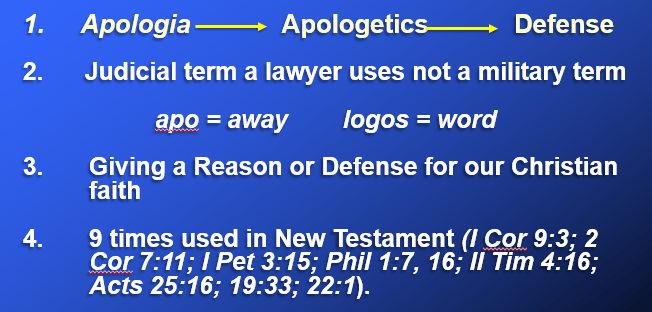
FAITH CONFESSION AND DEFENSE APOLOGIA OF FAITH

Romans 10 v 5-13

For Moses writes that the man who practices the righteousness which is based on law [with all its intricate demands] shall live by it. 6 But the righteousness based on faith [which produces a right relationship with Him] says the following: “Do not say in your heart, ‘Who will ascend into Heaven?’ that is, to bring Christ down; 7 or, ‘Who will descend into the abyss?’ that is, to bring Christ up from the dead [as if we had to be saved by our own efforts, doing the impossible].” 8 But what does it say? “The word is near you, in your mouth and in your heart”—that is, the word [the message, the basis] of faith which we preach—9 because if you acknowledge and confess with your mouth that Jesus is Lord [recognizing His power, authority, and majesty as God], and believe in your heart that God raised Him from the dead, you will be saved. 10 For with the heart a person believes [in Christ as Savior] resulting in his justification [that is, being made righteous—being freed of the guilt of sin and made acceptable to God]; and with the mouth he acknowledges and confesses [his faith openly], resulting in and confirming [his] salvation. 11 For the Scripture says, “Whoever believes in Him [whoever adheres to, trusts in, and relies on Him] will not be disappointed [in his expectations].” 12 For there is no distinction between Jew and Gentile; for the same Lord is Lord over all [of us], and [He is] abounding in riches (blessings) for all who call on Him [in faith and prayer]. 13 For “whoever calls on the name of the Lord [in prayer] will be saved.”

1 Corinthians 15 v 1-4

Now brothers and sisters, let me remind you [once again] of the good news [of salvation] which I preached to you, which you welcomed and accepted and on which you stand [by faith]. 2 By this faith you are saved [reborn from above—spiritually transformed, renewed, and set apart for His purpose], if you hold firmly to the word which I preached to you, unless you believed in vain [just superficially and without complete commitment].

3 For I passed on to you as of first importance what I also received, that Christ died for our sins according to [that which] the Scriptures [foretold], 4 and that He was buried, and that He was [bodily] raised on the third day according to [that which] the Scriptures [foretold],

1 Corinthian v 12-19

Now if Christ is preached as raised from the dead, how is it that [c]some among you say that there is no resurrection of the dead? 13 But if there is no resurrection of the dead, then not even Christ has been raised; 14 and if Christ has not been raised, then our preaching is vain [useless, amounting to nothing], and your faith is also vain [imaginary, unfounded, devoid of value and benefit—not based on truth]. 15 We are even discovered to be false witnesses [misrepresenting] God, because we testified concerning Him that He raised Christ, whom He did not raise, if in fact the dead are not raised. 16 For if the dead are not raised, then Christ has not been raised, either; 17 and if Christ has not been raised, your faith is worthless and powerless [mere delusion]; you are still in your sins [and under the control and penalty of sin]. 18 Then those also who have fallen asleep in Christ are lost. 19 If we who are [abiding] in Christ have hoped only in this life [and this is all there is], then we are of all people most miserable and to be pitied.

1 Corinthians 15 v 20-28 But now [as things really are] Christ has in fact been raised from the dead, [and He became] the first fruits [that is, the first to be resurrected with an incorruptible, immortal body, foreshadowing the resurrection] of those who have fallen asleep [in death]. 21 For since [it was] by a man that death came [into the world], it is also by a Man that the resurrection of the dead has come. 22 For just as [d]in Adam all die, so also [e]in Christ all will be made alive. 23 But each in his own order: Christ the first fruits, then those who are Christ’s [own will be resurrected with incorruptible, immortal bodies] at His coming. 24 After that comes the end (completion), when He hands over the kingdom to God the Father, after He has made inoperative and abolished every ruler and every authority and power. 25 For Christ must reign [as King] until He has put all His enemies under His feet. 26 The last enemy to be abolished and put to an end is death. 27 For He (the Father) has put all things in subjection under His (Christ’s) feet. But when He says, “All things have been put in subjection [under Christ],” it is clear that He (the Father) who put all things in subjection to Him (Christ) is excepted [since the Father is not in subjection to His own Son]. 28 However, when all things are subjected to Him (Christ), then the Son Himself will also be subjected to the One (the Father) who put all things under Him, so that God may be all in all [manifesting His glory without any opposition, the supreme indwelling and controlling factor of life].

My friend, don’t be deceived by the wisdom of the present age, which says that truth cannot be known, and that material, scientific evidence must be obtained before anything can be proven. As John writes, the proof is in our hearts, and only those who have tasted the everlasting water which God has so freely offered (John 6) can be assured of its never-ending benefit.

Here are the facts: Jesus was born; He died; He rose again on the third day; He is living in the hearts of all those who trust in Him.

And the Apostle John says . . . of this we can be assured!

Prayer Point:  Thank the Lord for writing down an eyewitness account of His ministry, His miracles, and His mission, so that “you may know that you have eternal life.” Then, thank Him for giving you assurance in your heart, even when you are crippled by doubt.

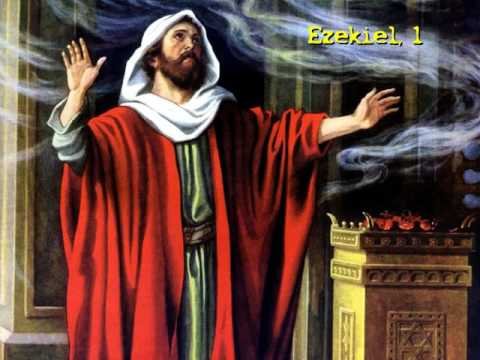
Ezekiel an introduction

BACKGROUND

Ezekiel lived during a time of international upheaval. The Assyrian empire that had once conquered the Syro-Palestinian area and destroyed the northern kingdom of Israel (which fell to the Assyrians in 722–721 b.c.) began to crumble under the blows of a resurgent Babylon. In 612 the great Assyrian city of Nineveh fell to a combined force of Babylonians and Medes. Three years later, Pharaoh Neco II of Egypt marched north to assist the Assyrians and to try to reassert Egypt’s age-old influence over Canaan and Aram (Syria). At Megiddo, King Josiah of Judah, who may have been an ally of Babylon as King Hezekiah had been, attempted to intercept the Egyptian forces but was crushed, losing his life in the battle (see 2Ki 23:29–30;2Ch 35:20–24).

Jehoahaz, a son of Josiah, ruled Judah for only three months, after which Neco installed Jehoiakim, another son of Josiah, as his royal vassal in Jerusalem (609 b.c.). In 605 the Babylonians overwhelmed the Egyptian army at Carchemish (see Jer 46:2), then pressed south as far as the Philistine plain. In the same year, Nebuchadnezzar was elevated to the Babylonian throne and Jehoiakim shifted allegiance to him. When a few years later the Egyptian and Babylonian forces met in a standoff battle, Jehoiakim rebelled against his new overlord.

Nebuchadnezzar soon responded by sending a force against Jerusalem, subduing it in 597 b.c. Jehoiakim’s son Jehoiachin and about 10,000 Jews (see 2Ki 24:14), including Ezekiel, were exiled to Babylon, where they joined those who had been exiled in Jehoiakim’s “third year” (see Da 1:1 and note). Nebuchadnezzar placed Jehoiachin’s uncle, Zedekiah, on the throne in Jerusalem, but within five or six years he too rebelled. The Babylonians laid siege to Jerusalem in 588, and in July, 586, the walls were breached and the city plundered. On Aug. 14, 586, the city and temple were burned.

Under Nebuchadnezzar and his successors, Babylon dominated the international scene until it was crushed by Cyrus the Persian in 539 b.c. The reign of the house of David came to an end; the kingdom of Judah ceased to be an independent nation; Jerusalem and the Lord’s temple lay in ruins.

AUTHOR

person

What is known of Ezekiel is derived solely from the book that bears his name. He was among the Jews exiled to Babylon by Nebuchadnezzar in 597 b.c., and there among the exiles he received his call to become a prophet (see 1:1–3). He was married (see 24:15–18), lived in a house of his own (see 3:24; 8:1) and along with his fellow exiles, though confined to Babylonia, had a relatively free existence there.

He was of a priestly family (see NIV text note on 1:3) and therefore was eligible to serve as a priest. As a priest-prophet called to minister to the exiles (separated from the temple of the Lord with its symbolism, sacrifices, priestly ministrations and worship rituals), his message had much to do with the temple (see especially chs. 8–11; 40–48) and its ceremonies.

Ezekiel was obviously a man of broad knowledge, not only of his own national traditions but also of international affairs and history. His acquaintance with general matters of culture, from shipbuilding to literature, is equally amazing. He was gifted with a powerful intellect and was capable of grasping large issues and of dealing with them in grand and compelling images. His style is often detached, but in places it is passionate and earthy (see chs. 16; 23).

More than any other prophet (more even than Hosea and Jeremiah) he was directed to involve himself personally in the divine word by acting it out in prophetic symbolism.

OCCASION, PURPOSE AND SUMMARY OF CONTENTS

Though Ezekiel lived with his fellow exiles in Babylon, his divine call forced him to suppress any natural expectations he may have had of an early return to an undamaged Jerusalem. For the first seven years of his ministry (593–586 b.c.) he faithfully relayed to his fellow Jews the stern, heart-rending, hope-crushing word of divine judgment: Because of all her sins, Jerusalem would fall (see chs. 1–24). The fact that Israel was God’s covenant people and that Jerusalem was the city of his temple would not bring their early release from exile or prevent Jerusalem from being destroyed (see Jer 29–30). The only hope the prophet was authorized to extend to his hearers was that of living at peace with themselves and with God during their exile.

After being informed by the Lord that Jerusalem was under siege and would surely fall (24:1–14), Ezekiel was told that his beloved wife would soon die. The delight of his eyes would be taken from him just as the temple, the delight of Israel’s eyes, would be taken from her. He was not to mourn openly for his wife, as a sign to his people not to mourn openly for Jerusalem (24:15–27). He was then directed to pronounce a series of judgments on the seven nations of Ammon, Moab, Edom, Philistia, Tyre, Sidon and Egypt (chs. 25–32). The day of God’s wrath was soon to come, but not on Israel alone.

Once news was received that Jerusalem had fallen, Ezekiel’s message turned to the Lord’s consoling word of hope for his people—they would experience revival, restoration and a glorious future as the redeemed and perfected kingdom of God in the world (chs. 33–48).

DATE

trowel

Since the book of Ezekiel contains more dates (see chart, p. 1661) than any other OT prophetic book, its prophecies can be dated with considerable precision. In addition, modern scholarship, using archaeology (Babylonian annals on cuneiform tablets) and astronomy (accurate dating of eclipses referred to in ancient archives), provides precise modern calendar equivalents.

Twelve of the 13 dates specify times when Ezekiel received a divine message. The other is the date of the arrival of the messenger who reported the fall of Jerusalem (33:21).

Having received his call in July, 593 b.c., Ezekiel was active for 22 years, his last dated oracle being received in April, 571 (see 29:17). If the “thirtieth year” of 1:1refers to Ezekiel’s age at the time of his call, his prophetic career exceeded a normal priestly term of service by two years (see Nu 4:3). His period of activity coincides with Jerusalem’s darkest hour, preceding the 586 destruction by 7 years and following it by 15.

THEMES

The OT in general and the prophets in particular presuppose and teach God’s sovereignty over all creation, over people and nations and the course of history. And nowhere in the Bible are God’s initiative and control expressed more clearly and pervasively than in the book of Ezekiel. From the first chapter, which graphically describes the overwhelming invasion of the divine presence into Ezekiel’s world, to the last phrase of Ezekiel’s vision (“the Lord is there”) the book sounds and echoes God’s sovereignty.

This sovereign God resolved that he would be known and acknowledged. Approximately 65 occurrences of the clause (or variations) “Then they will know that I am the Lord” testify to that divine desire and intention (see note on 6:7). Overall, chs. 1–24 teach that God will be revealed in the fall of Jerusalem and the destruction of the temple; chs. 25–32 teach that the nations likewise will know God through his judgments; and chs. 33–48promise that God will be known through the restoration and spiritual renewal of Israel.

God’s total sovereignty is also evident in his mobility. He is not limited to the temple in Jerusalem. He can respond to his people’s sin by leaving his sanctuary in Israel, and he can graciously condescend to visit his exiled children in Babylon.

God is free to judge, and he is equally free to be gracious. His stern judgments on Israel ultimately reflect his grace. He allows the total dismemberment of Israel’s political and religious life so that her renewed life and his presence with her will be clearly seen as a gift from the Lord of the universe.

Furthermore, as God’s spokesman, Ezekiel’s “son of man” status (see note on 2:1) testifies to the sovereign God he was commissioned to serve.

LITERARY FEATURES

The three major prophets (Isaiah, Jeremiah, Ezekiel) and Zephaniah all have the same basic sequence of messages: (1) oracles against Israel, (2) oracles against the nations, (3) consolation for Israel. In no other book is this pattern clearer than in Ezekiel (see Outline).

Besides clarity of structure, the book of Ezekiel reveals symmetry. The vision of the desecrated temple fit for destruction (chs. 8–11) is balanced by the vision of the restored and purified temple (chs. 40–48). The God presented in agitated wrath (ch. 1) is also shown to be a God of comfort (“the Lord is there,” 48:35). Ezekiel’s call to be a watchman announcing divine judgment (ch. 3) is balanced by his call to be a watchman announcing the new age to follow (ch. 33). In one place (ch. 6) the mountains of Israel receive a prophetic rebuke, but in another (ch. 36) they are consoled.

Prophetic books are usually largely poetic, the prophets apparently having spoken in imaginative and rhythmic styles. Most of Ezekiel, however, is prose, perhaps due to his priestly background. His repetitions have an unforgettable hammering effect, and his priestly orientation is also reflected in a case-law type of sentence (compare 3:19, “If you do warn the wicked . . .,” with Ex 21:2, “If you buy a Hebrew servant . . .”).

The book contains four major visions (chs. 1–3; 8–11; 37:1–14; 40–48) and 12 symbolic acts (3:22–26; 4:1–3;4:4–8; 4:9–11; 4:12–14; 5:1–3; 12:1–16; 12:17–20; 21:6–7; 21:18–24; 24:15–24; 37:15–28). Five messages are in the form of parables (chs. 15–17; 19; 23).

THEOLOGICAL SIGNIFICANCE

Other prophets deal largely with Israel’s idolatry, with her moral corruption in public and private affairs, and with her international intrigues and alliances on which she relied instead of the Lord. They announce God’s impending judgment on his rebellious nation but speak also of a future redemption: a new exodus, a new covenant, a restored Jerusalem, a revived Davidic dynasty, a worldwide recognition of the Lord and his Messiah and a paradise-like peace.

The contours and sweep of Ezekiel’s message are similar, but he focuses uniquely on Israel as the holy people of the holy temple, the holy city and the holy land. By defiling her worship, Israel had rendered herself unclean and had defiled temple, city and land. From such defilement God could only withdraw and judge his people with national destruction.

But God’s faithfulness to his covenant and his desire to save were so great that he would revive his people once more, shepherd them with compassion, cleanse them of all their defilement, reconstitute them as a perfect expression of his kingdom under the hand of “David” (34:23–24), overwhelm all the forces and powers arrayed against them, display his glory among the nations and restore the glory of his presence to the holy city.

Ezekiel powerfully depicts the grandeur and glory of God’s sovereign rule (see Themes) and his holiness, which he jealously safeguards. The book’s theological center is the unfolding of God’s saving purposes in the history of the world—from the time in which he must withdraw from the defilement of his covenant people to the culmination of his grand design of redemption. The message of Ezekiel, which is ultimately eschatological, anticipates—even demands—God’s future works in history proclaimed by the NT.


OUTLINE

  • Oracles of Judgment against Israel (chs. 1–24)
    • Ezekiel’s Inaugural Vision (chs. 1–3)
      1. Overwhelming display of the glory of the Lord (ch. 1)
      2. Ezekiel’s call to be a prophet (2:1—3:15)
      3. Ezekiel’s task as watchman (3:16–21)
      4. Restraints on Ezekiel’s prophetic ministry (3:22–27)
    • Symbolic Acts Portraying the Siege of Jerusalem (chs. 4–5)
      1. Ezekiel’s symbolic siege of Jerusalem (ch. 4)
      2. God’s razor of judgment at work (ch. 5)
    • Oracles of Divine Judgment (chs. 6–7)
      1. Doom for the mountains of Israel (ch. 6)
      2. The end has come on the land (ch. 7)
    • Corruption of the Temple and Its Consequences (chs. 8–11)
      1. Idolatry in the temple (ch. 8)
      2. Judgment on the idolaters (ch. 9)
      3. God’s glory departs from the temple (ch. 10)
      4. God’s sure judgment on Jerusalem (11:1–14)
      5. Those in exile to be restored (11:15–21)
      6. Conclusion of the vision (11:22–25)
    • Ezekiel Symbolizes the Exile of Jerusalem (ch. 12)
      1. An exile’s baggage (12:1–16)
      2. Anxious eating (12:17–20)
      3. The nearness of judgment (12:21–28)
    • Oracles concerning God’s Judgment on Judah (13:1—24:14)
      1. Condemnation of the false prophets (ch. 13)
      2. Condemnation of the idolaters (14:1–11)
      3. No mediators can turn back God’s judgment (14:12–23)
      4. Jerusalem likened to a piece of burnt vine (ch. 15)
      5. Jerusalem allegorized as an adulterous wife (ch. 16)
      6. Allegory of two eagles and a vine (ch. 17)
      7. The soul who sins will die (ch. 18)
      8. A lament over the fall of Jerusalem’s kings (ch. 19)
      9. Apostate Israel purged and renewed through judgment (20:1–44)
      10. Babylon, God’s sword of judgment (20:45—21:32)
      11. The sins for which Jerusalem is judged (ch. 22)
      12. Jerusalem and Samaria allegorized as adulterous sisters (ch. 23)
      13. Jerusalem cooked over the fire (24:1–14)
    • The Death of Ezekiel’s Wife Symbolizes Jerusalem’s Fall (24:15–27)
  • Oracles of Judgment against the Nations (chs. 25–32)
  • Oracles of Consolation for Israel (chs. 33–48)
    • Renewal of Ezekiel’s Call as Watchman (33:1–20)
    • Jerusalem’s Fall Reported and Its Remnant Condemned (33:21–33)
    • The Lord to Be Israel’s Shepherd (ch. 34)
    • A Prophecy against Edom (ch. 35)
    • Israel’s Complete Restoration Announced (ch. 36)
    • Israel’s Dry Bones Revived and Unity Restored (ch. 37)
      1. Israel’s dry bones restored to life (37:1–14)
      2. Again one nation under one King (37:15–28)
    • The Great Battle of the Ages (chs. 38–39)
    • The New Order for Purified Israel (chs. 40–48)
      1. The temple area restored (40:1–47)
      2. The new temple (40:48—42:20)
      3. God’s glory returns to the temple (43:1–12)
      4. Restoration of the great altar (43:13–27)
      5. Restoration of the priesthood (ch. 44)
      6. Restoration of the theocratic order (chs. 45–46)
      7. The river of life from the temple (47:1–12)
      8. The boundaries of the land (47:13–23)
      9. The distribution of the land (48:1–29)
      10. The twelve gates of the new city (48:30–35

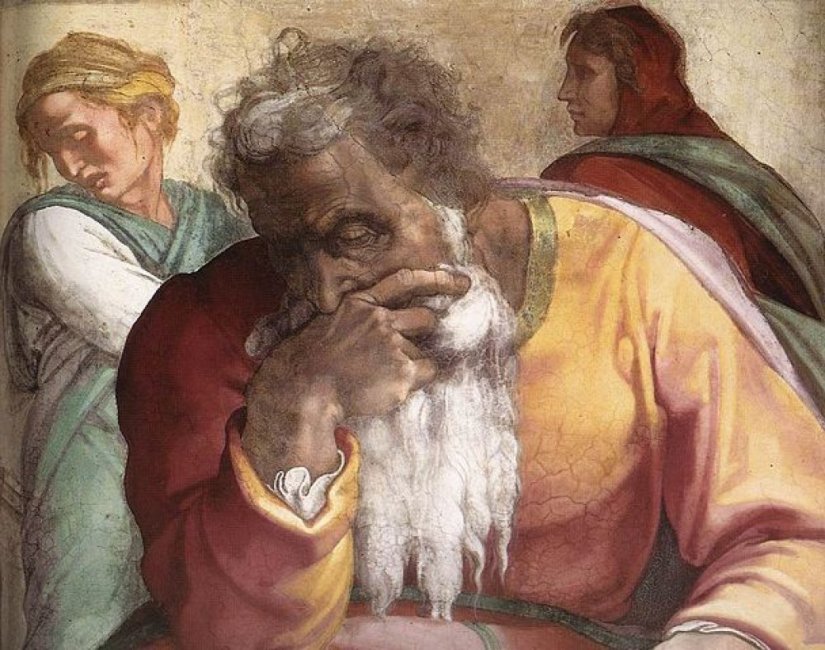
Jeremiah An Introduction to the book of Jeremiah

AUTHOR AND DATE

The book preserves an account of the prophetic ministry of Jeremiah, whose personal life and struggles are shown to us in greater depth and detail than those of any other OT prophet. The meaning of his name is uncertain. Suggestions include “The Lord exalts” and “The Lord establishes,” but a more likely proposal is “The Lord throws,” either in the sense of “hurling” the prophet into a hostile world or of “throwing down” the nations in divine judgment for their sins. Jeremiah’s prophetic ministry began in 626 b.c. and ended sometime after 586 (see notes on 1:2–3). His ministry was immediately preceded by that of Zephaniah. Habakkuk was a contemporary, and Obadiah may have been also. Since Ezekiel began his ministry in Babylon in 593, he too was a late contemporary of the great prophet in Jerusalem. How and when Jeremiah died is not known; Jewish tradition, however, asserts that while living in Egypt he was put to death by being stoned (cf. Heb 11:37).

Jeremiah was a member of the priestly household of Hilkiah. His hometown was Anathoth (1:1), so he may have been a descendant of Abiathar (1Ki 2:26), a priest during the days of King Solomon. The Lord commanded Jeremiah not to marry and raise children because the impending divine judgment on Judah would sweep away the next generation (16:1–4). Primarily a prophet of doom, he attracted only a few friends, among whom were Ahikam (26:24), Gedaliah (Ahikam’s son, 39:14) and Ebed-Melech (38:7–13; cf. 39:15–18). Jeremiah’s closest companion was his faithful secretary, Baruch, who wrote down Jeremiah’s words as the prophet dictated them (36:4–32). He was advised by Jeremiah not to succumb to the temptations of ambition but to be content with his lot (ch. 45). He also received from Jeremiah and deposited for safekeeping a deed of purchase (32:11–16), and accompanied the prophet on the long road to exile in Egypt (43:6–7). It is possible that Baruch was also responsible for the final compilation of the book of Jeremiah itself, since no event recorded in chs. 1–51 occurred after 580 b.c. (ch. 52 is an appendix added by a later hand).

Given to self-analysis and self-criticism (10:24), Jeremiah has revealed a great deal about himself. Although timid by nature (1:6), he received the Lord’s assurance that he would become strong and courageous (1:18; 6:27; 15:20). In his “confessions” (see 11:18–23;12:1–4; 15:10–21; 17:12–18; 18:18–23; 20:7–18 and notes) he laid bare the deep struggles of his inmost being, sometimes making startling statements about his feelings toward God (12:1; 15:18). On occasion, he engaged in calling for redress against his personal enemies (12:1–3; 15:15; 17:18; 18:19–23; see note on Ps 5:10)—a practice that explains the origin of the English word “jeremiad,” referring to a denunciatory tirade or complaint. Jeremiah, so often expressing his anguish of spirit (4:19; 9:1; 10:19–20; 23:9), has justly been called the “weeping prophet.” But it is also true that the memory of his divine call (1:17) and the Lord’s frequent reaffirmations of his commissioning as a prophet (see, e.g., 3:12; 7:2,27–28; 11:2,6; 13:12–13; 17:19–20) made Jeremiah fearless and faithful in the service of his God (cf. 15:20).

BACKGROUND

Jeremiah began prophesying in Judah halfway through the reign of Josiah (640–609 b.c.) and continued throughout the reigns of Jehoahaz (609), Jehoiakim (609–598), Jehoiachin (598–597) and Zedekiah (597–586). It was a period of storm and stress when the doom of entire nations—including Judah itself—was being sealed. The smaller states of western Asia were often pawns in the power plays of such imperial giants as Egypt, Assyria and Babylon, and the time of Jeremiah’s ministry was no exception. Ashurbanipal, last of the great Assyrian rulers, died in 627. His successors were no match for Nabopolassar, the founder of the Neo-Babylonian empire, who began his rule in 626 (the year of Jeremiah’s call to prophesy). Soon after Assyria’s capital city Nineveh fell under the onslaught of a coalition of Babylonians and Medes in 612, Egypt (no friend of Babylon) marched northward in an attempt to rescue Assyria, which would soon be destroyed. King Josiah of Judah made the mistake of trying to stop the Egyptian advance, and his untimely death near Megiddo in 609 at the hands of Pharaoh Neco II was the sad result (2Ch 35:20–24). Jeremiah, who had found a kindred spirit in the godly Josiah and perhaps had proclaimed the messages recorded in 11:1–8; 17:19–27 during the king’s reformation movement, lamented Josiah’s death (see 2Ch 35:25 and note).

Josiah’s son Jehoahaz (see NIV text note on 22:11), also knwn as Shallum, is mentioned only briefly in the book of Jeremiah (22:10b–12), and then in an unfavorable way. Neco put Jehoahaz in chains and made Eliakim, another of Josiah’s sons, king in his place, renaming him Jehoiakim. Jehoahaz had ruled for a scant three months (2Ch 36:2), and his reign marks the turning point in the king’s attitude toward Jeremiah. Once the friend and confidant of the king, the prophet now entered a dreary round of persecution and imprisonment, alternating with only brief periods of freedom (20:1–2; 26:8–9; 32:2–3; 33:1; 36:26; 37:12–21; 38:6–13,28).

Jehoiakim remained relentlessly hostile toward Jeremiah. On one occasion, when an early draft of the prophet’s writings was being read to Jehoiakim (36:21), the king used a scribe’s knife to cut the scroll apart, three or four columns at a time, and threw it piece by piece into the firepot in his winter apartment (vv. 22–23). At the Lord’s command, however, Jeremiah simply dictated his prophecies to Baruch a second time, adding “many similar words” to them (v. 32).

Just prior to this episode in Jeremiah’s life, an event of extraordinary importance took place that changed the course of history: In 605 b.c., the Egyptians were crushed at Carchemish on the Euphrates by Nebuchadnezzar (46:2), the gifted general who succeeded his father Nabopolassar as ruler of Babylon that same year. Neco returned to Egypt after heavy losses, and Babylon was given a virtually free hand in western Asia for the next 70 years. Nebuchadnezzar besieged Jerusalem in 605, humiliating Jehoiakim (Da 1:1–2) and carrying off Daniel and his three companions to Babylon (Da 1:3–6). Later, in 598–597, Nebuchadnezzar attacked Jerusalem again, and the rebellious Jehoiakim was heard of no more. His son Jehoiachin ruled Judah for only three months (2Ch 36:9). Jeremiah foretold the captivity of Jehoiachin and his followers (22:24–30), a prediction that was later fulfilled (24:1; 29:1–2).

Mattaniah, Jehoiachin’s uncle and a son of Josiah, was renamed Zedekiah and placed on Judah’s throne by Nebuchadnezzar in 597 b.c. (37:1; 2Ch 36:9–14). Zedekiah, a weak and vacillating ruler, sometimes befriended Jeremiah and sought his advice but at other times allowed the prophet’s enemies to mistreat and imprison him. Near the end of Zedekiah’s reign, Jeremiah entered into an agreement with him to reveal God’s will to him in exchange for his own personal safety (38:14–27). Even then the prophet was under virtual house arrest until Jerusalem was captured in 586 (38:28).

While trying to flee the city, Zedekiah was overtaken by the pursuing Babylonians. In his presence his sons were executed, after which he himself was blinded by Nebuchadnezzar (39:1–7). Nebuzaradan, commander of the imperial guard, advised Jeremiah to live with Gedaliah, whom Nebuchadnezzar had made governor over Judah (40:1–6). After a brief term of office, Gedaliah was murdered by his opponents (41:1–9). Others in Judah feared Babylonian reprisal and fled to Egypt, taking Jeremiah and Baruch with them (43:4–7). By that time the prophet was probably over 70 years old. His last recorded words are found in 44:24–30, the last verse of which is the only explicit reference in the Bible to Pharaoh Hophra, who ruled Egypt from 589 to 570 b.c.

THEOLOGICAL THEMES AND MESSAGE

Referred to frequently as “Jeremiah the prophet” in the book that bears his name (20:2; 25:2; 28:5,10–12,15; 29:1,29; 32:2; 34:6;36:8,26; 37:2,3,6; 38:9–10,14; 42:2,4; 43:6; 45:1; 46:1,13; 47:1; 49:34; 50:1) and elsewhere (2Ch 36:12; Da 9:2; Mt 2:17; 27:9; see Mt 16:14), Jeremiah was ever conscious of his call from the Lord (1:5; 15:19) to be a prophet. As such, he proclaimed words given him by God himself (19:2) and therefore certain of fulfillment (28:9; 32:24). Jeremiah had only contempt for false prophets (14:13–18; 23:13–40; 27:14–18) like Hananiah (ch. 28) and Shemaiah (29:24–32). Many of his own predictions were fulfilled in the short term (e.g.,16:15; 20:4; 25:11–14; 27:19–22; 29:10; 34:4–5; 43:10–11; 44:30; 46:13), and others were—or will yet be—fulfilled in the long term (e.g., 23:5–6; 30:8–9; 31:31–34; 33:15–16).

As hinted earlier, an aura of conflict surrounded Jeremiah almost from the beginning. He lashed out against the sins of his countrymen (44:23), scoring them severely for their idolatry (16:10–13,20; 22:9; 32:29; 44:2–3,8,17–19,25)—which sometimes even involved sacrificing their children to foreign gods (see7:30–34 and notes). But Jeremiah loved the people of Judah in spite of their sins, and he prayed for them (14:7,20) even when the Lord told him not to (7:16; 11:14; 14:11).

Judgment is one of the all-pervasive themes in Jeremiah’s writings, though he was careful to point out that repentance, if sincere, would postpone the otherwise inevitable. His counsel of submission to Babylon and his message of “life as usual” for the exiles of the early deportations branded him as a traitor in the eyes of many. Actually, of course, his advice not to rebel against Babylon marked him as a true patriot, a man who loved his own people too much to stand by silently and watch them destroy themselves. By warning them to submit and not rebel, Jeremiah was revealing God’s will to them—always the most sensible prospect under any circumstances.

For Jeremiah, God was ultimate. The prophet’s theology conceived of the Lord as the Creator of all that exists (10:12–16; 51:15–19), as all-powerful (32:27; 48:15; 51:57), as everywhere present (23:24). Jeremiah ascribed the most elevated attributes to the God whom he served (32:17–25), viewing him as the Lord not only of Judah but also of the nations (5:15; 18:7–10; 25:17–28; chs. 46–51).

At the same time, God is very much concerned about individual people and their accountability to him. Jeremiah’s emphasis in this regard (see, e.g., 31:29–30) is similar to that of Ezekiel (see Eze 18:2–4), and the two men have become known as the “prophets of individual responsibility.” The undeniable relationship between sin and its consequences, so visible to Jeremiah as he watched his beloved Judah in her death throes, made him—in the pursuit of his divine vocation—a fiery preacher (5:14; 20:9; 23:29) of righteousness, and his oracles have lost none of their power with the passing of the centuries.

Called to the unhappy task of announcing the destruction of the kingdom of Judah (thoroughly corrupted by the long and evil reign of Manasseh and only superficially affected by Josiah’s efforts at reform), it was Jeremiah’s commission to lodge God’s indictment against his people and proclaim the end of an era. At long last, the Lord was about to inflict on the remnant of his people the ultimate covenant curse (see Lev 26:31–33; Dt 28:49–68). He would undo all that he had done for them since the day he brought them out of Egypt. It would then seem that the end had come, that Israel’s stubborn and uncircumcised (unconsecrated) heart had sealed her final destiny, that God’s chosen people had been cast off, that all the ancient promises and covenants had come to nothing.

But God’s judgment of his people (and the nations), though terrible, was not to be the last word, the final work of God in history. Mercy and covenant faithfulness would triumph over wrath. Beyond the judgment would come restoration and renewal. Israel would be restored, the nations that crushed her would be crushed, and the old covenants (with Israel, David and the Levites) would be honored. God would make a new covenant with his people in which he would write his law on their hearts (see 31:31–34 and notes; see also Heb 8:8–12 and note) and thus consecrate them to his service. The new covenant was cast in the form of ancient Near Eastern royal grant treaties and contained unconditional, gracious and profoundly spiritual, moral, ethical and relational promises (see chart, p. 23). The house of David would rule God’s people in righteousness, and faithful priests would serve. God’s commitment to Israel’s redemption was as unfailing as the secure order of creation (ch. 33).

Jeremiah’s message illumined the distant as well as the near horizon. It was false prophets who proclaimed peace to a rebellious nation, as though the God of Israel’s peace was indifferent to her unfaithfulness. But the very God who compelled Jeremiah to denounce sin and pronounce judgment was the God who authorized him to announce that the divine wrath had its bounds, its 70 years. Afterward forgiveness and cleansing would come—and a new day, in which all the old expectations, aroused by God’s past acts and his promises and covenants, would yet be fulfilled in a manner transcending all God’s mercies of old.

LITERARY FEATURES

Jeremiah is the longest book in the Bible, containing more words than any other book. Although a number of chapters were written mainly in prose (chs. 7; 11; 16; 19; 21; 24–29; 32–45), including the appendix (ch. 52), most sections are predominantly poetic in form. Jeremiah’s poetry is lofty and lyrical. A creator of beautiful phrases, he has given us an abundance of memorable passages (e.g.,2:13,26–28; 7:4,11,34; 8:20,22; 9:23–24; 10:6–7,10,12–13; 13:23; 15:20; 17:5–9; 20:13; 29:13; 30:7,22; 31:3,15,29–30,31–34; 33:3; 51:10).

Poetic repetition was used by Jeremiah with particular skill (see, e.g., 4:23–26; 51:20–23). He understood the effectiveness of repeating a striking phrase over and over. An example is “sword, famine and plague,” found in 15 separate verses (14:12; 21:7,9;24:10; 27:8,13; 29:17–18; 32:24,36; 34:17; 38:2; 42:17,22; 44:13). He made use of cryptograms (see NIV text notes on 25:26; 51:1,41) on appropriate occasions. Alliteration and assonance were also a part of his literary style, examples being zarim wezeruha(“foreigners . . . to winnow her,” 51:2) and pah∆ad wapah∆at wapah∆(“Terror and pit and snare,” 48:43; see note on Isa 24:17). Like Ezekiel, Jeremiah was often instructed to use symbolism to highlight his message: a ruined and useless belt (13:1–11), a smashed clay jar (19:1–12), a yoke of straps and crossbars (ch. 27), large stones in a brick pavement (43:8–13). Symbolic value is also seen in the Lord’s commands to Jeremiah not to marry and raise children (16:1–4), not to enter a house where there is a funeral meal or where there is feasting (16:5–9), and to buy a field in his hometown, Anathoth (32:6–15). Similarly, the Lord used visual aids in conveying his message to Jeremiah: potter’s clay (18:1–10), two baskets of figs (ch. 24).


OUTLINE

Unlike Ezekiel, the oracles in Jeremiah are not arranged in chronological order. Had they been so arranged, the sequence of sections within the book would have been approximately as follows: 1:1—7:15; ch. 26; 7:16—20:18; ch. 25; chs. 46–51; 36:1–8; ch. 45; 36:9–32;ch. 35; chs. 21–24; chs. 27–31; 34:1–7; 37:1–10; 34:8–22; 37:11—38:13; 39:15–18; chs. 32–33; 38:14—39:14; 52:1–30; chs. 40–44;52:31–34. The outline below represents an analysis of the book of Jeremiah in its present canonical order.

From Jacob to Jesus

Genesis 49:10; Luke 1:33

The study in the life of Jacob is different from all the rest. When we began, he was still in his mother’s womb. When Genesis brings his story to a close, he is buried in the cave of Machpelah, along with his father and grandfather. In between, this man of restless faith never stopped moving—from Beersheba to Bethel to Haran to Gilead to the Jabbok to Succoth to Shechem to Bethel again to Ephrathah to Migdal Eder to Mamre to Beersheba again to Egypt and finally back to the Promised Land where he was buried in the Cave of Mach-pelah—and those are just the moves we know about. In 147 years Jacob never let the grass grow under his feet.

But now his story is over, and he passes into the list of great Bible characters. Compared to Abraham, his faith was not as great. Compared to Joseph, his worldly achievements were much less. Compared to Isaac, Jacob did very well for himself. He was not the greatest man in the Old Testament, but he belongs not far from the top of the list. Others did more, perhaps, but no one left such an indelible imprint. For nearly 4000 years since his death, every time someone has mentioned the nation of Israel, they have paid unknowing tribute to Jacob.

Our purpose in this final study is to place Jacob into the larger context of biblical revelation. A river of connected history flows from Genesis to Revelation, spanning thousands of years and hundreds of generations. Those who believe the Bible have long argued that although it contains 66 books written by many different people over 1500 years, it has but one message: God’s plan to bring salvation to the world through Jesus Christ. In one way or the other, everything in the Bible fits around that great theme.

Old Testament—Anticipation

Gospels—Incarnation

Acts—Proclamation

Epistles—Explanation

Revelation—Consummation

The Old Testament says, “He is coming!” The Gospels say, “He is here!” The book of Acts says, “He has come!” The Epistles say, “He is Lord!” Revelation says, “He is coming again!”

History, then, is His Story. Everything in the Bible either leads up to his coming or explains the meaning of his coming or promises that he will come again. Some years ago Norm Geisler wrote a book called To Under-stand the Bible, Look for Christ. In his book he demonstrated how Christ is seen in all 66 books of the Bible. In Genesis he is the Seed of the Woman, in Exodus he is the Passover Lamb, in Leviticus he is the Blood Atonement, in Numbers he is the Star of Jacob, and so on. Seen correctly, the Bible is Christocentric—which means it has Christ as its central focus.

In this study we want to discover how Jacob fits into God’s larger plan to bring Jesus Christ to the world. How do you get from Jacob to Jesus? What is the connection between the Heel-Grabber and the Son of God? Is there a thread that runs from Bethel to Bethlehem?

The Unfolding Promise

Our story begins in the Garden of Eden in those tragic few moments after Adam and Eve had eaten the forbidden fruit. Paradise was violated by the entrance of sin. Satan had won, God’s plan had been foiled, our First Parents had fallen from innocence. From that moment sin spread out across the earth, staining everything it touched.

What would God do? How would he deal with people who had chosen to turn away from him? Would he destroy Adam and Eve and start over again? No. Salvation begins with the simple observation that God didn’t give up on the human race. God was determined to do something! He would not let Satan win the battle for planet earth.

The rest of the Old Testament is the progressive unfolding of God’s plan to counteract what happened in Eden. At that point in time God made a promise that, while vague, was the first glimmer of hope after the Fall. That promise can be traced across the centuries as God slowly clarifies the promise by narrowing its scope. The promise in its purest form was this: God would do something about sin by sending someone to the earth. But who and how and where and when?

Let’s trace the unfolding answer to that question:

  1. He will be a member of the human race.

“And I will put enmity between you and the woman, between your offspring and hers; he will crush your head, and you will strike his heel.” (Genesis 3:15) This verse contains an amazing amount of information concerning God’s plan to rescue the human race:

1. God’s plan centered in a specific person.

2. That person would be a man.

3. He will enter the human race by being born of a woman.

4. He will do battle with Satan.

5. Satan will strike a blow against him but will not defeat him.

6. He will crush Satan and his power.

The Deliverer, when he comes, will be the “seed of the woman”—that is, he will not be an angel or some super-natural creature, but he will be a man and will enter the human race by being born of a woman. Genesis 3:15 is thus the first link in the long chain that leads us to Bethlehem.

  1. He will come from the Semitic peoples.

“Blessed be the Lord, the God of Shem!” (Genesis 9:26) After the Flood of Noah, the line begins to narrow. Noah has three sons, but the Deliverer must come from one of them. Noah declared that the Deliverer would come from the descendants of his son Shem—who is the father of the Semitic peoples of the world.

  1. He will be a son of Abraham.

“I will make your name great, and you will be a blessing … all peoples on earth will be blessed through you.” (Genesis 12:2,3) Many years later God spoke to Abraham while he was in Ur of the Chaldees, calling him to leave that city for a land God would afterward show to him. Abraham obeyed and ended up in the Promised Land. This represents a great narrowing down of the promise—from all humanity to one solitary man. The Deliverer must come from among Abraham’s descendants.

  1. He will be a son of Isaac.

“… through your offspring all nations on earth will be blessed…” (Genesis 22:18) The promise narrows even further as God now specifies that the promise will come through Isaac—not through Ishmael.

  1. He will be a son of Jacob.

“… All peoples on earth will be blessed through you and your offspring.” (Genesis 28:14) Isaac had two sons—Jacob and Esau. By custom, Esau should have received the promise as the first-born. But he sold that right to Jacob for a bowl of “red stuff.” Would God honor that transaction? The answer is yes, even though it involved some degree of unfairness on Jacob’s part. In that mysterious dream of the stairway to heaven, God repeats to Jacob the promise previously made to his father and grandfather. Thus the line is narrowed again.

  1. He will come from the tribe of Judah.

“The scepter will not depart from Judah, nor the ruler’s staff from between his feet, until he comes to whom it belongs and the obedience of the nations is his.” (Genesis 49:10) Jacob had 12 sons. Which one would be chosen to carry on the promise? By rights it should have been Reuben, the first-born. But he sinned and was passed over. The same is true of Simeon and Levi. When Jacob came to his fourth son Judah, he uttered one of the most amazing prophecies in all the Bible. For 2000 years Genesis 49:8-12 has been regarded as one of the greatest Messianic prophecies in the Old Testament. Although Jacob was old and dying, with eyes of faith he saw through the mist to a day when the tribe of Judah would take leadership in Israel. The people of Judah would be lion-like in courage and strength. Their tribe would lead the way; the other 11 tribes would follow.

The scepter (the sign of regal authority) would rest with Judah until “Shiloh” comes. “Shiloh” is either a proper name for the Messiah or it is a Hebrew contraction meaning “he to whom it (the scepter) belongs.” If it is a proper name, then “Shiloh” means “the one who brings peace.” That may well be correct, since Isaiah 9:6-7 calls Messiah the “Prince of Peace” and Micah 5:5 says of the Messiah that “he will be their peace.” If it is a Hebrew contraction, Jacob is prophesying that the Messiah will be the rightful ruler of the world. Both thoughts are true, of course, and it is possible that both thoughts are intended by the expression “Shiloh.”

Here is a simple outline of Jacob’s prophecy concerning Judah in Genesis 49:8-12:

  1. Judah will be the dominant tribe in Israel. 82. Judah will be lion-like in courage and strength. 9

    3. The Messiah will come from the tribe of Judah. 10

    4. Messiah’s coming brings peace, joy and prosperity. 11-12

Although Jacob predicts dominance for Judah, this prophecy was not fulfilled for many centuries. Israel’s earli-est leaders came from other tribes:

Moses from Levi

Joshua from Ephraim

Gideon from Manasseh

Samson from Dan

Samuel from Ephraim

Saul from Benjamin

But after Saul was rejected, God chose a man from the tribe of Judah to be king.

  1. He will be a descendant of David.

In I Samuel 16 things begin to change. After rejecting Saul as king, God chooses the youngest son of Jesse, a shepherd boy named David. He eventually becomes the king of Israel. In time he will be considered as Israel’s greatest king, her model warrior, her finest statesman, her poet laureate and “the sweet singer of Israel.” In this one man are bound up all the hopes and dreams of a nation longing for the fulfillment of the ancient promises.

At the height of his career God made an amazing promise to David. “… the Lord himself will estab-lish a house for you … I will raise up your offspring to succeed you … Your house and your kingdom will endure forever before me; your throne will be established forever.” (II Samuel 7:11,12,16) This promise is the most specific yet. Not only will the Deliver come from the line of David, he will also rule over David’s kingdom and will reign upon David’s throne. More than that, David’s “house” and “kingdom” and “throne” will last forever.

These sweeping promises go beyond merely the human rulers who followed David—Solomon, Asa, Hezekiah, Josiah, to name only a few. Although these men were righteous before God, because they were human, they could never reign from David’s throne forever. Mortal men could never exhaust this great promise. It demands a Ruler who will live forever. But what person could fulfill that requirement? David could not have imagined the answer to that question.

The promise has now become very specific indeed. We have moved from a member of the human race to a descendant of Shem to Abraham to Isaac to Jacob to Judah to the tribe of Judah to David to the descendants of David and ultimately to someone who can reign forever on David’s throne.

Who could the Deliver be and where will he come from and how will he be recognized? The next two promises begin to answer those questions.

  1. He will be born of a virgin.

Many years pass as the people of God wait for the Deliverer to come from heaven. Then in the days of King Ahaz God once again narrows the line. This time he specifies how the Deliverer will enter the world: “… the Lord himself will give you a sign: The virgin will be with child and will give birth to a son, and will call his name Immanuel.” (Isaiah 7:14) A virgin birth! I wonder what Ahaz thought when he heard that? Come to think of it, I wonder what Isaiah thought? Only God could have conceived of such an event. The Messiah will indeed be a member of the human race, but his entrance will signal that he is no ordinary person. He enters the world supernaturally because he is the One sent by the Father. In the fact of the virgin birth, we have a hint (though not more than that) of the Messiah’s true identity—fully God (thus miraculously born of a virgin) and fully man (thus born of a woman).

  1. He will be born in Bethlehem.

The line narrows once again—this time to specify exactly where the Messiah will be born. Out of all the cities and villages of Israel, he will be born in Bethlehem. “But you, Bethlehem Ephrathah, though you are small among the clans of Judah, out of you will come for me one who will be ruler over Israel, whose origins are from old, from ancient times.” (Micah 5:2) The phrase “from ancient times” could literally be translated “from days of eternity” (the NIV margin). This ties directly back to Genesis 49:10, which speaks of a ruler who comes from Judah. It also adds the crucial fact that Messiah’s origins are from “days of eternity.” This helps explain how the Messiah can reign on David’s throne forever. Since his origins are from eternity, he will have an eternal reign.

When all these prophecies are taken together, we have an amazing portrait of the Messiah:

  1. He will be a Jew.2. He will come from the tribe of Judah.

    3. He will be a descendant of David.

    4. He will be born in Bethlehem.

    5. He will be born of a virgin.

Who would fit all those qualifications? Many people could fit the first one, fewer the second, fewer still the third, very few the fourth, but only one person in history has ever met the fifth qualification. His name is Jesus Christ.

Where does Jacob fit into all this? He fits in at four specific points:

  1. He is the fifth link in the chain—son of Isaac, father of Judah.2. He is mentioned in the genealogies of Matthew 1 and Luke 3.

    3. He foretold that the Messiah would come from the tribe of Judah.

    4. He gave his name to the nation of Israel.

That last point needs some elaboration. Jacob had two names—Jacob (given by his parents) and Israel (given by God). After his death, the nation eventually called itself “Israel” in his honor—looking to him as its Founding Father. But later in the Old Testament, God often referred to the nation Israel as “the house of Jacob.”

When the angel Gabriel appeared to Mary to announce that she had been chosen by God to give birth to the Messiah, these were the words used to describe what he (the Messiah) would accomplish: “and he will reign over the house of Jacob forever…” (Luke 1:33)

There it is! The last step in our journeys with Jacob. Now we can add one final place to our list:

From Beersheba

To Bethel

To Haran

To Gilead

To the Jabbok

To Succoth

To Shechem

To Bethel again

To Ephrathah

To Migdal Eder

To Mamre

To Beersheba

To Egypt

To the Cave of Machpelah

To Bethlehem!

Jacob was in Bethlehem? Yes, he was there in the person of his direct, physical descendant—Jesus Christ. He was there when Jesus was born as a “son of Jacob” to rule over the “house of Jacob.” And although Jacob and Jesus are separated by 1800 years, Jacob prophesied of his coming and was mentioned at his birth.

One other note. When the Apostle John tried to describe Jesus Christ in Revelation 5:5, he called him “the Lion of the tribe of Judah.” That picture of Christ goes all the way back to Genesis 49:10. When our Lord came the first time, he came as “the Lamb of God, who takes away the sin of the world.” (John 1:29) When he returns to the earth, he will come as “the Lion of the tribe of Judah.” Thus the story of redemption stretches from the first pages of the Bible to the last pages of the Bible. History is His Story!

When we celebrate Christmas, we don’t simply celebrate what happened at Bethlehem. We celebrate God’s plan which started in Eden and continues to the end of history.

Jacob and Esau—One Last Look

Our story is not yet complete. Let’s go back and look at Jacob and Esau one final time. If we roll the tape back to the very beginning, we discover that these two boys were completely different from the moment of their birth. Esau came out first, but Jacob came out grabbing Esau’s heel. That set a pattern that never changed over the years—Esau the leader and Jacob the heel-grabber.

I think it’s perfectly fair to say that Esau had more of the outward characteristics we usually associate with success. He was physically strong, athletic, outgoing, and loved to hunt in the fields. By contrast, Jacob was quiet, domestically-inclined, an introvert and a thinker. With Esau, everything is on the surface—what you see is what you get. When he’s mad, you know it; when he’s happy, you know it. He’s quick to anger, but just as quick to forgive. He is capable of great destruction—and just as capable of great acts of forgiveness and reconciliation.

With Jacob, you just never really know. He is smarter than Esau, a clever man, a deep thinker, a dreamer and a schemer—always looking for a way to get an edge on the competition. If he is angry, you don’t always know it because Jacob knows how to control his emotions.

Who is the better leader? Esau.

Who is the better thinker? Jacob.

Who would you choose to lead your company? Esau.

Who would you choose to close a big deal? Jacob.

Who would be more likely to rally the masses? Esau.

Who would cut corners to save a company from bankruptcy? Jacob.

Twin brothers—born to the same parents, yet fundamentally different people.

What Happened to Esau?

One of the points we passed over in our study of Jacob’s life is what happened to Esau. We know that he moved to the area of Mount Seir and became the founder of the Edomite people. Genesis 36 tells the rest of the story. At first glance, this appears to be just another boring genealogy—but it is much more than that. Verse 1 says, “This is the account of Esau.” Verse 2 tells about his wives, verse 10 about his sons, verse 15 about his descendants, verse 31 about the later rulers of Edom. The list is long and impressive, showing that Esau founded a vast kingdom that flourished long before Israel came out of Egypt. The final verse of Genesis 36 says, “This was Esau the father of the Edomites.” What’s the point? Genesis 36 is telling us about Esau’s great worldly success. He wasn’t a failure from the standpoint of accomplishing something with his life. The dozens of names in this chapter testify to his greatness, to his ability to build a great nation, to rally men to his cause, to establish a nation that would last nearly 2000 years after his death.

Esau Got the World, Jacob Got the Lord! 3. He will be a son of Abraham.

Although it is not evident in our English Bible, Genesis 37:1 is meant to go with all of Genesis 36. That is, one little verse balances against 43 very detailed verses. What does Genesis 37:1 say, “Jacob lived in the land where his father had stayed, the land of Canaan.” That’s it? What does it mean? Moses is contrasting Esau’s great worldly success in Genesis 36 with the struggles of Jacob in Genesis 37. For most of his life, Jacob struggled while Esau rose to prominence. Why is that? Because Jacob had chosen to walk with God and seek his blessing, while Esau (though having his good points) chose to despise the birthright and seek the blessings of this world. God gave Esau worldly prosperity because that was all he was going to get!

Esau got the world!

Jacob got the Lord!

Alan Ross puts this contrast in proper perspective:

In contrast to the expanding, powerful Esau, Jacob was dwelling in the land of the sojournings of his father … He had no kings, no full tribes, no land to govern. He too was a sojourner. Delitzsch notes poignantly that “secular greatness in general grows up far more rapidly than spiritual greatness.” … The promised spiritual blessing demands patience in faith, and emphasizes that waiting while others prosper is a test of faithfulness and perseverance. (Creation and Blessing, p. 588)

From the beginning Esau was blessed with the ability to do well in the world. To borrow a modern phrase, he’s got the “right stuff.” Yet Jacob is the one God chose to stand in the line of promise. For his entire life, Jacob seemed to come in second when compared with his older, more successful brother. At his death—and for many generations thereafter—the sons of Esau appeared to outshine the sons of Jacob.

“You Shall Not Pass Through”

Centuries pass and the sons of Jacob become a great nation in Egypt. At the same time the sons of Esau prosper in Edom. Eventually Moses arises to lead the people of God out of Egypt and back to the Promised Land. But in order to get there quickly, they needed to pass through the land of Edom. Numbers 20 records their request for permission to travel through—and Edom’s belligerent reply: “You may not pass through here; if you try, we will march out and attack you with the sword.” (18) When Israel asked a second time, the reply was simple: “You may not pass through.” (20) Then Edom came out against Israel with a large and powerful army, threatening war if the people of Israel traveled across their land. “Since Edom refused to let them go through their territory, Israel turned away from them.” (21)

This animosity—traceable to the competition that had existed between Jacob and Esau—continued across the years. Once Israel was in the land, Edom became one of her most hated enemies. The two countries fought each other numerous times—and when they didn’t fight, they eyed each other suspiciously. There is constant conflict, bloodshed, warfare, hatred and hostility. The sons of Jacob and the sons of Esau never got along, never trusted each other, never even liked each other.

We come now to the end of the Old Testament era. Edom was eventually conquered and the Romans added some territory to it and called the whole region Idumaea. They then appointed a certain man to be the king of Idumaea. His descendants to the throne considered themselves to be Jews, but the Jews never accepted them—partly because of their connection with Rome, but mostly because of their connection with Edom. To the Jews, these Idumaean kings were half-breed imposters.

A Tale of Two Kings

Then one dark night in Jerusalem two kings met face to face. One sat on a bejeweled throne, heir to a vast fortune, ruler of the land, surrounded by his lackeys, his courtiers, his hangers-on, and his soldiers. The other stood before him, clad in the simple robes of a man from Galilee. The king on the throne was ruler over an earthly empire. The other king claimed to rule over the hearts of men. One king could snap his fingers and call a legion of soldiers. The other had no army save a ragtag band of uneducated Galileans—mostly fishermen and farmers. He was a king in name only.

He had no crown, but one was soon to be provided.

He had no throne, but the praises of his people.

He had no scepter, but the scepter of his righteousness.

He had no robe, but the mocking soldiers would soon see to that.

One was the King of the Idumaeans.

The other claimed to be the King of the Jews.

Questions, But No Answers

That night at long last Jesus the son of Jacob stood before Herod the son of Esau. The only time they met was the night before Jesus was crucified. As so many times in the past, the son of Esau appeared to have the upper hand while the son of Jacob appeared to be down on his luck. The man on the throne smiled because he had heard about this itinerant rabbi from Nazareth. Now he would hear him for himself. He was hoping to see this man perform some miracles.

But Jesus performed no miracles for Herod. He knew that the son of Esau would be impressed by a dazzling display of power; he also knew his heart—like Esau’s—was empty. When Herod asked many questions, Jesus gave no answer because he knew that Herod—like Esau—had no sense of ultimate values in life. He was curious, but he was not hungry for the truth. Like Esau, Herod was hungry for the things of this world.

After a few minutes, Herod gave up and joined his soldiers in mocking Jesus. Dressing him in an elegant robe, they sent him back to Pilate … and Pilate sent him out to die. That day Herod and Pilate became friends—before this they were enemies. How ironic. The son of Esau joins forces with the man from Rome to put to death this troublesome son of Jacob.

The next day Jesus was crucified, and it appeared that Herod was right about Jesus. Perhaps the sons of Esau had finally defeated the sons of Jacob. That was Friday. Sunday came, and the world turned upside down. Jesus rose from the dead and ascended into heaven. That ragtag band of followers took his message and spread it to the ends of the earth.

What of Herod? He ends up as a footnote in history, a forgotten man whose only claim to fame is that he par-ticipated in the trial of Jesus Christ. After 2000 years, we never speak of Herod except to mention that one fateful night in Jerusalem. And Jesus has become the centerpiece of history—so important that we mark the passing years by the time of his coming to earth—B.C. or A.D.

Four years after that night, Herod was deposed, dethroned and sent into exile. He died a forgotten man. To this day, Jesus reigns as King of Kings and Lord of Lords. He waits in heaven for his return to the earth as the Lion of the Tribe of Judah.

Are You A Son of Jacob?

Throughout history all of humanity has been divided into two categories—the sons of Esau and the sons of Jacob. The sons of Esau are the successful people of the world who have everything going for them but are empty on the inside. The sons of Jacob are those people who may not have great worldly wealth, but they have bowed their knees before King Jesus and have crowned him Lord of all.

Which line are you in? Are you in the line of Esau or the line of Jacob?

You may be successful—but that’s not enough.

You may be spiritually sensitive—but that’s not enough.

You may be curious about God—but that’s not enough.

You are still in the line of Esau until you bow before Jesus and crown him Lord of your life. Here is the wonder of salvation: Though you may be a son of Esau at this moment, you can become a son of Jacob right now. All that is required is that you open your heart to Jesus Christ. Say Yes to Jesus. Crown him King of your life.

Heavenly Father, we thank you that your plan spans the centuries. We thank you that history really is His Story. Give us faith to believe that Jesus Christ has done enough—and all that is left for us is simply to believe. May the sons of Esau become the sons of Jacob through faith in the Lord Jesus Christ. Amen.

https://www.keepbelieving.com/sermon/from-jacob-to-jesus/