
Blog

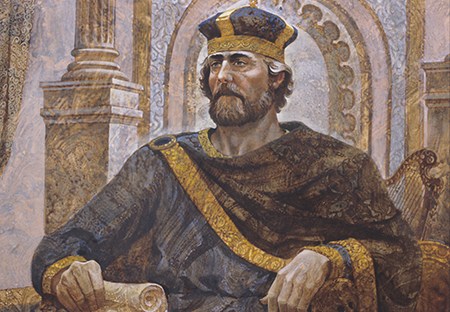
Why David was a man after God’s heart Part VIII

“Let me hear joy and gladness; let the bones you have crushed rejoice.”

Psalm 51: 8
New International Version

Proverbs 3 v 7-8

Do not be wise in your own eyes;
fear the Lord and shun evil.
8 This will bring health to your body
and nourishment to your bones.

“The part can never be well unless the whole is well.”

Plato

There is a reason that for an in-depth studied about what it means for you and me to have a “covenant” with our heavenly Father. It is because it helps us take time to reflect on what it means to have a Father whose bond with us is solid. His word is true. And what He says will come to pass does.

It is with this clear knowledge that we take a second look at the words recorded in Psalm 51:8 where we find David asking his Father to infuse his life again with heavenly joy. David wanted the relationship he once had with his Father to be restored.

In Psalm 23, the David who wrote the touching words, “The Lord is my Shepherd, I shall not want,” was not the same person spiritually or emotionally who ordered his trusted army captain, Joab to “Set ye Uriah in the forefront of the hottest battle, and retire ye from him, that he may be smitten, and die” (II Samuel 11: 15, K.J.V.). Believe me, David knew his life was in terrible shape and this is why he told God, “I want my old joy back. I want the happiness You and I once had to fill my life again.”

But then David went on to pen some words that are probably difficult for all of us to read. David asked God to bring healing to his crushed bones – the ones God had fractured – at least at first glance this is how this text appears to read.

For those of who have suffered from the pain caused by broken bones, frankly this text is tough to comprehend.

It is rather revealing that many of the Bible commentaries resources appeared to shy away from taking on this rather difficult passage in the Bible. I don’t find fault with that because the topic of human suffering, and heaven’s response to it, is one that has been argued, debated and written about throughout the ages.

Here in Psalm 51: 8, we find David pleading with God to put joy back in his heart because, he tells God, if He will do this, “The bones which Thou hast broken will rejoice.” I must say I don’t find this statement that odd, for on those days when one is in severe pain and the spirit is sagging, the more depressed one find oneself, often the more pain one seems to have. With his life in tatters, David told God that since joy had left his heart, his bones felt crushed and his whole body ached.

Now to better understand this text’s meaning, I found one commentary which referred me to Psalm 6 where David wrote these words: “O Lord, rebuke me not in Thine anger, neither chasten me in Thy hot displeasure. Have mercy upon me, O Lord; for I am weak: O Lord, heal me; for my bones are vexed” (Psalm 6: 1,2, K.J.V.).

There are two important points we can uncover from this passage which also relates to Psalm 51: 8.

First, God was obviously not happy with David’s wayward life and David knew it. Second, because at that time in history, illness, pain and physical trauma were seen as a direct hit by God to the individual, the sicker you were and the more in pain you were, the more evil you were perceived to be.

However, here’s a problem with this kind of faulty thinking. There are just too many bad people in this world who apparently skip through their days without a single worry. And then, there are those Godly people who are living their lives within the will of their Father and a flood washes away their home or a tornado kills their family or cancer takes the life of their young wife and they did nothing at all to deserve the tragic plight of disaster.

So what David tells us, and then his son Solomon reiterates in Proverbs 3: 7 & 8, is that by loving, holding in awe and respecting our heavenly Father’s word and way, heavenly joy will bring health to the “marrow of our bones.” David told God. He said, “Without Your joy, my broken bones are too weak to hold me up. I can’t make it without You.” The fact is, none of us can!

But there’s one more insight that I found in the book of Malachi which helps me traverse each day, no matter what staggering calamity comes my way. In Malachi 4: 1 & 2, there is a very interesting text. However, we often read only Malachi 4: 2 when we are talking about healing for it offers this beautiful promise from the Lord Almighty, “For you who revere My name, the sun of righteousness will rise with healing in His wings.”

Here’s the most critical part of this text though. Malachi 4: 1 begins by talking about the end of time. This is a purifying time when the earth is made new by our Father. Speaking of this time, which we look forward to, Thomas Moore said: “Earth has no sorrow that heaven cannot heal.”

For those children of God who find the pain and brokenness of this earth to be unbearable on some days, our Father, whose covenant with us is eternal and whose word is true, promises that His joy will not only infuse our lives on earth each step of the way but that an eternity of total healing and wholeness awaits us! I can hardly wait!

“One breath of paradise will extinguish all the adverse winds of earth.”

  1. W. Pink

Reference: www.transformationgarden.

10 Things You Need to Know about the Unforgivable Sin

  1. Jesus mentions it in the gospel of Mark.


Jesus addressed the topic in Mark 3:20-30, a passage that ends with these words:  “Assuredly, I say to you, all sins will be forgiven the sons of men, and whatever blasphemies they may utter; but he who blasphemes against the Holy Spirit never has forgiveness, but is subject to eternal condemnation” (Mark 3:28-29).

This is the verse that gets quoted whenever Christians address this issue. But the passage doesn’t stop there.


  1. To correctly understand it, you need to look at the very last phrase.


Take a look again at Jesus’ finishing statement in verses 28-30: “‘Assuredly, I say to you, all sins will be forgiven the sons of men, and whatever blasphemies they may utter; but he who blasphemes against the Holy Spirit never has forgiveness, but is subject to eternal condemnation,’ because they said, ‘He has an unclean spirit.’”

This paragraph has been the source of great misunderstandings in Christendom. To arrive at the correct interpretation, we have to begin with the last phrase, which explains why Jesus made this statement. He gave this teaching because His foes were accusing Him of having an unclean spirit (verse 22). Our Lord was telling them, in essence, “There is a sin that you are on the verge of committing. You should be very careful, because you’re about to do something for which there is no forgiveness.”

  1. It’s not a thoughtless mistake.


Let me take a moment and say the unforgivable sin isn’t something that someone commits randomly. The scribes who came from Jerusalem didn’t just do this on a whim. If you follow the references to these scribes throughout the book of Mark you’ll see there is a progression to their unbelief. They were initially curious about Jesus and His ministry. Then they had questions. In time, they grew indifferent; but then their indifference metastasized into a malicious attitude that became so hateful and vengeful that it ultimately nailed Jesus Christ to the cross.

  1. There is a Greek verb that proves it’s not an instant reaction.


In our story in Mark 3, there’s an interesting fact that’s only apparent in the Greek New Testament. According to verse 22, the scribes said, “He has Beelzebub.” The verb form for “said” is in the imperfect tense. It can be translated as, “They kept on saying.” It wasn’t just a matter of a sudden thoughtless word or an instant reaction. Their words represented a hardened attitude and an embittered and impenitent heart.

  1. It shows us that progressive rejection can be the most dangerous.


When God convicts us of sin and presents us with the Gospel, it’s dangerous to neglect it, especially if our procrastination becomes chronic. We resist and resist and resist. After a while, we can become so hard-hearted and sin-hardened that we grow calloused of soul. Our ears can’t receive the truth. Our minds shake off the conviction of the Spirit. We become cynical of conscience. And although the grace of God is still available to us, we push away from it.

  1. Knowing the Word of God isn’t enough.


These scribes had become Jesus-resistant because of the time-lapsed attitudes of their own evil hearts. It’s tragic, for these scribes had devoted their lives to copying the Word of God. Note the relationship between the words scribe and scribble. These men had copied and recopied the Old Testament. Every day they copied an ancient Scripture scroll by hand.

They had copied Isaiah 53, about the Suffering Servant. They had copied Psalm 22, about the death of the Messiah. They knew Micah 5 and the prophecy of our Lord’s birth. Yet their hearts had become so hardened they couldn’t receive His grace when it arrived in the person of Jesus.

  1. We can be hardened to spiritual truth by living in the middle of it.


We can go to church and read the Bible so much that the words no longer register with us. The scribes had come to the place where they were so familiar with religious things that when the Son of God showed up, they didn’t know who He was and they accused Him of being from Satan.

  1. The unforgivable sin is denying the deity of Christ.


By ascribing the miracles of Jesus to Satan, the religious leaders were denying the deity of Jesus Christ. They were saying He could not be God. Yet by His miracles He was showing Himself to be nothing and no one less than God. Only God Himself could do what He had done. His followers believed in His deity.

  1. Rejecting the Holy Spirit and rejecting the deity of Christ are connected.


It’s the Holy Spirit who witnesses to the deity of Christ in our world today.

So when you refuse to accept the ministry of the Holy Spirit or you ascribe His ministry to Satan, you give up the final opportunity to be saved. You must believe in Jesus as the Son of God. We have to accept the witness of the Holy Spirit and act upon the conviction He brings.

  1. If you’re worried that you may have committed a sin God will not forgive…you’ve likely not committed this sin.


The thought of an unforgivable sin has haunted sensitive people in every Christian century, and maybe it has haunted you. I want to be clear in saying that if you’re bothered in your spirit that you may have committed a sin God will not forgive, the very fact that you have anxiety over that is evidence you’ve not committed the sin. If He is still working in your heart, it’s not possible to have committed the unpardonable sin. The very fact that you’re reading this article is a tremendous indication you’ve not committed the unforgivable sin described in the Gospel of Mark.

In summation, this is the “unpardonable sin”:


In its essence, the unforgivable sin is hardening your heart against God and repeatedly refusing to respond to His entreaties to your soul. By continuing to resist and reject the Lord, you build calluses on your soul until the conviction of the Spirit of God no longer registers on your heart. Over a period of time you become hardened. You hear the Word of God and it makes no impact on you. If you die in that condition, there’s no further forgiveness available. For those who reject Jesus Christ, there’s no forgiveness anywhere else, anytime, either in this world or the next. He died for you, and if you reject that, there’s no other sacrifice for sin.

So don’t worry that you’ve committed the unpardonable sin. But if you don’t know Jesus Christ as your personal Savior, be concerned that you might.

Closing thoughts:

Have you resisted?


If you’ve resisted Christ and refused Him as your Savior, and if something happens and you die, you will have committed the unpardonable sin. You don’t get a second chance after death. Whatever we do concerning Christ, we do in this life. Don’t gamble that you will have time or that you can respond later. The Bible says, “Seek the Lord while He may be found, call upon Him while He is near” (Isaiah 55:6).

I’m here to tell you that Jesus is who He claims to be. He is the way, the truth, and the life. He is the only way to God. He is Son of God and Son of Man, our Savior, the Word made flesh, the Firstborn from the Dead. He is our Maker, Defender, Redeemer, and Friend. He is Christ the Lord, the Rock of Ages, the Sure Foundation, the Cornerstone. When He is your unforgettable Savior, you’ll never have to worry about the unforgivable sin.

Reference: https://www.crosswalk.com/slideshows/10-things-you-need-to-know-unforgivable-sin.html “I hope you will watch my complete message online to understand the full scope of Mark 3:20-30 and what it reveals about the character of Jesus and the truth of the unpardonable sin”.

Adapted from the original article “Have You Committed the Unpardonable Sin?” by Dr. David Jeremiah. See the article in full here.


Reference: https://www.crosswalk.com/slideshows/10-things-you-need-to-know-unforgivable-sin.html

Positive conversation


Ephesians 4 verse 29

 Do not let any unwholesome talk come out of your mouths, but only what is helpful for building others up according to their needs, that it may benefit those who listen.

There are some of us when we converse with toddlers and babies, we do so in an unintelligible language which we call “baby talk “, and no wonder some babies take longer to master the rudimentary verbal communications. There are some of us who communicate best with sarcasm, and reverse psychology, manipulation and other negative methods. All these are unhelpful and do not have any added value to the lives of individuals, nor do they build others up.

God’s Power to Keep Going

“I’m a mess. I’m nothing and have nothing; make something of me. You [God] can do it; you’ve got what it takes” (Psalm 40:17 The Message).

The Bible tells us that God always finishes what he starts: “God, who began the good work within you, will continue his work until it is finally finished” (Philippians 1:6 NLT). It doesn’t say, “God might finish it.” It doesn’t say, “God hopes to finish it.” It says God will finish it. What does that mean? It means if you have really given your life to Jesus Christ — if you’ve opened yourself up to God and said, “Christ, be number one in my life” — you are going to make it to heaven. There’s no doubt about it. Case closed. Done deal. You are going to make it across the finish line because it doesn’t depend upon your performance; it depends upon God’s sustaining grace. The only question is how you finish the race. You know as well as I do that some people finish a race poorly while other people finish a race well. I don’t want you to just get into heaven. I don’t want you to just get across the finish line. I want to help you finish the race of life well. I want you to enjoy life, the abundant life — to figure out what God made you for and then do it. How can you be sure you’re going to finish the race of life? Because of God’s sustaining grace. God doesn’t want to just save you. He wants to sustain you through life. He wants you to make it. What is sustaining grace? Sustaining grace is the power to keep on going when you feel like giving up. It’s the power to do the right thing when you don’t feel like doing the right thing. There are many pitfalls in the marathon race of life. But regardless of what you go through, no matter what you face this year, you can count on God’s sustaining grace. “My purpose in writing is to encourage you and assure you that what you are experiencing is truly part of God’s grace for you. Stand firm in this grace” (1 Peter 5:12 NLT).PLAY today’s audio teaching from Pastor Rick >>
Talk About It

  • Why do we so often try to “just make it” through the week when God wants us to experience an abundant life?
  • How has God’s sustaining grace helped you endure a trial in your life?
  • In what situation do you need God’s help to stand firm? How are you asking God to help sustain you?

What You believe shapes your Life

“When the foundations of life are undermined, what can a righteous person do?” (Psalm 11:3 GW)

What we believe about the world around us shapes everything about our lives. I’ve shared this with you many times in these devotionals. What you believe determines your behaviour. Your behaviour then determines what you become, and that has a direct effect on the direction of your life. The same is true of a country or the world. They are largely shaped by the values we believe. The problem is, we’ve bought into three very destructive philosophies that have replaced truth in our lives. 1) Individualism: We buy into the lie that we’re the only standard for our lives. A few years back I read a Wall Street Journal article that said 44 percent of executives consult first with themselves in an ethical crisis. That’s really nothing new. The Israelites went through this in the book of Judges when the Bible says, “In those days Israel had no king; all the people did whatever seemed right in their own eyes” (Judges 21:25 NLT). It didn’t work well then, and it doesn’t work well today. 2) Secularism: You can summarize this in three words: God is unnecessary. In the past half-century, we’ve been systematically removing God from all areas of our lives — from schools to the government to the media. We’ve basically relegated God to Sunday mornings, if we even consider him then. 3) Relativism: That’s when we’re told that there are no absolutes — what’s true for you may not be true for me. It’s a great way to live if you don’t want any guilt. If you don’t measure up to God’s standard, you just change the standard. It’s both illogical and irrational, but it’s highly prevalent in our world today. Don’t be conned by individualism (love for yourself), secularism (God is unnecessary), or relativism (there are no absolutes). The consequences as a society and for us as individuals for falling for these cons is staggering. Without a commitment to truth and a commitment to the authority of God, our culture is crumbling. In tomorrow’s devotional, we’ll begin to explore God’s answer for our moral collapse.

Talk It Over

  • How have you seen individualism, secularism, or relativism influence families you know?
  • How do you think our society’s lack of commitment to the authority of God has influenced our moral decline?
  • What are some of the consequences of this moral decline that are evident in our culture?