
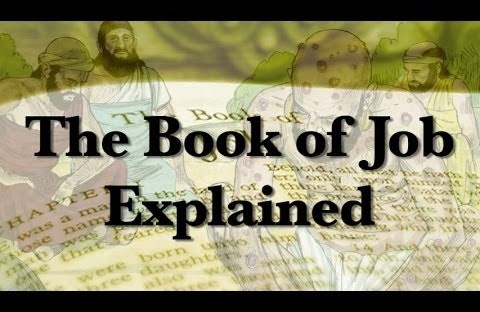
In the book of Job, we come across nomenclature pertaining or identifying our creator and some other spiritual entities in a different manner. And, this is the manner that the Jews of that period relate to the entities concerned; for example, Diabolos, the slanderer, or accuser or prosecutor. (Beelzebub is originally the name of a Philistine god (more specifically a certain type of Baal, from Ba‘al Zebûb, lit. “Lord of Flies”) but is also used in the New Testament as a synonym for Satan.)
There have been many times in my life that I felt or relate to God or perceive God as someone who watches everything.
Job 7 verse 20
If I sin, what do I do to you, you watcher of humanity? Why have you made me your target?
The title of this piece is a revelation from God to one of His chosen, pre-destined and anointed ones (Matthew 16 v 17), because when centuries later our Redeemer stood on the earth and posed the questions of Who He was, is and to be, and Peter gave Him the answer, our Redeemer at that moment confirmed that only our Father could reveal such information. So for Job, in the midst of his sufferings, complaints and suicidal thoughts and desires, to make this statement, then we know that God is closest to us when we are at our weakest, bruised, shattered, broken in pieces and most humble.
Job is a wealthy man living in a land called Uz with his large family and extensive flocks. He is “blameless” and “upright,” always careful to avoid doing evil (1:1). One day, Satan (“the Adversary”) appears before God in heaven. God boasts to Satan about Job’s goodness, but Satan argues that Job is only good because God has blessed him abundantly. Satan challenges God that, if given permission to punish the man, Job will turn and curse God. God allows Satan to torment Job to test this bold claim, but he forbids Satan to take Job’s life in the process.
After making pains to assert his blameless character, Job ponders man’s relationship to God. He wonders why God judges people by their actions if God can just as easily alter or forgive their behavior. It is also unclear to Job how a human can appease or court God’s justice. God is unseen, and his ways are inscrutable and beyond human understanding. Moreover, humans cannot possibly persuade God with their words. God cannot be deceived, and Job admits that he does not even understand himself well enough to effectively plead his case to God. Job wishes for someone who can mediate between himself and God, or for God to send him to Sheol, the deep place of the dead.
Job’s friends are offended that he scorns their wisdom. They think his questions are crafty and lack an appropriate fear of God, and they use many analogies and metaphors to stress their ongoing point that nothing good comes of wickedness. Job sustains his confidence in spite of these criticisms, responding that even if he has done evil, it is his own personal problem. Furthermore, he believes that there is a “witness” or a “Redeemer” in heaven who will vouch for his innocence (16:19, 19:25).
Job 16 verses 19-21
Even now my witness is in heaven;
my advocate is on high.
20 My intercessor is my friend[a]
as my eyes pour out tears to God;
21 on behalf of a man he pleads with God
as one pleads for a friend.
After a while, the upbraiding proves too much for Job, and he grows sarcastic, impatient, and afraid. He laments the injustice that God lets wicked people prosper while he and countless other innocent people suffer. Job wants to confront God and complain, but he cannot physically find God to do it. He feels that wisdom is hidden from human minds, but he resolves to persist in pursuing wisdom by fearing God and avoiding evil.
Job 19
Then Job replied:
2 “How long will you torment me
and crush me with words?
3 Ten times now you have reproached me;
shamelessly you attack me.
4 If it is true that I have gone astray,
my error remains my concern alone.
5 If indeed you would exalt yourselves above me
and use my humiliation against me,
6
7 “Though I cry, ‘Violence!’ I get no response;
though I call for help, there is no justice.
8 He has blocked my way so I cannot pass;
he has shrouded my paths in darkness.
9 He has stripped me of my honour
and removed the crown from my head.
10 He tears me down on every side till I am gone;
he uproots my hope like a tree.
11 His anger burns against me;
he counts me among his enemies.
12 His troops advance in force;
they build a siege ramp against me
and encamp around my tent.
13 “He has alienated my family from me;
my acquaintances are completely estranged from me.
14 My relatives have gone away;
my closest friends have forgotten me.
15 My guests and my female servants count me a foreigner;
they look on me as on a stranger.
16 I summon my servant, but he does not answer,
though I beg him with my own mouth.
17 My breath is offensive to my wife;
I am loathsome to my own family.
18 Even the little boys scorn me;
when I appear, they ridicule me.
19 All my intimate friends detest me;
those I love have turned against me.
20 I am nothing but skin and bones;
I have escaped only by the skin of my teeth.[a]
21 “Have pity on me, my friends, have pity,
for the hand of God has struck me.
22 Why do you pursue me as God does?
Will you never get enough of my flesh?
23 “Oh, that my words were recorded,
that they were written on a scroll,
24 that they were inscribed with an iron tool on[b] lead,
or engraved in rock forever!
25 I know that my redeemer[c] lives,
and that in the end he will stand on the earth.[d]
26 And after my skin has been destroyed,
yet[e] in[f] my flesh I will see God;
27 I myself will see him
with my own eyes—I, and not another.
How my heart yearns within me!
28 “If you say, ‘How we will hound him,
since the root of the trouble lies in him,[g]’
29 you should fear the sword yourselves;
for wrath will bring punishment by the sword,
and then you will know that there is judgment.[h]”
References: http://www.sparknotes.com/lit/oldtestament/section11/
https://www.biblegateway.com/versions/New-International-Version-NIV-Bible/#booklist


