
Do not compare yourself to others, and do not boast, if you will boast, the grounds for boasting according to Paul in 2 Corinthians v 12-18 is based on Jeremiah 9 v 24; but let the one who boasts boast about this:
that they have the understanding to know me,
that I am the Lord, who exercises kindness,
justice and righteousness on earth,
for in these I delight,”
declares the Lord.
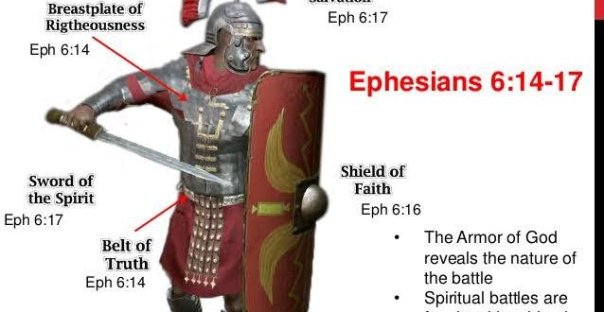
In Ephesians 6 v 12-20, Paul listed 7 spiritual weapons, and these are:
- Truth
- Righteousness
- Evangelism
- Faith
- Salvation
- Word of God
- Prayer.
Truth
In contrast to the woman at the well, who felt geographic location of worship was important, Jesus states that the issue is not whether one should worship God in Moriah or Gerizim, but rather one should worship in spirit and in truth.
Definition of Truth; the quality or state of being true. that which is true or in accordance with fact or reality. a fact or belief that is accepted as true. Truth is most often used to mean being in accord with fact or reality, or fidelity to an original or standard. Truth may also often be used in modern contexts to refer to an idea of “truth to self,” or authenticity.
In Scripture, truth is characterized by both qualitative and quantitative aspects. In the historical narratives of the Old Testament, truth is identified with personal veracity and historical factuality. Before identifying himself to his brothers, Joseph desires to test them by commanding them to send one of their brothers as a prisoner, to see if there is truth in them ( Gen 42:16 ). Both Joseph’s brothers and Achan claim to be speaking the truth when they confess their respective sins ( Gen 42:21 ; Joshua 7:20 ).
Truth is also a quality used to describe utterances that are from the Lord. When Elijah intervenes for the son of the widow of Zarephath, bringing the boy back to life, the boy’s mother remarks that now she knows that Elijah is a man of God, and that the word of the Lord in his mouth is truth. Ahab becomes angry with Micaiah, his personal incarcerated prophet, because the latter has given a sarcastic favorable forecast for battle. Ahab responds by saying, “How many times must I make you swear to tell me nothing but the truth in the name of the Lord?” ( 1 Kings 22:16 ; 2 Chron 18:15 ).
The Psalter describes truth as a fundamental characteristic of God, a characteristic that the psalmist desires to share. The wicked do not speak truth ( 5:9 ), whereas the blameless one speaks truth from the heart ( 15:2 ). The psalmists often depict truth as a quality separate from God, and which God serves by virtue of his nature. In many instances, truth appears to be personified. The psalmist tells God to “guide me in your truth” ( 25:5 ); the psalmist asks God to “send forth your light and your truth” to lead him ( 43:3 ); the psalmist asks the Lord to “ride forth victoriously in behalf of truth” ( 45:4 ). The psalmist desires to walk in God’s truth ( 86:11 ). Indeed, the sum of God’s word is truth.
Proverbs seldom speaks of truth, but when it does it defines it as a virtue that the person of God should practice. Truth is to proceed from one’s mouth, and wickedness is an abomination to the lips ( 8:7 ); the one who speaks the truth gives honest evidence ( 12:17 ); truth is described as a commodity that one should purchase, along with wisdom, instruction, and understanding ( 23:23 ).
Jeremiah bemoans the fact that in Judah truth is absent. He tells the people that if they can find a man in Jerusalem who does justice and speaks truth, God will pardon the entire city ( 5:1 ). The Lord looks for truth ( 5:3 ), but it is notoriously absent from Judah ( 7:28 ; Jeremiah 9:3 Jeremiah 9:5 ). In Daniel, truth is an eschatological virtue related to the interpretations of the visions that God shows to Daniel. Daniel inquires of the truth of the vision of the four beasts ( Daniel 7:16 Daniel 7:19 ). The casting down of truth allows the little horn to act and prosper ( 8:12 ); the future dealings of the kings of Persia are referred to as the truth ( 10:21 ; 11:2 ). Zechariah commands his readers to speak the truth ( 8:16 ), and to love truth and peace ( 8:19 ).
The Synoptic Gospels scarcely use the word truth at all, while in John it is an extremely significant term referring to Jesus and his ministry. Jesus, as the Word become flesh, is full of grace and truth ( 1:14 ), and is the source of grace and truth ( 1:17 ). In contrast to the woman at the well, who felt geographic location of worship was important, Jesus states that the issue is not whether one should worship God in Moriah or Gerizim, but rather one should worship in spirit and in truth. For John, truth is ultimately identified with, and is personified in the person of, Jesus Christ. The ministry of John the Baptist is to bear witness to the truth ( 5:33 ). Jesus speaks the truth, and for this the Jews seek to kill him ( 8:40 ). This is because the Jews who contended with Jesus were ultimately of their father the devil, who has no truth in him whatsoever ( 8:44-46 ).
Jesus describes himself as the way, the truth, and the life, and as such he is the only means to the Father ( 14:6 ). Even when Jesus departs, the ministry of truth will continue because the Comforter, who is the Spirit of truth ( 14:17 ), will be active both in the church as well as in the world.
For Paul, truth is the message of God that all of humanity has repressed ( Rom 1:18 ) and exchanged ( 1:25 ) for lie, in that they have directed their worship not to the Creator, but to the creation. All unbelievers ultimately do not obey the truth, which is embodied in the law ( Romans 2:8 Romans 2:20 ). In Galatians, truth is synonymous with the gospel, which the Judaizers have perverted by requiring converts to practice law observance ( Galatians 2:5Galatians 2:14 ; 4:16 ; 5:7 ; cf. Eph 1:13 ; Col 1:5-6 ).
In addition, Paul also uses truth to speak practically of the believer’s deportment in following the Lord. Believers are to speak the truth to one another in a loving manner, as we grow up into submission to our head, namely Christ ( Eph 4:15 ). The importance of speaking the truth to one another is underscored by the fact that we are members of one another ( Eph 4:25 ).
In 2 Thessalonians Paul equates the truth with the believers’ salvation. Those who perish do so because they are under a wicked deception, and so refuse to love the truth and be saved ( 2:10 ). Such people are condemned because they did not believe the truth, but instead had pleasure in unrighteousness ( 2:12 ). God’s choosing of the Thessalonian believers for salvation came about by means of sanctification by the Spirit as well as belief in the truth. Interestingly, the term “truth” does not appear in 1 Thessalonians.
In the Pastoral Epistles, truth takes on the characteristics of a repository, or official body of beliefs, of which the church is the faithful steward and guardian. Salvation includes, and is likely synonymous with, knowledge of the truth ( 1 Tim 2:4 ). The church of the living God is both the pillar and ground of the truth. Knowledge of and belief in the truth prevents one from becoming entangled in erroneous doctrines, such as the belief that marriage is to be avoided, abstinence from certain foods is to be enjoined, and that godliness is a means of gain ( 1 Tim 4:3 ; 6:5), as well as the belief that the resurrection is past ( 2 Tim 2:18 ). Paul further encourages Timothy to guard the truth, which the Holy Spirit has entrusted to him ( 2 Tim 1:14 ). The Scriptures are themselves the word of truth ( 2 Tim 2:15 ). Individuals who oppose God and naively listen to others (i.e., Jannes and Jambres, Pharaoh’s two magicians) never arrive at the truth, and, in fact, actually oppose it ( 2 Tim 3:7-8 ). Paul informs Titus that the knowledge of the truth goes along with the furtherance of faith and with godliness ( Titus 1:1 ). Paul informs both Timothy and Titus that the only alternative to the truth is to believe in myths ( 2 Tim 4:4 ; Titus 1:14 ).
While the term “truth” appears only sporadically in most of the General Epistles, it appears repeatedly throughout the Johannine epistles. To claim to have fellowship with God, and to walk in darkness, is not to live according to the truth ( 1 John 1:6 ). To claim sinlessness for the believer is to practice self-deceit and thus be void of truth ( 1 John 1:8 ). The basic message of Christianity is termed “the truth, ” and believers know the truth, and can discern that no lie is of the truth ( 1 John 2:4 1 John 2:21 ). Believers are to love in both deed and in truth (i.e., “truly” 1 John 3:18 ). Believers are of the truth, which no doubt means that they belong to Jesus, who is the truth ( 1 John 3:19 ). Likewise, the fact that we are of God allows us to know the spirit (Holy Spirit?) of truth, and to discern it from the spirit of error ( 1 John 4:6 ). The truth abides with us forever ( 2 John 2 ), and the Elder rejoices because the elect lady’s children follow the truth ( 2 John 4 ; cf. also 3 John 4 ). Further references in 3 John indicate that the Elder refers to Jesus Christ as “the truth” ( 3 John 1:3 3 John 1:4 3 John 1:8 3 John 1:12 ). Interestingly, the term “truth” does not occur in Revelation.
Andrew L. Smith
Righteousness (Living in Integrity)
Definition of righteousness: the quality of being morally right or justifiable.
Righteousness is one of the chief attributes of God as portrayed in the Hebrew Bible. Its chief meaning concerns ethical conduct (for example, Leviticus 19:36; Deuteronomy 25:1; Psalm 1:6; Proverbs 8:20). In the Book of Job, the title character is introduced to us as a person who is perfect in righteousness.
God the Father is righteous (just); Jesus Christ his Son is the Righteous (Just) One; the Father through the Son and in the Spirit gives the gift of righteousness (justice) to repentant sinners for salvation; such believing sinners are declared righteous (just) by the Father through the Son, are made righteous (just) by the Holy Spirit working in them, and will be wholly righteous (just) in the age to come. They are and will be righteous because they are in a covenant relation with the living God, who is the God of all grace and mercy and who will bring to completion what he has begun in them by declaring them righteous for Christ’s sake.
The noun righteousness/justice (Gk. dikaiosune [dikaiosuvnh]) bears meanings in the New Testament related to two sources. The major one is the Hebrew thought-world of the Old Testament and particularly the sdq [q;d’x] word group, which locates the meaning in the sphere of God’s gracious, covenantal relation to his people and the appropriate behavior of the covenant partners (Yahweh and Israel) toward each other. The other is the regular use of the words in everyday Greek as spoken in New Testament times, which fixes the meaning in the sphere of a life in conformity to a known standard or lawthus honesty, legality, and so on. This latter meaning in terms of doing God’s will is of course also found in the Old Testament.
When we translate the Greek words based on the stem dikai- into English we make use of two sets of words based on the stems, just and right. So we have just, justice, justify and right, righteous, righteousness, rightwise (old English). The use of two sets of English words for the one set of Greek words sometimes causes difficulties for students of the Bible. This is especially so when the verb “to justify, ” describing God’s word and action, is used with the noun “righteousness, ” pointing to the result of that action.
The Gospels. The appropriate background to bear in mind for understanding the teaching of both John the Baptist and Jesus the Christ on righteousness/justice are two of the dominant ideas of the Old Testament. First, Yahweh-Elohim, the Lord God, is righteous in that he speaks and Acts in accordance with the purity of his own holy nature; further, what he says and does for Israel is in accordance with his establishment of the covenant with this people (see Psalm 22:31 ; 40:10 ; 51:14 ; 71:15-24 ; Amos 5:21-24 ). Micah declared the righteousness of God as his faithfulness to keep and act within the covenant and thus to save Israel from her enemies, as well as to vindicate the penitent.
Second, the covenant people of God are called to live righteously, that is, in conformity to the demands of the covenant and according to God’s will (see Psalm 1:4-6 ; 11:7 ; 72:1 ; Isa 1:16-17 ). Having within the covenantal relation with God the gift of salvation, they are to behave as the people of the holy Lord. Hosea, the prophet of divine love, ties righteousness with mercy, loving kindness, and justice ( 2:19 ; 10:12 ).
John the Baptist called for repentance and righteous behavior such as is pleasing to God ( Luke 3:7-9 ). Further, it was because of the demands of such righteousnessfulfilling the will of Godthat he actually was willing to baptize Jesus ( Matt 3:15 ). Likewise Jesus presents righteousness as conformity to the will of God expressed in the Mosaic law ( Matt 13:17 ; 23:29 ; Matthew 27:4 Matthew 27:19 Matthew 27:24 ) and also conformity to his own teachings concerning the requirements of the kingdom of heaven ( Matt 5:17-20 ). However, conformity to his own teachings presupposes that he is the Messiah, that he fulfills the Law and the Prophets, and that what he declares is the morality of the kingdom of God relating to the totality of life, inward and outward, seen by God. Further, Jesus does allow that conformity to the norms of the scribes and Pharisees is a certain kind of (inferior) righteous living, but he contrasts it with the proper righteousness he exhibits, proclaims, and looks for ( Luke 5:30-32 ; 15:7 ;18:9 ) in the disciples of the kingdom. So in a fundamental sense, in the four Gospels righteousness as a quality of living is intimately related to the arrival and membership in the kingdom of God and is only possible because God has come to his people as their Redeemer.
The Gospel of Matthew makes clear that from the beginning Jesus’ mission is to fulfill God’s righteousness ( 3:15). This is brought to realization in his words and ministry so that the kingdom and salvation of God are in him and come through him. Alongside this is the righteousness in the new covenant, which is right thinking, feeling, speaking, and behavior on the part of disciples of the kingdom, who do what God approves and commands. This moral substance is very clear from the detailed contents of the Sermon on the Mount (chaps. 5-7), where the will of God is set forth by Jesus and is contrasted with a mere legalism. Yet what Jesus proclaims and outlines is certainly not a self-righteousness, for it is portrayed as the outflowing of a life that is centered on submitting to, worshiping, and seeking after God and confessing Jesus as the Messiah (see especially 5:17-42 ).
In the Gospel of Luke, we read of Zechariah and Elizabeth, Simeon and Joseph of Arimathea being called righteous ( 1:6 ; 2:25 ; 23:50 ) because they embody genuine religion according to the norms of the Old Covenant. They trust in and obey God. Further, Jesus himself as the Servant of Yahweh is the righteous or innocent one ( 23:47 ), even as the centurion confessed at the cross. The righteousness of the kingdom of God is practical and reverses the standards of the regular social order ( Luke 3:11 Luke 3:14 ; 6:20-26 ). At the last day it will be those who have been genuinely righteous in terms of doing the will of God who will be declared just ( 14:14 ).
In the Gospel of John, God is righteous ( 17:25 ) and the Holy Spirit, the Paraclete, has a specific role with respect to righteousness ( John 16:8 John 16:10 ). It is the unique work of the Spirit, who comes into the world in the name of Jesus the Messiah, to convince/convict the world of righteousness. The Spirit both vindicates Jesus as the Righteous One, whom the Father has raised from the dead and exalted into heaven, and also makes clear what kind of righteous life is required by, and, in grace, provided by God.
The Letters of Paul. The uses the noun dikaiosune [dikaiosuvnh] (righteousness), the adjective dikaios [divkaio”] (righteous), and the verb dikaio [dikaiovw] (to justify or to declare and treat as righteous) over one hundred times and his usage reflects a particular development from the use of sdq [q;d’x] in the Old Testament. God is righteous when he Acts according to the terms of the covenant he has established. Righteousness is God’s faithfulness as the Lord of the covenant. God Acts righteously when he performs saving deeds for his people and thereby in delivering them places them in a right relation to himself (see especially Isa. 51 and 61). The interchangeability of righteousness and salvation is seen in this verse: “I am bringing my righteousness near, it is not far away; and my salvation will not be delayed. I will grant salvation to Zion, my splendor to Israel” ( Isa 46:13 ).
Thus God’s people are righteous when they are in a right relation with him, when they enjoy his salvation; they are considered by God as the Judge of the world as righteous when they are being and doing what he requires in his covenant. So it may be said that the concept of righteousness in Paul belongs more to soteriology than to moral theology, even though it has distinct moral implications.
God’s righteousness is, for Paul, God’s saving activity in and through the life, death, and resurrection of Jesus Christ, his Son. It is activity that is directly in line with the saving activity of God in the Old Testament. The acceptance of the unique saving deed of God at Calvary by faith in the person of Jesus Christ is that which God has ordained to be the means for sinners (the unrighteous and the disobedient ones) to enter into the right with God, the Father, and receive the forgiveness of sins. God as the Judge justifies believing sinners by declaring them righteous in and through Jesus Christ; then he expects and enables these sinners to become righteous in word and deed. Faith works by love.
The righteousness of which Paul speaks, especially in the letters to Galatia and Rome, stands in contrast to the righteousness that is based on the fulfillment of the law by man as the covenant partner of God. It is “the righteousness of faith” and “the righteousness of God” ( Rom 10:6 ; Php 3:9 ), and is most certainly the gift of God. From the human standpoint what God looks for in those who receive the gospel is “faith in the Son of God, who loved me and gave himself for me” ( Gal 2:20 ). God’s gift to those who believe is a righteousness that exists and can be given only because of the sacrificial death of Jesus for sinners and his resurrection from the dead as the vindicated Lord of all.
So God as the righteous Judge justifiesplaces in a right relation with himself within the new covenant of gracethose who believe the gospel of the Father concerning his Son, the Lord Jesus Christ. And he justifies Jew and Greek alike on precisely the same basis, by faith alone without works, and he makes no distinction whatsoever between the people of the Old Covenant and the Gentiles. Abraham, says Paul, was himself justified by faith alone ( Gen 12:3 ; 15:6 ; 18:18 ; Rom 4:3 ; Gal 3:8 ). In fact, Paul confessed that the power of the gospel to be the word of salvation to both Jew and Greek was based on the revelation of the righteousness of God thereinof God the Father acting justly for the sake of his Son ( Rom 1:16-17 ).
The gift of a right relation with the Father through the Son in the Spirit, which is justification, creates a relationship for believers both with God and fellow believers that they are to dedicate to righteousness in the sense of obeying Christ ( Rom 6:12-14 ; cf. 2 Corinthians 6:7 2 Corinthians 6:14 ; 9:10 ; Eph 4:24 ; Php 1:11 ). Though they could never become righteous before God by their efforts to conform their lives to his will, out of gratitude and love they are to serve him because he has given them the gift of salvation through the grace of the Lord Jesus Christ. He has pronounced them righteous, he has reconciled them to himself and removed their alienation, and he has transformed their relation to him into that of friendship. Therefore, since God has made them his own and given to them his righteousness, their duty and privilege is to be righteous in conduct. And he promises that on the last day and for the life of the age to come he will actually make them to be truly and effectually righteous in all that they are, become, and do.
The word “eschatological” is often used with reference to this gift of righteousness. The reason is this. It is in anticipation of what God will do for the sake of his Son Jesus Christ at the last day that he pronounces guilty sinners righteous now in this evil age. At the last day, God the Father will be vindicated and all will confess that Jesus Christ is Lord. Those who believe will become and remain righteous in their resurrection bodies of glory. Now and before the new age arrives, by the proclamation of the gospel and by the presence of the Spirit, that which is not yet (the fullness of righteousness of the age to come) is actually made available by the will and declaration of the Father, through the mediation of Jesus Christ the Lord and by the presence and operation of the Holy Spirit. Already there is the provision of a right relation with God through the preaching of the gospel, but there is not yet the experience of the fullness of righteousness as an imparted gift. Now believers merely have the firstfruits of that which awaits them in the age to come.
It would be a mistake, however, to think that Paul does not use the word “righteousness” in its more familiar meaning as a virtue. In fact he does so particularly in 1 and 2 Timothy. He commends striving for righteousness ( 1 Tim 6:11 ) as the right motivation of a person of God; and he sees the use of the inspired Scriptures as being to train Christians in righteousness ( 2 Tim 3:16 ). Further, as a reward for his efforts for the kingdom of God he looks for “the crown of righteousness” ( 2 Tim 4:8 ).
Other New Testament Books. Righteousness in terms of the actual doing and completing the will of God is found outside the Gospels in various places. It is found in Acts 10:35 in terms of fearing God and doing righteousness. In Hebrews 12:11 we read of the peaceful fruit of righteousness. In 1 Peter Christians are to die to sin and live to righteousness ( 2:24 ) and be prepared to suffer for righteousness’ sake ( 3:14 ). In 1 John the doing of righteousness in terms of following Jesus Christ, the righteous One, who came in flesh and will come again in glory, is what vital Christianity is all about. Believers who act righteously in word and deed proclaim their righteous Lord and show the error of the false teachers ( 2:29 ; 3:7-10 ).
The most discussed passage outside the Pauline corpus with respect to righteousness and justification is James 2:14-26. Here, at least on the surface, it appears that James is disagreeing with Paul. In fact the truth is that they have different starting points and are facing different missionary and pastoral situations.
A faith without works is said by James to be a dead faith, and Abraham is presented as being justified by his works because he was prepared to sacrifice his beloved son. For James, faith comes to completion in practical works and it was this completed faith of Abraham, says James, which was reckoned to him for righteousness ( Gen 15:6 ; James 2:23 ). Thus for James a person is placed in a right relation with God by a faith expressed in works. It is possible to reconcile Paul’s approach and that of James if it is remembered that Paul himself spoke of “faith expressing itself through love” ( Gal 5:6 ; cf. James 2:1 James 2:8 ).
Peter Toon
Evangelism
Definition of Evangelism: the spreading of the Christian gospel by public preaching or personal witness. Zealous advocacy or support of a particular cause. Evangelism. noun. (in Protestant churches) the practice of spreading the Christian gospel RC Church term: evangelization, evangelisation. ardent or missionary zeal for a cause. the work, methods, or characteristic outlook of a revivalist or evangelist preacher.
Basic Definition. “To evangelize” is to proclaim the good news of the victory of God’s salvation. “Evangelism” is the noun denoting that activity. This biblical concept is expressed through a Hebrew verb (basar [r;f’B]) and a Greek verb and noun (euangelizo [eujaggelivzw] and euangelion [eujaggevlion]). Euangelion [eujaggevlion] is normally translated “gospel, ” denoting the content of the good news. But it can also be a noun of action, describing the activity of telling that news ( eg 1:1 9:14 ; 2 Col 2:12 ; Php 1:5 ).
The Old Testament. In family matters, one may “bring news” to a father that a male child is born ( Jer 20:15 ). In military matters, “to evangelize” is to bring news of the outcome of a military engagement, usually a victory ( 1 Sam 31:9 ; 2 Sam 18:31 ; 1 Kings 1:42 ; but cf. 1 Sam 4:17 ). This secular usage serves as the background for the theological usage in Isaiah and the psalms.
Since Israel’s national destiny is in God’s sovereign hands, and he fights the nation’s battles for her, any announcement of military victory necessarily has theological meaning. The victory over the Canaanite kings in the conquest of the land is so complete and certain that it is captured in a juxtaposition of its prelude”The Lord announced the word”and aftermath”and great was the company of those who proclaimed it” ( Psalm 68:11 ; cf.Exod 15:20-21 ).
The initial act of bringing the news of military victory can be a religious act for pagan nations as well ( 1 Sam 31:9; cf. 2 Sam 1:20 ). But for Israel, the “good news” is that the Lord has freed (vindicated) the nation and its divinely anointed ruler from the hands of their enemies. When the lepers discover the abandoned camp of the Syrian siege-makers of Elisha’s and Jehoram’s day, they name it “a day of good news” ( 2 Kings 7:9 ). To withhold proclamation of this divinely accomplished victory is not right (7:9). Indeed, they must tell the beneficiaries of the victory immediately.
David appropriates “evangelism” terminology for the worship context as he describes his confession before the God of divine deliverance: “I proclaim righteousness in the great assembly” ( Psalm 40:9 ). Again there is a protestation of moral constraint: “I do not seal my lips.” The message proclaimed is that God has acted in accordance with his character, his righteousness. He explains God’s actions further by referring to God’s reliability: God’s faithfulness, truth, covenant loyalty and love, and salvation ( 40:10 ). The audience is the people of God, “the great assembly” ( 40:9-10 ).
What is true on a personal level is true for the nation as the people return the ark of the covenant to its rightful place at the center of Israel’s worship ( 1 Chron 16:23-25 / Psalm 96:2-4 ). In an act of worship the whole earth is exhorted to continually proclaim good tidings. The message is an announcement of the salvation, glory, and mighty deeds of the supreme God, who is great and greatly to be praised. The messenger, the message, and the audience all have a universal quality.
Isaiah makes the most extensive and significant contribution to understanding the proclamation of the victory of God’s final salvation in its Old Testament promise form ( 40:9-11 ; 52:7 ; 60:6 ; 61:1 ). This prophet’s teaching is not only foundational for seminal New Testament passages, but it is also the source for the New Testament use of the term “gospel.”
Within the context of predicting comfort for Israelthe return to the land of those in exile in BabylonIsaiah unfolds a scene of redemption that will only be fully realized at the end of time. The prophet relates the proclamation of the good news of the victory of God’s salvation in progressive stages until the Gentiles are publishing it.
At God’s initiative ( 41:27 ) a messenger arrives from Babylon bringing good news of happiness (good, 52:7 ). The “beautiful feet” figure, along with the joyful response, indicate the news’ value and personal benefit. As in the military context, the basic message is one of complete victory: “Your God reigns!” God, with supreme sovereign power, has acted in covenant loyalty to Israelto restore, comfort, redeem, save, and protect her ( 52:8-12 ). Israel will know peace, good, and salvation ( 52:7 ). To speak of restoration, redemption, and salvation in the sight of all the nations and all the ends of the earth points us beyond the return from exile to full salvation at the end of time ( 52:10 ). The prophet emphasizes a Spirit-empowered messenger divinely sent “to bring good news to the afflicted.”
Isaiah 61:1-3 also unveils the physical/spiritual dynamic of this salvation along with the relationship between proclamation and accomplishment. It is possible to view the messenger’s message and mission as dealing only with the external, physical, socioeconomic condition of the exile and the emotional trauma it has caused. Indeed many who practice a liberation theology hermeneutic see these verses and Jesus’ appropriation of them as justifying a message and praxis of socioeconomic and political liberation. Is that not what it means to “preach good news to the afflicted (the oppressed poor)”? The term Isaiah uses (anawim) refers to those who are poor because of the oppression of the rich and powerful.
One of Israel’s sins was economic oppression of the weak and defenseless ( 10:1-2 ). For this their divine punishment was to experience oppression at the hands of the Babylonians. When God acts to save and restore Israel he will relieve physical oppression by release from exile and an establishment of justice in Messiah’s reign ( 11:4 ; 29:18-19 ; 49:13 ). And he will get at the spiritual root of the problem by offering forgiveness to these former sinful oppressors ( 41:17 ; Isaiah 55:1 Isaiah 55:7 ). This they receive as they adopt a humble stance before the Lord as the oppressed in heart and spirit ( 57:15 ; 66:2 ). Any proclamation of good news to the oppressed poor, then, must present a holistic salvation with a spiritual center.
That the messenger’s task is both to announce and to accomplish what is announced”to bring good news to the afflicted to bind up the brokenhearted”has led some to conclude that Scripture views the proclamation itself as accomplishing the salvation. Such a view, although it takes cognizance of the Bible’s claims for the saving power of the good news, fails to reckon with the distinction between Jesus, who both proclaims and accomplishes salvation, and those who come after him, who simply proclaim its accomplishment. In the sense that proclamation is the occasion for the appropriation of the salvation by the hearers, it can be said to effect it.
Although Isaiah 40:9 might be seen as another command to a messenger to Jerusalem, it is better, given grammatical considerations, to take it as an exhortation to the inhabitants of Jerusalem. They have received the good news of the victory of God’s salvation and now are encouraged to become “bearers of good news” themselves. They are to carry the message to the surrounding towns of Judah. “Your God reigns!” becomes “Here is your God!” The salvation arrives with the coming of the powerful God who with a shepherd’s gentleness brings his reward, but also exacts his judicial recompense.
The next step in the proclamation of God’s victorious salvation is evidently to the Gentiles. They in turn will come to Jerusalem and “bear good news of the praises of the Lord” ( 60:6 ).
The New Testament. Other than 1 Thessalonians 3:6, all New Testament uses of the term have a theological meaning. Whether in predicting the forerunner’s genesis ( Luke 1:19 ) or announcing the Savior’s birth ( 2:10 ), angels “evangelize” people. In the latter case, “great joy” is to be proclaimed as good news to all the people. The fulfillment of the promises through Isaiah have begun for a savior, Christ the Lord, is born.
John the Baptist’s ministry is at the decisive boundary between promise and fulfillment in God’s salvation history ( Luke 16:16 ). Jesus characterizes it as a time from which “the kingdom (reign) of God is proclaimed as good news.” Such preaching in John’s case is termed “exhortation” ( 3:18 ). He announced both a preparatory repentance ethic, in the light of the approaching final judgment ( Luke 3:3 Luke 3:7-14 ), and a corrective to his audience’s messianic expectations as he pointed to Jesus and the salvation blessings he offered ( 3:15-17 ).
Jesus’ mission is to be the divinely sent proclaimer of the good news ( Luke 4:43 ; Acts 10:36 ). This Jesus claims is in fulfillment of Isaiah 61:1-3 and establishes his messianic identity ( Luke 4:18-21 ; Luke 7:19 Luke 7:22 ). Jesus’ conduct of his earthly itinerant ministry of proclaiming the good news is accompanied by healing miracles and combined with teaching ( 4:43 ; 7:22 ; 8:1 ; 20:1 ). He sends out his disciples in Israel to follow the same pattern ( Luke 9:2 Luke 9:6 ).
The message Jesus proclaims is revelational ( Acts 10:36 ) and points to the arrival of endtime salvation in terms of the coming of God’s reign or of peace ( Matt 24:14 ; Mark 1:14-15 ; Luke 8:1 ; Acts 10:36 ; Eph 2:17 ; cf. Isaiah 52:7 Isaiah 52:19 ). The response looked for is repentance and faith ( Mark 1:15 ). Echoes of Isaiah and military victory imagery clearly underlie the expressions “proclaiming the good news of the reign of God” and “the good news of the kingdom.” The “hiddenness” aspect of Jesus’ precross earthly mission prevented him from making consistent and explicit reference to himself as the embodiment of the good news. Jesus makes clear the christological center of the gospel only after he has accomplished salvation, through his death and resurrection. Still, when Mark entitles his account of Jesus’ life and ministry, he labels it “The beginning of the gospel about Jesus Christ, the Son of God” ( Mark 1:1 ).
Jesus’ teaching makes one point about evangelism. World evangelism is the one positive feature of the time between his return to heaven and his second coming ( Matt 24:14 / Mark 13:10 ; Matt 26:13 / Mark 14:9 ): “And this gospel of the kingdom will be preached in the whole world as a testimony to all nations, and then the end will come.” World evangelization is certain in its occurrence and universal in its scope. Jesus does not command it but predicts it and declares that its accomplishment is determinative of the end of human history. He says the whole inhabited world will be the arena for proclamation and that the witness will be addressed to every ethnic group. The last occurrence of euangelizo [eujaggelivzw] and euangelion [eujaggevlion] in Scripture carries the same teaching ( Rev 14:6-7 ).
In the Book of Acts, whether as the activity to which God calls a person for lifelong service ( 20:24 ; cf. 1:8 ) or as the result of immediate divine guidance ( 15:7 ; 16:10 ), God is the source of evangelizing. The messengers may be apostles or evangelists ( 5:42 ; Acts 8:12 Acts 8:24 Acts 8:35 Acts 8:40 ; 15:7 ; 21:8 ), but not exclusively so. For the early church found the apostles evangelizing in company with nonapostles ( 13:32 ; Acts 14:7 Acts 14:21 ;15:35 ). And in the same context where the work of Philip the evangelist is highlighted, believers dispersed by persecution following Stephen’s death “preached the word wherever they went” ( 8:4 ). Anyone who has received, believed, and experienced the salvation blessings of the good news is qualified to proclaim it.
The message proclaimed is in continuity with Jesus’ gospel in its eschatological/promise and fulfillment, soteriological, and ethical dimensions. Only now the revelational and christological aspects are central. To proclaim the good news is to proclaim Messiah Jesus or the Lord Jesus or simply Jesus. The response looked for is repentance ( 14:15 ) and faith ( 8:12 ; 15:7 ).
The early church also imitated her Lord in the way she evangelized. Teaching and making disciples were closely allied to it in an itinerant ministry that possessed a momentum moving the witnesses to the ends of the earth. Such evangelism evokes persecution, yet perseveres in the wake of it.
The good news concerns the fulfillment of promises made to the Jews ( 13:32 ), so it is right that the proclamation be made to them first ( 3:26 ; 13:46 ). But its Old Testament divine design and its very contentthe universal offer of salvation to everyone who believes ( Luke 24:47 ; Acts 13:39 )show that it is for the Gentiles as well. Almost every time a significant cultural threshold is crossed as the gospel reaches people who are farther and farther away from the light that God had given to Israel, euangelizo [eujaggelivzw] is used to describe what the church is doing.
Paul at the New Testament fulfillment stage as Isaiah at the Old Testament promise stage contributes the fullest exposition of “evangelize, evangelism.” The divine source of this activity manifests itself both in the commissioning and the enabling of the apostle. He was “set apart for the gospel [proclaiming the good news] of God” ( Rom 1:1 ). This and this alone he was sent to do ( 1 Cor 1:17 ). Taking the singular messenger of Isaiah 52:7 as a collective, Paul declares that all who evangelize are fulfilling Isaiah’s prophetic pattern ( Rom 10:14-15 ). The divine enablement in proclaiming the good news is a grace given; a spiritual gifting from the risen and exalted Lord, so much the work of Christ that Paul can say that the risen One himself comes and preaches peace to those who are afar off and to those who are near ( Eph 2:17 ; Ephesians 3:2 Ephesians 3:8 ; 4:11 ; 6:19 ).
As modeled in the early church Paul teaches that the proper messengers of the good news are not only apostles and evangelists ( Rom 1:9 ; cf. 1 Col 9:18 ; Eph 3:5 ) and full-time Christian workers ( 1 Corinthians 9:14 1 Corinthians 9:18 ; 2 Col 11:7 ), but all the church of Christ ( Eph 3:10 ; cf. Col 1:7 ). Every member must have feet shod “with the readiness that comes from the gospel of peace” ( Eph 6:15 ).
Paul does give the content of the gospel in summary form several times ( Rom 10:8-10 ; 1 Col 15:3-4 ; 2 Tim 2:8 ). The qualifying phrases he puts with the word “gospel” yield important insights. Yet, when it comes to presenting an object for euangelizo [eujaggelivzw], which might give us clues as to Paul’s understanding of the “good news” proclaimed, he seems to speak in tautologies. What is proclaimed as good news is the good news, to euangelion[eujaggevlion] ( 1 Col 15:1 ; 2 Col 11:7 ; Gal 1:11 ). Since there is only one good news, which Christians will recognize over against false gospels, this expression is in the end no meaningless tautology ( Gal 1:6-9 ). What Paul does bring out in his use of objects with euangelizo [eujaggelivzw] is the Christocentric and soteriological nature of the message. The messenger proclaims Christ, his unfathomable riches, and the faith ( 2 Col 4:5 ; Galatians 1:16Galatians 1:23 ; Eph 3:8 ). The response looked for is an understanding and believing of the good news that leads to a calling on the Lord for salvation and an active obedience to that same Lord Jesus in this new relationship ( Romans 1:5 Romans 1:16-17 ; 10:14 ; Eph 1:13 ; Col 1:5-6 ).
Paul expounds the conduct of “evangelism” in terms of the motives for it, the spiritual transaction it is, and the imagery that may describe it. A person proclaims the good news moved both by the necessity of an entrusted stewardship ( 1 Corinthians 9:12 1 Corinthians 9:16-17 1 Corinthians 9:23 ; 1 Thess 2:4 ) and commitment to the audience ( Rom 1:15 ; Col 1:7 ; 1 Thess 1:5 ; 2:8-9 ).
Paul delights in highlighting the spiritual transaction that occurs during the proclamation of the good news. He may say power, the Holy Spirit, and deep conviction accompanied the preaching ( 1 Thess 1:5 ). He may present the proclamation as the means by which God called persons to obtain salvation blessings ( 2 Thess 2:14: ; cf. 1 Col 4:15 ). In fact, the proclamation may be personified as the power itself as what “all over the world is bearing fruit and growing” ( Col 1:5-6 ; cf. Rom 1:16-17 ).
Paul’s imagery characterizes evangelizing as revelatory. It is making plain “the administration of this mystery, which for ages past was kept hidden in God” ( Eph 3:9 ; 6:19 ; Rom 16:26 ). By it the manifold wisdom of God is “made known to the rulers and authorities in the heavenly realms” ( Eph 3:10 ). Evangelism is also worship, for Paul says he ministers “with the priestly duty of proclaiming the gospel of God, so that the Gentiles might become an offering acceptable to God, sanctified by the Holy Spirit” ( Rom 15:16 ).
On the human plane evangelism is not only the proclamation of a commissioned witness ( Rom 10:15 ; Eph 6:15 ;Col 1:5 ). It is also a “traditioning” ( 1 Cor 15:1-3 ) and a controversial activity for which one will suffer persecution and at the same time offer a defense ( Philippians 1:7 Philippians 1:16 ; 2 Timothy 1:8 2 Timothy 1:12 ; 2:9 ).
For Paul the audience to be evangelized includes both unbelieving Jew and Gentile, although he notes Jewish rejection and Gentile receptivity. Paul also speaks of evangelizing Christians. For them such proclamation holds up a standard for their Christian conduct ( 2 Col 9:13 ; Gal 2:14 ; Php 1:27 ) and strengthens them in their faith ( Rom 16:25 ; Col 1:23 ; 2 Timothy 4:2 2 Timothy 4:5 ). Neither this use nor the fact that a local pastor, Timothy, is instructed to do the work of an evangelist should lead us to the false conclusion that the biblical understanding of evangelism in its full exposition by Paul is so broadened that in the end it does not retain its sharp focus of proclamation of the good news of salvation to the unsaved. Christians only rightly apply such evangelizing to themselves in their saved condition when they continue to receive it as the proclamation of the gospel.
Peter brings the biblical teaching on evangelism to an appropriate climax with an emphasis on the value and power of the message proclaimed. In continuity with the prophets, Jesus, and the other apostles, Peter recounts a gospel with the Messiah’s suffering and glory at its center and salvation and grace as its benefit. The Holy Spirit not only revealed the message to the Old Testament prophets, but he, sent from heaven, empowered those who evangelized Peter’s hearers ( 1 Peter 1:10-12 ). No wonder this gospel is things into which angels long to look ( 1:12 ).
Peter says that there is power in evangelism to make people be born again unto eternal life ( 1:23-25 ). Peter makes it clear that it is not the act of evangelizing but the good news communicated in that act, the Word of God that abides forever, which is the imperishable seed that by the Spirit ( 1:12 ) gives the new birth. It is no coincidence that Peter quotes verses that immediately precede Isaiah 40:9 when he describes the message that was proclaimed as good news to his hearers. This power Peter finally places in eschatological perspective when he notes the purpose for which those who had already died had been evangelized: “so that they might be judged according to men in regard to the body, but live according to God in regard to the spirit” ( 1 Peter 4:6 ).
William J. Larkin, Jr.
Faith
complete trust or confidence in someone or something. said to express surprise or emphasis.
Belief, trust, and loyalty to a person or thing. Christians find their security and hope in God as revealed in Jesus Christ, and say “amen” to that unique relationship to God in the Holy Spirit through love and obedience as expressed in lives of discipleship and service.
The Old Testament. The Hebrew language has six terms that develop the fundamental ideas of belief, trust, and loyalty. The root bth [j;f’B] expresses an individual’s feeling of safety, and so means to feel secure. At times this confidence is self-centered ( Eze 33:13 ) or related to warriors ( Hosea 10:13 ) and riches ( Jer 49:4 ). But security that is a result of a trusting relationship with God is most important. It can be combined with the fear of the Lord and obedience to his Word so that the one who walks in the dark is encouraged to “trust in the name of the Lord and rely on his God” ( Isa 50:10 ). It can also be equated with acknowledging God in all our ways in contrast to relying on our own understanding ( Prov 3:5-6 ).
The term hsh [j;v}j] describes the state of one in need of help who is dependent on another for protection. In Jotham’s parable the thornbush challenges the trees who invite it to be their king: “If you really want to anoint me king over you, come and take refuge in my shade” ( Judges 9:15 ). While being pursued by an enemy, David asks the Lord to “save and deliver” him based on a similar assertion: “I take refuge in you” ( Psalm 7:1 ). The idea of taking refuge can also be contrasted with trusting in people or princes ( Psalm 118:8-9 ). It is not surprising then that “those who seek refuge” in God are the same as the godly who experience the love and salvation of God ( Psalm 17:7 ). To acknowledge dependence on God for protection when in need of help is a unique mark of the godly.
The terms qwh [h”w’q], yhl [l;j”y], and hkh [h’k’j] express persistence, a simple hope, or a waiting for. Isaiah promises: “Those who hope in the Lord will renew their strength” (40:31). David prays: “May your unfailing love rest upon us, O Lord, even as we put our hope in you” ( Psalm 33:22 ); he confesses: “We wait in hope for the Lord; he is our help and our shield” ( 33:20 ).These descriptions that express a hope in God that involves patience and persistence are expressions of faith. During the siege of Samaria, Ahab, who blamed his troubles on the Lord, showed a lack of faith when he asked, “Why should I wait for the Lord any longer?” ( 2 Kings 6:33 ).
The term mn [m’a] with its stress on firmness and stability emphasizes the varied activities of God and our responses to him. Deuteronomy 7:9 majestically calls us to an understanding of who God is: “Know therefore that the Lord your God is God; he is the faithful God, keeping his covenant of love to a thousand generations of those who love him and keep his commands.” Because the person of God and his word are one, Solomon prays: “And now, O God of Israel, let your word that you promised your servant David my father come true” ( 1 Kings 8:26 ); and the prophet threatens, “I proclaim what is certain” when speaking of God’s sure judgment ( Hosea 5:9 ). The proper response of individuals to this firm and stable activity of God is modeled by Abraham, who is chosen by God. Because his heart is faithful, God enters into a covenant with him that involves a homeland ( Neh 9:7-8 ).
The recognition and acknowledgment of the relationship into which God enters with people is a declaratory saying of “amen” to God and a special religious attitude of the people of God. The commands of God demand a proper response. Individuals are to acknowledge his demands, regard him as trustworthy, and be obedient to him. Faith is a spiritual attitude involving activity. The children of Israel stood condemned because they rebelled at God’s command to take possession of the land he had given them. Fundamental to this rebellion is the claim: “You did not trust him or obey him” ( Deut 9:23 ). On the other hand, Abram stood approved when he acknowledged the promise of God, and trusted God’s power to perform what he had promised: “Abram believed the Lord, and he credited it to him as righteousness” ( Gen 15:6 ). The Lord indicated to Abram his plan for history, and Abram believed it to be something real and was filled with a firmness and security in the Lord. His subsequent exercise of patience and obedient actions are clear indications of the meaning of faith.
The setting and origin of the term “faith” as used in the Old Testament are intimately linked to the covenant between God and his people. The term sums up all the ways by which people express their relationship to God. Isaiah dares to equate existence and faith when he claims that the people of God have their particular manner of being, and are established through their faith ( Isa 7:9 ). This understanding is in sharp contrast with the picture of Ahaz, who rejects God’s invitation to confirm the truth of his word, and then ironically is given the promise of Immanuel ( Isa 7:14 ). In the fulfillment of this promise lies the challenge of the New Testament to redefine faith.
The New Testament. The transition from the Old Testament to the New Testament understanding of faith involves an appreciation of the continuity between them and that which is unique in the New Testament. The concepts of covenant, people of God, revelation, and the activity of God in history continue from the Old Testament to the New Testament. The unique understanding in the New Testament is defined by a new covenant, and the people of God being identified by their response to God’s Son, Jesus. In the language of the New Testament, the common Greek of Jesus’ day, we are told how God enters history as the Christ in the person of his Son Jesus, and remains active in the world through his Holy Spirit and the church.
The Septuagint, as a transitional text between the Hebrew of the Old Testament and the Greek of the New Testament, fixes the theological vocabulary that the church uses to define what God has done, is doing, and will do. The meaning of faith in the New Testament is then both a reflection of its continuity with the Old Testament and an expression of its uniqueness in a different historical and cultural setting. In the representative selections from the Old Testament that we have examined, only one term, mn [m’a], is consistently translated in the Septuagint by a single concept, pisteuein/pistos [pisteuvw/pistov”]. It is this concept that the Synoptic Gospels, Acts, the Epistles, and the Johannine writings use to examine and illustrate the meaning of faith in the New Testament.
The Synoptic Gospels. As for the ancient Israelites so for the new people of God, faith means primarily confident trust based on God’s promise as understood through his Word ( Luke 1:20 ; 24:25 ). In Jesus Christ, the living Word of God, and the gospel, the true message of God, people are called to say “yes” to God and to recognize the messenger and the message as true ( Mark 1:15 ).
For Jesus, God is Father and King. This claim involves a unique sense of presence and communion with God, as well as the call to his hearers to respond to his own claim of Sonship ( Mark 12:1-12 ), and his interpretation of the kingdom of God as being near ( Matt 12:22-28 ). Mark opens his Gospel with the simple assertion that this is “the gospel about Jesus Christ, the Son of God” ( 1:1 ). It begins with the ministry of John the Baptist, which climaxes with the baptism of Jesus and the heavenly announcement of Jesus’ Sonship ( 1:11 ; cf. Matt 3:17 ; Luke 3:22 ). This announcement is repeated during Jesus’ transfiguration and followed by the command, “Listen to him” ( Mark 9:7 ; cf. Matt 17:5 ; Luke 9:35 ). In the beginning of his ministry Jesus proclaims the gospel in terms of the nearness of the kingdom and the need to believe ( Mark 1:14-15 ). Specifically, the parables of Jesus and the Sermon on the Mount call for a response. The parable of the sower calls the proper response to Jesus’ word “believing” ( Luke 8:12-13 ). The Sermon on the Mount (Matt. 5-7), as the ethics of those who are to live under the rule of God as Father, concludes with Jesus’ admonition to be wise and to put these words into practice ( 7:24-27 ; cf. 5:19-20 ).
The results of faith are seen in the radical changes that people experience when they place their trust in Jesus. The Gospels make the faith response explicit in particular miracles. The centurion’s servant ( Matt 8:13 ), a paralytic ( Matt 9:2 ), a woman who had been sick for twelve years ( Mark 5:34 ), a twelve-year-old child who died ( Mark 5:36 ), and a blind beggar ( Luke 18:42 ) are all examples from the Synoptic Gospels of those who are told by Jesus: “Your faith has healed you.”
In the Gospel of Mark the fearful and amazed responses of individuals to the person and work of Jesus are indicators of belief or unbelief. The amazement of the people in the Capernaum synagogue at Jesus’ teaching and healing of a man possessed by an evil spirit leads to their recognition of his authority ( Mark 1:21-27 ). When this same amazement is expressed by the people in the synagogue in Jesus’ hometown, it leads to offense and Jesus’ comment on their lack of faith ( Mark 6:1-6 ). The side-by-side stories of the healing of the woman with a hemorrhage and the raising of Jairus’s daughter from the dead have as a common theme the conquering of fear and the exercise of faith that results in new life ( Mark 5:32-34 Mark 5:36 ). In two incidents on the Sea of Galilee the disciples, when rescued by Jesus, respond with fear and amazement that are identified as a lack of faith ( Mark 4:40-41 ) or a hardness of heart ( Mark 6:50-52 ). These conditions prevent them from responding to Jesus when he reveals to them what it means to be the Messiah ( Mark 8:31-32 ; 9:31-32 ; 10:32-34 ), or from hearing how believers can be true followers of this Messiah ( 8:34-38 ; 9:33-37 ; 10:41-45 ). Because Mark is intent on clarifying for the church the central truth that Jesus as the Son of Man is a suffering-servant Messiah whose example they must be willing to follow, a blind Bartimaeus, who is healed as he exercises faith, becomes the model disciple as he follows Jesus to Jerusalem and the way of the cross with his new sight.
Jesus asserts, in a discussion with skeptical disciples, that power is available to all who have faith ( Mark 11:23 ), and that prayer is one means for expressing this faith ( Mark 11:24 ). This paradoxical power of faith is seen not only in its “mountain-mover” quality, which is a kind of participation in God’s creative activity, but also in its comparison with a minute grain of mustard seed ( Luke 17:6 ). To place one’s trust in Jesus is to open the door for radical change in the meaning of life itself.
The Book of Acts. In its record of the statements and activities of the early church, Acts emphasizes that Jesus Christ is the focus of faith. If faith in the Synoptic Gospels means confident trust based on God’s promise as understood through his word and the person of his Son, then in Acts, which serves as a bridge between the Gospels and the Epistles, it is that and more. A single statement about faith in God is clarified as “belief in the Lord” ( 5:14 ; 9:42 ; 11:21 ; 14:23 ; 18:8 ) or “belief in Jesus” (3:16; 19:4), and made comprehensive when linked to the idea of salvation through the hearing of the word ( 4:4 ; 13:12 ). Gentiles ( 11:21 ; Acts 13:12 Acts 13:48 ; 15:7 ;17:34 ; 21:25 ), Jews ( 6:7 ; 15:5 ; 16:1 ; 18:8 ; 21:20 ) and people of both genders ( 5:14 ) will be saved when they believe in the Lord Jesus Christ.
The church, in responding to the example and words of Jesus radicalized the Old Testament meaning of faith. By means of the ministries of Peter and Paul, Luke paints a vivid picture of the internal and external struggles of the Christian community as both the synagogue and the Jerusalem church resist breaking from the strict keeping of the law and the limitations of racial descent to acknowledge the claim that salvation is by faith in Jesus Christ alone ( 4:12 ; 15:14 ). All those who accept the gospel message and Christ’s lordship are identified as “believing ones” ( 4:32 ; 11:21 ; 18:27 ; 19:18 ; 22:19 ), a synonym for “Christians.”
In anticipation of the more formal analysis of the Epistles, faith in Acts is linked to baptism ( 8:12-13 ; 18:8 ; 19:2 ), confession ( 19:18 ), forgiveness ( 10:43 ), grace ( 15:11 ; 18:27 ), healing ( 3:16 ; 14:9 ), the Holy Spirit ( 19:2 ), justification ( 13:39 ), purification ( 15:9 ), and sanctification ( 26:18 ). Faith is also portrayed as something one can be full of ( 11:24 ), turned from ( 13:8 ), remain true to ( 14:22 ), and be strengthened in ( 16:5 ). Basic to all of these ideas is the understanding that the act of believing is also a commitment to a community of worship ( 5:12), the meeting of the needs of others ( 2:44-45 ), and the sharing of this faith with all as Jesus told them ( 1:7-8 ).
The Epistles. The fundamental Jewish positionthat the law is God’s love-gift to his people and that by fulfilling its requirements they could attain the righteousness of Godis countered in the Epistles by the claim that salvation is by faith in the crucified and risen Christ. Saul, a Jew whose persecution of the Christians was based on this premise ( Acts 22:3-5 ), after meeting the risen Christ becomes a Paul who with opened eyes receives the Holy Spirit and preaches that Jesus is the Christ, the Son of God ( Acts 9 ; Gal 1:23 ). His letters to the churches validate the claim that faith in Christ is the only means of attaining the righteousness of God ( Rom 1:16-17 ; Php 3:7-9 ).
According to Paul in his letter to the church in Rome, the moral degradation of all people becomes the occasion for God’s saving activity (1:18-3:20), with a resulting righteousness being received by faith (3:21-31). This salvation is variously described by Paul using the analogies of justification ( Rom 3:24 ; 4:25 ), redemption ( Rom 3:24 ; 1 Cor 1:30 ), reconciliation ( Rom 5:10 ; 2 Cor 5:18-20 ), and freedom ( Gal 4:1-7 ; 5:1 ). James’ argument for the necessary outworking of this salvation in good works ( 2:14-24 ) is countered by Paul’s insistence on the working of the grace of God in the act of faith for salvation ( Rom 3:24-31 ).
The effect of faith in the life of the believer can be generalized under the picture of a new creation ( 2 Cor 5:17 ), but is also particularized in terms of sonship ( Rom 8:14-17 ; Gal 4:4-7 ), unity ( 1 Cor 1:10 ), love ( 1 Cor. 13 ;Galatians 5:6 Galatians 5:22 ), hope ( Rom 6:8 ; 1 Peter 1:21 ), and steadfastness ( Heb 11 ). Paul’s letters to the churches, with their recitation of problems with unity, love, and hope, seem to deny these claims. If faith means being a new creation, why is there so little unity and love in the Corinthian church and so little hope in the Thessalonian church? Paul’s answer is twofold. First, he acknowledges the tension between the power of God at work in the people of faith and their continuing mortality ( 2 Cor 4:7-12 ). Second, he reminds the Corinthians that the presence of the Spirit empowers God’s people in their mortality now and also serves as a deposit guaranteeing what is to come, so that they live now by faith and not by sight ( 2 Cor 5:5-7 ; 2 Thess 2:13-17 ). The writer to the Hebrews uses this same definition, plus the examples of Old Testament persons of faith and Jesus, as a basis for the exhortation to live the life of faith and Jesus, as a basis for the exhortation to live the life of faith in the face of its hindrances ( Heb 10:35-12:12 ).
The later letters in the New Testament to Timothy and Titus, in addition to their continuing use of these dynamic definitions of faith, distinguish true faith from false faith by making the content of faith confessional ( 2 Tim 4:3 ;Titus 1:9 ). Sound doctrine becomes the basis for right teaching ( Titus 2:1 ) and right living ( 2 Tim 3:15 ). Paul’s words to Timothy when faced with the prospect of death”I have kept the faith” ( 2 Tim 4:7 )can be a witness to both the dynamic quality of his life in Christ and the correctness of his understanding.
The Johannine Writings. The change to a specific vocabulary for speaking about faith is most evident in the Gospel and Epistles of John. The Greek verb “to believe” (pisteuein [pisteuvw]) is used in all instances except 1 John 5:4, which uses the noun to define “the victory that has overcome the world, ” although even it is followed by the verbal explanation that “he who believes that Jesus is the Son of God” overcomes the world ( 1 John 5:5 ). The Fourth Gospel’s ninety-eight uses of the verb for believing contrast with only thirty uses in all of the Synoptic Gospels. All four Gospels refer to believing facts (hoti clause: Matt 9:28 ; Mark 11:23-24 ; Luke 1:45 ; John 6:69 ), to believing people or Scripture (dative case: Matt 21:25 ; Mark 11:31 ; Luke 1:20 ; John 2:22 ), and believing without a stated object (absolute use: Matt 8:13 ; Mark 5:36 ; Luke 8:12-13 ; John 1:50 ). The Gospel of John alone stresses what it means to believe into (eis [daneisthv”]) Jesus Christ.
From the beginning of the Gospel, where we are told that John the Baptist’s witness to Jesus as the light is “so that through him all men might believe” ( 1:7 ), until the Gospel’s concluding statement of purpose”That you may believe that Jesus is the Christ, the Son of God, and that by believing you may have life in his name” ( 20:31 ), the gospel is presented as a call to faith. Jesus Christ, as the object of faith, is first portrayed as the Word become flesh who comes into the world to make it possible for all to become children of God by believing/receiving him ( 1:10-14 ), and finally shown to be the risen Christ who in belief is acknowledged as Lord and God ( 20:28-29 ). In between these two brackets belief or unbelief is determined by people’s responses to Jesus’ signs in which he reveals his glory ( 2:11 ), his power to heal ( 4:53 ; 5:9 ), his willingness to meet the needs of the hungry ( 6:12-14 ), the helpless ( John 6:21 John 6:61-70 ), and the blind ( 9:38 ), and to raise the dead ( 11:25-26 ). To his disciples he explains how they too can “overcome the world” ( 16:33 ). Their confession of faith at the end of the discourse in the upper room affirms their willingness to let their relationship with Jesus define the essence of their life and faith ( 16:29-30 ; cf. 14:20-21 ; 15:1-17 ; 16:12-15 ).
The intensity of the relational in John’s description of believing in Christ may be compared to Paul’s use of the term “in Christ” to define what it means to be a Christian ( Romans 6:11 Romans 6:23 ). The result of this relationship is a movement from darkness to light ( John 12:46 ), from death to life ( John 11:25-26 ), and a love that reciprocates the love of the Father for the Son and for the world ( John 15:9-13 ; 3:16 ) as the believer is involved in active, self-giving service ( John 13:1 John 13:12-17 ). The power for this is to be found after Jesus’ resurrection in the continuing relationship between the Son and the believer through the Holy Spirit ( John 14:15-27 ; 16:5-15 ; 7:37-39 ).
The Book of Revelation, with its stress on that which is to come, sees faith almost entirely from the perspective of the end and the exalted role of the martyr as a faithful witness ( Revelation 2:10 Revelation 2:13 Revelation 2:19 ;14:12 ) who is compared with Jesus Christ who is also designated as faithful ( 1:5 ; 3:14 ; 19:11 ). All whose names are written in the Lamb’s book of life respond to the promise of this Faithful One, “I am coming soon, ” with the prayer, “Marana tha.”
Herbert L. Swartz
Salvation
Definition of salvation: preservation or deliverance from harm, ruin, or loss. deliverance from sin and its consequences, believed by Christians to be brought about by faith in Christ.
Of the many Hebrew words used to signify salvation, yasa [[;v”y] (to save, help in distress, rescue, deliver, set free) appears most frequently in the Old Testament. Commonly, the deliverance of which the Old Testament speaks is material in nature, though there are important exceptions. In contrast, the employment of soteria in the New Testament, though it may include material preservation, usually signifies a deliverance with special spiritual significance. In addition to the notion of deliverance the Bible also uses salvation to denote health, well-being, and healing.
Broadly speaking, one might say that salvation is the overriding theme of the entire Bible. But since it is a multidimensional theme with a wide range of meaning, simple definitions are impossible. The biblical writers speak of salvation as a reality with at once spiritual and physical, individual and communal, objective and subjective, eternal and historical dimensions. Since the biblical writers view salvation as a historical reality, the temporal dimensions of past, present, and future further intensify and deepen the concept. Salvation is a process with a beginning and an end. Further, salvation involves the paradox of human freedom and divine election. Despite the complexity of these dimensions, the Bible constantly speaks about salvation in the context of some very simple and concrete relationshipsbetween humans and God, between human beings, and between human beings and nature. God is the main actor throughout, from the deliverance of Noah’s family to the great multitude who shout “Salvation belongs to our God, who sits on the throne, and to the Lamb!” ( Rev 7:10 ).
The Old Testament. In general the Old Testament writers see salvation as a reality more physical than spiritual, more social than individual. Where individuals are singled out it seems to be for the good of the community. For example, the Genesis narrative develops the theme of God’s blessing, which though resting on certain individuals, renders them agents for some greater work of God. Joseph’s rise to fame in Egypt preserves the lives of his entire family ( Gen 45:4-7 ). Through Noah’s faithfulness God brings salvation to his family as well as animal life (Gen. 7-9). And the blessing of the promise of nationhood and land for Abraham was not only for his descendants but for all families on the earth ( Gen 12:1-3 ). After 430 years in Egypt, an entire people is delivered through Moses (Exod. 1-12). Through Esther’s rise to power the Jewish people are spared annihilation ( Esther 7 ).
Despite the importance of human agency, salvation is attributed above all to God. None but God can save ( Isa 43:14 ; Hosea 1:7 ). He is the keeper of his flock ( Eze 34 ) and on him alone one waits for a saving word to penetrate the silence ( Psalm 62 ). Idolatry is an illusion, for the salvation of Israel is in the Lord ( Jer 3:23 ). God is the warriornot Moseswho triumphs gloriously over Pharaoh’s armies at the sea ( Exod 15 ). Salvation is something to stand and watch, for “The Lord will fight for you; and you need only be still” ( Exod 14:13 ). “In repentance and rest is your salvation; in quietness and trust is your strength” summons Isaiah ( 30:15 ). The content of God’s salvation includes personal and national deliverance from one’s enemies, deliverance from slavery ( Deut 24:18 ), ongoing protection and preservation from evil (Ps. 121), escape from death ( Psalm 68:19 ), healing ( Psalm 69:29; Jer 17:14 ), inheritance of land, descendants, and long life.
Salvation from sin, though not a dominant concern, is by no means absent, especially in the prophets. As much as he is concerned for Israel’s national restoration, Ezekiel stresses the need for salvation from uncleanness, iniquity, and idolatry ( 36:22-32 ). Here salvation involves the gift of a new heart of flesh and new spirit, which will finally empower his people to keep the commandments, after which comes habitation in the land. In this passage, too, we encounter a common refrain: such salvation, when it comes, will be neither for the sake of Israel nor her deeds, but for God and his glory, which has been profaned and which now must be vindicated among the nations. Isaiah tells of a salvation still on the way, which will be achieved through the vicarious suffering of the Servant (chap. 53) who bears the sin of many. This salvation will last forever ( 51:6 ).
The anticipated salvation of the prophetic writings manifests a tension similar to that which pervades the New Testament. While salvation is a fait accompliGod saved Israel from slavery in Egypt unto a covenant relationship with himselfIsrael still awaits God’s salvation. God had saved Israel in the past, and therefore God can be expected to deliver in the future. Whatever else salvation may be from a biblical perspective, its dimensions of “settled past” and “anticipated future” show it in its widest scope to be an elongated reality covering the entire trajectory of history. This recognition has helped recent biblical scholarship to avoid the earlier pitfall of relegating the role of the Old Testament to that of mere preparation or precursor for the gospel. One cannot escape the fact that for the Jews of the Old Testament salvation was not an abstract concept, but a real and present experience. The psalms are replete with praise for God’s salvation, which is experienced as joy ( 51:12 ). It is a cup of thanksgiving lifted to God ( 116:13 ) and a horn ( 18:2 ). Elsewhere salvation is depicted as a torch ( Isa 62:1 ), a well ( Isa 12:3 ), and a shield ( 2 Sam 22:36 ).
The New Testament. The advent name “Immanuel, ” “God with us, ” signifies momentous progress in the history of salvation. In Matthew’s Gospel the angel tells Joseph that Mary’s child is conceived of the Holy Spirit, and that he is “to give him the name Jesus, because he will save his people from their sins” ( 1:21-23 ). The name “Jesus” (derived from the Hebrew Joshua [;[Wv/hy]) itself means salvation. The purpose for the Son of Man’s coming is to seek out and save the lost ( Luke 19:10 ). The New Testament continues the Old Testament affirmation that salvation belongs to God alone, but with greater specificity. Now it is God’s presence in and to the man Jesus that proves decisive. Peter’s certainty of this relation between “Jesus Christ of Nazareth, whom you crucified” and the “God [who raised him] from the dead” moves him to the exclusive confession that salvation belongs only to the name of Jesus Christ ( Acts 4:10-12 ).
In Jesus’ teaching salvation is linked to the advance of God’s kingdom, which is in turn linked to Jesus’ own person. By using God’s kingdom as a circumlocution for salvation, Jesus deepens the Old Testament conviction that salvation belongs to God, for the kingdom signifies a sphere of reality in which God reigns sovereign. The disciples themselves responded to Jesus’ teaching about the kingdom with the question “Who then can be saved?” ( Mark 10:23-26 ). That Jesus understood himself to be that bringer of God’s kingdom is evident in the claim following his synagogue reading, “Today this scripture is fulfilled in your hearing” ( Luke 4:21 ). Salvation belongs to those who follow Jesus, bringer and embodiment of God’s kingdom.
Salvation is described as the mystery of God that is now revealed ( Eph 3:9 ; 6:19 ), a plan conceived before the foundations of the world ( Eph 1:3-14 ), a light for revelation to the Gentiles ( Luke 2:30-32 ), a transition from death to life ( John 5:24 ), a message especially for sinners ( Mark 2:17 ), a gift of grace through faith not of works ( Eph 2:8-9 ), that for which the whole creation groans ( Rom 8:22 ), the revelation of God’s righteousness to faith and for faith ( Rom 1:16-17 ), the justification that comes through faith ( Rom 4:22-25 ), reconciliation ( 2 Cor 5:18-19 ), and redemption ( Rom 8:23 ). In response to Nicodemus’s statement, salvation is said to be a spiritual birth, a birth from above without which one cannot enter the kingdom ( John 3:1-11 ). Salvation means death to and freedom from sin ( Rom 6 ), a new perspective that transcends the human point of view and participation in a new creation ( Rom 5:16-17 ), peace with God ( Rom 5:1 ), life as adopted children of God’s ( Gal 4:4 ), baptism into Christ’s death ( Rom 6:4 ), and the reception of the Holy Spirit ( Rom 5 , 8 ).
Salvation encompasses both the physical and spiritual dimensions of life, having relevance for the whole person. On the physical side, entrance into the kingdom requires attention to earthly needs, especially those of the poor. Jesus demands that a wealthy man give his riches to the poor ( Mark 10:17-22 ). The salvation that comes to Zacchaeus’s house inspires him to give half his possessions to the poor ( Luke 19:8-10 ). Care for the poor was a regular function of the earliest Christian communities ( Acts 9:36 ; Acts 10:4 Acts 10:31 ; 24:17 ; Gal 2:10 ; James 2:1-7 ). But for Jesus the physical and spiritual dimensions are held very close together. Forgiveness of sins and physical healing frequently coexist, as in the healing of the paralytic ( Mark 2:1-12 ). Other healings done in Jesus’ name call attention to the intimate connection ( Acts 3:16 ; 4:7-12 ) among spirit, mind, and body. In these examples salvation means not only forgiveness of sin but mitigation of its effects.
Salvation also extends beyond the parameters of national Jewish identity. On at least two occasions Jesus corrects (or at least sidesteps) national expectations concerning the kingdomonce in response to the disciples’ question ( Acts 1:6-8 ) and once on the Emmaus road ( Luke 24:25-26 ). Since Jesus’ death was for all people ( John 11:51 ), repentance and forgiveness of sins were to be proclaimed to all nations ( Luke 24:47 ). This gospel, says Paul, was given in advance in the form of God’s promise to bless all the nations through Abraham ( Gal 3:8 ).
The objective basis and means of salvation is God’s sovereign and gracious choice to be “God with us” in the person of Jesus Christ, who is described as both author and mediator of salvation ( Heb 2:10 ; 7:25 ). But the movement of Jesus’ life goes through the cross and resurrection. It is therefore “Christ crucified” that is of central importance for salvation ( 1 Cor 1:23 ), for “Christ died for our sins according to the Scriptures” ( 1 Cor 15:3 ) and was handed to death for our trespasses ( Rom 4:25 ). What Jesus did in our name he also did in our place, giving “his life as a ransom for many” ( Matt 20:28 ). And if Christ demonstrated his love by dying when we were still sinners, how much more shall we now be saved by his life? ( Rom 5:8-10 ). So critical is the resurrection to the future hope of salvation that “If Christ has not been raised, your faith is futile; you are still in your sins” ( 1 Cor 15:17 ).
The subjective basis of salvation is personal repentance and faith, often associated closely with water baptism. John the Baptist preached a baptism of repentance for the forgiveness of sins ( Matt 3:2 ; Mark 1:4 ), a message echoed by Peter ( Acts 2:38 ) and Paul ( Acts 20:21 ). Jesus said salvation required belief in him ( Mark 16:15 ;John 6:47 ). Paul enjoined confession with the mouth that “Jesus is Lord” and belief that God raised him from the dead ( Rom 10:8-9 ). The writer of Hebrews suggests that the hearing of the gospel is of no value unless combined with faith ( 4:1 ).
The New Testament articulates salvation in terms of past, present, and future time. In Christ we were elected before the foundation of the world ( Eph 1:4 ). In hope we were saved ( Rom 8:24 ). Yet the cross is the power of God for those who are being saved ( 1 Cor 1:18 ). Likewise Paul’s readers are admonished to work out their salvation with fear and trembling ( Php 2:12 ). And there is yet a salvation that lies waiting to be revealed in the last time ( 1 Peter 1:5 ), a redemption for which we groan inwardly ( Rom 8:23 ). For Paul, the past dimension of salvation is generally conceived as justification, redemption, and reconciliation, while its present dimension is depicted in terms of the Spirit’s sanctifying work. Its future dimension is said to be glorification, the culmination of the saving process wherein believers will experience Christ’s presence in new and resurrected bodies no longer burdened by the vestiges of sin.
William T. Arnold
Word of God
Definition of Word of God: the Bible, or a part of it. Jesus Christ. the sacred writings of the Christian religions; “he went to carry the Word to the heathen” Christian Bible, Good Book, Holy Scripture, Holy Writ, Scripture, Bible, Book, Word.
( Hebrews 4:12 , etc.). The Bible so called because the writers of its several books were God’s organs in communicating his will to men. It is his “word,” because he speaks to us in its sacred pages. Whatever the inspired writers here declare to be true and binding upon us, God declares to be true and binding. This word is infallible, because written under the guidance of the Holy Spirit, and therefore free from all error of fact or doctrine or precept. (See INSPIRATION; BIBLE .) All saving knowledge is obtained from the word of God. In the case of adults it is an indispensable means of salvation, and is efficacious thereunto by the gracious influence of the Holy Spirit ( John 17:17 ; 2 Tim John 3:15 John 3:16 ; 1 Peter 1:23 ).
Rhema (ῥῆμα in Greek) literally means an “utterance” or “thing said” in Greek. It is a word that … of the Hebrew Bible into Greek uses the terms rhema and logos as equivalents and uses both for the Hebrew word dabar, as the Word of God.
The phrase, “Word of God,” is used of both the Bible and the person of Jesus.
- The Word of God is inspired: “All scripture is inspired by God and profitable for teaching, for reproof, for correction, for training in righteousness,” (2 Tim. 3:16).
- The Word of God is truth: “all thy commandments are truth,” (Psalm 119:151).
- Jesus makes free: ” . . . If you abide in My word, then you are truly disciples of mine; and you shall know the truth, and the truth shall make you free,” (John 8:32).
- The Word of God produces faith: “So faith comes from hearing, and hearing by the word of Christ,” (Rom. 10:17).
- The Word of God judges: “For the word of God is living and active and sharper than any two-edged sword, and piercing as far as the division of soul and spirit, of both joints and marrow, and able to judge the thoughts and intentions of the heart,” (Heb. 4:12).
Jesus is the Word of God made flesh (John 1:1, 14).
All of us, as Christians believe that we must obey the Word of God. But what exactly is the Biblical Definition for the “Word of God”? Is it the whole Bible? Or is it part of the Bible? Can parts of God’s Word, even be done away? What did Christ refer to as the “Word of God”? As followers of Christ, we must have a clear understanding of this definition, and this is exactly what we hope to research in this short study.
In an earlier post (What does it mean to be like a “Berean”?) we learned that Christ, His disciples and all of the writers of the New Testament agreed that “Scripture” in their eyes was what we call, the “Old Testament”. A basic knowledge of History would allow anyone to know that the New Testament writings were compiled almost 3 Centuries after the time of Christ. If this is so, what did Christ and all His disciples refer to as the “Word of God”. Let’s look at the evidence.
- Christ said that Man lives not by food alone, but by the “Word of God” quoting Deut 8:3
Mat 4:4 But he answered and said, It is written, Man shall not live by bread alone, but by every word that proceedeth out of the mouth of God.
Luk 4:4 And Jesus answered him, saying, It is written, That man shall not live by bread alone, but by every word of God.
Deu 8:3 And he humbled thee, and suffered thee to hunger, and fed thee with manna, which thou knewest not, neither did thy fathers know; that he might make thee know that man doth not live by bread only, but by every word that proceedeth out of the mouth of the LORDdoth man live.
We can conclude that every Word that proceeds from the Mouth of God is known as the “Word of God” by comparing Mat 4:4 with Luk 4:4. We can also understand that the “Word of God” referred by Christ in these verses, is the same as what was referred to by Moses in Deut 8:3, as this is the exact verse quoted by Messiah.
- Christ confirms that God’s Commandments given through Moses is the “Word of God”
Mar 7:9-13 And he said unto them, Full well ye reject the commandment of God, that ye may keep your own tradition. For Moses said, Honour thy father and thy mother; and, Whoso curseth father or mother, let him die the death: But ye say, If a man shall say to his father or mother, It is Corban, that is to say, a gift, by whatsoever thou mightest be profited by me; he shall be free. And ye suffer him no more to do ought for his father or his mother; Making the word of God of none effect through your tradition, which ye have delivered: and many such like things do ye.
In the above passage, Yeshua(Jesus’ true name) rebukes the Pharisees telling them that they are breaking God’s Commandments by keeping their own traditions (Please read about the Pharisees for a clearer explanation on what they believed). One of the most important things that many glance across in this reading, is that Christ calls the Commandments of God, given through Moses as the “Word of God”.
- Christ preached the “Word of God”
Luk 5:1 And it came to pass, that, as the people pressed upon him to hear the word of God, he stood by the lake of Gennesaret,
Christ preached the Word of God as clearly stated in the above passage. If the “Word of God” was (by His own definition), the writings of Moses, then this means that what He preached came from what we now call the Old Testament. (Much of the misunderstandings, such as Christ abolished the Law, comes from a weak knowledge of what He preached. Read an example here)
- Christ called whoever hears the “Word of God” and does it, “Blessed” and also part of “His own Family”
Luk 11:28 But he said, Yea rather, blessed are they that hear the word of God, and keep it.
Luk 8:21 And he answered and said unto them, My mother and my brethren are these which hear the word of God, and do it.
- The “Word of God” stands forever according to Isaiah and Peter
Isa 40:8 The grass withereth, the flower fadeth: but the word of our God shall stand for ever.
1Pe 1:24,25 For all flesh is as grass, and all the glory of man as the flower of grass. The grass withereth, and the flower thereof falleth away: But the word of the Lord endureth for ever.And this is the word which by the gospel is preached unto you.
We see Peter quoting the words written by Isaiah agreeing with him, that “God’s Word” stands forever, which means it cannot fade away or be abolished.
- Christ says that “Scripture”(which is the Old Testament)cannot be broken, and refers to it as the “Word of God”
Joh 10:34,35 Jesus answered them, Is it not written in your law, I said, Ye are gods? If he called them gods, unto whom the word of God came, and the scripture cannot be broken;
Psa 82:6 I have said, Ye are gods; and all of you are children of the most High.
In the above verse we see Christ quoting Psalms 82:6, and goes on to say that Scripture cannot be broken (done away/abolished). Furthermore, He calls the people who received this Word (which is in Psalms, which is part of the Old Testament) as the ones to whom the “Word of God” came. Thereby making “The Word of God” equal to “The Scriptures” or “Old Testament” as it is known today.
7.Conclusion
Yeshua saw every word that proceeded from God’s Mouth as “The Word of God”, and clearly equaled it to the writings of Moses in the Old Testament. In the Old Testament we see clear phrases such as “The LORD (Yehovah) spoke”(Exo 25:1) or “The Word of the Lord came”(Gen 15:1) that refers to “God’s Word” or the “Word of God”.
Even though much of today’s believers are taught that some parts of the Bible are no longer valid for them, and that the “Word of God” is the New Testament Writings, looking at the evidence, we can conclude that “The Old Testament” was regarded as the “Word of God” by our Messiah. If anyone teaches or believes that the Old Testament is done away, they are inadvertently saying that God’s Words are abolished.
It is time that we ask ourselves important questions such as, can parts of God’s Word be abolished, done away or removed?… When Peter and Isaiah both say that “The Word of God” endures forever. Through Yeshua’s own Words and testimony it is clear that this cannot be, and that He regarded “The Scriptures” which is “the Old Testament” as the authoritative “Word of God”. As a follower of Christ, what do you believe?
(Reference: https://biblethingsinbibleways.wordpress.com/2014/01/21/what-is-the-biblical-definition-of-the-phrase-word-of-god/)
Prayer
Definition of Prayer: a solemn request for help or expression of thanks addressed to God or another deity. a religious service, especially a regular one, at which people gather in order to pray together. an earnest hope or wish.
An examination of the Old and New Testaments and of the early Church Fathers reveals certain “minimal” beliefs or assumptions that underlie the practice of Christian praying. This is not to deny that there was a development in the conception of prayer, though this development is more pronounced in the Old Testament than it is in the New Testament and early church. The consistency in the latter case is seen in the close correspondence between Jesus’ prayer life and the prayer life of the New Testament church. This consistency extended into the patristic period, for the early Father’s understanding of prayer was thoroughly shaped and limited by the Lord’s Prayer, particularly through mutually influencing exegetical literature on it, devotional and liturgical use of it, and the catechetical tradition that employed it.
Petition. Though prayer also includes adoration (e.g., Pss. 144-150 Luke 1:46-55 ), confession (e.g., Psalm 51 ;Luke 18:13 ), and thanksgiving (e.g., Psalm 75 ; 1 Thess 1:2 ), Christian prayer has always been essentially petitionary. Indeed, the simple and almost naive petitioning that marks New Testament prayer is reflected in all its humanness in the psalmsthe liturgical inheritance of the early Christiansas well as in the rest of the early church’s Scriptures. Petitions are made for rain and fire, relief from famine and plague, resurrections from the dead, and so forth (e.g., see 1 Kings 8:35-40 ; 17:20-22 ; 18:26-39 ). In fact, most Hebrew terms used in the Old Testament for prayer refer in some sense to petition; prayer in the Old Testament more frequently expressed supplication than anything else.
Christian prayer, then, shared a simple belief that God could be petitioned to intervene and effect changes in nature and in the course of world events. The immediate source of this confidence came from the teachings and examples of Jesus himself, such as the model prayer he offered ( Matt 6:9-13 ; Luke 11:2-4 ) and his assurance that one had only to ask the Father in order to receive what was needed ( Matt 7:7 ; Luke 11:9 ). We can readily document that Jesus’ instructions were taken to heart by his early followers: there were prayers for the selection of leaders, for deliverances from prisons, for the spread of the gospel, for healings, and so on (e.g., see Acts 1:24 ;12:5 ; 13:3 ). Indeed, Paul’s teaching in Philippians 4:6 echoes Jesus’ own. Thus, prayer was unquestioningly believed to be an effective cause of God’s actions such that a difference resulted in human events.
Such petitions were, in part, motivated by the need of the moment. In fact, a notable characteristic of New Testament prayer (and its predecessor) was its spontaneity. Prayer was to be placed in the midst of everyday life, not just reserved for liturgical contexts. Accordingly, petitions were to cover the entire gamut of one’s life, including material and spiritual needs, though by the time we reach the New Testament period the former has been subordinated to the latter, as the pattern of the Lord’s Prayer suggested. The pray-er should feel free to make requests of God, which, according to biblical material is equivalent to letting God know the desires of one’s heart (see Job 6:8 ; Psalm 21:2 ; Php 4:6 ).
At this point we must guard against equating Christian belief in the efficacy of prayer and magic. Magic attempts to control or manipulate the divine will in order to induce it to grant one’s wishes, especially through the use of techniques such as charms, spells, rituals, or ceremonies. Christian prayer involves a struggle of wills in which the pray-er attempts to persuade God, all the time seeing prayer as a divinely given means whereby the pray-er can participate in God’s agenda.
God. One’s understanding of prayer varies in accordance with one’s conception of the two parties involvednamely, the divine and the humanand their relation to each other. We turn then to the biblical conception of the first partyGod. The view of prayer found in the Old Testament, the soil for that in the New Testament, was founded on the Hebraic conception of God as both immanent and transcendent.
The prayers of Israel reveal their fundamental belief that they were talking to a God who, though mysterious, was immediately and actively present.
This immanent God of Israel was addressed as “you who hear prayer” ( Psalm 65:2 ). That is to say, from the beginning of the Old Testament traditions, God and humans engaged in dialoguein conversation made possible by the ascription of personhood to God. Thus, Elohim was a God who listened and answered ( Gen 21:16-18 ; 22:11-12 ). The Divine shares his intentions ( Gen 18:17 ; Exod 3 ). The human questions ( Genesis 15:2 Genesis 15:8 ), requests guidance ( Exod 5:22-23 ; 32:11-13 ), complains ( Num 11:1-15 ), reasons ( Gen 18:23 ), and bargains ( Gen 28:20-22 ). This personal relationship established in prayer recurs in almost every book of the Old Testament (especially in Jeremiah). This understanding of prayer as personal confrontation with a responsive objective referent continues into the New Testament and makes Christian prayer distinctive from merely reverencing an impersonal sacred object that can never be prayed to, petitioned, or thanked. Personhood includes mutuality, rapprochement, and reciprocityaddressing and being addressed. Christian prayer is possible only if it is an event between two persons in an essential reciprocal relationship. This sense of reciprocity, which is found in the Judeo-Christian concept but is lost in a monistic understanding of prayer, allows us to speak of prayer as talking to God.
The essence of Judeo-Christian prayer conceives of this fellowship between God and humans as a communion reflecting the forms of the social relations of humanity (friendship, master-servant, groom-bride, father-child). (One implication is that anyone capable of conventional interhuman discourse is capable of praying.) It is the last relationship that is most important as we move from the Old Testament’s conception of God to the New Testament’s. In fact, it has been suggested that the outstanding idea of Christ’s teaching was the fatherhood of God.
The notion of God as father is not absent from the Old Testament, though it appears only fifteen times. Still, nothing in all the extant literature of ancient Palestinian Judaism indicates that “my Father” was used as a personal address to God. The community did pray to God as Father, and the individual occasionally spoke of God as his heavenly Father; but this was rare before the diaspora, and other titles for God were far more frequent in Jewish prayers. Instead, “my Father” is characteristic of the ipsissima vox Jesu. (Jesus always addresses God in prayer as “Father” except for the “cry of dereliction” on the cross.) With the word “abba” Jesus introduced a new way of prayingtalking to God as naturally, intimately, and sincerely as a child talks to his or her father. “Abba” reveals the heart of Jesus’ relationship with God, marking his complete obedient surrender to the Father ( Mark 14:36 ) and his authority as the one to whom God reveals his thoughts ( Matt 11:27 ). The early church used this same address and thereby appropriated the central element of Jesus’ understanding of God (see Rom 8:15 ; Gal 4:6 ). Indeed, by giving the disciples the paradigm prayer with the address “Our Father, ” Jesus invited his followers to share in the same relationship with God he had, for it was customary in the Judaism of that time for individual religious groups to be united and characterized by a particular prayer (hence the disciples’ request in Luke 11:1 ).
The Christian tradition also conceives of God as susceptible to human influence by means of prayer. The conception of a real influence of humans on God lies at the root of the prophetic belief that God hears or answers prayer. God can let himself be determined by the pray-er and grant what is asked for or, because God is Person, he can refuse the petitioner and deny the request. (The very notion of “petition” or “request” implies this.) Certainly this is true of the Old Testament. For example, one thinks of Abraham’s intercession for Sodom ( Gen 18:22-23 ), Moses’ intercession for his people ( Num 14:12-20 ), or Israel’s desire to have a king against God’s wishes ( 1 Sam 8:19-22 ). But while this belief is presupposed by those who pray and teach about prayer in the Gospels and the New Testament church, in two prominent cases God’s will is precisely not changed by human petitioning: in Jesus’ Gethsemane prayer and in Paul’s thrice-prayed request to have his “thorn in the flesh” removed. (Again, though, even in these cases pray-ers must have presupposed that God’s will could be influenced in order to pray such prayers.) In fact, the New Testament emphasis seems not to be on changing God’s will through prayer, but on changing the human’s will. Nonetheless, in Christian prayer the human response to the Word of God has an effect on God. These words constitute part of the history between God and humans, and thus become part of God’s history as well.
While the immanence of God formed much of the basis for prayer in the Judeo-Christian tradition, God’s transcendence is important as well. We have already implied it by noting that God maintains the prerogative of denying the pray-er’s request. God’s hand cannot be forced. In fact, even the intimacy of the “abba” in the Lord’s Prayer is mitigated by the following phrase, “who are in heaven, ” to insure that petitioners remember that they and the addressee are not on a par with each other. God is the Supreme Being or reality, both omnipresent and omnipotent. He can perform what is asked, but he stands over against the pray-er and, as such, he is sovereign over the petitioner, in providential control of the universe, and the source and bestower of all that we receive.
Humans. If God is the sovereign Lord of the universe from whom we should seek and receive the provision of spiritual and physical necessities, then we are reminded of our utter creaturely dependence on God. The divine-human relationship is understood to have its origin and the determination of its character entirely from the divine side, so that prayer is but a trusting response in a relationship that has been initiated by God. Prayer’s form, content, and efficacy belong to the divine economy of human salvation.
Christian prayer has traditionally also expressed the human’s freedom to play its essential role in prayer. Prayer in the Old Testament often pictures the pray-er as an active cooperator. Such prayer is a dynamic dialogue that expresses the history Immanuel wills to have with humans. Prayer thus becomes one of the ways in which the creature cooperates with God in order to bring about God’s plan. This is evident in God’s history of salvation when many significant events include the prayers of mediators such as Abraham, Moses, Samuel, David, and others. In fact, it sometimes even seems in the Old Testament that God so desires obedience and cooperation that he is unwilling to carry out his purposes until men and women have recognized the divine summons and answered it (e.g., see Exod 4:10-17 ).
This Old Testament emphasis is not as clearly set forth in the New Testament, which may account, for example, for some disagreements about the intention of the first three petitions in the Lord’s Prayerwhether they are a call for God to act alone (Lohmeyer, for example) or a call to God for help (Augustine, Luther). If the latter is the case (as the majority think), then why ask God to do for us what should be our duty? It is certainly not to escape our responsibility for action, but to enter into this human-divine partnership in which we offer ourselves at God’s disposal, expecting and seeking him to be at work to make our efforts effective. This raises two important Judeo-Christian themes regarding prayer.
First, while prayer is a kind of work, the corollary is not necessarily (nor even usually) true. We must guard against the reductionistic motto “To work is to pray.” It should be obvious that work cannot be a substitute for prayer, for no matter how faithful one has been in planning and toil, the harvest ultimately depends on factors outside of human control. The reduction of work to prayer may even be a manifestation of the human proclivity toward self-justification.
Second, both Testaments insist that while prayer and service are not to be equated with each other, they are also not to be separated from each other. With this insistence goes the belief that only the prayer of the righteous is efficacious ( Prov 15:29 ). This set of convictions is particularly a prophetic emphasis in the Old Testament, beginning as early as Samuel’s intercession for Saul, which leads to the conclusion that prayer must result in obedience ( 1 Samuel 7:12 1 Samuel 7:15 ; 15:22-23 ). It was especially the eighth-century prophets who emphasized the necessity for moral goodness of the one who prayed. Prayer was not to be substituted for righteousness. Jahweh wanted more than mere ritual and ceremony, notwithstanding Israel’s elected status. There can only be true prayer if one is simultaneously actively seeking good; insincere prayer cannot be a substitute for justice and responsible action.
These twin virtues of service and prayer were also inseparably linked in the New Testament. Prayer in the early church is depicted as producing encouragement ( Acts 18:9-10 ; 23:11 ), guidance ( Acts 8:26-40 ; 10-11; 13:1-3 ), and power ( Acts 16:25-26 ) in one’s work. And again, effective prayer in such cases is not to be disassociated from righteousness (e.g., see James 5:15-16 ).
The Basis of Prayer. The true basis of prayer in the Judeo-Christian tradition is the recollection of God’s acts in history. Such remembrances establish the ground on which a request can be made and guide the petitioner to make appropriate requests. This is especially seen in Deuteronomy where appropriate prayer is prompted by the recollection of God’s mighty deeds ( Deuteronomy 4:9 Deuteronomy 4:32-39 ; 9:25-29 ; 32:1-43 ). The memory of God’s lovingkindness often becomes the preamble and ground for the petition ( Gen 32:10-13 ; 1 Kings 3:3-14 ). In fact, failure to recall God’s past Acts might prevent a favorable response to prayer ( Jer 2:5-13 ). Thus, prayer in the Old Testament must be discussed in the light of God’s covenantal relationship with Israel. This is quite noticeable in the psalms, which recapitulate the great events of salvation history. The grounding of prayer in the recollection of God’s nature and deeds contains the seeds of New Testament liturgical practice and teaching (e.g., see 2 Kings 19:14-19 ; Matt 6:5-8 ).
“Christian” Prayer. If prayer is based on God’s Acts, then prayer is ultimately a response to the prior activity of God. In Christian prayer, the primary divine act is God’s new revelation in Jesus Christ, in whom all the promises of God find their “yes.” Christian prayer is, thus, a sequel in a relationship that begins before the idea of praying even occurs to us. One is summoned to continue the dialogue by the God who offers the gift of prayer, who guarantees its reality, and who calls on men and women to pray through the instrumentality of human speech. Thus, Christian prayer is not conceived of as the natural human’s own achievement. Though our own endeavors are not precluded, ultimately the believer is impelled to pray by the indwelling God at work in the deepest places of his or her soul. In the New Testament, this understanding of prayer as God’s work focuses on the roles of Christ and the Holy Spirit.
First, Christian prayer is to be prayed “in the name of Christ” ( John 14:13-14 ; 16:23-28 ). This is not some magical formula. It signifies that the suppliant takes the posture and attitude of Christ toward God and toward the world. To pray “in his name” is therefore to pray in a manner consistent with our new identity effected by the reconciliation of God and humans in Jesus Christ. That is to say, the use of Jesus’ name in prayer is effective not as some sort of password that can be used indiscriminately by every petitioner. It is only effective to pray “in Jesus’ name” if we are truly living in the name of Jesus. This phrase, then, has more to do with the identification of the person who prays than it does with right methods or conditions of prayer (e.g., see Acts 19:13-16 ). Such prayer guards against a misreading of God’s nature and will, and saves prayer from human selfishness and presumption.
Prayer “in Christ’s name” is usually associated with prayer that is in keeping with God’s will. Indeed, the patristic exegesis of the third petition of the Lord’s Prayer insisted that God’s will is expressed by the divine economy in Christ. In the third petition we ask not only for God’s will to be done; we pray that it may be done among and through usthat we may become obedient participants in its accomplishments. By so praying, we also guard against the self-centered request for personal gain, away from which biblical prayer seems to move, at least in the New Testament.
Second, Christian prayer is mediated by Christ, a theme that is particularly found in John’s Gospel and the letter to the Hebrews. This role of Christ began with his ascension to the Father and is made possible, in part, by his experiences whereby he empathizes with our condition ( Heb 4:14-16 ). The role of mediator in prayer was prevalent in the Old Testament (as in Abraham, Moses, David, Samuel, Amos, Solomon, Hezekiah, Elijah, Elisha, Jeremiah, Ezekiel, and Israel). But Christ is pictured in the New Testament as the ultimate intercessor, and, because of this, all Christian prayer becomes intercession since it is presented through and by Christ to God. In fact, Calvin insisted that without Christ’s intercession we are cut off from the benefits of prayer, for the only hope that our prayers are heard lies in the fact that Christ causes them to be heard in his mediatorial role.
Third, Christian prayer is prompted and guided by the Holy Spirit. In the New Testament the Spirit is that which makes possible even the address of God as “abba” ( Rom 8:15-16 ; Gal 4:6 ). The precise meaning of the Spirit’s role in Romans 8:26-27 is variously interpreted, though it is usually associated with the regulation and purification of our requests as the interpreter of the mind of God. Thus, the Holy Spirit is the arbiter, director, and interpreter of all our wishes. Accordingly, God may answer our petitions in his own way (see 2 Cor 12:7-9 ).
Wrestling in Prayer. We have established that prayer is a dialogue between two distinct partners. In fact, prayer in the Judeo-Christian tradition is often a struggle between two willsbetween two covenant partners. And though the two partners are not equal, the human agent is not precluded from the complaining, questioning, and passionate vehemence that characterize true dialogues.
The psalms offer some of the best examples of this. We must not overlook or censor the humanness of the psalmist just so that our modern “piety” will not be disturbed.
The prototype of this wrestling or conflict with God is the story of Jacob in Genesis 32:22-32. Jacob engages God with a perseverance that refuses to let go until Jacob’s desire is met. In this case, the struggle results in a character change and marks the petitioner for life. Other outstanding Old Testament examples of contention with God in prayer include the prophets Jeremiah (see Jer 12:1 ) and Habakkuk (see Hab 1:2-4 ). In these cases, the arguments result in assurances that all is in God’s control and a deepened understanding of God’s purposes; however, while Habakkuk finally takes delight in God’s providence, Jeremiah never seems to be sure whether he should delight in or despair over such divine government (compare Hab 3:17-19 ; with Jer 20:7-18 ). Somewhat paralleling these prophets, especially with regard to the subsequent submission of the suppliant, the exemplary New Testament models of the engagement of two wills in prayer are Jesus’ Gethsemane prayer ( Matt 26:36-46, ; par.) and Paul’s “thorn-in-the-flesh” prayer ( 2 Cor 12:7-10 ).
The New Testament passages that are more difficult to explain include those that seem to teach importunity in prayer (e.g., Luke 11:5-13 ; 18:1-8 ). Some argue that these parables teach perseverance in a request until either our wills or the circumstances of our lives are altered. Others argue that the original design of these stories may not have been to teach importunity. In Luke 11 and 18, for instance, Jesus is telling his hearers that if humans are like this, how much more readily will God respond to petitions. In Luke 11, then, Jesus was concerned to teach that the needy may always resort to God without hesitation. Luke added his application in verse 8 (“I tell you “). In Luke 18 the parable is placed in an eschatological setting regarding the vindication of sufferers, and verse 1 does not specify persistence with respect to the same request. Even if this latter interpretation is correct regarding the original intention of these parables, one must still deal with the way they were understood and applied by the early church. And we are still left with the examples of persistent storming of heaven in the Old Testamentexamples in which the petitioners sometimes get their way (e.g., refer to Israel’s request for a king in 1 Sam. 8).
In the Bible there seem to be what C. S. Lewis calls two “patterns” of petitionary prayer. On the one hand, there is the wrestling that strives with God to change God’s will and/or the circumstances. On the other hand, there is the resignation to God’s will and to the circumstances.
God’s Response. If God is to be thought of in the Judeo-Christian tradition as a personal being with whom one wrestles in prayer, it is not surprising to find that within this tradition God is sometimes conceived of as not”hearing” or “answering” prayer. In fact, if petitionary prayer is request, it follows that it may or may not be granted, since that is the nature of requests over against compulsion. Just as God cannot be bound by human wishes nor induced to carry out the petitioner’s will just because the prayer is long or eloquent or the pray-er is pious, so there are no automatic guarantees that God will hear our prayers.
There is certainly an expressed confidence that God will answer prayer ( Psalm 3:4 ; 6:9 ; 17:6 ; 138:3 ; Matt 7:7-11). But God sometimes seems far off or silent (see Psalm 10:1 ; 13:1-2 ; 77:5-9 ; 89:46 ). In fact, there are times when God does not answer or hear prayer. There is no formal treatment of this phenomenon in the Bible, though recurrent episodes suggest reasons why God does not hear some prayers. Such reasons include broken taboos ( 1 Sam 14:36-42 ), divine displeasure with a people’s behavior ( Deut 3:23-27 ), sins of various sorts ( Psalm 66:18 ;Isa 1:15 ; 59:1-3 ), selfish ends ( James 4:3 ), and so forth. At times, the silence of God is simply inexplicable (as in Job).
But to be fair to the Judeo-Christian tradition more needs to be said. First, it is assumed that prayers that will be answered in due time (that is, in God’s time) are prayers prayed in accord with God’s will, particularly as that is expressed in Christ. This is especially the New Testament answer to the “problem of unanswered prayer.” Thus, such silences are only temporary; for example, the silence of God experienced and expressed by the psalmist is not typically isolated in the biblical accounts but is set in the context of God’s answering (e.g., see Psalm 22 and28 ). Second, prayers that are answered in a way that we do not expect give us the appearance of God’s silence only because we do not hear the response we want to hear; such “unanswered” prayer may really uncover a moral problem on the petitioner’s part. Third, in refusing the specific answer requested, God may truly be hearing and answering our prayers if our intention is to seek God’s will, because God sometimes wrathfully gives exactly what the wicked seek to their own damnation (see Rom 1 ).
A caution is in order here. The suggestion is often made that prayer is “unanswered” because one does not pray “in Christ’s name” nor “according to God’s will.” Not only does such a way out of the problem raise some interesting questions regarding Jesus’ Gethsemane prayer, but it ignores the times when one seems to pray in Christ’s name or according to God’s will and does not receive an answer. Any solution must being with the reminder that answers to prayer are grounded in God’s graciousness and faithfulness to his promises, not in the petitioner’s rights.
Dennis L. Okholm
Reference: https://www.biblestudytools.com/


