
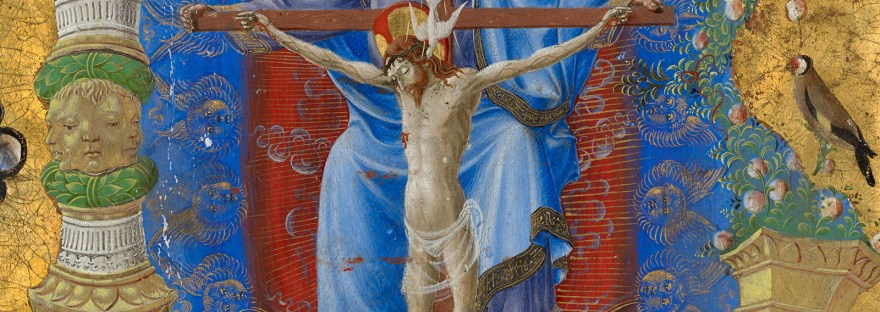
The Trinity can be described as the Christian Godhead as one God in three persons: Father, Son, and Holy Spirit.
Luke 4:1-12
According to the gospel account of Luke, towards the end of chapter three, there was the reporting of the baptism of Jesus Christ by John the Baptist, and the assumed genealogy of Jesus Christ. During the baptism account, there was a co-ordinated physical interaction of the Trinity in the presence of witnesses, the descent of the Holy Spirit in the form of a dove on Jesus Christ and the voice of the Father announcing His pleasure on the proceedings.
Thereafter, in chapter four, two verses, which are verses one and twelve, may contain clues about whether the Trinity were present during the temptation of Christ or not: verse one states; Jesus, full of the Holy Spirit, left the Jordan and was led by the Spirit into the wilderness, while verse twelve states; Jesus answered, “It is said: ‘Do not put the Lord your God to the test.’”
Straight away in the introduction to the account in chapter four, we have the persons or actors present in the scene, Jesus, the Holy Spirit and the Spirit. And of course, the second verse reports on the other person in the scene, that is the devil. Generally whenever the word ‘spirit’ is written in the Bible with an upper case “S”, it is a reference to God the Father, the God of all spirits, such as in Numbers 27:16; Let the Lord, the God of the spirits of all flesh, set a man over the congregation (KJV). So, in the opening verse of Luke chapter 4: we have; JESUS, the HOLY SPIRIT, and the FATHER, while in the twelfth verse, we have Jesus responding to the devil, that the devil should not put the FATHER to the test. In between verses one and twelve, we also have in a response to the devil, in verse eight; Jesus answered, “It is written: ‘Worship the Lord your God and serve him only.’”
This cursory study of some of the texts in Luke’s gospel account, chapter four, present the case for the presence of the Trinity during the temptation of Christ.


