
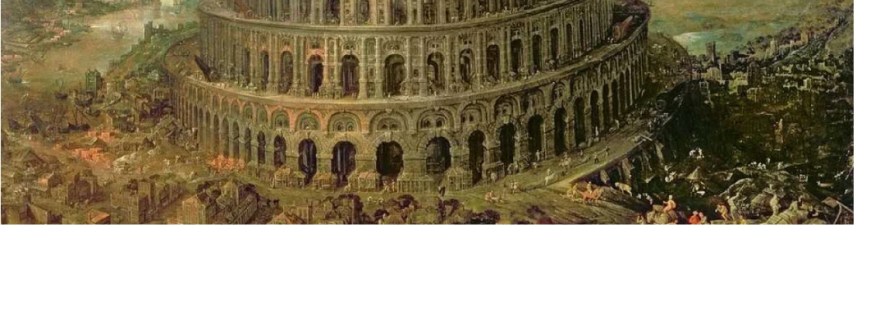
Advocates of unfettered free speech, trying literarily to build a gateway to Heaven, are ignorant of the irony of the tower of Babel story in the Bible. When you consider the example of the current owner of Twitter and SpaceX (the latter company spends billions of dollars devoted to building the most powerful rockets, to facilitate travel to the Moon and Mars, and beyond. While the former advocates unfettered free speech. Both owned by the same individual.)
Article 19 of the Universal Declaration of Human Rights, adopted in 1948, states that: Everyone has the right to freedom of opinion and expression; this right includes freedom to hold opinions without interference and to seek, receive and impart information and ideas through any media and regardless of frontiers. Freedom of speech is the right to speak, write, and share ideas and opinions without facing punishment from the government. The First Amendment protects this right by prohibiting Congress from making laws that would curtail freedom of speech.
In the middle of the 20th century, the Supreme Court ultimately concluded that because the right to speak freely is so fundamental, it is subject to restriction only in limited circumstances. Despite the broad freedom of expression guaranteed by the First Amendment, there are some historically rooted exceptions. First, the government may generally restrict the time, place, or manner of speech, if the restrictions are unrelated to what the speech says and leave people with enough alternative ways of expressing their views. Thus, for instance, the government may restrict the use of loudspeakers in residential areas at night, limit all demonstrations that block traffic, or ban all picketing of people’s homes.
Second, a few narrow categories of speech are not protected from government restrictions. The main such categories are incitement, defamation, fraud, obscenity, child pornography, fighting words, and threats. As the Supreme Court held in Brandenburg v. Ohio (1969), the government may forbid “incitement”—speech “directed at inciting or producing imminent lawless action” and “likely to incite or produce such action” (such as a speech to a mob urging it to attack a nearby building). But speech urging action at some unspecified future time may not be forbidden.
Defamatory lies (which are called “libel” if written and “slander” if spoken), lying under oath, and fraud may also be punished. In some instances, even negligent factual errors may lead to lawsuits. Such exceptions, however, extend only to factual falsehoods; expression of opinion may not be punished even if the opinion is broadly seen as morally wrong.
According to Genesis, the Babylonians wanted to make a name for themselves by building a mighty city and a tower “with its top in the heavens.” God disrupted the work by so confusing the language of the workers that they could no longer understand one another. Imagine the good and self-sustainability that could be achieved by devoting such copious amount of resources expended in building the most powerful rockets, instead into providing food (especially for those that lack, due to one reason or the other [war, drought, famine, environmental disaster]), and materials to produce more food and employment, and environment sustenance. One of the two is a fool’s errand. One is conceived by man, and the other by God. It is a question of who is smarter, God or man, the owner of Twitter and SpaceX, or God. You decide!


