Living Waters

The Deity of Jesus Christ

John 1 v 1-5

In the beginning [before all time] was the Word ([a]Christ), and the Word was with God, and [b]the Word was God Himself. 2 He was [continually existing] in the beginning [co-eternally] with God. 3 All things were made and came into existence through Him; and without Him not even one thing was made that has come into being. 4 In Him was life [and the power to bestow life], and the life was the Light of men. 5 The Light shines on in the [c]darkness, and the darkness did not understand it or overpower it or appropriate it or absorb it [and is unreceptive to it].

Eternity and eternal existence of Christ: before time and forever

Jesus Christ was with and in, God the Father at the time of Jacob’s sojourn on earth. In Genesis 33 v 18-20: After an altercation with his brother Esau, Jacob spent twenty years with his relative Laban. When he returned, “Jacob came safely to the city of Shechem, which is in the land of Canaan, on his way from Paddan-aram, and he camped before the city. And from the sons of Hamor, Shechem’s father, he bought for a hundred pieces of money the piece of land on which he had pitched his tent. There he erected an altar and called it El-Elohe-Israel” Although Genesis does not mention a well, tradition and the account in John’s Gospel lend credibility to the claim that this well was either dug or purchased by Jacob.

The climax era since creation; birth of Christ, works, crucifixion, resurrection and ascension.

Approximately 2000 (1800) years between Jacob and Jesus Christ, the Messiah at the time of the first coming for our Redemption.

When Jesus Christ was on His way to Galilee from Judea, passing through Samaria, came to a Samaritan town called Sychar, stopped at a well known as Jacob’s well and met a Samaritan woman who came to draw water.

Samaritans and Jews both descended from Jacob, before being separated into two nations or peoples from the time of King Rehoboam, son of Solomon (931/932 BC). The independent kingdom of Israel or Ephraim (Samaria; consisting of the ten northern tribes) and the kingdom of Judah or the southern kingdom.

950 years later in John 4 v 7; Then a woman from Samaria came to draw water. Jesus said to her, “Give Me a drink”

In John 4 v 9, ironically; The Samaritan woman asked Him, “How is it that You, being a Jew, ask me, a [c]Samaritan woman, for a drink?” (For Jews have nothing to do with Samaritans.)

This leads to one of the earliest gospel declaration on Salvation, in John 4 v 10: Jesus answered her, “If you knew [about] God’s gift [of eternal life], and who it is who says, ‘Give Me a drink,’ you would have asked Him [instead], and He would have given you living water (eternal life).”

Summary of the Bible: The Old Testament says, “He is coming!” The Gospels say, “He is here!” The book of Acts says, “He has come!” The Epistles say, “He is Lord!” Revelation says, “He is coming again!”

Thanksgiving 2018

Psalm 95 v 2

Let us come before His presence with a song of thanksgiving;
Let us shout joyfully to Him with songs.

Ephesians 5 v 20

always giving thanks to God the Father for all things, in the name of our Lord Jesus Christ;

1 Thessalonians 5 v 18

 in every situation [no matter what the circumstances] be thankful and continually give thanks to God; for this is the will of God for you in Christ Jesus.

Philippians 4 v 6-7

Do not be anxious or worried about anything, but in everything [every circumstance and situation] by prayer and petition with thanksgiving, continue to make your [specific] requests known to God. 7 And the peace of God [that peace which reassures the heart, that peace] which transcends all understanding, [that peace which] stands guard over your hearts and your minds in Christ Jesus [is yours].


Taking a “servant” attitude of thankfulness in all of life’s circumstances will help you react as old Matthew Henry did when he was mugged. He wrote in his diary, “Let me be thankful first because I was never robbed before; second, although they took my purse, they did not take my life; third, because although they took my all, it was not much; and fourth, because it was I who was robbed, not I who robbed.”

Psalm 95 v 2-3

Let us come before His presence with a song of thanksgiving;
Let us shout joyfully to Him with songs.
3 
For the Lord is a great God
And a great King above all gods,

Psalm 100 v 4-5

Enter His gates with a song of thanksgiving
And His courts with praise.
Be thankful to Him, bless and praise His name.

For the Lord is good;
His mercy and lovingkindness are everlasting,
His faithfulness [endures] to all generations.

A Prayer of Thanks for Food and Family

Thank You, Lord God, for this food we are about to eat. Thank You for the hands that have prepared it, for those sitting around the table who are here to share it, and for the ability to be here together under one roof, and enjoy these blessings at Your hand. We realize that everything we have comes from You and for that we are eternally grateful. We also thank You for what we don’t have this year, for we trust that You have withheld in Your goodness and out of Your protection for us. Thank You that Scripture says You are a Good Father who loves to give gifts to Your children. We sit here as evidence of Your goodness. Thank You for the gift of today and all who are here to share it with us. In the name of Your Son, Jesus, we pray. Amen.

A Prayer of Thanks for Blessings Past and Present

Lord God, we gather around this table to humbly thank You for all that You have given us this past year – not just what is on this table, but who is sitting around this table. Thank you for life and laughter, for health and happiness, for relationships and memories. Thank you, too, for the lessons learned and the tears we’ve cried because of Your ability to grow us through them. Thank You for Your comfort and Your presence, in light of good days and bad. Thank You for what we have now, for what we had yesterday, and for what You will continue to give tomorrow. Let us never take that for granted, but to always be grateful for every good and perfect gift that comes from You. May we have hearts full of thanksgiving not only today but every day of our lives. We pray these things in the name of Jesus Christ, Your Son, Amen.

A Prayer of Thanks for Who God is and What He has Given

Heavenly Father, it is with sincere hearts that we thank You for Who You are and all You have given to us, by Your grace. Thank You not just for this food, but for your Son, whom Scripture calls the Bread of Life. Thank You, God, for the greatest gift you could ever give us: forgiveness through the death of Your Perfect Son, Jesus, on the cross for us. Thank You for the righteousness You credited toward us, through Jesus’ death and resurrection. Thank You for the hope we have, through Jesus, that we will never die, but live forever in Your presence, when we trust in Him alone for our salvation. Thank You, God, for all that You have allowed and not allowed in our lives this past year so we could rely on You more. Thank You for answered prayer, as well as unanswered prayer. We acknowledge Your goodness in what You have decided to allow and what You have determined to withhold. We commit our lives anew to You this day and ask that You would continue to remind us, throughout this next year, that You are God, You are on the throne, and You are eternally good. Thank You, finally, that we can pray in the name of Jesus, who made our access to You – and a personal relationship with You – possible.  Amen.

REFORMATION 500 YEARS SINCE IT STARTED

One verse that help shape Reformation:

For in the gospel a righteousness from God is revealed, a righteousness that is by faith from first to last, just as it is written: ‘the righteous shall live by faith. (Romans 1:17)

Luther’s five Solas:

  • Sola Scriptura (Scripture alone)
  • Sola Fide (Faith alone)
  • Sola Gratia (Grace alone)
  • Sola Christus or Solo Christo (Christ alone)
  • Soli Deo Gloria (Glory to God alone)


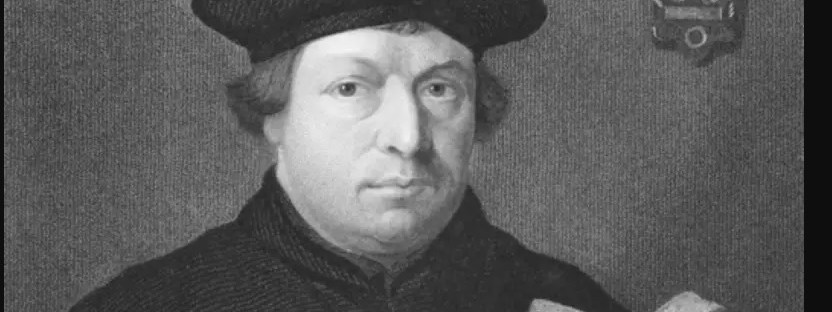
On October 31, 1517, Luther posted Ninety-Five Theses to the front door of the Castle Church in Wittenberg, which listed 95 issues he could not reconcile between Roman Catholic doctrine and the Bible. This was a political act as much as it was theological, and it nearly cost him his life. Eventually, Luther stood trial at the Diet of Worms, where he was forced to recant or be excommunicated; which he could not do, and was.

Fearing for his life, Frederick the Wise requested that Luther be taken under his protection at Wartburg Castle. Luther hid there for nearly one year under a false name (Junker Jorg, “the Knight George”) and translated the New Testament into German in just a few months.

The first “Lutheran” New Testament was published in 1522. The complete Bible, containing the Old and New Testaments and Apocrypha, was published in 1534.

New believers called themselves Protestants, marked by their protest of and separation from the Roman Catholic Church and empire. Luther’s protest and what became known as the Protestant Reformation, sparked reformation movements throughout the continent. His courage continues to inspire Protestants 500 years later worldwide.

 “Sola Scriptura” means 3 things:

  1. The Bible is God’s Wordcommunicated to humankind so that they may know and love their Creator. It offers wisdom, hope and guidance for all areas of life.

The Bible is inspired by God, or “God-breathed,” meaning it is God’s Word:

All Scripture is breathed out by God and profitable for teaching, for reproof, for correction, and training in righteousness, that the man of God may be competent, equipped for every good work. (1 Tim. 1:16-17)

  1. God’s Word is the sole authority over all of life, the only source of truth about life, and clearly communicates how one can know, love, and spend eternity with God. (Rom. 1:16-17). J. I. Packer clarifies:

. . . the Bible is both fully human and fully divine. So all its manifested contents – histories, prophecies, poems, songs, wisdom writings, sermons, statistics, letters, and whatever else, should be received as God’s authoritative instruction.

The Apostle Paul in his letter to Timothy (1 Tim. 5:8) quotes Jesus, identifying the reference of his quote– the Gospel of Luke– (Luke 10:7) as “Scripture.” Likewise, the Apostle Peter referred to Paul’s letters as “Scripture” (2 Pet. 3:15-16), describing Paul’s teachings about Jesus to be Spirit-taught: “This is what we speak, not in words taught us by human wisdom but in words taught by the Spirit, expressing spiritual truths in spiritual words.” (1 Cor. 2:13)

Scripture is not only authoritative, but also trustworthy. The faithful preaching and teaching of the whole counsel of God must be central to all worship. (2 Tim. 4:1-2)

  1. Anyone can freely read the Bibleand have direct access to God. The Pope is not the sole authority on scripture, or anything else for that matter. The “universal priesthood of believers” (the saints), means that every Christian has direct access to God– to pray to God directly, to receive forgiveness from God directly, and to worship God directly. God’s grace and mercy is free. (1 Pet. 2:5, 9-10)

As such, only the Lord Jesus Christ is the only mediator between God and man. (1 Tim. 2:5) No one need pray to, or pay for, prayer or access to God through a priest or anyone else. Likewise, the only sacraments believers should follow are those instituted by Jesus himself: water baptism (Matt. 28: 19-20) and the Lord’s Supper (1 Cor. 11:23-26).

Righteousness could not be bought, as the Roman Catholic Church advocated on the streets through the sale of indulgences and a piece of paper stamped by the Pope. Instead, after studying the book of Romans, Luther affirmed that he (and no one) could ever attain “the righteousness of God.” It was only by God’s mercy; only through faith in Jesus and his imputed righteousness that anyone could be saved. Salvation was already purchased by the blood of Jesus on the Cross.

After meditating on Romans 1:17, he wrote:

There I began to understand that the righteousness of God is that by which the righteous lives by a gift of God, namely by faith. And this is the meaning: The righteousness of God is revealed by the gospel, namely the passive righteousness with which the merciful God justifies us by faith. … Here I felt that I was altogether born again and had entered paradise itself through open gates.

Justification through faith alone in Jesus, and through God’s grace alone, not through baptism or penance or purchasing indulgences or Hail Mary’s, but through Jesus alone, could anyone be saved. Thus, the first two Solas, Sola fide (Faith alone) and Sola gratia (Grace alone)– became the foundational principle for the identity of believers even today who now have to clarify their faith with the qualifying adjectives: “conservative, evangelical, born again, Bible-believing Protestant followers of Jesus Christ.”

Following Sola Scriptura, Sola Fide, and Sola Gratia, Martin Luther clarified the ultimate distinction between Protestantism and every other belief: salvation was possible through Christ alone: Sola Christus. Truth comes from scripture alone. Faith comes from Christ alone.

At the heart of the matter lies the answer to the question: is saving faith in Jesus Christ enough? Or does one need to contribute something to atone for one’s sins– in addition to Christ’s death on the Cross and resurrection from the grave?

By the early mid-16th century, the Roman Catholic Church had instituted seven sacraments necessary for salvation:

  • baptism,
  • confirmation, or Chrismation,
  • communion (partaking of the Eucharist),
  • acts of penance,
  • anointing the sick,
  • Holy Orders,
  • and matrimony.

Martin Luther’s reformation reduced these to two: baptism and communion. His reasoning was based on the centrality of the person and work of Jesus Christ as taught in the Bible.

Martin Luther argued that Christian theology was “the theology of the Cross.” This meant that salvation from eternal death and separation from God was achieved only through faith alone (sola fide), grace alone (sola gratia), and Christa alone, Solus Christus.

Jesus, Martin Luther argued, was enough. There is no need for priests, Roman Catholic saints, or praying to or asking for blessings from Jesus’s mother, Mary. There is no need to ritually perform sacraments to earn salvation (baptism, penance, communion). And there definitely is no need to pay for anyone’s “unpaid-for- sins” who the Roman Catholic Church claims are trapped in the non-biblical “purgatory.” In fact, belief in Jesus in alone brought such relief and joy to Luther that he wrote,

If you have true faith that Christ is your Savior, then at once you have a gracious God, for faith leads you in and opens up God’s heart and will, that you should see pure grace and overflowing love.

The last of Martin Luther’s Five Solas, Soli Deo Gloria, puts into perspective the purpose of life for all Christians: to glorify and enjoy God forever. One’s vocation, or calling and purpose, is to glorify God– no matter their ethnic, religious, cultural, or socio-economic background. No distinctions exist within Christianity; no one Christian is above another.

This was another revolutionary concept Luther introduced– and mind-blowing– coming from an ordained priest and monk– who rallied against one of the Roman Catholic Church’s sacraments, the Holy Orders (becoming a bishop, priest, or deacon). Luther renounced his ordination and later married, arguing there was nothing biblical about the Holy Orders or a requirement of celibacy for ordination.

Neither bishops nor priests had the power to grant absolution, grace, or anything else. Nor could “the clergy” receive more grace or special favor from God than “the laity.” The divisive and non-biblical Roman Catholic doctrine that had categorized everyone other than bishops and priests as “less than” for centuries– was now declared null and void. One’s highest calling, Luther clarified, wasn’t to the church, but to God.

Therefore, whatever Christians do, Luther argued, should always be motivated by their desire to glorify God, citing the Apostle Paul once again:

So whatever you eat or drink or whatever you do, do it all for the glory of God. (1 Cor. 10:31)

Luther also argued that no distinction between secular or sacred vocations could exist. Every job could be done to the glory of God. He wrote:

God is a butler who sets forth a feast for the sparrows and spends on them annually more than the total revenue of the king of France. Christ worked as a carpenter. ‘I can just imagine,’ said Luther from the pulpit, ‘the people of Nazareth at the judgment day. They will come up to the Master and say, ‘Lord, didn’t you build my house? How did you come to this honor?’ The Virgin Mary worked, and the most amazing example of her humility is that after she had received the astonishing news that she was to be the mother of the Redeemer, she did not vaunt herself but went back and milked the cows, scoured the kettles, and swept the house like any other housemaid. Peter worked as a fisherman and was proud of his skill, though not too proud to take a suggestion from the Master when he told him to cast on the other side.

No matter one’s job, whether it be cleaning, care-taking, teaching, participating in athletic or music competitions, solving mathematic equations or building architectural feats, Christians do so primarily to glorify God. Christians can rejoice and give God the glory, no matter their vocation or circumstance– and no matter the outcome.

Stephen J. Nichols points out in The Reformation: How A Monk and a Mallet Changed the World, that,

a German musician would subscribe to this teaching of Luther. So Johann Sebastian Bach would sign his pieces, both pieces commissioned for the church and his so-called secular works, JSB and SDG. JSB stands, of course, for his initials; SDG stands for Soli Deo Gloria. Luther and Bach, both significant figures from the pages of history, remind us that in our seemingly ordinary work and life we are doing something extraordinary.

Because truth was found in scripture alone, and only Jesus could mediate between God and humanity, every Christian can have immediate access to God, personally serve God, and intercede for others:

You also, like living stones, are being built into a spiritual house to be a holy priesthood, offering spiritual sacrifices acceptable to God through Jesus Christ.

But you are a chosen people, a royal priesthood, a holy nation, a people belonging to God, that you may declare the praises of Him who called you out of darkness into His wonderful light. (1 Pet. 2:5, 9)

Let the word of Christ dwell in you richly as you teach and admonish one another with all wisdom, and as you sing psalms, hymns and spiritual songs with gratitude in your hearts to God. And whatever you do, whether in word or deed, do it all in the name of the Lord Jesus, giving thanks to God the Father through Him. (Col. 3:16-17)

No Holy Order is necessary to serve God. And, with the emphasis on this sola, Luther reoriented the concept of the church to the definition of scripture. The body of believers wasn’t defined by what one could get from the church (absolution, forgiveness, mediation), but what one could give to fellow believers. Soli Deo Gloria reemphasized that the importance of one’s time, talent, and treasure– was how it glorified God.

In 1529 German princes officially “protested” against Rome, thus becoming called Protestants. Their acts following Luther’s initial protest is what Protestants worldwide celebrate and remember 500 years later on this Sunday, called Reformation Sunday.

Martin Luther wrote often about the importance of praising God through music and song. He said:

Next to the Word of God, the noble art of music is the greatest treasure in the world. … music deserves the highest praise. The gift of language combined with the gift of song was given to man that he should proclaim the Word of God through Music.

Music is a gift and grace of God, not an invention of men. Thus it drives out the devil and makes people cheerful. Then one forgets all wrath, impurity, and other devices.

Next to theology I give music the highest place of honor. As long as we live there is never enough singing.

Martin Luther wrote hymns and instituted singing– by the congregation– into all services. This was never done in the Roman Catholic Church. In fact, Luther wrote entire hymnals including carols for holidays. His influence on German hymnody was enormous; his repertoire included 37 hymns. United Methodist Hymnal editor Carlton R. Young remarked:

he “wrote several original hymns and melodies, revised many Latin hymns to German texts set to adaptations of plainsong and folk melodies, and encouraged the composition of new texts and rhythmic hymn melodies. His thirty-seven hymns and paraphrase are cast in simple, plain, and sometimes rough phrases and striking metaphors, qualities that are for the most part lost in English translations.”

Luther wrote five Christmas carols, initially for his children. He wrote From Heaven on High for his five-year-old son Hans, which was published a few years later. As part of his family’s Christmas Eve devotions, the children sang in response to a man dressed as an angel. His hymns and carols are a testament to his creative celebration of music.

His most well-known hymn, “Ein’ Feste Burg,” otherwise known as, A Mighty Fortress is Our God, was based on Psalm 46 and Luther’s own experiences. According to the Psalter Hymnal Handbook:

Stanzas 1-3 of the original text were inspired by Psalm 46; stanza 4 arose directly from Luther’s persecution experience. The text expresses trust in God’s protection amidst the battle that Christians wage against the devil. “Earthly powers” in stanza four undoubtedly referred to the Roman Catholic authorities of Luther’s day, but modern Christians may identity other “powers” that oppose the rule of Christ. The closing line of the text provides much comfort: “God’s truth abideth still; his kingdom is forever!”

A Might Fortress is Our God has been considered “the true National Hymn of Germany.” It was sung on the Leipzig battlefield in 1631 during the Thirty Years’ War (1618-1648). The famous nineteenth-century German poet, Heinrich Heine, considered this hymn comparable to France’s national anthem, calling it, “the Marseillaise Hymn of the Reformation.” It’s still referred to as the Battle Hymn of the Reformation:

Imagine no choirs, no carols, no singing in church. No praise and worship bands. No reading hymnals. Martin Luther, and the Protestant Reformation made this possible. The legacy of singing in church is directly credited to Luther and his counterpart reformers in other European countries.

Reference: https://www.crosswalk.com/slideshows/back-to-scripture-the-protestant-reformation-and-the-five-solas.html

El Shaddai: God Almighty

What does the Old Testament word shaddai mean, and is there a message in this name for the Church?

Shaddai—Shades of Meaning?

There is considerable debate surrounding the name Shaddai. I believe the various possibilities are shades of meaning that give us greater understanding of who God is and what He does.

Among Christians, the most common interpretation of shaddai today is “mighty,” and El Shaddai would translate to “God Almighty.” Coinciding with this, one suggested root meaning for El Shaddai is “The Overpowerer,” meaning God will do what He purposes to do, overpowering all opposition.

Some interpret shaddai as “sufficient,” and God is the “All-sufficient One.” Either interpretation—mighty or sufficient—works for me, because the Almighty is the God who is enough! He is more than sufficient to meet any need. He is power and provision. In great compassion, He sustains, nourishes and protects me. He takes my weakness and gives me strength. He takes my inadequate resources and in His sufficiency uses them for His great and powerful purposes.

Yet another possible meaning of El Shaddai is “The God of the Mountain.” Some Messianic teachers say shaddai comes from the Akkadian word shaddu, meaning “mountain.” God lives in heaven, but He also inhabited a mountain top—Mount Sinai. It was on this mountain Moses met with God and received the Ten Commandments.
It might be argued God’s presence on that mountain reminded the Israelites of His power and provision. The God of the Mountain was the same God who mightily led His people from Egypt and appeared to them as a cloud by day and a fire at night. He is the God who expected obedience to His commands, and swiftly and powerfully took action against those who rebelled and ignored His will.

How Is God Mighty?

I want to focus on “shaddai” as “almighty. What does “God is Almighty” look like in practical terms?

The most obvious expression of God’s might is as the Creator. He is the Maker of all things in the universe—including humans. That isn’t open to dispute in scripture. “All things were made by Him, and without him was not any thing made that was made” (John 1:3). All things were created through the Lord’s power and for Him.

Think of the greatest construction workers you know and the beautiful things they build. God is infinitely a better Constructor than that! Hebrews 3:4 says it this way: “the builder of all things is God.”

God’s might is far beyond ours because He is eternal—the everlasting God from before time and into the timeless future. He is the everlasting King of heaven; and as the Sovereign God, He is answerable to no one!

God does “great and awesome” wonders—miracles! There is nothing too hard Him. He has unlimited power. We cannot even imagine all El Shaddai can do!

El Shaddai through the Old Testament

We discover El Shaddai throughout the years of the Patriarchs. Although the surrounding nations had many gods, the Hebrews had one, the Almighty. We see this name for God in Genesis 17:1when Abraham spoke with God, and also in Genesis 28:3 and 35:11.

Jacob asked God Almighty for mercy for his sons concerning their brother Joseph. Later, he described to Joseph how the Almighty appeared to him at Luz.

God told Moses of His encounters with Abraham and Jacob as God Almighty, and He added a new name in Exodus 6:2-3—the LORD. Ezekiel also mentioned God’s might and power.

Contending with the Almighty

The name El Shaddai is found repeatedly in the book of Job, and that is no surprise. Though Job initially contended with the Almighty, God’s display of power and wisdom caused the Patriarch to shut his mouth before the Lord’s sovereignty and authority.

The Psalmist wrote about those who contend with and plot against the Father and His anointed Son—trying to claim greater wisdom and power than the Lord of heaven. But scripture says God laughs at their silly assertions.

Truly, we can mock and play games with God all we want, but God’s wisdom and power are so far beyond us. We are foolish to contend with the Almighty.

Does Our Culture Discount El Shaddai?

In modern culture, the proclamation of God’s power has gone silent in many churches. A God of love is more palpable, more easily received, than the God who is sovereign and powerful—the Mighty God who can turn the hearts of kings and direct nations to do His will.

Habakkuk’s prayer (3:1-16) expressed some of the reasons the prophet trembled over a “report” about the Lord. He recounted the Lord’s mighty character and works, His anger over sin, and His sovereignty over the nations. When God’s prophets spoke His words with power, sometimes people and nations listened and turned to the Lord; but others resisted God. So it is today when God’s people speak up about His power and might.

If pastors preach the whole counsel of God, they will remind God’s people to see Him as He is: the reigning “Lord God Almighty” who will someday exert His great power and reign forever. He is the God who chooses us to make us a holy people and He transforms us with His power. He is to be honored with reverence and awe—holy “fear of the Lord.”

The Almighty Invites Us to Trust Him

The mighty God, embodied in Jesus Christ, fed thousands from simple provisions. He healed people and cast out demons that tormented them. He worked mighty miracles to assist His people and rescue them. He even raised people from the dead!

What a mighty God we serve—and we need to praise Him. He invites us to call on Him in prayer so He can show us great and mighty things. We can trust Him because He is trustworthy; He is our solid rock and hiding place, our deliverer and protector. We are wise to love and trust Him with all our heart, soul and mind.

The Lord says, “Come to Me,” because He knows His power and provision will lead to the peace of hope and praise.

The Paradox of Might and Humility

The Psalmist says, “Be exalted, O LORD, in your strength! We will sing and praise your power.” The Psalmist looked forward to the Messiah who would come in power; and Zechariah’s words in Luke 1:68 were a song of praise for God’s redemption in Christ.

Yet the wonder of all wonders is that the God who is El Shaddai would humble Himself to bring us salvation in His Son. The redeemed church is to thank and praise the meek and mighty Savior.

The watching church will see the Mighty God of Isaiah 9:6 come again with “power and great glory.” This One who has the name above all names will be honored throughout eternity for the mercy He extended to those who call on His name. In heaven, all of God’s creation will ascribe to Him “glory, majesty, power and authority”—the praise El Shaddai is due “forevermore.”

Ref: Dawn Wilson: What Is the Meaning of the Name Shaddai? https://www.crosswalk.com/faith/bible-study

FELLOWSHIP WITH GOD, WHAT IS IT? HOW IS IT? WHERE DOES IT TAKES PLACE?

The “First” coming of the Messiah was predicted by all the major and minor prophets, and the relationship and fellowship that God desires from us after the coming of Messiah was described by Jeremiah:

Jeremiah 31 v 31-34

“The days are coming,” declares the Lord,
“when I will make a new covenant
with the people of Israel
and with the people of Judah.
32 It will not be like the covenant
I made with their ancestors
when I took them by the hand
to lead them out of Egypt,
because they broke my covenant,
though I was a husband to[d] them,[e]”
declares the Lord.
33 “This is the covenant I will make with the people of Israel
after that time,” declares the Lord.
“I will put my law in their minds
and write it on their hearts.
I will be their God,
and they will be my people.
34 No longer will they teach their neighbour,
or say to one another, ‘Know the Lord,’
because they will all know me,
from the least of them to the greatest,”
declares the Lord.
“For I will forgive their wickedness
and will remember their sins no more.”

Prophet Ezekiel also confirmed what prophet Jeremiah prophesied about the Messiah’s coming.

Ezekiel 37 v 24-28

 “‘My servant David will be king over them, and they will all have one shepherd. They will follow my laws and be careful to keep my decrees.25 They will live in the land I gave to my servant Jacob, the land where your ancestors lived. They and their children and their children’s children will live there forever, and David my servant will be their prince forever.26 I will make a covenant of peace with them; it will be an everlasting covenant. I will establish them and increase their numbers, and I will put my sanctuary among them forever. 27 My dwelling place will be with them; I will be their God, and they will be my people. 28 Then the nations will know that I the Lord make Israel holy, when my sanctuary is among them forever.’”


Fellowship with God occurs when you talk to God from deep within your heart; Jesus Christ said in Matthew 22 v 37: Jesus replied: “‘Love the Lord your God with all your heart and with all your soul and with all your mind.’[c] 38 This is the first and greatest commandment.

The place is your mind, preferably physically away from others.

How do you fellowship can be found in the book of Matthew 6 v 6-13

 But when you pray, go into your room, close the door and pray to your Father, who is unseen. Then your Father, who sees what is done in secret, will reward you. 7 And when you pray, do not keep on babbling like pagans, for they think they will be heard because of their many words. 8 Do not be like them, for your Father knows what you need before you ask him.

9 “This, then, is how you should pray:

“‘Our Father in heaven,
hallowed be your name,
10 your kingdom come,
your will be done,
on earth as it is in heaven.
11 Give us today our daily bread.
12 And forgive us our debts,
as we also have forgiven our debtors.
13 And lead us not into temptation,[a]
but deliver us from the evil one.[b]’

For Thine is Thy Kingdom

Thine Power and Thy Glory

Forever and Ever

Amen.