Blog

Beyond or besides Limitless Power

Exodus 6:3; I appeared to Abraham, to Isaac and to Jacob as God Almighty,[El Shaddai] but by my name the Lord [The Hebrew for Lord sounds like and may be related to the Hebrew for I am] I did not make myself fully known to them.

The adjective almighty can be defined as having unlimited power; omnipotent, as God; having very great power, influence; or when almighty is used informally, means extreme; terrible. All these descriptors of God are found in the scriptural accounts of God’s actions and works, even a descriptor such as “terrible”. It takes unlimited power to create something out of nothing, just ask Quantum scientist and Albert Einstein, about the amount of energy required to produce atomic and or nuclear bombs and energy, and here, we are talking about turning something to nothing (destruction not creation) and even that is not possible. Energy can not be destroyed, only transformed. Those working in the field of nuclear power can attest to the immense energy involved or generated, and even this knowledge pales into insignificance when we consider or try to envision the power of God.

By His power, God created the whole creation out of nothing, He performed countless stupendous feats by His power. We are talking, mind-boggling feats, supernatural acts that manifests His omni potency. Since our minds are limited, we can not begin to fathom the extent of His power, and anyway His powers are limitless. Therefore, to begin to discuss an aspect of God, that is beyond or besides His omni potency, when we can not even begin to fathom His powers, is indeed complicated, if not near impossible. Which was what became the barrier of or against, understanding for theologians and experts of the Law, in the time God was with us in person as Jesus Christ.

For God to state unequivocally in Exodus chapter 6 verse 3, that even that nature of His “omni potency” is not a complete revelation of Who He is, and that the full revelation of Him is in that, He is the “I AM” (Lord), immediately begs the question, what is “I AM” or who is “I AM”, what does it mean? A clue to the meaning may be found in Psalm 62 verses 11 and 12, which states; One thing God has spoken, two things I have heard: “Power belongs to you, God, and with you, Lord, is unfailing love”. So in the context of this, God’s statement in Exodus 6:3 can be understood, that the complete revelation of God is His unfailing Love, in addition to His limitless power. Out of His unfailing Love flows His mercy, His compassion, and His forgiveness. Because of His Love, we are not consumed. His Love keeps His limitless power in check. In Romans 8:39, the Holy Spirit tells us that, the love of God that is revealed in Christ Jesus.

The unfailing love that made God come down in person to offer Himself as sacrifice in order to redeem man, to save man from the consequences of man’s sins, which is death. It is that unfailing love (that KEY nature of God) of God that makes Him forgive us no matter how wicked we are, and mind you, we are and can be pretty wicked. Man can be more wicked than some demons, that is really something. However, if we paraphrased Psalm 130 verse 4 as ”But there is limitless (Almighty, Omnipotent) power and forgiveness with thee, that thou mayest be feared.” Inherent in forgiveness is the power to punish. Therefore Psalm 130 verse 4 suggests with the statement “But there is forgiveness with thee, that thou mayest be feared.” That God has the power to punish, and this is the reason why we have to fear Him. Though forgiveness from God is borne out of His Love for us. Which seems contradictory on the face of it in Psalm 130 verse 4 when taken literarily (associating fear with forgiveness, whereas this is an aspect of love or borne out of love). The Scriptures is full of the promises of the manifestation of that STAR quality or nature of God, that was finally manifested when He was with us as Emmanuel. Jesus Christ said “He came to fulfill the Laws. He also said that the prophets and the righteous men (the chosen men of God) talked about Him”. This implies that the Old Testament – The Scriptures is about Jesus Christ. He confirmed it that He is, was and to be, the “I AM” several times in the gospel account of John in chapters 4, 5, 6, 7, and 8: verse 58; Jesus answered, “before Abraham was born, I am!”. The Psalms are also full of the promises of the manifestation of “I AM” or that “I AM” is AKA “unfailing love”. Just as the book of revelation chapter 5 verses 9-10 reveals to us what “I am who I am.[ I will be what I will be]”, will be; “You are worthy to take the scroll and to open its seals, because you were slain, and with your blood you purchased for God persons from every tribe and language and people and nation. You have made them to be a kingdom and priests to serve our God, and they will reign on the earth.” In Exodus 3:14; God said to Moses, “I am who I am.[ I will be what I will be] This is what you are to say to the Israelites: ‘I am has sent me to you.’” I AM involves the two major natures of God, His limitless power, and His unfailing Love, from which all His other natures or characteristics flow.
FOLLY OF A RELIGIOUS LEADER

In a video that went viral, a religious leader with millions (debatable) of followers said: (paraphrased),” when you attack or criticize me, I will only pray for you, but if you attack my wife, I will kill you so thoroughly that you will not wake up on resurrection day”. Either from ignorance or anger, this leader has lifted himself above the God he claims to serve, according to the Scriptures in John 5:28-29, Jesus Christ said “Do not be amazed at this, for a time is coming when all who are in their graves will hear his voice and come out—those who have done what is good will rise to live, and those who have done what is evil will rise to be condemned. By saying that he can kill someone so thoroughly that the person will not rise up on resurrection day, whereas Jesus Christ, the Lord that the religious leader claims to serve, said ALL will rise, he is abrogating to himself powers beyond that of the God he claims to serve. IGNORANCE.

Religion and Character

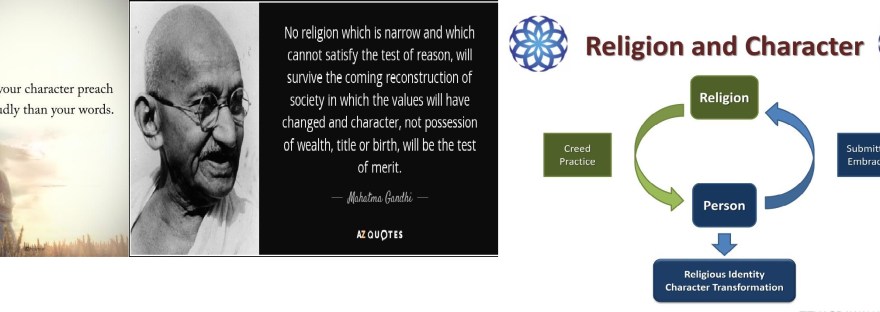
There is an African saying which can be paraphrased as follows: religion is one thing; character is another thing. It is possible to have religion and not have a good character. Religion can be defined as a set of beliefs concerning the cause, nature, and purpose of the universe, especially when considered as the creation of a superhuman agency or agencies, usually involving devotional and ritual observances, and often containing a moral code governing the conduct of human affairs. The perspective of religion on moral character and its role in promoting virtues is an important issue. Divine religions, generally, focus more on the inherent character of a person than the specific actions he or she should perform.

Members of a religious organization that strictly follow their devotional and ritual observances, but indulge in any of the following (Galatians 5:19-21); sexual immorality, impurity and debauchery; idolatry and witchcraft; hatred, discord, jealousy, fits of rage, selfish ambition, dissensions, factions and envy; drunkenness, orgies, gossiping or biting and devouring each other, can be described as having religion, but lacking good character.

The Holy Spirit speaking through prophet Isaiah phrased it, and explained its practical application in our daily lives in, Isaiah 58:3-7 that, “Yet on the day of your fasting, you do as you please and exploit all your workers. Your fasting ends in quarrelling and strife, and in striking each other with wicked fists. You cannot fast as you do today and expect your voice to be heard on high. Is this the kind of fast I have chosen, only a day for people to humble themselves? Is it only for bowing one’s head like a reed and for lying in sackcloth and ashes? Is that what you call a fast, a day acceptable to the Lord? “Is not this the kind of fasting I have chosen: to loose the chains of injustice and untie the cords of the yoke, to set the oppressed free and break every yoke? Is it not to share your food with the hungry and to provide the poor wanderer with shelter—when you see the naked, to clothe them, and not to turn away from your own flesh and blood.

Good character according to God translates into true religion or aptly put right relationship with God. The Scriptures in James 1:27 points out that Religion that God our Father accepts as pure and faultless is this: to look after orphans and widows in their distress and to keep oneself from being polluted by the world. According to the Scriptures in Galatians 5:14; For the entire law is fulfilled in keeping this one command: “Love your neighbour as yourself. When you love your neighbour, stranger or enemy as yourself, all your actions and behaviour towards others are grounded in love, that is, good character involved in a right relationship with God.

Thousand year old prophecy

Explaining why the statement of Jesus in John 7:28-29; (Then Jesus, still teaching in the temple courts, cried out, “Yes, you know me, and you know where I am from. I am not here on my own authority, but he who sent me is true. You do not know him, 29 but I know him because I am from him and he sent me.”), is based on Psalm 53:1-6

In Isaiah 45 verse 21; God said; Who foretold this long ago, who declared it from the distant past? Was it not I, the LORD? And there is no God apart from me, a righteous God and a Savior; there is none but me.

Around a thousand years before Christ, the Holy Spirit spoke through King David in Psalm 53; The fool says in his heart, “There is no God.” They are corrupt, and their ways are vile; there is no one who does good. God looks down from heaven on all mankind to see if there are any who understand, any who seek God. Everyone has turned away, all have become corrupt; there is no one who does good, not even one. Do all these evildoers know nothing? They devour my people as though eating bread; they never call on God. But there they are, overwhelmed with dread, where there was nothing to dread. God scattered the bones of those who attacked you; you put them to shame, for God despised them. Oh, that salvation for Israel would come out of Zion! When God restores his people, let Jacob rejoice and Israel be glad!

However, since no one was worthy, good [Luke 18:19; “No one is good—except God alone](John 8:7; “Let any one of you who is without sin be the first to throw a stone at her.”) to do the work of Salvation, God Himself (God the Son) had to come down to do the work of Salvation.

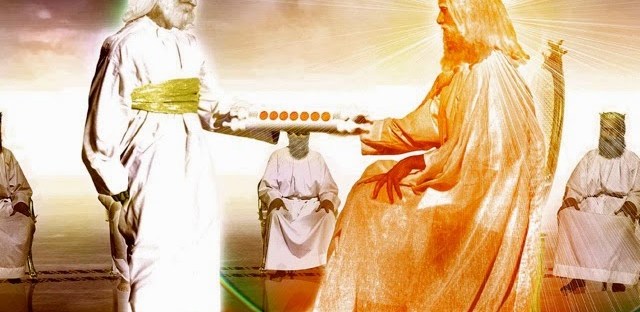
Around a thousand and sixty-five years later, Apostle John in the book of Revelations in the visions shown to him by an Angel, confirmed this, Revelations 5:1-5; Then I saw in the right hand of him who sat on the throne a scroll with writing on both sides and sealed with seven seals. And I saw a mighty angel proclaiming in a loud voice, “Who is worthy to break the seals and open the scroll?” But no one in heaven or on earth or under the earth could open the scroll or even look inside it. I wept and wept because no one was found who was worthy to open the scroll or look inside. Then one of the elders said to me, “Do not weep! See, the Lion of the tribe of Judah, the Root of David, has triumphed. He is able to open the scroll and its seven seals.”

Analysis: self and other

Check your habits including online behaviour, be it on social media platforms and or other media platforms. Are your posts mainly your pictures, or about things you are involved in, such as your business or profession? If your answer is yes, this means that you are self-involved. On the one hand, there is nothing wrong in this, as long as one recognises that, God had designed man with this inherent quality, with a view to, as a means of survival, extending to a desire for immortality.

Man is always focused on his/her abilities, achievements, desires, interests, will and wishes, including the desire to live forever. The Scriptures is a love story consisting of two actors: God and Man. Out of the two actors, one, is in all the stories and anecdotes busy with himself/herself, entirely self-involved and makes everything about themselves, while the other actor, in all the stories and anecdotes makes it about the other actor. Man makes it about man, and God makes it about man. It is possible to study the Bible and conclude that our Lord Jesus Christ died and rose on the third day, mainly to save us “Salvation” from our sin (thus making us the focus of the Salvation work). On the other hand, the redemptive work of Christ can be seen as God coming down from Heaven to reunite man to Himself, by cleansing man with His, God, own Blood. This understanding puts God at the front and centre of the story, as it should be.

God always, at every step, since Creation, put man first, beginning with; after creating the plants and animals, He paraded everything before man and asked man to give them names, as if it were man that did the work. God continuously honoured man, right from Creation work to Salvation, when He finished the work on the cross. This constantly has lulled man into thinking that he/she is the main actor, that it is all about him/her, and his/her abilities, looks, achievements and desires, including living forever. Ask any person you know to tell you about their family member that lived one hundred years ago without looking into any written source. Let them describe the character, likes and dislikes, momentous events, and occasions in that dead relative’s life. The dead are dead and forgotten. This explains what Jesus meant when he said that even the tax collectors love those who love them, their family members, and these ones would soon forget, the moment the reinforcing instrument is removed or absent. Jesus advocates being like the Father, loving your enemies, love the stranger like yourself (see the hook of self-love once again), in order to be like your Father in Heaven.

James 4:6; But he gives us more grace. That is why Scripture says: “God opposes the proud but shows favour to the humble.”

Proverbs 3:34; He mocks proud mockers but shows favour to the humble and oppressed.

Pride can be defined as a sense of one’s own proper dignity or value; self-respect. Or pleasure or satisfaction taken in an achievement, possession, or association. Or arrogant or disdainful conduct or treatment; haughtiness.

A high or inordinate opinion of one’s own dignity, importance, merit, or superiority, whether as cherished in the mind or as displayed in bearing, conduct, etc.

The state or feeling of being proud.

A becoming or dignified sense of what is due to oneself or one’s position or character; self-respect; self-esteem.

Pleasure or satisfaction taken in something done by or belonging to oneself or believed to reflect credit upon oneself: civic pride.

A respected Bible scholar and pastor, once did an analysis of the book of Jonah and came to the conclusion that this book was about man, according to him, workers in the church (what he meant was workers/employees in his religious organization) are sleeping, and that they have to wake up from their slumber in order to help God with Salvation work! However, some other theologians, in their analyses of the book of Jonah concluded that the book was about the forgiven nature and character of God. This is a perfect example of the principle of self-involvement and selflessness. Man is always making it about himself/herself, while God is always making it about man. What a sweet, sweet, loving, kind, forgiving, compassionate and merciful God we have.