Blog

Dispassionate, Personal and Complicated Man

Being dispassionate can be described as not influenced by strong feelings or emotions; impartial. Free from passion; calm; composed; impartial; unmoved by strong emotion; cool; applied to persons: as, dispassionate men or judges. Not dictated by passion; not proceeding from temper or bias; impartial: applied to actions or sentiments. While, Personality refers to the pattern of thoughts, feelings, social adjustments, and behaviors consistently exhibited over time that strongly influences one’s expectations, self-perceptions, values, and attitudes. Personality also predicts human reactions to other people, problems, and stress.

Being holy can be described as perfect in goodness and righteousness. Holy can also be regarded as pure, having a spiritually pure quality: a holy love, without flaw. (Ecclesiastical Terms) of, relating to, or associated with God or a deity; sacred. (Ecclesiastical Terms) endowed or invested with extreme purity or sublimity. (Ecclesiastical Terms) devout, godly, or virtuous. Holy terror, a difficult or frightening person, inspiring fear, awe, or distress.

It is possible to like God and not love Him because He inspires fear, awe or distress. However, one can love Jesus Christ because He is spiritually pure, without flaw and most important of all the expressional form, person, or nature of God’s love. While one can reverence the Holy Spirit because He is perfect in goodness and righteousness. Due to the complexity of God and His character, and above all His desire to commune with man, He presents Himself in three or more ways, in order for man to like Him, love Him and reverence or fear Him. An extremely complicated Man indeed, with no name, taking on names depending on the occasion or situation, such as Father (Man), Son (Son of Man), Holy Spirit (the Spirit) or Adonai Eloheinu (My Lord my God). Because of the Fear due to Him, so to make Himself accessible to us, God has expressed Himself and lived among us as Jesus Christ.

God is a personal God, with likes and dislikes, such as: He likes truth, honesty, fairness, kindness and He is prone to being hurt when confronted with His dislikes such as: lies, deceit, hatred, cruelty, disdain, lack of empathy, manipulation, envy, pride, gossip, malicious rumor mongering, oppression and the list goes on and on.

Despite being personal, God is also at the same time dispassionate and unbiased; He sends rain on both the good and the wicked, He gives length of days irrespective of goodness or wickedness, He gives riches to both the good and the wicked, and He allows poverty, calamity or disaster on both the good and the wicked. Almost impersonal or devoid of emotions or feelings when it comes to dispensing His favors. He is indeed an extremely complicated Man.

Resuscitation ‘raising of Lazarus’ versus Resurrection

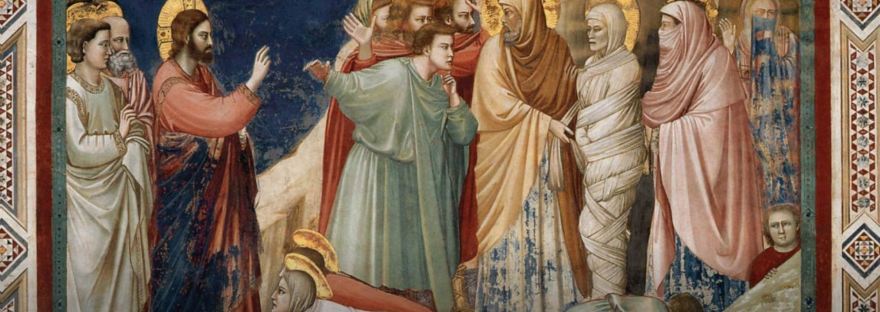
Raising Lazarus from the dead and the resurrection of the body. Some people accept death as a natural part of human life. Others think death to be merely a portal to eternity. Death came into the world through the envy of the devil, not through the plan of God. Death wrenches soul from body. It rips loved ones from the embrace of their families. Jesus’ miracles in the gospels always spring from his compassion for the suffering. But he always has more in mind than helping just the victim lying before him. His miraculous works in John’s gospel are called signs because they point beyond themselves to something even greater he will do to gain a greater benefit for all. His teaching was of course sublime. And his cures were life-changing. But wise and healthy people still face the horror of death. If Jesus were really the saviour, he had to save us from the grave. And the salvation would have to be a permanent one.  The raising of Lazarus was only a stay of execution. A few years later, the mourners would have to assemble around his bedside once again. So, in the presence of the great crowd assembled for the funeral, Jesus called Lazarus out of the tomb. This demonstration of Jesus’ power over death was a sign of his own coming resurrection, and of Lazarus’s and ours as well. This is the last recorded miracle or “sign” in John’s gospel. But that was all part of his plan. For he was in total control. He planned to lay his life down willingly, to experience the horrible torture of crucifixion, the bitter wrenching or the sublime unfathomable transition[those who die peacefully in their sleep at old age and sometimes at any age] of body from soul, with the body turning to dust and ashes (though in the case of Jesus; He did not let His Holy One see decay)and the soul moving on, and ultimate separation of friend from friend (in this realm in any case). He was willing to do this because by means of it, he knew he would accomplish more for us than he had for Lazarus–a victory over death that would last forever.

“Christ’s resurrection was not a return to earthly life, as was the case with the raisings from the dead that He had performed before Easter: Jairus’ daughter, the young man of Naim, Lazarus. These actions were miraculous events, but the persons miraculously raised were returned by Jesus’ power to ordinary earthly life. At some particular moment they would die again. “Christ’s resurrection is essentially different. In His risen body He passes from the state of death to another life beyond time and space. At Jesus’ resurrection, His body is filled with the power of the Holy Spirit: He shares the divine life in His glorious state”.

Indications of this transformation are clear in the Gospel accounts. Christ’s resurrected body now has new capabilities: He can appear and reappear suddenly; He can pass through locked doors; He can conceal His identity even from those who know Him well (see Luke 24:13–37; John 20:11–19). Then, at the appointed time of His last appearance, He is able to ascend into heaven in this transformed body (see Luke 24:50–51), bringing about “the irreversible entry of his humanity into divine glory”

Being raised from the dead, like Lazarus, is not the same as resurrection. Lazarus was brought back to his mortal body, and would ultimately die “again”. Resurrection is when our spirit is reunited with an immortal body that will never die again. In the resurrection, we will be resurrected to the glory that we will inherit, or to no glory at all for sons of perdition.

All flesh is not the same flesh: but there is one kind of flesh of men, another flesh of beasts, another of fishes, and another of birds. There are also celestial bodies, and bodies terrestrial: but the glory of the celestial is one, and the glory of the terrestrial is another. There is one glory of the sun, and another glory of the moon, and another glory of the stars: for one star differeth from another star in glory. So also is the resurrection of the dead. It is sown in corruption; it is raised in incorruption: (1 Cor. 15:39-42). Christ was the first to be resurrected on this earth: (Acts 26: 23; Col. 1: 18; Rev. 1: 5).

When it comes to the Christian faith, one of the most important doctrines is the resurrection of the dead/the resurrection of Jesus. Biblical faith is not simply centred in ethical and religious teachings. Instead, it is founded on the person and work of Jesus. From a soteriological perspective, if Jesus was not raised from the dead, we as His followers are still dead in our sins (1Cor.15:7). Jesus said in John 11:25, “I am the resurrection and the life; he who believes in me shall live even if he dies.” Jesus could not have made full atonement for our sins without the resurrection. Also, through the resurrection, Jesus took on the role as advocate and intercessor (1 John. 2:2O; Rom. 8:34). His resurrection also guaranteed us the opportunity of having a resurrected body’s like His (1 Cor.15:20-23, 51-53; 1 Pet.1:3; Phil. 3:20-21; John. 5:25-29).

The Jewish people knew the God of Israel as the only one who could raise the dead (Job 19:26; Ps. 17:15; 49:15; 73:24; Is. 26:19; 53:10; Dn. 12:2;12:13).Therefore, by claiming the authority to raise the dead, Jesus was exemplifying both the same actions and attributes of the God Israel. The resurrection also marked Jesus as the one who will be the judge all men (Acts 17:31).

The Difference between Resuscitation and Resurrection

The Greek word for resurrection is “anatasis” which means “a raising up” or “rising.” The key is to differentiate between a resuscitation and a resurrection. There are resuscitations in the Tanakh (the Old Testament) such as the example of Elijah and Elisha raising a person from death (1 Kings 17-23; 2 Kings 4:34-35).

Likewise, there are three resuscitations in the Gospels (Lk. 8:49-56; Jn. 11:38-44; Lk. 7:11-15). So if look at the life of Lazarus it seems like he was resurrected. He was “raised up.” However, Lazarus went on to live on in his old mode and still had to face a ‘second’ death. Hence, Lazarus and these other accounts are similar to the raising of the dead as already mentioned in the examples of Elijah and Elisha raising a person from death (1 Kings 17-23; 2 Kings 4:34-35).

The Bible gives several specific examples of people who were resuscitated (Acts 20:9-11), or re-animated, back to life. Each of these people who were brought back to life had to die again. This is not the same as the biblical hope of resurrection. When believers are raised from the dead, they will receive a new, glorified body. This body will never perish. The use of the word “resuscitate.” If one were in fact dead, then resuscitation would not be possible. For example, a fire cannot be revived if there are no sparks (seen or unseen). So also, a person cannot be resuscitated (medically)if there is no life (soul) present with reference to the semantically correct modern usage of the terms.

However, in itself, resuscitation does not imply that the person must still have some spark of life. Resuscitation comes from “re” (again) + “suscitater” (to rouse, awaken). [this seems particularly fitting for Lazarus, since Christ himself says that he is going to awaken him]. Resurrection is from the Latin “re” + “surgere” (rise, life). It is worth noting that, in French, the word “ressusciter” is used to mean “to resurrect”. Etymologically, there is little difference in meaning between “resurrection” and “resuscitation”, the use of the two words is an easy way of indicating that Lazarus had not yet experienced the resurrection to glory. In any case, we can be sure of this: Lazarus was dead, his soul had left his body; but Christ called him back to (natural) life. Christ’s resurrection is essentially different. In His risen body He passed from the state of death of the physical body (without His physical body undergoing decay) to another spiritual body of life beyond time and space. From one realm, physical realm govern by laws of nature, to the spiritual realm, a realm not bounded or limited by time and space.

References

(https://www.crossroadsinitiative.com/media/articles/raising-of-lazarus/)

(https://www.stcatherinercc.org/single-post/2018/04/04/Was-Jesus-Resurrection-the-Same-as-Lazarus)

(https://thirdhour.org/forums/topic/30715-resurrection-versus-raised-from-the-dead/)

(https://tabernacleofdavidministries.com/2019/09/24/whats-the-difference-between-the-resurrection-of-lazarus-and-the-resurrection-of-jesus/)

(https://newtheologicalmovement.blogspot.com/2011/04/lazarus-resuscitation-compared-to-jesus.html)

When the Mediator is the Judge Himself

Man is up the creek without a paddle, only he does not know it yet. At least, not everyone, but the majority are. If you are reading this piece and you ask why, well it is simple, imagine yourself as a criminal, a murderer caught in the act and arraigned before a judge, being tried and you find out that your Lawyer, defense attorney whom you have already confessed the gory details of your crime to, in confidence, expecting him to defend you, is the judge himself. You see, there is a caveat to mediating or defending an accused, and this can be found in the gospel of Mathew chapter 25, from verses 37 to 46.

“Then the righteous will answer him, ‘Lord, when did we see you hungry and feed you, or thirsty and give you something to drink? When did we see you a stranger and invite you in, or needing clothes and clothe you? When did we see you sick or in prison and go to visit you?’ “The King will reply, ‘Truly I tell you, whatever you did for one of the least of these brothers and sisters of mine, you did for me.’ “Then he will say to those on his left, ‘Depart from me, you who are cursed, into the eternal fire prepared for the devil and his angels. For I was hungry and you gave me nothing to eat, I was thirsty and you gave me nothing to drink, I was a stranger and you did not invite me in, I needed clothes and you did not clothe me, I was sick and in prison and you did not look after me.’ “They also will answer, ‘Lord, when did we see you hungry or thirsty or a stranger or needing clothes or sick or in prison, and did not help you?’ “He will reply, ‘Truly I tell you, whatever you did not do for one of the least of these, you did not do for me.’ “Then they will go away to eternal punishment, but the righteous to eternal life.”

Having established that most of us are up the shitcreek without a paddle, that is our case will not be taken up by the Mediator. Let us examine the identity of the Mediator, using Biblical reference sources.

1 Samuel 2:25 tells us that, If one person sins against another, God [or the Judges] may mediate for the offender, but if anyone sins against the Lord, who will intercede for them?

1 Timothy 2:5 equally says, For there is one God and one mediator between God and mankind, the man Christ Jesus. This man attests in John 6:51, that, I am the living bread that came down from heaven. Whoever eats this bread will live forever. This bread is my flesh, which I will give for the life of the world.”

Then we have the stunning declaration of the man [Son of Man] in John 5:17-18, In his defense Jesus said to them, “My Father is always at his work to this very day, and I too am working.” For this reason, they tried all the more to kill him; not only was he breaking the Sabbath, but he was even calling God his own Father, making himself EQUAL with GOD. JESUS CHRIST = GOD

Does this mean that God Himself, is the Mediator? And that Jesus Christ is God Himself. Who at different times, operates as the Father, Son and Holy Spirit, individually and or simultaneously as a duality or trifold. Any way if you can not get your head around this concept, you are in good company, those practicing Judaism could not either, and in the time of Jesus, were actually incensed at Jesus Christ for making them consider it, while the founding fathers! of Catholic church, Greek orthodox church (the New Testament was written mostly in Greek) came up with the Nicene Creed containing Trinity. Not forgetting the Arians, Origen, Athanasius, Gregory of Nyssa, Sabellius, Eunomius, Eusebius of Caesarea, Georges Florovsky, Cyril of Alexandria, and Maximus Confessor, who were all at one time or the other trying to wrap their head around this complicated and difficult concept.

Furthermore, John 5:22 says, Moreover, the Father judges no one, but has entrusted all judgment to the Son (Jesus Christ). And in John 8:50, Jesus also says that, I am not seeking glory for myself; but there is one who seeks it, and he is the judge. He added in John 5:27, And he has given him authority to judge because he is the Son of Man.

Jesus continued in John 5:30, By myself I can do nothing; I judge only as I hear, and my judgment is just, for I seek not to please myself but him who sent me. While in John 9:39; Jesus said, “For judgment I have come into this world, so that the blind will see and those who see will become blind.” He clarified in John 9:5 that, While I am in the world, I am the light of the world.”

John 5:23 made us to understand that, Whoever does not honor the Son does not honor the Father, who sent him. Honoring the Father requires believing in the One sent by the Father, which Jesus put succinctly in John 6:29 in this manner, “The work of God is this: to believe in the one he has sent.” He paraphrased this in John 6:40, For my Father’s will is that everyone who looks to the Son and believes in him shall have eternal life, and I will raise them up at the last day.”

Now we know who the judge is, and who the Mediator is, but what about the prosecutor? The clue is in John 5:45; Your accuser is Moses (the Laws were given to Moses by God the Father), on whom your hopes are set.

Knowing who the actors are in the courtroom is essential, though it seems the judge, the defense attorney and the prosecuting attorney are all ONE and the same. According to John 4:25-26, the Savior, Mediator is Christ, otherwise known as Messiah; The woman said, “I know that Messiah” (called Christ) “is coming. When he comes, he will explain everything to us.” Then Jesus declared, “I, the one speaking to you—I am he.” The teaching or explaining aspect is also confirmed by him in John 6:45; It is written in the Prophets: ‘They will all be taught by God.’ [Isaiah 54:13; All your children will be taught by the Lord, and great will be their peace.] Everyone who has heard the Father and learned from him comes to me.

That the judge and the defense attorney and the prosecuting attorney are all together the same God is put in a crystal clear manner in Isaiah 9:6; For to us a child is born, to us a son is given, and the government will be on his shoulders. And he will be called Wonderful Counselor, Mighty God, Everlasting Father, Prince of Peace.

Where does this leave us? In a situation where the Mediator is the Judge Himself. Since especially, all have sinned (Romans 3:23), therefore, to qualify for Mediation!, it is not enough to worship God by regularly attending church services and participating in all of your local church programs (Romans 2:13; For it is not those who hear the law who are righteous in God’s sight, but it is those who obey the law who will be declared righteous.), but by putting God’s words to practice by obeying them (Luke 11:28; He replied, “Blessed rather are those who hear the word of God and obey it.”). All of which can be distilled into the statement in Galatians 5:14; For the entire law is fulfilled in keeping this one command: “Love your neighbor as yourself.”[Leviticus 19:18; “‘Do not seek revenge or bear a grudge against anyone among your people, but love your neighbor as yourself. I am the Lord.], strangers and self-professed enemies included. Remember, we ourselves are sinners, criminals, while, Jesus Christ is the Rock, and according to Deuteronomy 32 verse 4, He is the Rock, his works are perfect, and all his ways are just. A faithful God who does no wrong, upright, and just is he.


Jealous – Reconciling and understanding God’s words

In the Scriptures, there is a phrase in Exodus 34:14, that says “the Lord, whose name is Jealous, is a jealous God.” While in 1 John 4:8, we are informed that “God is love”. We are also told in 1 Corinthian 13:4-8, that “Love… does not envy”.

Jealousy as we human beings know it, is different from that of God’s. the word jealous can be defined in three manners according to the dictionary:

  1. It can be defined as feeling or showing envy of someone or their achievements and advantages (this is the more familiar emotions with us human beings).
  2. It can also be defined as feeling or showing suspicion of someone’s unfaithfulness in a relationship (this is relevant to the Scripture text in Exodus 34:14).
  3. Also as fiercely protective or vigilant of one’s rights or possession (this is relevant to the Scripture text in Exodus 34:14).

So, what does the phrase “…Jealous, is a jealous God” mean? We know that where there is no law, there is no sin. When God said that He is a jealous God, that statement was made, in the giving of the Laws. An important factor is that, God gives (gave) everything to man (God actually metaphorically refers to man as His lover/partner). It follows that when a person gives everything (Himself, His life as sacrifice) to their partner in love, is it too much to expect that, their partner reciprocates? Here is the application of definitions “B” and “C” of Jealous.

Therefore, God expects man to be as devoted to Him, as He is devoted to man. As a result of which, God is not willing to share the devotion, feeling or emotion of the object/subject of His Love (that is man) with anything or anybody (Do not have any other God besides Me). This aptly expresses definitions “B” and “C”, and partly explains the Jealousy. What is good for the Goose is good for the Gander.

In spite of this nature of God, and because God is Love, He endows man with free will, and with this free will, man is free to choose whether to love God or not. An important aspect of true love is the willingness to set the object/subject of love free, and if this object/subject comes back to you, then you know that it (he or she) truly loves you.

The statement “God is a jealous God” is more of a reference statement or standard setting; in the giving of the Law, an indicative statement, of what can or does result in sin on the part of man, when or if man chooses to give his affection to something or somebody else, other than God. This would be noted as a sin against God.

However, according to 1 Corinthians 13:4-8, God does not keep records of wrong, when man repents and turn back to give his affections, love, totally to God, God then wipe away the record, because God is a merciful God. God is Love.

A snapshot of the Courtroom: revisited

Using sources from the three Abrahamic religions, a glimpse of the courtroom on the day of judgement can be had.

Most souls will appear on an individual basis in the dock, with an inability to speak on their own behalf. And with no recourse to a counsel, each soul would be judged. Every thought, speech and action would be played back and judged. The standard of measurement is God Himself. The judge is Jesus Christ (John 5:22), and the accuser/ prosecutor is Moses (John 5:45). And the defense attorney is Jesus Christ (1 John 2:1).

The previous statement may sound confusing, but it is even more complicated, considering the fact that the statement made by Jesus in the gospel of John 5:45, when it is put under further consideration, “the accuser is Moses”, we realize that the context in which Jesus was speaking to the theologians of the day (Pharisees) was that they put their hopes in the Laws of Moses and their adherence (and or non-adherence) to it, however, the Laws were given to Moses by, you guessed it, God. This translates into: the judge is God; the prosecutor is God; and the defense attorney is God. So, the accused is ficked (excuses for the language), whichever way you look at it, once he or she appears in that courtroom.

Exploring the situation in details, present scenarios such as, when a soul that has done a lot of good works while alive and some bad, assumes that his or her good works will be weighed against his or her bad deeds, suddenly discovers that a fatal assumption has been made, in that the court proceedings there, do not go that way. Instead a person’ work will be weighed against God’s work, and unless an individual’s righteousness measures up to that of God’s righteousness (which is impossible), they will otherwise be found guilty.

As stated earlier, this is standard practice for most souls, however some souls, whom are recognized by Jesus Christ (such souls that believed in Him by doing everything that Jesus Christ said, which can be summed up into two precepts, namely love God with all your heart, soul and body, and secondly love your neighbour, including your enemy, like yourself), would get a free pass and not undergo judgement, transferring straight away to eternal life with God the Father.

This translates into a scenario such as when a person dies and their soul shows up in the Courtroom, such soul is on a one-way ticket to Hell and is surely at the departure lounge to Hell. Therefore, the Courtroom is synonymous to the departure lounge of Hell. While living, people have a choice of where they get to spend the rest of eternity; do everything Jesus Christ said and spend the rest of eternity in Heaven with God, or do whatever you want, including some good works and few bad deeds and hate your enemies, be biased, discriminate on any basis, treat strangers differently than your loved ones, pride, comparing yourself to others, and the list go on and on, and get to spend the rest of eternity in Hell. Seems like a very simple choice, but choosing Jesus Christ (doing everything He said) is so difficult that one needs the enablement of the Holy Spirit Himself. May the Holy Spirit enable us to walk according to the precepts of God. Amen.