Blog

Could Jesus Have Survived the Crucifixion?

Quote of the Day

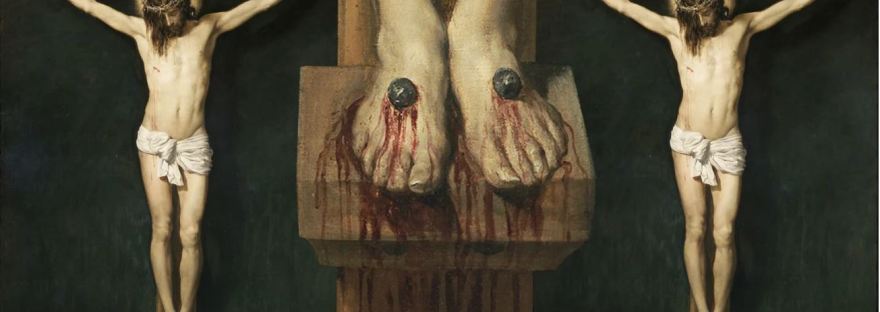
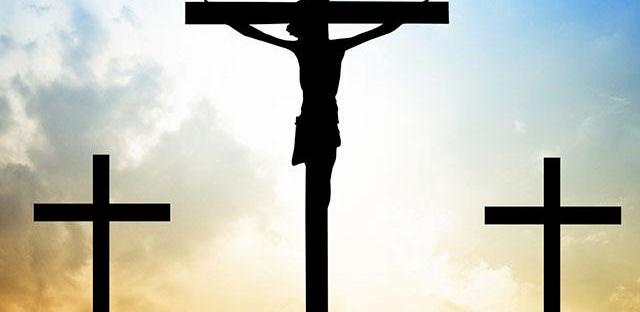
“And when they came to the place that is called The Skull, there they crucified him, and the criminals, one on his right and one on his left.”

~Luke 23:33

Today’s Answer

Could Jesus Have Survived the Crucifixion?

Answered by Greg Laurie

The swoon theory is one of Satan’s oldest lies concerning the Resurrection. This theory proposes that Jesus did not rise from the dead, because He never really died. Instead, Jesus went into a deep coma or “swoon” from the severe pain and trauma of the Crucifixion. Then, in the cool atmosphere of the tomb, Christ revived, somehow escaped the strips of cloths that were wrapped tightly upon Him, and then appeared to His disciples.

The swoon theory flies in the face of the facts. You see, the Roman guards were experts at execution and would be put to death if they allowed a condemned man, like Christ, to escape death. The guards were certain Jesus was dead, because when they thrust a spear into His side, it brought forth blood and water. This was their final proof of His death because this occurs when the heart stops beating.

Some time ago I read a local advice column that featured a reader’s question about the Resurrection. The reader asked, “Dear Uticus, Our preacher said that Jesus swooned on the cross and then His disciples nursed Him to health. What do you think? Signed, Bewildered.” Uticus responded, “Dear Bewildered, Beat your preacher with a cat-o’-nine-tails thirty-nine times. Nail him to a cross. Hang him in the sun for six hours. Run a spear through his side, embalm him, and put him in an airless tomb for thirty-six hours and see what happens. Sincerely, Uticus.”

Uticus’ response points to the ridiculousness of the swoon theory. Amazingly enough, people still subscribe to this theory. Not because it’s plausible. Not because it’s logical, but because it’s something to hang their doubt on. The truth of the matter is that Jesus Christ has risen!

Taken from “A Case for the Resurrection (Part 2)” by Harvest Ministries (used by permission).

Crucifixion was a method of capital punishment in which the victim was tied or nailed to a large wooden beam and left to hang, perhaps for several days, until eventual death from exhaustion and asphyxiation.

Punishment, penitence and rehabilitation

Jeremiah chapter 5

Jeremiah 5:6-7; Therefore, a lion from the forest will kill them, A wolf of the deserts will destroy them, A leopard is watching their cities. Everyone who goes out of them shall be torn in pieces, Because their transgressions are many, Their desertions of faith are countless. “Why should I [overlook these offenses and] forgive you? Your children have abandoned (rejected) Me And sworn [their oaths] by those who are not gods. When I had fed them until they were full [and bound them to Me by a promise], They committed [spiritual] adultery, Assembling in troops at the houses of prostitutes (idols).


Punishment can be defined as the infliction or imposition of a penalty as retribution for an offense. Punishment can also be described as painful or rough treatment or handling inflicted on or suffered by a person or thing. It can also include or be accompanied by the denial of some human rights’ basic freedoms (such as movement, food, water, shelter and health) previously enjoyed by the individual. Punishment has five recognized purposes: deterrence, incapacitation, rehabilitation, retribution, and restitution.

Deterrence prevents future crime by frightening the defendant or the public. The two types of deterrence are specific and general deterrence. Specific deterrence applies to an individual defendant. When the government punishes an individual defendant, he or she is theoretically less likely to commit another crime because of fear of another similar or worse punishment. General deterrence applies to the public at large. When the public learns of an individual defendant’s punishment, the public is theoretically less likely to commit a crime because of fear of the punishment the defendant experienced. When the public learns, for example, that an individual defendant was severely punished by a sentence of life in prison or the death penalty, this knowledge can inspire a deep fear of criminal prosecution. Incapacitation prevents future crime by removing the defendant from society. Examples of incapacitation are incarceration, house arrest, or execution pursuant to the death penalty. Rehabilitation prevents future crime by altering a defendant’s behavior. Examples of rehabilitation include educational and vocational programs, treatment center placement, and counseling. The court can combine rehabilitation with incarceration or with probation or parole. In some states, for example, nonviolent drug offenders must participate in rehabilitation in combination with probation, rather than submitting to incarceration (Ariz. Rev. Stat., 2010). This lightens the load of jails and prisons while lowering recidivism, which means reoffending. Retribution prevents future crime by removing the desire for personal avengement (in the form of assault, battery, and criminal homicide, for example) against the defendant. When victims or society discover that the defendant has been adequately punished for a crime, they achieve a certain satisfaction that our criminal procedure is working effectively, which enhances faith in law enforcement, our government and most important of all, in God. Restitution prevents future crime by punishing the defendant financially (think of current global economic meltdown). Restitution is when the court orders the criminal defendant to pay the victim for any harm and resembles a civil litigation damages award. Restitution can be for physical injuries, loss of property or money, and rarely, emotional distress. It can also be a fine that covers some of the costs of the criminal prosecution and punishment. What about when the injured party is God?

God is the final judge and arbiter in the case of mankind versus God, mankind is the defendant, the accused, and the evidence though overwhelming, has evinced denial and refusal on the part of the defendant in recognizing or identifying the crime, not to talk about acknowledging culpability of the charges levelled against him. So where is the possibility of penitence. And without penitence, there can be no rehabilitation. Therefore, when we pray to God about COVID-19, and refuse to change, refuse to be penitent, refuse to acknowledge our wrong doings, our idolatry, worship of money (economics), faith in our own capabilities, rejection of God, and so on. And expect God to just heal us, relent and go back to heaven and leave us to continue with our lives the way we’ve been doing without changing. Then we are saying that God should change His character, while we are not willing to change. Well, I guess, we are going to have to play a waiting game with God to see who blinks first, though He has time on His side, He created time, a thousand years is like a day in His sight, and I’m not sure any of us has the wherewithal to live for a thousand years, so there is going to be one loser in that game, and it isn’t God.

Disciples of Jesus Christ and Christians

Matthew 7:16-23; By their fruits ye shall know them. Do men gather grapes of thorns, or figs of thistles? 17 Even so every good tree bringeth forth good fruit; but the corrupt tree bringeth forth evil fruit. 18 A good tree cannot bring forth evil fruit, neither can a corrupt tree bring forth good fruit. 19 Every tree that bringeth not forth good fruit is hewn down, and cast into the fire. 20 Therefore by their fruits ye shall know them. 21 Not every one that saith unto me, Lord, Lord, shall enter into the kingdom of heaven; but he that doeth the will of my Father who is in heaven. 22 Many will say to me in that day, Lord, Lord, did we not prophesy by thy name, and by thy name cast out demons, and by thy name do many [c]mighty works? 23 And then will I profess unto them, I never knew you: depart from me, ye that work iniquity.

According to the Word of God, there is a vast difference between being a Christian and being a Disciple of Jesus Christ.  You can be a child of God, saved and on your way to heaven and be a nominal Christian.  Ultimately, only God the Father knows who is truly saved and who is lost, but the Bible teaches that you shall know them by their fruit.

We do not need to be fruit inspectors. I would not encourage that at all. I would encourage you to ask yourself this question, “What can I say or do to encourage others in their salvation or lead them to salvation?” This is how a true Disciple thinks, and this is what a true Disciple does.

There is a vast difference between a person who is simply a Christian and a person who is a true Disciple.  As a Christian you are saved, so you can be saved and on your way to heaven, but not be a Disciple of Jesus Christ, but what you can’t do is you can’t be a Disciple and not be saved.

The cycle of life in Judaism – Crucifixion and Resurrection in Christianity

Micah 4:1; In the last days the mountain of the Lord’s temple will be established as the highest of the mountains; it will be exalted above the hills, and peoples will stream to it.

In cycles, the life-death cycle posits that entities are “born”, at a certain initial point in time, then travel through a passage of existence, during a certain window of time, then “die” at a certain final point in time, a process that can be either take place once, reoccur a second time, or reoccur continually.

In Judaism, any round food, especially an egg symbolizes mourning. The round shape represents the cycle of life and reminds a mourner that an end is also a new beginning. On Passover night, we remember that we still mourn the loss of the Holy Temple and that we yearn for our ultimate redemption. At the same time, we express our faith that our loss is not permanent, and that the temple will be rebuilt (has been rebuilt by Christ, “Resurrection” in 3 days).

Any circumstance or emergency (such as the current COVID 19) that concentrate man’s attention to his existence on a daily basis, crystalizes for him the essential requirement for the sustenance of life. This enables him to distinguish between what he wants and what he truly needs. This encourages him to embrace the freedom of knowing what he needs and being free from those things that he might desire. When man recognizes that all he truly needs is basic and easy to come by, he is free from the grasp of materialism that enslaves so many in modern society. Such freedom is sweet.

In Jewish tradition, fish is considered a symbol of fertility. Fish dish is suitable and popular at Passover. As one of the symbols of time spent by the Jews in Egypt, Exodus 1:12; But the more they were oppressed, the more they multiplied and spread; so, the Egyptians came to dread the Israelites. The proliferation of the Israelites under harsh circumstances teaches us that we, too, can become greater through challenges. The more hardships come our way, the more we can prosper when we choose to learn and grow from our difficulties.

Man is often, or can be faced with circumstances that, are or appear bleak and bitter, but often hidden in the core of a bitter fruit, event or circumstance, is sweetness. In bitter times, we can always find something sweet in our lives. Bitter times are eventually followed by the sweetness of salvation. Hard times do not last forever, and eventually when we pass through them in faith, we are led to better times and a greater appreciation of our blessings.

There is nothing more bitter than when man exists in sin against God, and or against his fellow man. This is a state wherein man is cruel against God, and or against his fellow man. Ironically, in this state, man is a slave to sin, ruled by sin, as expressed by Paul in Romans 7:19; For I do not do the good I want to do, but the evil I do not want to do—this I keep on doing. The time period between crucifixion and resurrection should be used to meditate and remind ourselves of the bitterness we experience as victims of negative circumstances such as; loss, disease, discrimination, oppression, lack, poverty, envy, jealousy, theft, physical and mental aggression, and so on, to help us focus on the harshness of slavery to sin. This allows us to also appreciate the greatness and sweetness of God’s salvation. It reminds us that no matter how bitter a situation we may find ourselves in, God can redeem us as well. Just as He was able to free an entire people from bitter slavery, God can bring us out of our difficulties and struggles, too.

Those who are truly blessed by God, are however often seen by the world to be poor in material things. A recognizable common trait of such people is their willingness to share or give a greater proportion of the little or next to nothing, they have, to God or to their neighbour. While not knowing where the next or tomorrow’s daily bread is coming from. Only when all people are free, safe, and provided for, will the world’s redemption be complete.

In Judaism, yeast, the leavening agent that causes bread to rise, represents pride. A prideful person is all puffed up, like a risen loaf of bread. By removing any products with yeast on Passover, Jews symbolically rid themselves of pride. And just as a small amount of yeast can ruin a batch of dough on Passover, so can a small amount of pride spoil a person if allowed to grow unchecked. While Jews may enjoy unleavened bread on Passover, it is not quite as puffed up, reminding all to deflate their egos and affirm that God is our Master and we are His humble servants.

On Passover, as we celebrate our freedom and our special relationship with our God, the King of kings, we demonstrate that we are privileged people (1 Peter 2:9; But you are a chosen people, a royal priesthood, a holy nation, God’s special possession, that you may declare the praises of him who called you out of darkness into his wonderful light.). Taking a first step towards your neighbour/ enemy, to render help or reconciliation, represents both faith and salvation. It represents faith because we have to trust God, that our love of Christ which is made real, by our doing what He told us to do, loving our neighbours including our enemies, is an act of faith, which brings about our redemption, and more specifically, that faith is the key to salvation. The cycle of life as expressed by crucifixion and resurrection is paraphrased by Paul in Romans 6:11; In the same way, count yourselves dead to sin but alive to God in Christ Jesus.