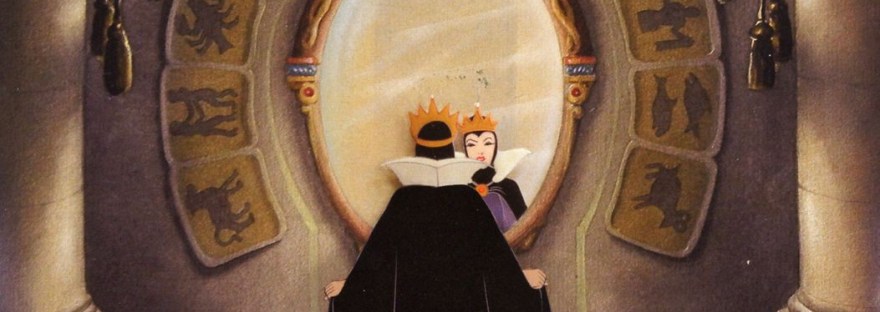
With all honesty that an individual can muster, he or she should try to make a list of what they would do, if they are god for a day. That list represents what is one’s priority in life.
To know what god looks like, take a look in the mirror, what you see there is god. Our “God” is as big as we make “Him”. Human beings are always trying to make “God” to conform to their image of “Him”. Despite the fact that the Scriptures in Genesis chapter 1 verse 26 says; Then God said, “Let us make mankind in our image, in our likeness, so that they may rule over the fish in the sea and the birds in the sky, over the livestock and all the wild animals, and over all the creatures that move along the ground.” Our prayers to our “God” consist of mostly of our “shopping list” of our desires and wants, followed by our battle or prayers against those we assign the title “enemies”, in our delusions, perceived to be hindering the realization of our wants. This, in the end makes us ignorant, stubborn, minute, petty, futile, deluded and ineffective gods. Lacking what, by our standards, we identify as power, living a life of frustration, which we then take out on those we perceive to be inferior to us, or our subjects, that is those over whom we rule, by our words and actions. This goes on for the “day”, at the end of which, our place remembers us no more. Both the physical and mental (mind/soul) place. Since the physical place has no memory to start with, and out of sight is out of mind. We perish and we are like a snake that passes through a rocky terrain living no traces behind.
The following Scripture makes it clear, that no matter how long we live, whether +0.1 time measurement after conception, or 1 year or 30 years or 70 years or 80 years or 100 years or 900 years after birth, the same fate awaits those born of a woman, and in the sight of God that time measurement is like a day. Psalm 90:3-6; You turn people back to dust, saying, “Return to dust, you mortals.” 4 A thousand years in your sight are like a day that has just gone by, or like a watch in the night. 5 Yet you sweep people away in the sleep of death— they are like the new grass of the morning: 6 In the morning it springs up new, but by evening it is dry and withered. The Holy Spirit confirms this through Prophet Isaiah in Isaiah 40:6-8; “All people are like grass, and all their faithfulness is like the flowers of the field. 7 The grass withers and the flowers fall, because the breath of the Lord blows on them. Surely the people are grass. 8 The grass withers and the flowers fall, but the word of our God endures forever.” Our tenure here on earth is temporary and short-lived, “a day”.
When we make our own gods, or a god in our own image, when we expect our god to change and we do not change, that god is an idol and the Scriptures tells us in Isaiah 44:9-11; All who make idols are nothing, and the things they treasure are worthless. Those who would speak up for them are blind; they are ignorant, to their own shame. 10 Who shapes a god and casts an idol, which can profit nothing? 11 People who do that will be put to shame; such craftsmen are only human beings. Let them all come together and take their stand; they will be brought down to terror and shame. The sarcasm of the Holy Spirit does not need an interpretation or further explanation, and yet the unperceiving nature of man of the text is all self-contained in the Scriptures in Isaiah 44:12-20; The blacksmith takes a tool and works with it in the coals; he shapes an idol with hammers, he forges it with the might of his arm. He gets hungry and loses his strength; he drinks no water and grows faint. 13 The carpenter measures with a line and makes an outline with a marker; he roughs it out with chisels and marks it with compasses. He shapes it in human form, human form in all its glory, that it may dwell in a shrine. 14 He cut down cedars, or perhaps took a cypress or oak. He let it grow among the trees of the forest, or planted a pine, and the rain made it grow. 15 It is used as fuel for burning; some of it he takes and warms himself, he kindles a fire and bakes bread. But he also fashions a god and worships it; he makes an idol and bows down to it. 16 Half of the wood he burns in the fire; over it he prepares his meal, he roasts his meat and eats his fill. He also warms himself and says, “Ah! I am warm; I see the fire.” 17 From the rest he makes a god, his idol; he bows down to it and worships. He prays to it and says, “Save me! You are my god!” 18 They know nothing, they understand nothing; their eyes are plastered over so they cannot see, and their minds closed so they cannot understand. 19 No one stops to think, no one has the knowledge or understanding to say, “Half of it I used for fuel; I even baked bread over its coals, I roasted meat and I ate. Shall I make a detestable thing from what is left? Shall I bow down to a block of wood?” 20 Such a person feeds on ashes; a deluded heart misleads him; he cannot save himself, or say, “Is not this thing in my right hand a lie?” Human beings regularly take scripture texts out of context to buttress or fashion their own gods. For thousands of years, wars and persecution have taken place among us, all on the basis of our interpretation of religious texts (some in context, and some out of context), or differing religious denomination or sects, or religion, or our need to acquire power (absolute), which corrupts. Ignoring the fundamental truth, the real enemy is within.
Are we gods? The answer is simply yes, even Jesus Christ said so in the gospel of John chapter 10 verse 34; Jesus answered them, “Is it not written in your Law, ‘I have said you are “gods”’ This was direct from what the Holy Spirit said earlier in Psalm 82 verse 6; “I said, ‘You are “gods”; you are all sons of the Most High.’ However, according to Psalm 82:5; “The ‘gods’ know nothing, they understand nothing. They walk about in darkness; all the foundations of the earth are shaken. And finally, anyone who defend the unjust and show partiality to the wicked, and does not defend the weak and the fatherless; uphold the cause of the poor and the oppressed, Rescue the weak and the needy; deliver them from the hand of the wicked, will die like mere mortals; you will fall like every other ruler.” Yes, man is a god, fashioned by his own hands, and worshipped by himself, ruling for a day, be it Donal Trump or the average Nigerian living in the overcrowded metropolis of Lagos, Ibadan, Abuja, Warri, Amsterdam, Paris, Rome, Athens, Thamesmead, Brixton, Peckham or Port Harcourt, placed on a visa ban or restriction list by Donald Trump effective February 21, 2020.