Blog

Software Updates, Modularity and Echo chambers or Silos

On 19 July 2024, a bug in the update for Windows systems led to widespread disruptions, affecting banks, hospitals, and airlines, and causing “blue screens of death” on 8.5 million computers worldwide.

Software Quality Assurance encompasses the entire software development process, including requirements engineering, software design, coding, code reviews, source code control, software configuration management, testing, release management and software integration. However, these elements of SQA are often existing in Silos, in practice, and most especially with an existing product. The Siloing of release management and software integration may be the explanation for the above mentioned worldwide disruption.

In software design, modularity refers to a logical partitioning of the “software design” that allows complex software to be manageable for the purpose of implementation and maintenance. The logic of partitioning may be based on related functions, implementation considerations, data links, or other criteria. This modularity encourages Siloing.

An echo chamber is “an environment where a person only encounters information or opinions that reflect and reinforce their own.” The term is a metaphor based on an acoustic echo chamber, in which sounds reverberate in a hollow enclosure.

Silos can lead to a lack of innovation, redundancy in work, and, ultimately, cause a decline in organizational efficiency. Individuals can also experience silos. In cases where an individual holds crucial information within an organization, a silo mentality can arise.

Working in silos means team members are isolated from the team itself. It could mean individuals or entire departments are isolated from the rest of the business. These individuals and groups don’t collaborate with others, which can eventually lead to a lack of communication.

Siloing is similar. It is a term often used in a business context. Part of an organization is siloed when it is cut off from other parts of the organization. This separation is often financial and social. Some businesses instigate silos purposefully.

There are genuine people that pierce echo chambers with seeming ease. These are the people that when you walk up they great you by name, introduce you to anyone you don’t know and take a few seconds to bring you up to speed in the conversation. This is being polite, but also more than that. It is a learned habit that minimizes the chance of echo chambers. We are all, I would imagine, familiar with such codes of practice. But our world is more and more a digital world, not an analog one. The digital world does not have a comparable etiquette.

Organizations have their own cultures they can encourage or discourage social norms. Social norms like being polite, including people in conversation, and listening, are critical. Review the actual communication practices in your company, and critically ask whether any existing silos are necessary. Install systems that encourage collaboration and communication. Build into the company culture rewards for anti-echo chamber behaviour. Practice what you preach. The change will be slow, so plan long-term.( https://www.linkedin.com/pulse/5-ways-avoid-silos-echo-chambers-joshua-bronson/).

Tower of Babel and the journey to the Stars

Advocates of unfettered free speech, trying literarily to build a gateway to Heaven, are ignorant of the irony of the tower of Babel story in the Bible. When you consider the example of the current owner of Twitter and SpaceX (the latter company spends billions of dollars devoted to building the most powerful rockets, to facilitate travel to the Moon and Mars, and beyond. While the former advocates unfettered free speech. Both owned by the same individual.)

Article 19 of the Universal Declaration of Human Rights, adopted in 1948, states that: Everyone has the right to freedom of opinion and expression; this right includes freedom to hold opinions without interference and to seek, receive and impart information and ideas through any media and regardless of frontiers. Freedom of speech is the right to speak, write, and share ideas and opinions without facing punishment from the government. The First Amendment protects this right by prohibiting Congress from making laws that would curtail freedom of speech.

In the middle of the 20th century, the Supreme Court ultimately concluded that because the right to speak freely is so fundamental, it is subject to restriction only in limited circumstances. Despite the broad freedom of expression guaranteed by the First Amendment, there are some historically rooted exceptions. First, the government may generally restrict the time, place, or manner of speech, if the restrictions are unrelated to what the speech says and leave people with enough alternative ways of expressing their views. Thus, for instance, the government may restrict the use of loudspeakers in residential areas at night, limit all demonstrations that block traffic, or ban all picketing of people’s homes.

Second, a few narrow categories of speech are not protected from government restrictions. The main such categories are incitement, defamation, fraud, obscenity, child pornography, fighting words, and threats. As the Supreme Court held in Brandenburg v. Ohio (1969), the government may forbid “incitement”—speech “directed at inciting or producing imminent lawless action” and “likely to incite or produce such action” (such as a speech to a mob urging it to attack a nearby building). But speech urging action at some unspecified future time may not be forbidden.

Defamatory lies (which are called “libel” if written and “slander” if spoken), lying under oath, and fraud may also be punished. In some instances, even negligent factual errors may lead to lawsuits. Such exceptions, however, extend only to factual falsehoods; expression of opinion may not be punished even if the opinion is broadly seen as morally wrong.

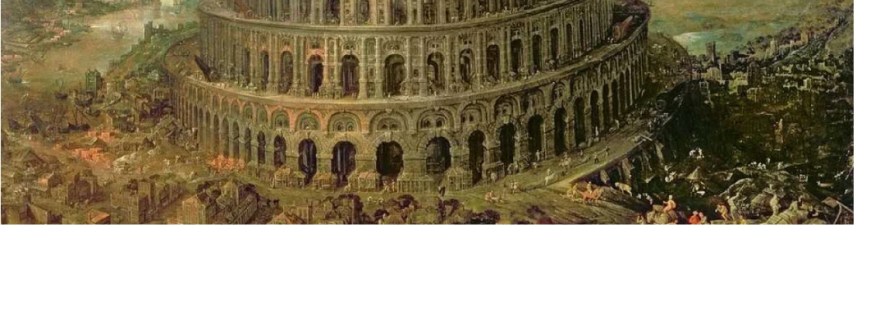
According to Genesis, the Babylonians wanted to make a name for themselves by building a mighty city and a tower “with its top in the heavens.” God disrupted the work by so confusing the language of the workers that they could no longer understand one another. Imagine the good and self-sustainability that could be achieved by devoting such copious amount of resources expended in building the most powerful rockets, instead into providing food (especially for those that lack, due to one reason or the other [war, drought, famine, environmental disaster]), and materials to produce more food and employment, and environment sustenance. One of the two is a fool’s errand. One is conceived by man, and the other by God. It is a question of who is smarter, God or man, the owner of Twitter and SpaceX, or God. You decide!

Saul- Paul and Pharisaic

Mathew 23 verses 1-12

Then Jesus spoke to the crowds and to His disciples, saying: “The scribes and Pharisees have seated themselves in Moses’ chair [of authority as teachers of the Law]; so practice and observe everything they tell you, but do not do as they do; for they preach [things], but do not practice them. The scribes and Pharisees tie up heavy loads [that are hard to bear] and place them on men’s shoulders, but they themselves will not lift a finger [to make them lighter]. They do all their deeds to be seen by men; for they make their phylacteries (tefillin) wide [to make them more conspicuous] and make their tassels long. They love the place of distinction and honour at feasts and the best seats in the synagogues [those on the platform near the scrolls of the Law, facing the congregation], and to be greeted [with respect] in the market places and public forums, and to have people call them Rabbi. But do not be called Rabbi (Teacher); for One is your Teacher, and you are all [equally] brothers. Do not call anyone on earth [who guides you spiritually] your father; for One is your Father, He who is in heaven. Do not let yourselves be called leaders or teachers; for One is your Leader (Teacher), the Christ. But the greatest among you will be your servant. Whoever exalts himself shall be humbled; and whoever humbles himself shall be raised to honour.

In an attempt to have an academic discussion, on the above teaching of Jesus Christ, with some senior pastors of the Nigerian Pentecostal churches, some of these pastors tried to counter the teachings of Christ on this particular subject, by citing texts from certain epistles of Paul- a self-confessed Pharisee, who extols his Pharisaic antecedents at every opportunity:

1 Timothy 1:1-2; Paul, an apostle (special messenger, personally chosen representative) of Christ Jesus by the commandment of God our Savior, and of Christ Jesus (the Messiah, the Anointed) our Hope [the fulfilment of our salvation], to Timothy, my true son in the faith: Grace, mercy, and peace [inner calm and spiritual well-being] from God the Father and Christ Jesus our Lord.

The irony here escapes many; Jesus Christ, God, Prophet, The Rabbi, was prophesying and teaching about people like Paul, even before He, Christ, commissioned Paul to evangelize. Secondly, those using Paul’s actions and behaviour to counter the words of Jesus Christ, to refuse to obey Jesus Christ, are now, just like Paul, praying in the name of Jesus Christ, and not in the name of Paul. Furthermore, in the writings of Luke, in Acts 17, Luke documented a speech made by Paul at the Areopagus on Mars Hill in Athens, though Paul did not deem it fit enough to document it in his epistles: Acts 17:24-25; The God who created the world and everything in it, since He is Lord of heaven and earth, does not dwell in temples made with hands; nor is He served by human hands, as though He needed anything, because it is He who gives to all [people] life and breath and all things.

Above illustrates the greatest irony, ignorance, lack of understanding, self-veneration (on the part of Paul), and a direct contradiction to, and contained in Paul’s usual introductory text of his many epistles. How can you pray in the name of Jesus Christ, and yet refuse to follow His teachings?

The Bible says in Acts 16:1-3: “Then came he [the Apostle Paul] to Derbe and Lystra: and, behold, a certain disciple was there, named Timotheus, the son of a certain woman, which was a Jewess, and believed; but his father was a Greek: Which was well reported of by the brethren that were at Lystra and Iconium. Him would Paul have to go forth with him; and took and circumcised him because of the Jews which were in those quarters: for they knew all that his father was a Greek.”

Timothy was a young man, a Jew through his mother’s lineage (his father was Greek). In order not to be a stumbling block to the unsaved Jews to whom they would preach for the rest of their ministries, Paul took Timothy and physically circumcised him. Timothy could not be discredited. Titus, a full-blooded Greek, did not need to be physically circumcised. This is significant in light of the context, Galatians chapter 2 (parallel is Acts chapter 15). The issue here is whether or not Paul’s Gentile converts needed physical circumcision for salvation (deliverance from Hell), justification (imputed righteousness).

Pauline Christianity or Pauline theology (also Paulism or Paulanity), otherwise referred to as Gentile Christianity, is the theology and form of Christianity which developed from the beliefs and doctrines espoused by the Hellenistic-Jewish Apostle Paul through his writings and those New Testament writings traditionally attributed to him. Paul’s beliefs were rooted in the earliest Jewish Christianity, but deviated from this Jewish Christianity in their emphasis on inclusion of the Gentiles into God’s New Covenant, and his rejection of circumcision as an unnecessary token of upholding the Mosaic Law.

Proto-orthodox Christianity, which is rooted in the first centuries of the history of Christianity, relies heavily on Pauline theology and beliefs, and considers them to be amplifications and explanations of the teachings of Jesus. Since the 18th century, a number of scholars have proposed that Paul’s writings contain teachings that are different from the original teachings of Jesus and those of the earliest Jewish Christians, as documented in the canonical gospels, early Acts, and the rest of the New Testament, such as the Epistle of James.

See the article below:

https://www.premiumtimesng.com/opinion/592024-the-daddification-of-church-leaders-by-seun-kolade.html

Honour your Father and Mother

  • Which of the Ten commandments has a promise attached to it?
  • Why was a promise attached to the commandment?
  • What is the understanding behind the comments of Jesus Christ in Mark 7: 11-13 ?

Exodus 20: 12; “Honor your father and your mother, so that you may live long in the land the Lord your God is giving you.

1 John 4: 20; Whoever claims to love God yet hates a brother or sister is a liar. For whoever does not love their brother and sister, whom they have seen, cannot love God, whom they have not seen.

Mark 7: 11-13; But you say that if anyone declares that what might have been used to help their father or mother is Corban (that is, devoted to God)— then you no longer let them do anything for their father or mother. Thus you nullify the word of God by your tradition that you have handed down. And you do many things like that.”

The History of the Temple of Jerusalem

2 Samuel 7: (2 Samuel 7:4-7; But that night the word of the Lord came to Nathan, saying: “Go and tell my servant David, ‘This is what the Lord says: Are you the one to build me a house to dwell in? I have not dwelt in a house from the day I brought the Israelites up out of Egypt to this day. I have been moving from place to place with a tent as my dwelling. Wherever I have moved with all the Israelites, did I ever say to any of their rulers whom I commanded to shepherd my people Israel, “Why have you not built me a house of cedar?”’)

Acts 17: 24-25; “The God who made the world and everything in it is the Lord of heaven and earth and does not live in temples built by human hands. And he is not served by human hands, as if he needed anything. Rather, he himself gives everyone life and breath and everything else.

  • The present site is a flat plaza surrounded by retaining walls (including the Western Wall), which were originally built by King Herod in the first century BCE for an expansion of the Second Jewish Temple. The plaza is dominated by two monumental structures originally built during the Rashidun and early Umayyad caliphates after the city’s capture in 637 CE: the main praying hall of al-Aqsa Mosque and the Dome of the Rock, near the center of the hill, which was completed in 692 CE, making it one of the oldest extant Islamic structures in the world. It stands where past Jewish temples are commonly believed to have stood.
  • The Temple Mount is the holiest site in Judaism. According to Jewish tradition and scripture, the First Temple was built by King Solomon, the son of King David, in 957 BCE, and was destroyed by the Neo-Babylonian Empire, together with Jerusalem, in 587 BCE. As no scientific excavations have ever been conducted on the site, no archaeological evidence has been found to verify this. The Second Temple was constructed under the auspices of Zerubbabel in 516 BCE, was renovated by King Herod, and was destroyed by the Roman Empire in 70 CE. Orthodox Jewish tradition maintains it is here that the third and final Temple will be built when the Messiah comes. The Temple Mount is the place Jews turn towards during prayer. Jewish attitudes towards entering the site vary. Due to its extreme sanctity, many Jews will not walk on the Mount itself, to avoid unintentionally entering the area where the Holy of Holies stood, since, according to rabbinical law, there is still some aspect of the divine presence at the site.

Are there contextual and non-contextual or Evergreen statements from God?

Malachi 3: 10; Bring the whole tithe into the storehouse, that there may be food in my house. Test me in this,” says the Lord Almighty, “and see if I will not throw open the floodgates of heaven and pour out so much blessing that there will not be room enough to store it.

When did God prophesied through Malachi? Was it before, during or post the Exile period of the Israelites? Why did God prophesied through Malachi? Were there extenuating circumstances/ or contextual issues, for the prophecy through Malachi? What was the state of the Temple at this period? Can some statements from God be applied all the time, or only at specific situations? Parting of the Red Sea, Love God, Love your Neighbour, Rebuild a partly destroyed structure, Genesis 9:16-17; Whenever the rainbow appears in the clouds, I will see it and remember the everlasting covenant between God and all living creatures of every kind on the earth.” So God said to Noah, “This is the sign of the covenant I have established between me and all life on the earth.”

The Edge of Reason and Beyond

Is there a limit to the mind and what it can imagine? Is there anything beyond the conscious and subconscious levels of the mind? Quantum theory is very strange. It says that an object like a particle or an atom that adheres to quantum rules doesn’t have a reality that can be pinned down until it is measured (Schrodinger’s thought experiment). What does ‘Quantum Tunnelling’ with regards to quantum biology’s explanation for the molecular pathway of enzyme functionality in some biochemical reactions, have in common with the biography of John Nash (Mathematician), depicted in the infamous film ‘The Beautiful Mind’. The journey to the edge of reason and beyond, leads to the question: What is divinity?

  • Immanence and transcendence: Immanence definition, the state of being inherent or exclusively existing within something. The doctrine or theory of immanence holds that the divine encompasses or is manifested in the material world. It is held by some philosophical and metaphysical theories of divine presence. Immanence, in philosophy and theology, a term applied, in contradistinction to “transcendence,” to the fact or condition of being entirely within something (from Latin immanere, “to dwell in, remain”). While transcendence can be defined as existence or experience beyond the normal or physical level. Transcendence is the act of rising above something to a superior state. … Transcendence comes from the Latin prefix trans-, meaning “beyond,” and the word scandare, meaning “to climb.” When you achieve transcendence, you have gone beyond ordinary limitations.
  • The incomprehensibility of God means that he is not able to be fully known. Isaiah 40:28 says, “his understanding no one can fathom”. Louis Berkhof states that “the consensus of opinion” through most of church history has been that God is the “Incomprehensible One”. Berkhof, however, argues that, “in so far as God reveals Himself in His attributes, we also have some knowledge of His Divine Being, though even so our knowledge is subject to human limitations.” Deuteronomy 29:29;
  • The infinity of God includes both his eternity and his immensity. Isaiah 40:28 says that “Yahweh is the everlasting God,” while Solomon acknowledges in 1 Kings 8:27 that “the heavens, even the highest heaven, cannot contain you”. Infinity permeates all other attributes of God: his goodness, love, power, etc. are all considered to be infinite.
  • Many theologians see mystery [Deut.29:29]as God’s primary attribute because he only reveals certain knowledge to the human race. Karl Barth said, “God is ultimate mystery.” Karl Rahner views “God” as “mystery” and theology as “the ‘science’ of mystery.” Nikolai Berdyaev deems “inexplicable Mystery” as God’s “most profound definition.” Ian Ramsey defines God as “permanent mystery,” Acts 17:23; For as I walked around and looked carefully at your objects of worship, I even found an altar with this inscription: to an unknown god. So, you are ignorant of the very thing you worship—and this is what I am going to proclaim to you.
  • The omnipotence of God refers to Him being “all powerful”. This is often conveyed with the phrase “Almighty”, as in the Old Testament title “God Almighty” (the conventional translation of the Hebrew title El Shaddai) and the title “God the Father Almighty” in the Apostles’ Creed. Jesus says in Matthew 19:26, “with God all things are possible”. C. S. Lewis clarifies this concept: “His Omnipotence means power to do all that is intrinsically possible, not to do the intrinsically impossible. You may attribute miracles to him, but not nonsense. This is no limit to his power.”
  • The omnipresence of God refers to him being present everywhere. Berkhof distinguishes between God’s immensity and his omnipresence, saying that the former “points to the fact that God transcends all space and is not subject to its limitations,” emphasising his transcendence, while the latter denotes that God “fills every part of space with His entire Being,” emphasising his immanence. In Psalm 139, David says, “If I go up to the heavens, you are there; if I make my bed in the depths, you are there” (Psalm 139:8, NIV).
  • The oneness, or unity of God refers to his being one and only. This means that Christianity is monotheistic, although the doctrine of the Trinity says that God is three persons: Father, Son, and Holy Spirit. The Athanasian Creed says, “we worship one God in Trinity, and Trinity in Unity.” The most notable biblical affirmation of the unity of God is found in Deuteronomy 6:4. The statement, known as the Shema Yisrael, after its first two words in Hebrew, says “Hear, O Israel: Yahweh our God, Yahweh is one.” In the New Testament, Jesus upholds the oneness of God by quoting these words in Mark 12:29. The Apostle Paul also affirms the oneness of God in verses like Ephesians 4:6. The oneness of God is also related to his simplicity.
  • The sovereignty of God is related to his omnipotence, providence, and kingship, yet it also encompasses his freedom, and is in keeping with his goodness, righteousness, holiness, and impeccability. It refers to God being in complete control as he directs all things — no person, organization, government, or any other force can stop God from executing his purpose. This attribute has been particularly emphasized in Calvinism. The Calvinist writer A. W. Pink appeals to Isaiah 46:10 (“My purpose will stand, and I will do all that I please”) and argues, “Subject to none, influenced by none, absolutely independent; God does as He pleases, only as He pleases always as He pleases.” Other Christian writers contend that the sovereign God desires to be influenced by prayer and that he “can and will change His mind when His people pray.”
  • God’s transcendence means that he is outside space and time, and therefore eternal and unable to be changed by forces within the universe. It is thus closely related to God’s immutability and is contrasted with his immanence. A significant verse which balances God’s transcendence, and his immanence is Isaiah 57:15: For this is what the high and exalted One says — he who lives forever, whose name is holy: “I live in a high and holy place, but also with the one who is contrite and lowly in spirit, to revive the spirit of the lowly and to revive the heart of the contrite.” Mathew 5:3;
  • The veracity of God means his truth-telling. Titus 1:2 refers to “God, who does not lie.” Among evangelicals, God’s veracity is often regarded as the basis of the doctrine of biblical inerrancy. Greg Bahnsen says, Only with an inerrant autograph can we avoid attributing error to the God of truth. An error in the original would be attributable to God Himself, because He, in the pages of Scripture, takes responsibility for the very words of the biblical authors. Errors in copies, however, are the sole responsibility of the scribes involved, in which case God’s veracity is not impugned.
  • Moses praises the wrath of God in Exodus 15:7. Later in Deuteronomy 9, after the incident of The Golden Calf, Moses describes how: “I feared the furious anger of the LORD, which turned him against you, would drive him to destroy you. But again he listened to me.” (9:19). In Psalm 69:24, the psalmist begs God to “consume” his enemies “with your burning anger”. In the New Testament, Jesus says in John 3:36, “Whoever believes in the Son has eternal life; whoever does not obey the Son shall not see life, but the wrath of God remains on him.” Wayne Grudem suggests that “if God loves all that is right and good, and all that conforms to his moral character, then it should not be surprising that he would hate everything that is opposed to his moral character.”
  • Furthermore, an apparent contradiction is also observable in the text, 1 Corinthians 3:9; For we are co-workers in God’s service; compared with the text in Acts 17:24-25; “The God who made the world and everything in it is the Lord of heaven and earth and does not live-in temples built by human hands. And he is not served by human hands. In the first letter to the Corinthians, Paul was stating or implying that certain chosen men are God’s servant, while in the book of Acts, he was also saying that God is not served by men. This may appear to be a contradiction. However, the Holy Spirit do consider some chosen men to be His servants, but He does make a technical distinction between men and angels (whom are indeed His servants). Probably the reason for the distinction is for the chosen men, not to think too highly of themselves. In summary the apparently contradictory concepts are conflated into one, as exemplified in Revelations 19:10; At this I fell at his feet to worship him. But he said to me, “Don’t do that! I am a fellow servant with you and with your brothers and sisters who hold to the testimony of Jesus. Worship God! For it is the Spirit of prophecy who bears testimony to Jesus.” Here, the angel of the Lord states categorically that certain men of God are regarded as ‘servants’ of God or have conferred unto them, the status of ‘servants of God’.
  • The establishment and location of the kingdom of God is an issue that has puzzled people for millennia. This was addressed by Jesus Christ in Luke 17:20-21; Once, on being asked by the Pharisees when the kingdom of God would come, Jesus replied, “The coming of the kingdom of God is not something that can be observed, nor will people say, ‘Here it is,’ or ‘There it is,’ because the kingdom of God is in your midst.” The Holy Spirit confirmed this through Paul in 1 Corinthians 3:16-17; Don’t you know that you yourselves are God’s temple and that God’s Spirit dwells in your midst? If anyone destroys God’s temple, God will destroy that person; for God’s temple is sacred, and you together are that temple.
  • The message of the cross consists of two elements, which are power and wisdom. This message was a mystery that existed before the dawn of time and was finally revealed to the chosen ones when and after the Work was done. According to Paul, this mystery existed before the dawn of time, see Ephesians 1:4-5; For he chose us in him before the creation of the world to be holy and blameless in his sight. In love he predestined us for adoption to sonship through Jesus Christ, in accordance with his pleasure and will. This mystery that existed before the dawn of time, the power and wisdom of God is entirely different from the wisdom of men and is not understood by men. This was testified to, by Paul in 1 Corinthians 2:6-8; We do, however, speak a message of wisdom among the mature, but not the wisdom of this age or of the rulers of this age, who are coming to nothing. No, we declare God’s wisdom, a mystery that has been hidden and that God destined for our glory before time began. None of the rulers of this age understood it, for if they had, they would not have crucified the Lord of glory.
  • The message of the cross: Wisdom is defined as the soundness of an action or decision regarding the application of experience, knowledge, and good judgment. While power can be defined as the ability or capacity to do something (work) or act in a particular way. Thus, the power of God, that was demonstrated in the creation of the perceived universe (experience and knowledge), was applied with good judgement in redeeming man from sin, unrighteousness, and unholiness (sanctification or made holy through the blood of Christ) – This is the Wisdom of God.
  • Christ the power of God and the wisdom of God. . But God chose the foolish things of the world to shame the wise; God chose the weak things of the world to shame the strong. God chose the lowly things of this world and the despised things—and the things that are not—to nullify the things that are, so that no one may boast before him. It is because of him that you are in Christ Jesus, who has become for us wisdom from God—that is, our righteousness, holiness, and redemption.
  • Abraham believed God and it was credited to him as righteousness [Genesis 15:6; Abram believed the Lord, and he credited it to him as righteousness. Romans 4:3-8; What does Scripture say? “Abraham believed God, and it was credited to him as righteousness.” Now to the one who works, wages are not credited as a gift but as an obligation. However, to the one who does not work but trusts God who justifies the ungodly, their faith is credited as righteousness. David says the same thing when he speaks of the blessedness of the one to whom God credits righteousness apart from works: “Blessed are those whose transgressions are forgiven, whose sins are covered. Blessed is the one whose sin the Lord will never count against them.” Psalm 32:1-2; Blessed is the one whose transgressions are forgiven, whose sins are covered. Blessed is the one whose sin the Lord does not count against them and in whose spirit is no deceit. Psalm 103:12; as far as the east is from the west, so far has he removed our transgressions from us.]
  • In John 14:26, Jesus Christ refers to the Advocate, the Holy Spirit being sent by the Father in the name of Jesus Christ. At the same time, in the same teaching further on in chapter 16, Jesu Christ declared that the Advocate will speak only what the Advocate hears from Him and that He, Jesus Christ would send the Advocate: John 16:13-15; But when he, the Spirit of truth, comes, he will guide you into all the truth. He will not speak on his own; he will speak only what he hears, and he will tell you what is yet to come. He will glorify me because it is from me that he will receive what he will make known to you. All that belongs to the Father is mine. That is why I said the Spirit will receive from me what he will make known to you.” While in the gospel of Luke, chapter 1 verse 35, The angel answered, “The Holy Spirit will come on you, and the power of the Most High will overshadow you. So the holy one to be born will be called the Son of God. Indicating that the Holy Spirit (Power of the Most High {God the Father})is the “Father” of Jesus Christ. God as the Father, God as the Son, and God as the Holy Spirit. All these individual declarations is summed up together in Isaiah 9:6; For to us a child is born, to us a son is given, and the government will be on his shoulders. And he will be called Wonderful Counsellor, Mighty God, Everlasting Father, Prince of Peace.
  • The name of God [Jehovah/Messiah/Emmanuel/Christ], John 17:11; Holy Father, protect them by the power of your name, the name you gave me, so that they may be one as we are one. This implies that God as the Father and God as the Son are both the same (see Isaiah 9:6).
  • John 12:41, states that; Isaiah said this because he saw Jesus’ glory and spoke about him. What Apostle John said here was documented by prophet Isaiah, when recounting his commissioning event in Isaiah 6:1-10; of which verses 3 and 5 states; “Holy, holy, holy is the Lord Almighty; the whole earth is full of his glory.” And, “Woe to me!” I cried. “I am ruined! For I am a man of unclean lips, and I live among a people of unclean lips, and my eyes have seen the King, the Lord Almighty.” John 12:45; The one who looks at me is seeing the one who sent me.
  • Double jeopardy: This is to avoid double jeopardy. In John 12:31, Jesus Christ was talking about the judgement of Believers, all have sinned, and sacrifice (payment, consequences which is death), must be made. And only a Lamb without defect (One without sin), whom is God Himself can be offered as a one-time sacrifice for all who believe for all time. This therefore results in Salvation. He continued in verses 47-48, and He then implied that non-believers would face their own judgement on the last day, when they do not have access to Intercession or the Atoning Sacrifice. This explains the text in Romans 8:1-2; Therefore, there is now no condemnation for those who are in Christ Jesus,  because through Christ Jesus the law of the Spirit who gives life has set you free from the law of sin and death. John 5:24; “Very truly I tell you, whoever hears my word and believes him who sent me has eternal life and will not be judged but has crossed over from death to life.
  • Mathew 23:8; “But you are not to be called ‘Rabbi,’ for you have one Teacher, and you are all brothers. John 13:13-14; “You call me ‘Teacher’ and ‘Lord,’ and rightly so, for that is what I am. Now that I, your Lord and Teacher…” Mathew 23:9; And do not call anyone on earth ‘father,’ for you have one Father, and he is in heaven.  John 13:33; “My children, I will be with you only a little longer.”
  • Luke 1:35; “The Holy Spirit will come on you, and the power of the Most High will overshadow you. So the holy one to be born will be called the Son of God.” This tells us that the Holy Spirit is the “Father” of Jesus Christ. God the Father is the Holy Spirit, and the Holy Spirit is in Jesus Christ. Therefore this statement of Jesus Christ can be understood as: I [Holy Spirit] am in the Father [Holy Spirit], and that the Father [Holy Spirit]is in me [Holy Spirit].
  • John 15:16; You did not choose me, but I chose you and appointed you so that you might go and bear fruit—fruit that will last—and so that whatever you ask in my name the Father will give you.
  • Love can be defined as a strong affection for another arising out of kinship or personal ties. It can also according to psychology, be defined as a force of nature. However much we may want to, we cannot command, demand, or take away love, any more than we can command the moon and the stars and the wind and the rain to come and go. On the basis of the psychological definition, man cannot command a force of nature, therefore, it is only an entity other than man, the creator of nature that can control or command a force of nature such as love, the moon and the stars and the wind and the rain to come and go. God is the creator of nature, and when Jesus Christ gave His command in John 15:12; My command is this: Love each other as I have loved you. He is commanding a force of nature. Proof of His deity.
  • Quantum tunnelling – https://www.youtube.com/watch?v=Zc9Xk99gCr4

Quantum tunnelling in quantum biology is an attempt to explain the biochemical process of enzyme facilitating molecular breakdown and or combination of subatomic particles, atoms and molecules, of complex compounds at subatomic level. Currently the attempt is at the edge of reason, arriving at the point beyond, scientists have suggested that particles, atoms, and molecules become invisible at the barrier (edge of reason),or creep underneath the barrier in a wave-form, or Schrodinger’s principle of multiverse. Alternatively, here is an idea, divinity at work.

  • The Beautiful Mind – Film

The narrative of the film differs considerably from the events of Nash’s life, as filmmakers made choices for the sense of the story. The film has been criticized for this aspect, but the filmmakers said they never intended a literal representation of his life.

One difficulty was the portrayal of his mental illness and trying to find a visual film language for this. As a matter of fact, Nash never had visual hallucinations: Charles Herman (the “roommate”), Marcee Herman and William Parcher (the Defense agent) are a scriptwriter’s invention. Sylvia Nasar said that the filmmakers “invented a narrative that, while far from a literal telling, is true to the spirit of Nash’s story”. Nash spent his years between Princeton and MIT as a consultant for the RAND Corporation in California, but in the film he is portrayed as having worked for the Department of Defense at the Pentagon instead. His handlers, both from faculty and administration, had to introduce him to assistants and strangers. The PBS documentary A Brilliant Madness tried to portray his life more accurately.

Few of the characters in the film, besides John and Alicia Nash, correspond directly to actual people. The discussion of the Nash equilibrium was criticized as over-simplified. In the film, Nash has schizophrenic hallucinations while he is in graduate school, but in his life he did not have this experience until some years later. No mention is made of Nash’s homosexual experiences at RAND, which are noted in the biography, though both Nash and his wife deny this occurred. Nash fathered a son, John David Stier (born June 19, 1953), by Eleanor Agnes Stier (1921–2005), a nurse whom he abandoned when she told him of her pregnancy. The film did not include Alicia’s divorce of John in 1963. It was not until after Nash won the Nobel Memorial Prize in 1994 that they renewed their relationship. Beginning in 1970, Alicia allowed him to live with her as a boarder. They remarried in 2001.

Nash is shown to join Wheeler Laboratory at MIT, but there is no such lab. Instead, he was appointed as C. L. E. Moore instructor at MIT, and later as a professor. The film furthermore does not touch on the revolutionary work of John Nash in differential geometry and partial differential equations, such as the Nash embedding theorem or his proof of Hilbert’s nineteenth problem, work which he did in his time at MIT and for which he was given the Abel Prize in 2015. The so-called pen ceremony tradition at Princeton shown in the film is completely fictitious. The film has Nash saying in 1994: “I take the newer medications”, but in fact, he did not take any medication from 1970 onwards, something highlighted in Nasar’s biography. Howard later stated that they added the line of dialogue because they worried that the film would be criticized for suggesting that all people with schizophrenia can overcome their illness without medication. In addition, Nash never gave an acceptance speech for his Nobel prize.

Beyond the edge of reason are two possible scenarios, which are; insanity, and divinity. Even the state that is defined as insanity has divinity embedded within it, as it is, in all known states of matter, and possibly antimatter (Quantum theory) or the unknown (Dark/Black hole ).