
Notes on Colossians 3:1-4
Before we read Colossians 3:5-11, let’s check out the notes from the NIV Halley’s Study Bible. These few sentences give a good overview of how chapter 3 begins and where it is headed.
“Set your minds on things above. The false teachers were instructing the Colossians to concentrate on temporal observances; in contrast, Paul instructs them to concentrate on the eternal realities of heaven. The Greek verb for set emphasizes an ongoing decision. Christians must continually discipline themselves to focus on eternal realities instead of the temporal realities of this earth.”
Read Colossians 3:5-11
“Put to death, therefore, whatever belongs to your earthly nature: sexual immorality, impurity, lust, evil desires and greed, which is idolatry. Because of these, the wrath of God is coming. You used to walk in these ways, in the life you once lived.
But now you must also rid yourselves of all such things as these: anger, rage, malice, slander, and filthy language from your lips. Do not lie to each other, since you have taken off your old self with its practices and have put on the new self, which is being renewed in knowledge in the image of its Creator.
Here there is no Gentile or Jew, circumcised or uncircumcised, barbarian, Scythian, slave or free, but Christ is all, and is in all.” – Colossians 3:5-11 (NIV)
Unpack Colossians 3:5-11
Insight on Paul’s Use of “Old Self” and “New Self”
“These two terms do not refer to the Christian’s fleshly and spiritual natures. Instead, Paul describes our former unredeemed life as the old self and our life as God’s child as the new self. The new self has the image of the new creation in Christ, just as the old self bears the image of our fallen nature. The old self is under an old master, Satan, while the new self has a new master, the Spirit of God living within.” — NIV Halley’s Study Bible
When Paul says “barbarian” and “Scythian,” what does he mean?
“Barbarian: In the Roman Empire a person who did not speak Greek was despised. Scythian. An uncultured person who came from the area around the Black Sea.” — NIV Halley’s Study Bible
The NIV Halley’s Study Bible also contains articles to guide you through your Bible study. Below you’ll find one of these articles.
Some Food for Thought on Colossians 3
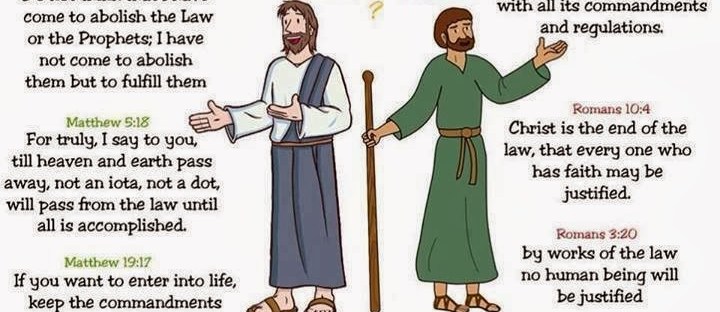
Legalists are those people who base their salvation on themselves and what they do—especially their religious behaviour (this is advocated by some religious sects)—rather than on Christ. Of course, we want to believe all the doctrines correctly and obey all the commandments to our utmost. But if in our own thinking we put too much emphasis on what we believe or what we do, are we not perilously close to basing our salvation on ourselves? Christ—not a doctrine, not a commandment—is our Saviour. He—not we ourselves—is the basis of our hope. We must not minimize the necessity of believing right doctrines. But after all is said and done, being a Christian is essentially loving Christ, a person, rather than believing this or that doctrine or obeying this or that commandment or having a particular experience.
We believe doctrines and obey commandments because of Christ. We must not love them more than we love him. If we love a doctrine too much, we are apt to grow irritated and hard and sour toward those who do not agree with our doctrine. If we love a person, Christ the person, we grow like him. In this letter, Paul wants to correct the false doctrines of the Judaizers on the one hand and of the Greek philosophers on the other, and also the resultant compromise doctrines. But even if our beliefs are scripturally sound, there is such a thing as exalting some truth about Christ above Christ himself. And when we thus tip the balance of our partnership with Christ toward our own side, we are legalists. It is possible to be a legalist over a doctrine of grace!


