Blog

Trust, faith, and Love

What is the meaning of trust?

  • Noun: firm belief in the reliability, truth, or ability of someone or something. Usage; “relations have to be built on trust”

Similar: confidence; belief; faith; freedom from suspicion/doubt; sureness.

  • Verb: believe in the reliability, truth, or ability of. Usage; “I should never have trusted her”

Similar: have faith in; put/place one’s trust in; have (every) confidence in; believe in.

The Lord our God was very clear and succinct with His precepts, before redeeming us, He admonish us not to put our trust in material things, furthermore, He stated clearly that those that put their trust in their fellowmen are cursed. Furthermore, given the definition of faith in Hebrews 11:1; Now faith is confidence in what we hope for and assurance about what we do not see, we should definitely not have faith in people or material things that we can see. Jeremiah 17:5; This is what the Lord says: “Cursed is the one who trusts in man, who draws strength from mere flesh and whose heart turns away from the Lord. Psalm 20:7; Some trust in chariots and some in horses, but we trust in the name of the Lord our God.

However, when the Everlasting Father walked amongst us as Emmanuel, He in His Wisdom gave us an ordinance that displays the truth of Love superseding the laws, the fulfilment of the laws, and the amplification or extension of the most important commandment of loving the Lord our God. This comes about in a situation wherein the next person to us, be it a stranger or whoever, may be born of the Spirit, and therefore a representative of our Lord, and therefore whatever we do or did not do, is directly to our Lord.

Mathew 25:38-40; When did we see you a stranger and invite you in, or needing clothes and clothe you? When did we see you sick or in prison and go to visit you?’ “The King will reply, ‘Truly I tell you, whatever you did for one of the least of these brothers and sisters of mine, you did for me.’ Mathew 22:37-40; Jesus replied: “‘Love the Lord your God with all your heart and with all your soul and with all your mind.’ This is the first and greatest commandment. And the second is like it: ‘Love your neighbour as yourself.’ All the Law and the Prophets hang on these two commandments.”

The texts above displays the total wisdom of our Lord, in that these two commandments encapsulate all the other precepts and commandments. On the one hand, wisdom indicates that there is no new commandment, while on the other hand, to avoid ambiguity and contradiction, the second most important commandment, which is ‘Love your neighbour as yourself’ is presented as a new commandment. This had to do with the curse pronounced in Jeremiah 17:5, because love entails trusts, that is if you love someone, you trust them, though you do not have faith in them, faith is in God alone.

John 13:34; “A new command I give you: Love one another. As I have loved you, so you must love one another. John 15:12; My command is this: Love each other as I have loved you. Our Lord expanded this commandment in Mathew 5:43-45; “You have heard that it was said, ‘Love your neighbour and hate your enemy.’ But I tell you, love your enemies and pray for those who persecute you, that you may be children of your Father in heaven. He causes his sun to rise on the evil and the good and sends rain on the righteous and the unrighteous. Furthermore, according to 1 John 4:16; God is love. Whoever lives in love lives in God, and God in them. 1 John 4:20; Whoever claims to love God yet hates a brother or sister is a liar. For whoever does not love their brother and sister, whom they have seen, cannot love God, whom they have not seen.

What is the connection between trust, hope, and love? This can be found in 1 Corinthians 13:4-8; Love is patient, love is kind. It does not envy, it does not boast, it is not proud. It does not dishonour others, it is not self-seeking, it is not easily angered, it keeps no record of wrongs. Love does not delight in evil but rejoices with the truth. It always protects, always trusts, always hopes, always perseveres. Love never fails. But where there are prophecies, they will cease; where there are tongues, they will be stilled; where there is knowledge, it will pass away.

When a stranger says something to me, I should trust the stranger that they are telling me the truth, and that they will do what they say that they will do. However, if the spirit of the Lord does not reside with them, then there is no truth in them, and there is no integrity. In addition, according to Proverbs 16:7; When the Lord takes pleasure in anyone’s way, he causes their enemies to make peace with them. And since God is Love, when I relate to others in love, our Lord delivers us from all potentially harmful situations and evil, as a result. The connection between faith, hope, and love, is thus, that we have faith in God, and we hope to be united with Him, in His Eternal Love, those of us that He redeemed. Love triumphs above all, this is confirmed in 1 Corinthians 13:13; And now these three remain: faith, hope and love. But the greatest of these is love. Because Jesus Christ is Love.

Love and Care versus Fear

God is the Father of all. And He places us in family units, for us to learn and express, care and love to each other. Whenever the family unit is disrupted by events such as the death of the father or mother, God sets things in motion, to bring about balance to nature. This explains why the care of widows and orphans is very dear and important to God.

In Hebrew culture, when a married man dies without any heir to succeed him, his next in line male sibling is mandated to marry the widow, in order to produce an heir that bears the name of the deceased man. This precept was sanctioned by God, and was a factor in the story of Perez, the son of Judah, borne by Tamar.

Wickedness on the part of Er and Onan, resulted in their demise. However, even if Judah did not know about the wickedness of Onan with regards to his unwillingness to follow through on the cultural precept sanctioned by God, that has as its purpose the care of a childless widow and the production of an heir that prolongs the name of the departed male, Er. God knows and sees everything, including what goes on in the most private and intimate settings of His children.

After losing two children, the fear of losing a third child, Shelah, in what appears to be mysterious circumstances, is quite understandable on the part of Judah. The loss of a child is such an incredible loss, that only those that have experienced it, have any inkling about what it entails, and surely its not wished on any individual. However, in the sight of God, this does not justify the contravention of the cultural precept of taking care of the childless widow.

Since Jesus Christ is our Justification, God’s poetic justice resulted in Judah sleeping with his daughter-in-law (whom he thought was a prostitute), Tamar, who then bore the twins Perez and Zerah. The same Perez, in the genealogy of our Lord Jesus Christ, that has entered eternal antecedents of Jesus of Nazareth. The Love of God triumphs over the fear of death.

The Bridegroom and the Bride

Some critics of King Solomon accused him of being a misogynist because he objectifies women, and he collects women [Solomon, third king of Israel (reigned c. 968–928 B.C.E.), is said to have had a harem that included 700 wives and 300 concubines (1 Kgs 11:3). His wives were to have included the daughter of Pharaoh, as well as women of Moabite, Edomite, Sidonian, and Hittite origins (1 Kgs 7:8; 11:1).]. However, this king with around one thousand wives/concubines was the same person under the influence of the Holy Spirit, who penned one of the most romantic prose, poetry ever written about the love of a man for a woman. Obviously, the criticism of misogyny was unfounded, otherwise, how could a misogynist (contempt for, or ingrained prejudice against women) know so much about love for a woman.

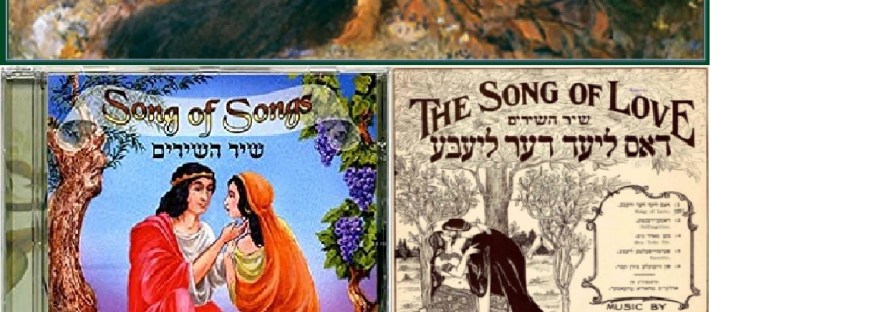
It is written in a very poetic manner, and on the face of it, it is a love poem clearly showing the love, anticipation of, and of the great admiration for, the woman through whose eyes the male object of her affection is perceived. The note in the Catholic RSV version of the Bible tells us that there are three main interpretations of this book: first, a purely allegorical interpretation, where, for the Jews, it stood for God’s love of the Chosen People; for the Church Fathers, it was an allegory showing the loving relationship between Christ and his Church. Secondly, it is seen as an allegory of the love between an unnamed bride and groom, intended to extol married love in the sight of God. Lastly, some, taking the literal sense of the second interpretation—that of married love—say that it is a type of the union between Christ and his Church. This poetry about romance, called Song of Songs is Hebrew love poetry that depicts the beauty and mystery of sexual love within the context of marriage, one of God’s gifts to humanity. The Song of Solomon is also called “The Song of Songs,” suggesting that it is the greatest of all songs. In chapter 8, they reveal that they are fiercely in love with one another, and that love is revealed as a representation of God’s fierce and jealous love for people. In other words, a metaphoric expression for Jesus Christ and His bride, the church.

The ekklēsia is never explicitly called “the bride of Christ” in the New Testament. That is approached in Ephesians 5:22–33. A major analogy is that of the body. Just as husband and wife are to be “one flesh”, this analogy for the writer describes the relationship of Christ and ekklēsia.

Ephesians 5:22-33; Wives, submit yourselves to your own husbands as you do to the Lord. For the husband is the head of the wife as Christ is the head of the church, his body, of which he is the Saviour. Now as the church submits to Christ, so also wives should submit to their husbands in everything. Husbands, love your wives, just as Christ loved the church and gave himself up for her to make her holy, cleansing her by the washing with water through the word, and to present her to himself as a radiant church, without stain or wrinkle or any other blemish, but holy and blameless. In this same way, husbands ought to love their wives as their own bodies. He who loves his wife loves himself. After all, no one ever hated their own body, but they feed and care for their body, just as Christ does the church— for we are members of his body. “For this reason, a man will leave his father and mother and be united to his wife, and the two will become one flesh.” This is a profound mystery—but I am talking about Christ and the church. However, each one of you also must love his wife as he loves himself, and the wife must respect her husband.

God gave everything, His life for His bride, the church. What an expression of perfect, fierce, and jealous love, that is the Love of God, that is in Christ Jesus. In spite of our imperfections and shortcomings, God love us so much. Thank you, Father, for loving me, for saving me, and for counting me worthy of your priceless gift of redemption. You are indeed wonderful Yeshua.

Desired Prayers, Fasting, Religion, and Worship

What we religious people know as fasting, which some of us actually regularly do during Lente or Ramadan, and sometimes at other times in a year, is described in Isaiah 58:3-5; “Yet on the day of your fasting, you do as you please and exploit all your workers. Your fasting ends in quarrelling and strife, and in striking each other with wicked fists. You cannot fast as you do today and expect your voice to be heard on high. Is this the kind of fast I have chosen, only a day for people to humble themselves? Is it only for bowing one’s head like a reed and for lying in sackcloth and ashes? Is that what you call a fast, a day acceptable to the Lord?

However, our Lord God stated further on in the same part of the Scriptures, precisely the kind of fasting that He desires, in Isaiah 58:6-7; “Is not this the kind of fasting I have chosen: to loose the chains of injustice and untie the cords of the yoke, to set the oppressed free and break every yoke? Is it not to share your food with the hungry and to provide the poor wanderer with shelter— when you see the naked, to clothe them, and not to turn away from your own flesh and blood?

Yeshua subsequently told us the benefits of the right kind of fasting in Isaiah 58:8-10; Then your light will break forth like the dawn, and your healing will quickly appear; then your righteousness will go before you, and the glory of the Lord will be your rear guard. Then you will call, and the Lord will answer; you will cry for help, and he will say: Here am I. “If you do away with the yoke of oppression, with the pointing finger and malicious talk, and if you spend yourselves in behalf of the hungry and satisfy the needs of the oppressed, then your light will rise in the darkness, and your night will become like the noonday.

Prayers and fasting are religious actions, since God has made known to us the kind of prayers and fasting that He desires. These are the religious penance acceptable to Him. The Scriptures confirmed this in James 1:26-27; If anyone thinks himself to be religious [scrupulously observant of the rituals of his faith] and does not control his tongue but deludes his own heart, this person’s religion is worthless (futile, barren). Pure and unblemished religion [as it is expressed in outward acts] in the sight of our God and Father is this: to visit and look after the fatherless and the widows in their distress, and to keep oneself uncontaminated by the [secular] world. In most parts of the world, orphans and widows have no one to provide for them except Yeshua, and since God takes care of us all, we are all God’s offspring. His concern is about caring for all His children. True religion involves loving each other, there is no better way to express love towards another person or God, than by helping, caring for, or giving to that person when in need, whether the person is a relative or a stranger.

True Love; the only commandment

God gave us one commandment that supersede all the other commandments. John 15:12; My command is this: Love each other as I have loved you. He said explicitly that there is no law against love. Galatians 5:22-23; But the fruit of the Spirit is love, joy, peace, forbearance, kindness, goodness, faithfulness, gentleness, and self-control. Against such things there is no law.

Individuals have different concepts of love. Is it possible to love somebody that you find physically distasteful? Is it possible to love somebody that you find mentally incompatible? Is it possible to love somebody that you find spiritually degenerate? Is possible to love somebody that you are only physically attracted to, but whose character you find repulsive? Is it possible to love somebody that lies compulsively or lies in difficult situation or tell white lies, while you are intrinsically honest? Is it possible to love somebody that whose interests are diametrically opposed to yours? Is it possible to love somebody that has no concept of love, but knows only of exploitative relationships?

What does it mean to truly love someone? 1 Corinthians 13:4-8; Love is patient, love is kind. It does not envy, it does not boast, it is not proud. It does not dishonour others, it is not self-seeking, it is not easily angered, it keeps no record of wrongs. Love does not delight in evil but rejoices with the truth. It always protects, always trusts, always hopes, always perseveres. Love never fails. This is the way our Lord God Jesus Christ loves us, and this is the way we should love one another. Not only should we love our friends and family in this manner, but this is the way we should love our enemies and strangers too. Let us truly love one another.

If I love you, I wouldn’t kill you, neither will I attack you or wound you, nor will I steal from you or take your partner, and neither will I lie to you or give false testimony about you, nor will I gossip about you, and neither will I mock you, nor will I try to dominate you or use you to gain something. Do you treat strangers the same way you treat your family? Do you love and pray for your enemies? Jesus Christ laid down His life for us, while we are/ were His enemies. We should truly love each other as Christ love us, that is True Love.