Blog

The Hardest Taskmaster

The hardest taskmaster known to man, is God Himself. This is apparent and amply demonstrated in the Scriptures, regarding the task God gave to His only Son. Romans 8:32; He who did not spare his own Son, but gave him up for us all—how will he not also, along with him, graciously give us all things?

The law of Moses concerning prostitution can be found in Deuteronomy 23:17-18; No Israelite man or woman is to become a shrine prostitute. 18 You must not bring the earnings of a female prostitute or of a male prostitute (Hebrew word used here is the same as: of a dog) into the house of the Lord your God to pay any vow, because the Lord your God detests them both. Furthermore, in when a man or a woman commits adultery such as the case with Prophet Hosea’s wife, the punishment stipulated in Leviticus 20:10 is death, “‘If a man commits adultery with another man’s wife—with the wife of his neighbour—both the adulterer and the adulteress are to be put to death. This law of Moses concerning prostitutes (stoning to death) is demonstrated in John 8:1-11. John 8:5; In the Law Moses commanded us to stone such women. Now what do you say?”. However, the earliest manuscripts and many other ancient witnesses do not have John 7:53—8:11. A few manuscripts include these verses, wholly or in part, after John 7:36, John 21:25, Luke 21:38 or Luke 24:53.

It is no wonder that modern day leaders and founders of religious groups, who are living or lived a life of luxury and ease are or were regarded with scepticism. Most especially those who claimed to have been called by God or those who have chosen ministry as a means of livelihood, due to poverty, unemployment or in order to amass wealth or fortune. Which is contrary to the future earthly prospect picture sketched by Jesus Christ. In Luke 9:23-25; Then he said to them all: “Whoever wants to be my disciple must deny themselves and take up their cross daily and follow me. 24 For whoever wants to save their life will lose it, but whoever loses their life for me will save it. 25 What good is it for someone to gain the whole world, and yet lose or forfeit their very self? Furthermore, in John 15:18-21; “If the world hates you, keep in mind that it hated me first. 19 If you belonged to the world, it would love you as its own. As it is, you do not belong to the world, but I have chosen you out of the world. That is why the world hates you. 20 Remember what I told you: ‘A servant is not greater than his master.’ If they persecuted me, they will persecute you also. If they obeyed my teaching, they will obey yours also. 21 They will treat you this way because of my name, for they do not know the one who sent me. Most, if not all the disciples and early Christians died a gruesome death. In contrast to modern day religious leaders and founders of new age religious groups living a life of luxury, some of them in possession of one or more private jets that require massive amount to maintain, moving around in motorcade and so on (Jesus entered Jerusalem on a donkey, not in horse drawn carriage made of gold, silver or bronze, as appropriate for His era. Compare to the gold gilded carriage of the Queen of England, the head of the church of England).

When God chooses His servants, or when God has task(s) for you to perform, then you know you are in for a torrid time. You may even wish you had never been born; ask Job. Another example is the context of the Jewish society and culture in the time of Prophet Hosea. This was a society in which adulteress are put to death, not to talk of the shame, loss of face or ego, experienced by the husband of an adulteress, in a male dominated society and culture. So, for God to instruct Hosea to go and marry a prostitute or adulteress, that did actually during the relationship commit adultery, is tasking this prophet with serious loss of reputation and moral standing within the society. Not to talk of loss of integrity, in the sense of a so-called Prophet of God harbouring or permitting a sinner or criminal guilty of the death penalty, to continue to live with him, thereby making himself an accomplice to the crime or sin. Mind you, this was the same Prophet who prophesied that Jesus Christ would be called out of Egypt, and that Jesus Christ would conquer death (see Hosea 11:1, and Hosea 13:14), all which were fulfilled. Given the current circumstances of corona virus, that was not predicted by the modern day crop of self-styled prophets of God, a deeper study of the book of Hosea offers lessons to all of us, of the punishment that could and are meted out by God to His children when they prostitute themselves to idols (which could be ourselves, our own abilities, our children, wealth acquisition and so on, anything or person that we honour above God). Imagine the Taskmaster that did not spare His own Son, or and those He choose, what will He do or can do to the rest of us. Repent, be remorseful, change your ways and come back to God, the hardest taskmaster known to man.

Faith like that of Habakkuk’s

Worshipping God when things are going fine is good, such as having a roof over your head (decent housing), eating whatever your heart desires, drinking whatever beverage of your choice, being healthy, being able to provide for your family, living in freedom (freedom of movement, speech and religion), and being able to show off your latest clothes and accessories at your place of worship. All well and good, however, what about praising God, when you are mourning the (the untimely, according to you) loss of a close member of your family, when you are destitute, homeless, hungry, of ill health, in prison, in exile, in captivity, under attack by your sworn, declared enemies, and when just about everything is not going your way. And you call on God for help; and nothing, zilch, nada, nyet, gein, no answer from Him. Can you still praise and worship Him? Can you still love Him? That is what faith like that of Habakkuk is like.

There is a worship song whose lyrics capture Habakkuk’s faith, and a refrain from the lyrics goes thus:

“When You do not move the mountain, I want You to move,

When You do not walk on the water, I want You to walk,

I will rejoice in You, the Lord.”

A study of the book of Habakkuk chapter 3, reveals in verse 2, that Habakkuk was asking God to move a mountain; Lord, I have heard of your fame; I stand in awe of your deeds, Lord. Repeat them in our day, in our time make them known; in wrath remember mercy.

Further down in that last chapter of the book of Habakkuk, we have Habakkuk keeping his faith in God, praising and worshipping God, in spite of the dire circumstances in verses 17 to 19; Though the fig tree does not bud and there are no grapes on the vines, though the olive crop fails and the fields produce no food, though there are no sheep in the pen and no cattle in the stalls, yet I will rejoice in the Lord, I will be joyful in God my Savior. The Sovereign Lord is my strength; he makes my feet like the feet of a deer; he enables me to tread on the heights. Things did not get better in Habakkuk’s time, but they did get better in God’s own appointed time. Keep the faith. Our physical demise is not the end of the story. We come from dust, obscurity and we pass on to dust, obscurity. God lives forever, eternity. God of infinity. There is only one work, that is Salvation, and He has already done it. He did everything by Himself, Creation and Salvation. Do not delude yourself into thinking that God needs your help as a worker, what work do you want to help God with? The work that is already completed. You have a choice, either you believe in Him or not. That does not stop Him from being God, irrespective of your personal circumstances. Love God with all your body, soul and might. Love your neighbour (including your self-declared enemies) as yourself, that is truly how you can show that you love God, whom you cannot see.

The basis of Law – A monotheist viewpoint

The basis of law is love

Laws are rules that bind all people living in a community. Laws protect our general safety and ensure our rights as citizens against abuses by other people, by organizations, and by the government itself.  We have laws to help provide for our general safety.  These exist at the local, state and national levels. We can ask the question, where do laws come from? In the United States, the Constitution is the ultimate source of the law. However, it was never designed to address every specific legal question. Within the boundaries of the Constitution, there are two primary sources of law, common law and statutory law. Common law comes from the judicial branch. Though the courts do not pass laws, they do interpret them. This means that the judiciary bases their legal decisions on what is written in the Constitution, and on previous court rulings in similar cases. This is a process called stare decisis which in Latin means “let the decision stand.” While in the case of Statutory law, Statutes are laws created by the legislative branch through the lawmaking process. Statutes are written, discussed, argued and voted on in Congress or in the legislature of a state. The courts then apply and interpret these statutes on a case by case basis.

Any law, morality, rules and regulation not based on love is practically useless and without purpose. Morality, rules, regulations and laws are necessary in a world containing more than one person. Let’s imagine for a moment that we have the earth, lifeless and dead, floating in a lifeless and dead universe. There are only mountains, rocks, gullies, winds, and rain, but no one anywhere to make judgments as to good and evil. In such a world would good and evil exist? Would it make any moral difference if a rock rolled down a hill or if it didn’t? Richard Taylor in his book, Good and Evil, has argued effectively that a “distinction between good and evil could not even theoretically be drawn in a world that we imagined to be devoid of all life.”

Now, following Taylor, let’s add some beings to this planet. However, let us make them perfectly rational and devoid of all emotion, totally free of all purposes, needs, or desires. Like computers, they simply register what is going on, but they make no moves to ensure their own survival or avoid their own destruction. Do good and evil exist now? Again, there is no theoretical way in which they can. These beings don’t care what goes on; they merely observe. And thus, they have no rationale for declaring a thing good or evil. Nothing matters to them and, since they are the only beings in the universe, nothing matters at all. However, the author of this piece differs from Richard Taylor’s book, Good and Evil, in that, this planet Earth and the universe did not come into existence from nothing, or from a random big bang theory and its preceding chaos. Furthermore, human beings are not computerlike living organisms devoid of emotions. Therefore, a Source is responsible for the existence of the universe and its content, including human beings. And the moment that we have more than one human being, then there is the need for a set of parameters guiding relationships between one and the other(s). in addition, when the Source is considered as a or the Being, and the first human being or man is also considered as a being, then there has to be a set of parameters guiding the relationship between the two. Hence the need for morality and in turn rule and regulations as a framework to guide relationships. All moral values would be arbitrary if it weren’t for God; God was the one who made good things good and bad things bad; and our knowledge of good and evil, right and wrong, moral and immoral must be based on the absolute moral standards established in heaven.

Mutual respect between one being and the other, honour, fairness, equitability, selflessness, wellness, kindness, patience, protection, growth, understanding and trust, are all qualities and attributes that stem out of love. And love is a virtue, action or state that requires more than one Being, for it to be manifested. In order for it to be shown or exhibited, at least two or more Beings are required. When these virtues, qualities and attributes are reflected in any rule or guideline, then there is peaceful coexistence of all parties. Not only being man and man, but also between man and God. According to the theist, the lawgiver is God, the laws of God that form the basis of most societal morals and ethics, can on a hypothetical perspective be considered as a contract between two parties, God on one hand, and man on the other hand. Subsequently, in the case of dispute, an analysis or determination would be made to ascertain, who has violated the terms and conditions of the contract. Irrespective of whether an individual is a theist or atheist or humanist, it still remains that rules and regulations presents a set of parameters or framework for human to human or Being to Being relationships. And the framework that lasts, is one based on Love. As our Lord Jesus Christ stated in Mathew 22:37-40; “‘Love the Lord your God with all your heart and with all your soul and with all your mind.’ 38 This is the first and greatest commandment. 39 And the second is like it: ‘Love your neighbor as yourself.’ 40 All the Law and the Prophets hang on these two commandments.”

(References: Fred Edwords; https://americanhumanist.org/what-is-humanism/human-basis-laws-ethics/ American Humanist Association “Good without a God”

https://judiciallearningcenter.org/law-and-the-rule-of-law/

https://www.biblegateway.com/passage/?search=Matthew+22&version=NIV)

Life is a journey

Sages have compared life to a journey. This may be true in some sense. One can compare life to a journey, for example flying from UK to US. Supposing one boards the flight from UK, with other passengers, among whom are a pilot (not the one flying the aircraft), an aeronautic engineer, a plumber, and oneself. In the case of oneself, I am an IT software specialist, I speak three languages fluently: English, Dutch and Yoruba. In order to make the scenario interesting, the passenger sitting next to me on the flight is my partner, a woman who speaks Arabic language ONLY (don’t ask me why I choose a partner who speaks Arabic language only, that is a story for another day).

The personality of the passengers are different, different experiences, different background, different knowledge base, different thinking and thought processes. This means that the way the passengers experience the flight will be different. For instance when we run into turbulence, the way we experience it would be different, such as, the pilot (not the one flying the plane) might be thinking that if he were the one flying, that he might fly the aircraft at a different altitude, in order to avoid the turbulence, or undertake some form of action to either mitigate the effect of the turbulence. While on the other hand, the aeronautic engineer, who during the turbulence, might be thinking of the stress or sheer factor or coefficient of the fabric or material used in building the aircraft, the rivets, joints, and air resistance of materials and components of the aircraft (mind you, I am not an aeronautic engineer). Then you have the plumber, whose stomach is churning as a result of the turbulence, is only focused on getting to the toilet to relieve himself and is only wondering about the plumbing system of the aircraft. There is also the passenger sitting next to me (my partner!) who speaks only Arabic, and during the turbulence, starts saying certain things (could be prayers to her God or angel or whatever), I do not comprehend due to the language barrier. Lastly you have me, an IT specialist, thinking of operating systems and software applications that are used in flying the aircraft, their quality and possible flaws or errors within the systems.

Would I be scared? No, I don’t think so. Why not? Firstly, because I believe that the pilot is God. Secondly, because whether we are going to crash in the middle of the Atlantic ocean or land safely at JFK in New York, there is nothing I can do about it, that depends on the aircraft pilot (not the pilot, who is also a passenger, in our hypothetical situation). So what do I do? I simply sit back and enjoy the ride, consider the turbulence as something that makes the flight interesting. Otherwise the journey would be bland, nothing special. The troubles, challenges and problems we encounter in our journey in life are what makes it (the journey) interesting. Sit back and enjoy the flight, no amount of worry on your part (the passenger), can change the outcome. Philippians 4:6-7; Do not be anxious about anything, but in every situation, by prayer and petition, with thanksgiving, present your requests to God. 7 And the peace of God, which transcends all understanding, will guard your hearts and your minds in Christ Jesus. The arrival of the flight is some point and time in the future, and Jesus Christ said in Mathew 6 verse 27, Can any one of you by worrying add a single hour to your life? And in verse 34, Therefore do not worry about tomorrow, for tomorrow will worry about itself. Each day has enough trouble of its own. Relax.

Resurrection and the Resurrection Body

The mantra in biology, the study of living things, is “form and function”, the meaning of which is that every living organism and its constituent parts with its shape, or structure, that is form, has a direct correlation with its function. Think of it this way, the structure of the human hands has a direct correlation with its function, what you do with it. The same principle goes for the human lungs, liver, kidney, rib cage and so on. What do we need our feet for? Walking, running and jumping. Why do we walk? To move from point A to point B. what is the purpose for moving from point A to point B? To search out for food (work) or pleasure (play). Existence on planet earth or in nature, requires that living organisms carry out certain functions in order to live. And some of these requirements include the taking in of energy in one form of the other and then converting the energy into a form that the living organism can use. Power can be defined as the ability to do work, therefore, in order for man to work, he requires energy, in order for man to move from point A to point B, he requires energy. In order for a living organism to grow, it requires energy. In natural sciences, it is taught that, energy is not destroyed, but transformed from one form to another. That is, there are different forms of energy.

The Scripture indicates that, there is the physical realm and the Spiritual realm, and that the two are distinctively different from each other and even that the two are in opposition to each other. Existence, therefore in any of the realms would therefore require entirely different things. The forms of the beings in one realm would and are different from those in the other. Logic then dictates that, different forms, different functions. This brings about the question; Is there a need for working and playing in the spiritual realm? If the answer is no, then the next question is; Is there a need for a spiritual being to take in energy in order to work? In order to factually and truthfully answer these questions, then one would need to have witnessed, experienced or verified the spiritual realm. To put it in another form, one would need to have been to the spiritual realm, live there, and then come to the physical realm, which we are in, now and then do the compare and contrast. Well according to the Scriptures, there is only one person who did just that, and that is Jesus Christ. He came from the spiritual realm to the physical realm, taught us certain things about both realms, and gave us tips on how to get into a certain section of the other realm. Apparently, there are two or so sections in the spiritual realm. And which section you end up in, depends on how you live in this physical realm. Very handy tip, if you prefer a particular section in the spiritual realm. If you don’t, then the tip doesn’t matter, you roll with the dice.

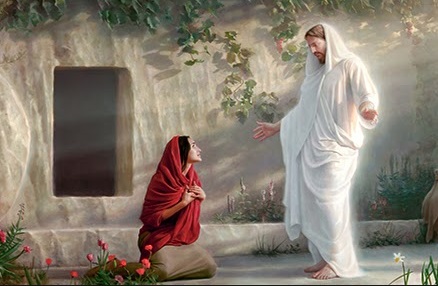
Easter holidays are the anniversary of the resurrection of the big guy, that is Jesus Christ. Some of us are quite certain that Jesus Christ rose from the dead, put it in other words, the energy form or power source known as Jesus Christ was transformed on a certain date, roughly about two thousand years ago, into another form. There were some people who witnessed the transformation, and even under the threat of death, pain, torture and so on, did not recant their story. They stuck with it and died maintaining their story. OK, so far, Jesus Christ rose from the dead. This brings me to a curious point in the report of these witnesses; firstly in John’s account in John 20:11-20, especially verses 14, 19 and 20, Mary Magdalene and then later the disciples did not immediately recognize the big guy, what is with that? I mean somebody you love, your close friend, mentor, teacher, helper, healer and provider. And you’ve been with this guy for some time, and he gets killed in a brutal fashion, with all the gruesome image fresh in your mind, and two or three days after he was murdered, you met him standing next to you, and you don’t recognize him. Well I don’t know about you, but if my brother was murdered two days ago, and I see him today (and we are not talking about ghosts), I would recognize him. Unless he is in a different form, totally unrecognizable from his form two days ago. Secondly, Luke’s account in chapter 24, verses 13 to 35, tells about two of Jesus’s disciples or followers, on a stroll to Emmaus from Jerusalem, maybe a mile’s walk or something like that, in any case, not far from Jerusalem, whether an hour’s walk or more. And Jesus was walking with these guys and talking with them, eventually entering the house they were going at their insistence. And all the time, these guys did not recognize him. This curious point in these two accounts of John and Luke may be explained by Apostle Paul’s defense of our faith in 1 Corinthians chapter 15. Paul is gifted with lovely turn of phrase, his prose, chain of thought and expression is simply great.

There is no point in paraphrasing him, one cannot improve on perfection, the prose used by Paul in this chapter is exquisite, and is exemplified in verses 40 and 41; There are also heavenly bodies and there are earthly bodies; but the splendor of the heavenly bodies is one kind, and the splendor of the earthly bodies is another. 41 The sun has one kind of splendor, the moon another and the stars another; and star differs from star in splendor. The inability of the close associates or family members of Jesus Christ in recognizing Him after He was resurrected can only logically be explained in this way.