Blog

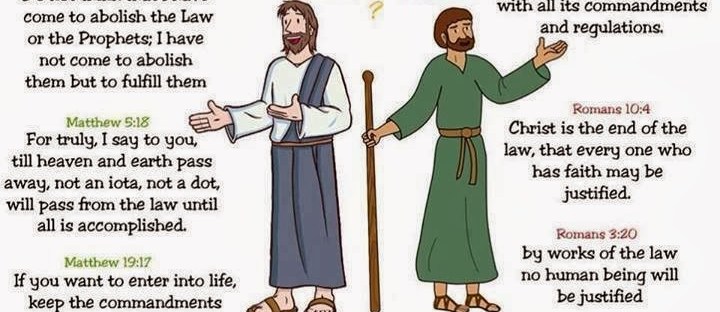
Legalism versus lovers of Christ

Notes on Colossians 3:1-4

Before we read Colossians 3:5-11, let’s check out the notes from the NIV Halley’s Study Bible. These few sentences give a good overview of how chapter 3 begins and where it is headed.

“Set your minds on things above. The false teachers were instructing the Colossians to concentrate on temporal observances; in contrast, Paul instructs them to concentrate on the eternal realities of heaven. The Greek verb for set emphasizes an ongoing decision. Christians must continually discipline themselves to focus on eternal realities instead of the temporal realities of this earth.”

Read Colossians 3:5-11

“Put to death, therefore, whatever belongs to your earthly nature: sexual immorality, impurity, lust, evil desires and greed, which is idolatry. Because of these, the wrath of God is coming. You used to walk in these ways, in the life you once lived.

But now you must also rid yourselves of all such things as these: anger, rage, malice, slander, and filthy language from your lips. Do not lie to each other, since you have taken off your old self with its practices and have put on the new self, which is being renewed in knowledge in the image of its Creator.

Here there is no Gentile or Jew, circumcised or uncircumcised, barbarian, Scythian, slave or free, but Christ is all, and is in all.” – Colossians 3:5-11 (NIV)

Unpack Colossians 3:5-11

Insight on Paul’s Use of “Old Self” and “New Self”

“These two terms do not refer to the Christian’s fleshly and spiritual natures. Instead, Paul describes our former unredeemed life as the old self and our life as God’s child as the new self. The new self has the image of the new creation in Christ, just as the old self bears the image of our fallen nature. The old self is under an old master, Satan, while the new self has a new master, the Spirit of God living within.” — NIV Halley’s Study Bible

When Paul says “barbarian” and “Scythian,” what does he mean?

“Barbarian: In the Roman Empire a person who did not speak Greek was despised. Scythian. An uncultured person who came from the area around the Black Sea.” — NIV Halley’s Study Bible

The NIV Halley’s Study Bible also contains articles to guide you through your Bible study. Below you’ll find one of these articles.

Some Food for Thought on Colossians 3

Legalists are those people who base their salvation on themselves and what they do—especially their religious behaviour (this is advocated by some religious sects)—rather than on Christ. Of course, we want to believe all the doctrines correctly and obey all the commandments to our utmost. But if in our own thinking we put too much emphasis on what we believe or what we do, are we not perilously close to basing our salvation on ourselves? Christ—not a doctrine, not a commandment—is our Saviour. He—not we ourselves—is the basis of our hope. We must not minimize the necessity of believing right doctrines. But after all is said and done, being a Christian is essentially loving Christ, a person, rather than believing this or that doctrine or obeying this or that commandment or having a particular experience.

We believe doctrines and obey commandments because of Christ. We must not love them more than we love him. If we love a doctrine too much, we are apt to grow irritated and hard and sour toward those who do not agree with our doctrine. If we love a person, Christ the person, we grow like him. In this letter, Paul wants to correct the false doctrines of the Judaizers on the one hand and of the Greek philosophers on the other, and also the resultant compromise doctrines. But even if our beliefs are scripturally sound, there is such a thing as exalting some truth about Christ above Christ himself. And when we thus tip the balance of our partnership with Christ toward our own side, we are legalists. It is possible to be a legalist over a doctrine of grace!

The verification of the deity of Jesus Christ in gospel account of Luke chapter 8

Psalm 104:4; He makes winds his messengers, flames of fire his servants.

The story in Luke chapter 8 verses 22 to 25 verifies the deity of Jesus Christ; by calming the storm, a feature or characteristic of God, that is control of the elements. God has complete control over all the elements of the material universe. So that He can commission His servants to use them according to His will. In Exodus 9:18-26, there is a demonstration of this power. So that He can make them rebuke the sin of man. He can arm the universe against a wicked soul. God can prevent them from working injury to the good. The heathen imagined that divers gods were over divers things; some ruling the air, some the fire, some the water, some the mountains, and some the plains. But God here demonstrates to the Egyptians His complete authority over the whole of nature. This truth is consoling to the good.

This is further acknowledged by Paul in his writings to the Philippians in chapter 2 verses 6 to 9; Who, being in very nature God, did not consider equality with God something to be used to his own advantage, 7 rather, he made himself nothing by taking the very nature of a servant, being made in human likeness. 8 And being found in appearance as a man, he humbled himself by becoming obedient to death—even death on a cross! 9 Therefore God exalted him to the highest place and gave him the name that is above every name.

The casting out of demons or impure spirits, who are themselves immortal creatures, is another example of the deity of Christ. The Lord is the God of all human spirits, and He has authority over them all. The account in Luke chapter 8 verses 26 to 39 is a verification of the deity of Christ. One of the most exceptional manifestation of the power of God is the casting out of demons. Solomon was reputed to have been able to do this in accounts outside the synoptic sources. Jesus made a reference to this in the synoptic account of the gospel of Matthew chapter 12 verses 42 to 45. And in another gospel account, after Jesus Christ had endowed His disciples with power and sent them out to heal and evangelize, after they came back, a man brought his son possessed by demons for healing, which the disciples could not do, and Jesus Christ told them that this kind of casting out require more fasting and praying than other forms of manifestation of God’s power. There is strict adherence to order and authority in the spiritual realm, and as stated in Philippians 2 verses 10 to 11; that at the name of Jesus every knee should bow, in heaven and on earth and under the earth, 11 and every tongue acknowledge that Jesus Christ is Lord, to the glory of God the Father. The authority over demons and other impure spirits is a verification of the deity of Christ.

The power of life and death belongs to God alone, and He is the One that can destroy the body and soul, as stated by Jesus Christ in Matthew 10:28; Do not be afraid of those who kill the body but cannot kill the soul. Rather, be afraid of the One who can destroy both soul and body in hell. God made man from dust and put part of His spirit into him, Genesis 2:7; Then the Lord God formed a man from the dust of the ground and breathed into his nostrils the breath of life, and the man became a living being. This is confirmed in Jeremiah 32:27; I am the Lord, the God of all mankind. And furthermore, in Numbers 27:16; the Lord, the God who gives breath to all living things. Therefore in the gospel account of Luke chapter 8 verses 40 to 56, wherein there is the account of Jesus Christ bringing a dead girl (the daughter of Jairus, a leader of the synagogue) back to life, the clue here is in verse 55, where we were told that the spirit of the girl returned to her, we have the demonstration of the power of God, the power of life and death. The Lord God is the God of all spirits. This is once more a verification of the deity of Christ Jesus.

The price or cost of Life/ Death is Death/ Life

Matthew 16:24-28

Then Jesus said to his disciples, “Whoever wants to be my disciple must deny themselves and take up their cross and follow me. 25 For whoever wants to save their life will lose it, but whoever loses their life for me will find it. 26 What good will it be for someone to gain the whole world, yet forfeit their soul? Or what can anyone give in exchange for their soul? 27 For the Son of Man is going to come in his Father’s glory with his angels, and then he will reward each person according to what they have done.

28 “Truly I tell you, some who are standing here will not taste death before they see the Son of Man coming in his kingdom.”

What is God Thinking?

by Berni Dymet

Isaiah 55:8,9 “My thoughts are not your thoughts, neither are your ways my ways,” declares the Lord. “As the heavens are higher than the earth, so are my ways higher than your ways and my thoughts than your thoughts.”

Some days – things just don’t make sense. Why – why did God let that happen? What was He thinking?

From time to time we all wonder that. And from our rather poor, rather clouded and foggy and limited vantage point – we think that we see things oh so clearly.

“Now if I were God – I’d have …”

Have you ever thought that to yourself?

Problem is, most of the time our perspective’s all-wrong. Most of the time – we see things through the eyes of our own needs and our own comforts, or through a distorted sense of human justice.

But God – He stands back – He sees the whole picture, the whole game, and the whole chessboard. And you and I just don’t know which bits connected to which other bit. How this random bit of suffering over here is going to bring some good over there.

So next time we’re tempted to play God, remember – we only see a minuscule part of the picture.

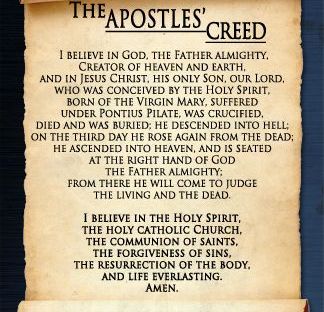
Did Jesus Actually Descend into Hell? The Nicene creed and the Apostles creed

The two most well-known creeds in the Christian church are the Nicene Creed and the Apostles’ Creed. Both creeds state similar beliefs, but the one major difference is the statement “he descended into hell” found in the Apostles’ Creed.

The Apostles’ Creed is an expanded version of the Old Roman Creed that was being used as early as the second century. Scholars are not exact on the reasons for creating the Apostles’ Creed. Early church leaders believed the creed was written by the apostles themselves, but we don’t really know.

This statement that Jesus descended into hell is believed to have been added later, around AD 390. This would have been at the same time a bishop named Apollinarius was teaching. He was stating that Jesus was not fully human, therefore, could not be an effective sacrifice for the sins of mankind. At the Council of Constantinople in AD 381, this doctrine was condemned.

There are several thoughts as to why this statement is not in the Nicene Creed. The Nicene Creed was developed at the Council of Nicaea in AD 325. Emperor Constantine gathered church leaders to create a statement of faith in response to the teachings of a man named Arius. Constantine wanted the Christian church to have a statement of faith that would unite each denomination.  This would have been before the addition in the Apostle’s Creed.

Beyond the development of these creeds is the scriptural references that are viewed as evidence that Jesus descended into hell. Most scholars use 1 Peter 18-22 as scriptural evidence to stand upon. This reference along with Ephesians 4:9 develops the understanding that Jesus may have descended into hell after his death on the cross.

1 Peter 3:18-22;

For Christ also suffered once for sins, the righteous for the unrighteous, to bring you to God. He was put to death in the body but made alive in the Spirit. 19 After being made alive,[d] he went and made proclamation to the imprisoned spirits— 20 to those who were disobedient long ago when God waited patiently in the days of Noah while the ark was being built. In it only a few people, eight in all, were saved through water, 21 and this water symbolizes baptism that now saves you also—not the removal of dirt from the body but the pledge of a clear conscience toward God.[e] It saves you by the resurrection of Jesus Christ, 22 who has gone into heaven and is at God’s right hand—with angels, authorities and powers in submission to him.

Ephesians 4:9; (Ephesians 4:8-10;)

This is why it says: “When he ascended on high, he took many captives and gave gifts to his people.” (What does “he ascended” mean except that he also descended to the lower, earthly regions? He who descended is the very one who ascended higher than all the heavens, in order to fill the whole universe.)

How Does the Language of the Creed Impact Understanding?

Hell is referred to in the Old Testament with the Hebrew word Sheol. This word means hell, but it refers to the present Hell. The understanding that those who have died in their sin and are lost will immediately enter this place upon death is what the word Sheol describes.

The reference to hell in the Greek is found in the New Testament. Since the Apostle’s Creed was originally written in Greek, we will focus closely on this language. Translating Greek into English is difficult because two words describe the “abode of the dead.”

The word in Greek that speaks of the place of hell is “Gehenna.” This word describes a final retribution or physical place. The Apostles Creed does not use this word.

In the Apostle’s Creed, we find the statement “he descended into Hell” using the Greek word “Hades.” The word Hades, in Greek, refers to the state of death. It could be translated as “descended to those below.” It does not refer to the place we recognize today as hell – it refers to the physical state of death.

Theological scholar Kenneth West explains this in the following statement regarding 1 Peter 3:18-22.

“It is clear that our Lord as the man Christ Jesus went to a place of the departed dead called in the Old Testament ‘Sheol’ and in the New Testament, ‘hell,’ the word ‘hell’ being the translation of the Greek word ‘Hades.’”

Modern churches have changed the meaning of the words in the Apostles Creed. This is a change that happened as time marched forward. Words in the English language began to have different meanings than their earlier counterparts. Specifically, the word hell began to mean the place where Satan lives. In the languages of the Bible, this was not what hell was.

What Happened after Jesus’ Death?

The events immediately following Jesus’ death are recorded in Matthew, Mark, and Luke. Each account gives a vivid and clear explanation of these events.

In Matthew 27:50-53 we read that Jesus cried out and gave up His spirit. Then the curtain of the sanctuary fell down and the earth shook. Rocks were split and the tombs of the saints opened up.

Mark 15:38 says “Then the curtain of the Temple was torn in two from top to bottom.”

Luke 23:44-45 states “It was now about noon, and darkness came over the whole land until three, because the sun’s light failed. The curtain of the sanctuary was split down the middle.”

Matthew’s account is the most vivid of the three. In his description, he shares with readers about the earthquake and darkness that was prophesied by Daniel, Elijah, and Zechariah. Even more importantly, Matthew shares that the veil was torn.

The tearing of the veil is mentioned in all three accounts and speaks to the importance of this event. The veil was the separation of the clean and the unclean. It hung in the Temple over the entrance to the Holy of Holies. This place was so holy that no one could enter except the high priest.

In Exodus 26 we learn that on the Day of Atonement, Aaron could enter and place the blood on the atonement seat. The Israelites could not come into the presence of the Lord just anytime. This speaks volumes about the tearing of this veil.

Jesus’ death and resurrection meant that no longer did we have to go through rituals or prepare sacrifices to enter into God’s presence. The ultimate sacrifice had been made. Everything spoken of by the Old Testament prophets had happened.

Why Do Some People Think Jesus Descended into Hell?

The belief that Jesus descended into hell is found in Christian churches today and many have questioned this. Some just cannot wrap their minds around this concept. Fr. Sev Kuupuo explains why Jesus did descend to hell and what the purpose of His descent was:

“Jesus went to Hell to liberate souls who have been held in prison. The task of Jesus in descending into Hell was for liberation of the Old Testament holy people. Some theologians explain that Jesus Christ went into Hell to experience the full rigor of suffering, which is the full impact for human sin, so as to give a comprehensive atonement for the sin of humanity.”

It is believed that the fulfillment of Jesus atoning for our sins could not happen without Jesus going into the place of Hell. He had to also rescue the holy people of the Old Testament that were awaiting Him in Abraham’s bosom.

R.C Sproul backs this thought up with his statement: “He goes to hell to liberate those spirits who, from antiquity, have been held in prison. His task in hell then is one of triumph, liberating Old Testament saints.”

In conclusion, those who do believe Jesus descended into hell, believe He went there to rescue souls and fulfill the sacrifice for our sins. It is not a belief that He went there and stayed awhile.

Why Do Some People Believe Jesus Did Not Descend into Hell?

People who confess their belief that Jesus did not descend into hell have various arguments to prove their case. The most popular is that Jesus was God in flesh. He made the place we know as hell. He banned Satan from heaven to live in hell forever.

If God created hell and determined its purpose, then how could he go there? Wasn’t Jesus holy and in no way could enter this place?

Others have researched this and came to their conclusions based upon what they have learned. They have understood what this statement means. Jesus did descend to hell because this word in Greek means the place of the dead not the place of eternal damnation.

How Should Christians Respond to This?

This question can have many answers, and opinions will mold those answers. Christians today can struggle with what to do with this statement because they do not live in Greek society. They do not speak Greek. We just don’t know what certain words mean in Greek.

Our response should be to take the time to study the Word. Do some research into the Biblical languages. Ask questions of your pastor or fellow person in Christ. This will help you to understand and process something that is truly beyond our human comprehension.

John Jones of the First Presbyterian church states “no confessional statement should be affirmed without understanding what it means. Understood properly, the Apostles Creed affirms a very important doctrinal truth.”

The Apostles Creed has made a statement that is controversial for some Christians. The key to understanding this statement is to know what the words mean. We must take the time to study before we take a stand on something.

Jesus was the ultimate sacrifice. He was put to death on a cross. He did die and enter a place of the dead. The gloriousness of this is that he did not stay there. He rose again and will return.

(Reference: https://www.biblestudytools.com/bible-study/topical-studies/did-jesus-actually-descend-into-hell.html?utm_source=today%27s+topical+bible+study&utm_campaign=today%27s+topical+bible+study+-+biblestudytools.com&utm_medium=email&utm_content=3121650&bcid=6fd36d2c4984deb491599514588ab2ed&recip=528989851+)