Blog

God tests our faith

God wants to test your faith.

“because you know that the testing of your faith produces perseverance. Let perseverance finish its work so that you may be mature and complete, not lacking anything.” (James 1:3-4)

The Greek translation of the word ‘test’ in the Scriptures is peirasmós, which means a trial or a proving. When you feel like God isn’t near, it is actually when He is closest to you; His apparent absence can be a test designed to strengthen your faith.

How can that be?

Testing is associated with purification—to cleanse you of those things that aren’t serving you and produce perseverance by strengthening your belief that God is greater than any adversity you face (1 Peter 1:7).

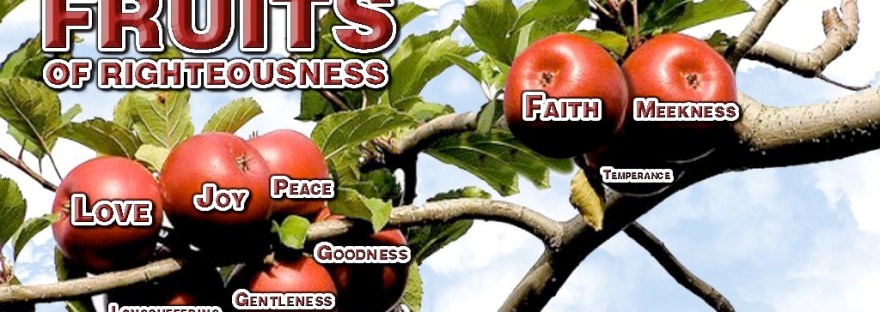
Testing is designed to bear fruit by bringing you up to a mature level of faith. For that reason, James assures, “Blessed is the one who perseveres under trial because, having stood the test, that person will receive the crown of life that the Lord has promised to those who love him” (James 1:12).

Wisdom part IV

When you love God, you will necessarily fear Him, and when you love God you have the Spirit of Christ in you; as such the Spirit of Christ in you and the wisdom of God is synthesized in the love of God.

Interlude: Where Wisdom Is Found

Job 28

There is a mine for silver
    and a place where gold is refined.
2 Iron is taken from the earth,
    and copper is smelted from ore.
3 Mortals put an end to the darkness;
    they search out the farthest recesses
    for ore in the blackest darkness.
4 Far from human dwellings they cut a shaft,
    in places untouched by human feet;
    far from other people they dangle and sway.
5 The earth, from which food comes,
    is transformed below as by fire;
6 lapis lazuli comes from its rocks,
    and its dust contains nuggets of gold.
7 No bird of prey knows that hidden path,
    no falcon’s eye has seen it.
8 Proud beasts do not set foot on it,
    and no lion prowls there.
9 People assault the flinty rock with their hands
    and lay bare the roots of the mountains.
10 They tunnel through the rock;
    their eyes see all its treasures.
11 They search[a] the sources of the rivers
    and bring hidden things to light.

12 But where can wisdom be found?
    Where does understanding dwell?
13 No mortal comprehends its worth;
    it cannot be found in the land of the living.
14 The deep says, “It is not in me”;
    the sea says, “It is not with me.”
15 It cannot be bought with the finest gold,
    nor can its price be weighed out in silver.
16 It cannot be bought with the gold of Ophir,
    with precious onyx or lapis lazuli.
17 Neither gold nor crystal can compare with it,
    nor can it be had for jewels of gold.
18 Coral and jasper are not worthy of mention;
    the price of wisdom is beyond rubies.
19 The topaz of Cush cannot compare with it;
    it cannot be bought with pure gold.

20 Where then does wisdom come from?
    Where does understanding dwell?
21 It is hidden from the eyes of every living thing,
    concealed even from the birds in the sky.
22 Destruction[b] and Death say,
    “Only a rumor of it has reached our ears.”
23 God understands the way to it
    and he alone knows where it dwells,
24 for he views the ends of the earth
    and sees everything under the heavens.
25 When he established the force of the wind
    and measured out the waters,
26 when he made a decree for the rain
    and a path for the thunderstorm,
27 then he looked at wisdom and appraised it;
    he confirmed it and tested it.
28 And he said to the human race,
    “The fear of the Lord—that is wisdom,
    and to shun evil is understanding.”

What is wisdom and how to get it

Wisdom is the right use of knowledge. To know is not to be wise. Many men know a great deal and are all the greater fools for it.

The answer to the question, “what is wisdom” seems, at first hearing, to demand a rather simple answer. One could say, “Wisdom is the appropriate application of knowledge,” and that is so. But upon reviewing wisdom in the Bible, this invaluable virtue is deep, immeasurable, priceless, and rare.

The Lord offers wisdom freely; however, most don’t bother to ask and, therefore, receive. Wisdom is a plenteous crop with a meager harvest. Wisdom personified cries out in the street, “I am here! I bring great blessings!” Thus, the Proverb:

Proverbs 1:20-22 (ESV): Wisdom cries aloud in the street, in the markets she raises her voice; at the head of the noisy streets she cries out; at the entrance of the city gates she speaks: “How long, O simple ones, will you love being simple?

She holds wealth, happiness, and abundant life. But the sweet voice with her kind offer is drowned out by the urgent noises of practicality and utility and self-reliance.

Wisdom is, in fact, a divine gift that is granted by God whenever any believer asks. This is the clear teaching of James:

James 1:5 (ESV): If any of you lacks wisdom, let him ask God, who gives generously to all without reproach, and it will be given him.

Yet, how many ask? How many pray? Solomon asked for wisdom and it is this prayer that unlocked the riches of the world. We read in 1 Kings 3:8-13 (ESV):

“And your servant is in the midst of your people whom you have chosen, a great people, too many to be numbered or counted for multitude. 9 Give your servant therefore an understanding mind to govern your people, that I may discern between good and evil, for who is able to govern this your great people?” 10 It pleased the Lord that Solomon had asked this. 11 And God said to him, “Because you have asked this, and have not asked for yourself long life or riches or the life of your enemies, but have asked for yourself understanding to discern what is right, 12 behold, I now do according to your word. Behold, I give you a wise and discerning mind, so that none like you has been before you and none like you shall arise after you. 13 I give you also what you have not asked, both riches and honor.”

Proverbs 1:7 (ESV) tells us,

“The fear of the Lord is the beginning of knowledge; fools despise wisdom and instruction.”

In this is the answer to the second part of the question: “how does one acquire wisdom?” The biblical answer is found in all of the Scriptures that we have cited and many more. We can survey all of the pool of biblical insights about wisdom and siphon the precious nectar of truth about how to get wisdom:


  1. Recognize that true wisdom is something that we need. Like grace, wisdom is something God offers and which we must receive. It is a gift.
  2. Repent of your claim on wisdom. Turn to God. By faith, believe in God and in his only begotten Son Jesus Christ. Ask him for wisdom.
  3. Receive the anointing of wisdom even as Joshua received wisdom after Moses laid his hand upon him. Recognize that wisdom is a spiritual act. It has very little to do with cognitive development or education. It has everything to do with the anointing of God to see what is right and what is wrong, to know what to do and when to do it. You and I both know that wisdom does not come along with a sheepskin of a diploma or certification. Cry out to God, and he will answer you and anoint you with wisdom.
  4. Use wisdom for the glory of God and for the good of others. If wisdom is not exercised, then wisdom ceases to be. However, the very nature of wisdom instructs your heart to use your insights, your discernment, your discretion, your vision to fulfill God’s will and to demonstrate how to love your neighbor.

Yes, wisdom is a bountiful blessing that is available to all. You have only to go to the Lord God and ask for this wisdom. As Paul prayed that the Colossians be granted wisdom, so I pray for those who read this:

“And so, from the day we heard, we have not ceased to pray for you, asking that you may be filled with the knowledge of his will in all spiritual wisdom and understanding” (Colossians 1:9-10 ESV).

Let us always remember that Jesus is the fullness of God’s wisdom. To receive the anointing of wisdom, then, is, in some way, to know the mind of God and to draw close to the one who is wisdom incarnate, even Jesus Christ our Lord:

“But we preach Christ crucified, to the Jews a [c]stumbling block and to the [d]Greeks foolishness, but to those who are called, both Jews and Greeks, Christ the power of God and the wisdom of God” (1 Cor. 1:23-24 NKJV).

Jesus Christ is the wisdom of God. And to receive him is to recognize your need of him and cry out to him. God will answer your prayer. So, this is wisdom and how to find it.

Reference: (https://www.crosswalk.com/faith/bible-study/what-is-wisdom-and-how-to-get-it.html?utm_source=Crosswalk%20Pastors%20Weekly&utm_medium=email&utm_campaign=05/17/2019&utm_source=Crosswalk%20Pastors%20Weekly&utm_campaign=Crosswalk%20Pastors&utm_medium=email&utm_content=2813252&bcid=6fd36d2c4984deb491599514588ab2ed&recip=528989851%20)


Who is a gentleman?

A gentleman is a man of refinement. He is a well polished man who has worked on his behaviour to attain the state of perfection. He is distinguished for his excellence in thought, manners and taste. He has a flawless, impeccable character. The Spanish call him a don.

The character of a gentleman

A gentleman never inflicts pain. Rather his main preoccupation is to remove obstacles which hinder the progress of people around him.

A perfect gentleman carefully avoids whatever may cause a jolt in the minds of those with whom he associates, besides shunning collision of feelings, gloom or resentment. His great concern is to ensure that everyone is at ease and comfortable. He is tender toward the bashful, gentle towards the distant and merciful towards the absurd. He makes light of favours while he does them, and seems to be receiving when he is actually conferring.

A true gentleman never boasts of his achievements; he has no ears for slander or gossip. Rather than imputes contrary motives to those who interfere with him, he interprets everything for the best. A don, as the Spanish will call a gentleman is never mean; neither does he take unfair advantages of others. He does not insinuate evil; he has too much good sense to be affronted at insults, too well employed to remember injuries, and too tolerant to bear malice.

A refined man is patient and long-suffering. Whenever he engages in controversy of any kind, his disciplined intellect preserves him from making the blunder of thinking too highly of himself.

Meanwhile an unrefined man is like a blunt cutlass that tears and hacks instead of cutting clean; he turns the key point in discourse upside down. He wastes his strength and time on trivialities.

However, a purified man is too clear-headed to dally on frivolities. He is decisive in all his undertakings. He is honest in all his dealings, humble enough to acknowledge his shortcomings, and then takes a clear step to rid himself of such impurities. He is not as haughty as not to say ‘I am sorry’ whenever he has to. A refined man who can find!

References: Psalm 15:1-2; Psalm 24:3-5; Psalm 101:3-4; Psalm 106:3; Psalm 112:4; Psalm 112:7-8; Proverbs 2:7; Proverbs 2:11; Proverbs 2:20; Proverbs 11:5-6; Proverbs 13:6; Isaiah 32:17; Isaiah 33:15-16; Daniel 12:3; Hosea 10:12; Mathew 12:35; Galatians 5:22-23; Ephesians 5:9; 2 Timothy 2:22; James 3:11-18; 2 Peter 1:5-9; 1 John 2:10-11.