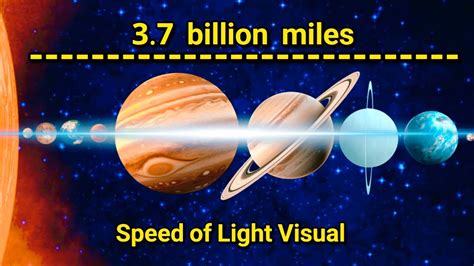
Genesis 1 verses 14-19; And God said, “Let there be lights in the vault of the sky to separate the day from the night, and let them serve as signs to mark sacred times, and days and years, and let them be lights in the vault of the sky to give light on the earth.” And it was so. God made two great lights—the greater light to govern the day and the lesser light to govern the night. He also made the stars. God set them in the vault of the sky to give light on the earth, to govern the day and the night, and to separate light from darkness. And God saw that it was good. And there was evening, and there was morning—the fourth day.
What is time from the perspective of living organisms compared to that of cosmic bodies?
This is a beautifully deep question that sits at the intersection of biology, physics, and philosophy.
What is Time, Fundamentally?
Physically, time is a dimension of the universe — part of the spacetime fabric described by Einstein’s relativity. But experienced time and cosmic time are very different things.
Time from the Perspective of Living Organisms
Time is biological and relative
Living organisms don’t experience time as a fixed constant — they experience it through:
- Metabolism — faster metabolism generally correlates with a faster subjective experience of time. A hummingbird’s heart beats ~1,200 times per minute; it likely perceives the world in much finer temporal slices than a tortoise
- Circadian rhythms — almost all life on Earth is locked to roughly a 24-hour biological clock, tied to the planet’s rotation
- Neural processing speed — the faster an organism processes sensory information, the more “frames per second” of reality it experiences. Small fast animals like flies perceive time more slowly relative to us (they see us moving in slow motion)
Time is purpose-driven for life
For living organisms, time is experienced as:
- Survival pressure — immediate, urgent, fleeting
- Generational — life measures time in lifespans, seasons, and reproductive cycles
- Cellular — at the cellular level, time is measured in chemical reactions, protein folding, and DNA replication — milliseconds to hours
- Evolutionary — at the species level, meaningful change happens over thousands to millions of years
Life’s relationship with time is asymmetric
Living organisms have a profound awareness of time’s arrow — birth, growth, decay, death. Entropy is felt personally. Every living thing is essentially a temporary configuration of matter fighting against disorder.
Time from the Perspective of Cosmic Bodies
Time is almost incomprehensibly vast
- The Sun is 4.6 billion years old and will live another ~5 billion — a single stellar lifetime dwarfs all of human civilisation millions of times over
- A neutron star can complete a full rotation in milliseconds, experiencing enormous amounts of rotational “time” per second
- Black holes warp time itself — at the event horizon, time slows to a standstill relative to a distant observer
- Galaxies evolve over billions of years; their “events” — collisions, star formation, spiral arm shifts — are invisible on any human timescale
Cosmic bodies don’t experience time
This is perhaps the most striking contrast. A star doesn’t feel its 10-billion-year life. A galaxy doesn’t anticipate its eventual collision with a neighbour. Cosmic time simply passes and accumulates through physics — gravity, nuclear fusion, thermodynamics — without any internal experience.
The Great Contrast
| Living Organisms | Cosmic Bodies | |
| Scale | Microseconds to millennia | Millions to billions of years |
| Experience | Subjective, felt, urgent | None — purely physical |
| Measurement | Heartbeats, seasons, generations | Light-years, orbital periods |
| Relationship to entropy | Active resistance | Passive progression |
| Time’s arrow | Deeply felt | Indifferent |
A Philosophical Reflection
There is something remarkable in the contrast: the universe is ancient and vast, yet indifferent to time, while a mayfly lives only one day but experiences that day with full biological urgency and presence.
In a sense, consciousness may be the universe’s only mechanism for actually experiencing time — and living organisms, however brief, are the only things in the cosmos for whom time truly means anything.
As the physicist Carlo Rovelli puts it, time as we feel it — flowing, urgent, personal — may be less a feature of the universe and more a feature of us.
The time scale and timespan of living organisms differs from that of cosmic bodies. How old is the oldest verified living organism?
The oldest verified living organism depends on how you define “individual organism” — the answer changes quite dramatically.
Single Organism (Clonal / Rooted)
Pando — a clonal colony of quaking aspen trees in Utah, USA — is often cited as one of the oldest and most massive living organisms, estimated at around 80,000 years old, though some estimates go higher. It’s technically a single organism connected by one root system.
Oldest Individual Non-human Animal
Jonathan the Seychelles giant tortoise is the oldest known living animal, born around 1832, making him approximately 193 years old as of 2026. He lives on the island of St. Helena.
Oldest Individual Tree
Methuselah, a Great Basin bristlecone pine in California, USA, is approximately 4,855 years old — the oldest known individual (non-clonal) tree.
Oldest Known Living Microorganism
Bacteria revived from ancient salt crystals and permafrost have been claimed to be hundreds of thousands to millions of years old, though these claims are harder to verify and debated scientifically.
Oldest in the Ocean
Ocean quahog clams (Arctica islandica) are among the longest-lived animals — one nicknamed “Ming” was confirmed at 507 years old when it was (unfortunately) killed during the aging process in 2006.
Key takeaway
Life’s longevity record depends heavily on definition — a single rooted tree, a clonal colony, an animal, or a microbe all yield very different answers. But life on Earth has clearly mastered the art of persistence.
The Sun is about 4.6 billion years old, formed from a collapsing cloud of gas and dust in a spiral arm of the Milky Way. It’s currently about halfway through its main-sequence lifetime — it’s expected to continue burning hydrogen for another ~5 billion years before expanding into a red giant.
Earth is also about 4.54 billion years old, forming roughly 50–100 million years after the Sun from the same swirling disk of gas and dust (the solar nebula).
We know this primarily through radiometric dating of the oldest rocks and minerals on Earth (zircon crystals dated to ~4.4 billion years), as well as dating of meteorites from the same era.
The earliest known systematic human anatomical dissections were performed in Alexandria, Egypt, around 300–250 BCE.
The key figures were Herophilus of Chalcedon and Erasistratus of Chios, both working at the famous Library/Museum of Alexandria under the patronage of the Ptolemaic rulers. They are credited with being the first to perform dissections of human cadavers in a systematic, scientific way — and according to some ancient sources (like Celsus), they may have even performed vivisections on condemned criminals, though this remains debated.
Before Alexandria, anatomical knowledge came mainly from:
- Animal dissections (e.g., Aristotle dissected many animals but not humans)
- Wound observation in warfare and surgery
- Hippocratic writings (~400 BCE), which were based on external observation rather than dissection
After the Alexandrian period, human dissection largely fell out of practice in the ancient world due to cultural and religious taboos, and wasn’t systematically revived in Europe until the 13th–14th centuries, with figures like Mondino de Luzzi in Bologna.
During a philosophical discussion with a friend, it was suggested that the modern generation are more intelligent than the older ones. Are the adolescents of the modern generation capable of more brain functioning capacity compared to previous generations?
This is a fascinating and nuanced question. The short answer is: it’s complicated — and depends on what you mean by “brain functioning capacity.”
The Flynn Effect
The most well-documented finding is the Flynn Effect — IQ scores rose steadily across the 20th century in many countries, roughly 3 points per decade. This suggests improvements in certain cognitive abilities like abstract reasoning and pattern recognition, likely due to better nutrition, education, healthcare, and more cognitively stimulating environments.
Where modern adolescents may have an edge
- Visual-spatial processing — navigating digital interfaces, reading complex visuals, and multitasking across screens appears stronger
- Information access and synthesis — faster at finding and filtering large amounts of information
- Tech-native problem solving — intuitive with tools previous generations had to consciously learn
Where there are concerns
- Attention span and deep focus — studies suggest sustained concentration may be declining, linked to smartphone and social media use
- Memory — reliance on external devices (“Google effect”) may reduce the need to internally store information
- The Flynn Effect may be reversing — some Scandinavian and other studies from the 1990s onward suggest IQ gains have plateaued or slightly declined in some developed nations
- Mental health — rates of anxiety, depression, and stress are notably higher in Gen Z, which affects cognitive performance
The bigger picture
The brain’s raw biological capacity hasn’t changed — human brains are essentially the same hardware as thousands of years ago. What changes across generations is how that capacity is trained, used, and expressed, shaped by environment, education, technology, nutrition, and culture.
So modern adolescents aren’t necessarily more capable in an absolute sense, but they are differently capable — optimised for the cognitive demands of the world they grew up in. The elephant in the room is; do you subscribe to the school of thought of an evolutionist or that of an intelligent designer/creationist? Follow the evidence.