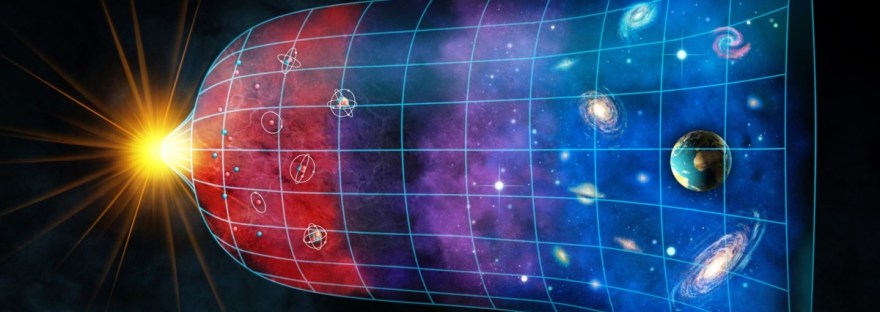
John 14:6-7; Jesus answered, “I am the way and the truth and the life. No one comes to the Father except through me. If you really know me, you will know my Father as well. From now on, you do know him and have seen him.” John 4:24; God is spirit, and his worshipers must worship in the Spirit and in truth.”
Below are excerpts from an article published by BBC.com
Chemistry Nobel awarded for solving mystery of life’s asymmetry
Heiner Linke, chair of the Nobel Committee for Chemistry, explained: “Henri Kagan and Kenso Soai have provided a solution to a chemical mystery that is over a century old: how homochirality – the selective production of the correct version of a molecule – can emerge spontaneously.
Kenso Soai from Tokyo University of Science took the next step in 1995. He published a scientific paper in the journal Nature, external describing the first ever chemical reaction that had the potential to be homochiral – producing only the desired version of an organic molecule.
In 2003, he finally succeeded in controlling a reaction in which only one of the two possible mirror images was formed.
“Other than life itself,” the Nobel Committee said in a statement, “no one had previously achieved this feat”.
Prof Angus Davison, from the University of Nottingham, studies the biology of chirality and said that the Nobel-winning chemistry could help reveal how and why life favours “one-handedness”.
“In ways that we don’t yet quite understand, the chirality of the basic building blocks of life ends up making bodies that are themselves also chiral,” he told BBC News.
This was the foundation, he explained, of our hearts being on left hand side of our bodies and snail shells that coil to the right.
Peter Somfai, a member of the Nobel Committee for Chemistry, said the research awarded this year’s prize has become part of “our basic understanding of how chemistry functions”.
He said showing how a mirror image is created is “probably the most fundamental question in life – because somehow that happened four billion years ago when life was created. And now we have, for the first time, mimicked that in the lab”.
The quote “The mystery of life isn’t a problem to solve, but a reality to experience” originates from Frank Herbert’s classic science fiction novel Dune.
Context and Meaning
Source: In the novel, Paul Atreides recounts that the Bene Gesserit Reverend Mother Mohiam shared this idea with him.
The First Law of Mentat: Paul replies to it by quoting, “A process cannot be understood by stopping it. Understanding must move with the flow of the process, must join it and flow with it.”
Core Philosophy: The text emphasizes that life is a dynamic flow. You cannot fully comprehend existence by trying to halt, dissect, or rigidly control it. Instead, true understanding comes from being present and moving along with life’s natural progression.
Human beings are physical entities, and all the particles, atoms, molecules, and chemical constituents that make up biological organisms are present in the Cosmos, the observable physical universe. If human beings have souls, then the soul of a human being is not a physical entity.
This brings us to the issue of Life; this is a mystery that science has not been able to unravel. Science may unravel the issue of chirality (see excerpts from the Nobel prize for Chemistry, above), but the science has not been able to create life in the laboratory from nothing. Maybe that is because creation of life (from nothing) is not a physiochemical occurrence. This brings us back to the starting text of this article from the words of Jesus Christ, a character from the Bible. Who claims to be ‘Life’, furthermore, He stated that ‘God is Spirit’ (a non-physical entity). So why are human beings who are physical entities searching for an ‘Entity’ that is non-physical. The use of physiochemical methods to search for a ‘non-physical entity’ seems to be a fruitless endeavour. Anyway, they can always hope, though technically, ‘hope’ is not a concept recognized by science. Scientifically, Life remains a mystery.
God created the physical universe and Time: Genesis 1 verses 1-3; In the beginning God created the heavens and the earth. Now the earth was formless and empty, darkness was over the surface of the deep, and the Spirit of God was hovering over the waters. And God said, “Let there be light,” and there was light. Genesis 1 verses 14-15; And God said, “Let there be lights in the vault of the sky to separate the day from the night, and let them serve as signs to mark sacred times, and days and years, and let them be lights in the vault of the sky to give light on the earth.” And it was so.
The speed limit of the universe refers to the speed of light in a vacuum (), which is approximately 299,792,458 meters per second (roughly 186,282 miles per second).
It is not merely the speed at which light travels, but a fundamental property of spacetime that sets the maximum speed at which any matter, energy, or information can move through space.
1. Mass Increases with Speed
According to Albert Einstein’s theory of Special Relativity, as an object with mass accelerates and moves faster, its relativistic mass-energy increases. To continue accelerating, it requires progressively more energy. As an object approaches , the energy required to accelerate it further approaches infinity, making it impossible for anything with mass to reach or exceed the speed of light.
2. Massless Particles
Particles that have no invariant rest mass—such as photons (particles of light) and gluons—do not need to accelerate; they naturally travel at from the moment they are created.
3. Causality and the Speed of Information
The speed limit is crucial for preserving causality—the principle that a cause must always precede its effect:
The speed of light is essentially the speed of causality itself.
If information or matter could travel faster than , it would be possible in certain reference frames to observe an effect before its cause occurred (effectively traveling backward in time), creating severe physical paradoxes.
4. Cosmic “Lag”
Because the speed of light is finite, looking out into space is equivalent to looking back in time:
Light from the Sun takes roughly 8 minutes and 20 seconds to reach Earth.
Light from distant stars and galaxies takes thousands or billions of years, showing them as they existed in the past.
In modern physics, gravity and quantum behaviour are described by two distinct, highly successful theoretical frameworks that explain how the universe works at different scales:
1. The Scientific Explanation for Gravity: General Relativity
At a macroeconomic/cosmological scale, gravity is described by Albert Einstein’s Theory of General Relativity (1915).
Space-Time Curvature: Rather than viewing gravity as an invisible force pulling two masses together (as Isaac Newton originally conceptualized), General Relativity explains gravity as a structural deformation of spacetime—a four-dimensional continuum combining the three dimensions of space with time.
Mass Informs Spacetime: Massive objects (like stars, planets, and black holes) curve and distort the spacetime around them.
Motion Follows Geometry: Objects in motion, including light rays and smaller celestial bodies, travel along the straightest possible paths in this curved spacetime (called geodesics). What we feel as the “pull” of gravity is simply our motion along these geometric curves. For instance, the Earth orbits the Sun because it is moving through a spacetime well carved out by the Sun’s mass.
Time Dilation: Because mass curves time along with space, time moves slower in stronger gravitational fields relative to weaker ones (gravitational time dilation).
2. The Scientific Explanation for Quantum Behaviour: Quantum Mechanics
At atomic and subatomic scales, the Universe behaves according to Quantum Mechanics. Rather than predictable, continuous motion, microscopic particles display counterintuitive properties governed by probability:
Wave-Particle Duality: Matter and light exhibit both particle-like and wave-like properties. Electrons, photons, and other particles do not exist at precise, single points until they are measured; instead, they exist as a wavefunction () that describes the probability of finding the particle in various states or positions (governed by the Schrödinger equation).
Quantization of Energy: Physical quantities like energy, angular momentum, and spin cannot vary continuously. Instead, they exist in discrete packets or units called quanta. An electron in an atom, for instance, jumps between specific energy levels rather than sliding smoothly between them.
The Uncertainty Principle: Formulated by Werner Heisenberg, this fundamental limit states that certain pairs of physical properties (like a particle’s precise position and momentum) cannot both be known simultaneously with infinite precision. Observing one property inherently increases the uncertainty of the other.
Superposition: Before a measurement occurs, a quantum system can exist in a linear combination of multiple physical states simultaneously. The system “collapses” into a single definite state only upon interaction with an external observer or environment (quantum measurement).
Quantum Entanglement: When particles interact in specific ways, their quantum states become intertwined. Measuring the state of one particle instantly determines the state of its entangled partner, regardless of the distance separating them—a phenomenon Einstein famously called “spooky action at a distance.”
The Unresolved Frontier: Unifying Gravity and Quantum Physics
While General Relativity excels at explaining massive, cosmic-scale objects and Quantum Mechanics perfectly predicts subatomic phenomena, they are fundamentally incompatible mathematically:
Deterministic vs. Probabilistic: General Relativity relies on a deterministic, smooth, and continuous spacetime geometry. Quantum mechanics operates on discrete, probabilistic, and fundamentally uncertain fluctuations.
The “Singularity” Problem: At extreme locations where both massive weight and tiny scales overlap—such as the centre of a black hole or the moment of the Big Bang—General Relativity yields infinite density and breaks down.
To reconcile these two theories, theoretical physicists are actively working on a unified theory of Quantum Gravity. Leading candidate frameworks include:
String Theory: Proposes that fundamental particles are not zero-dimensional points, but tiny, vibrating one-dimensional strings operating in 10 or 11 dimensions.
Loop Quantum Gravity (LQG): Suggests that spacetime itself is not a smooth continuum, but is instead broken down into discrete, microscopic loops or “pixels” of space at the Planck scale ( meters).
In theoretical physics, a graviton is the hypothetical elementary particle that mediates the force of gravity in the framework of quantum field theory.
If gravity can be described quantum mechanically, just like the other three fundamental forces of nature, the graviton would be its quantum force-carrier (or gauge boson).
Key Properties of the Graviton
Physicists have deduced what properties a graviton must possess based on the known behaviour of gravity:
Spin-2: Unlike the photon (spin-1) or the Higgs boson (spin-0), the graviton must have an intrinsic angular momentum (spin) of 2. This unique tensor nature is required to reproduce the attractive, geometry-bending nature of gravity described by Einstein’s General Relativity.
Massless: Gravity has an infinite range (it acts across cosmic distances), which mathematically requires the particle mediating it to have zero rest mass.
Electrically Neutral: Gravitons carry no electric charge.
Speed of Light (): Because it is massless, a graviton would travel through a vacuum at the exact speed of light.
The Analogy to Other Fundamental Forces
To understand how gravitons fit into physics, it helps to compare gravity to the other fundamental forces in the Standard Model of Particle Physics:
Force
Mediator / Particle
Observed?
Electromagnetism
Photon
Yes
Strong Nuclear Force
Gluon
Yes
Weak Nuclear Force
W & Z Bosons
Yes
Gravity
Graviton
Theoretical (Unobserved)
Just as electromagnetic radiation (light) is made up of individual packets called photons, gravitational waves—ripples in spacetime detected by observatories like LIGO—would theoretically be made up of a stream of individual gravitons.
Why Haven’t We Detected Gravitons?
Detecting an individual graviton is one of the most difficult challenges in modern physics:
Extreme Weakness of Gravity: On the scale of individual subatomic particles, gravity is fantastically weak compared to electromagnetism (roughly times weaker).
Tiny Cross-Section: Because a graviton interacts so weakly with matter, an experiment capable of detecting a single graviton would require a detector with astronomical mass (e.g., a detector the size of Jupiter placed in orbit around a neutron star) and would still take thousands of years to register a single interaction.
Status in Modern Physics
The graviton remains purely hypothetical. While standard General Relativity treats gravity as a smooth, continuous curvature of space rather than a stream of particles, candidate theories of quantum gravity—such as String Theory—naturally predict the existence of spin-2 massless particles, making gravitons a central feature of quantum physics research.
Whether time exists as a physical entity depends heavily on how physics defines an “entity.”
If by “physical entity” you mean a substance or fluid made of particles (like water) or an independent object you can touch, isolate, or collect in a jar, no: time is not a physical entity. You cannot have a container of time, nor is there a “time particle” (unlike gravity, which theoretically has the graviton, or light, which has the photon).
However, if by “physical entity” you mean an objective feature of physical reality—something that exists independently of human thought and can be measured, warped, and calculated—then modern physics overwhelmingly treats time as real, but as a dimension or relationship rather than an object.
1. Spacetime: A Geometric Dimension, Not a Substance
In Albert Einstein’s General Relativity, space and time are merged into a continuous, four-dimensional fabric called spacetime.
Time is a dimension of measurement (like length, width, and height).
Just as a meter stick measures distance between physical points, a clock measures the interval along a trajectory through spacetime.
Spacetime can stretch, warp, and curve around mass and energy. Strong gravitational fields and high speeds literally slow the rate at which time passes (gravitational and kinematic time dilation).
While the “fabric” of spacetime feels like an object in Einstein’s mathematics, time itself is a coordinate direction within that geometry, not a tangible substance filling the void.
2. The “Block Universe” (Eternalism)
General Relativity supports a view known as the Block Universe. In this interpretation, the past, present, and future all exist simultaneously in a static 4D block of spacetime.
Under this framework, the “passage” or “flow” of time is a subjective experience of observers moving along their worldlines, rather than a physical movement of time itself.
The “present moment” isn’t a physical wave traveling through the cosmos; it is simply a coordinate point, much like “here” is a point in space.
3. The Arrow of Time: An Emergent Property of Entropy
If physical laws at the microscopic scale are symmetric (they work the same forward or backward in time), why do we experience time as flowing strictly forward?
Physics explains the Arrow of Time not as a physical entity pushing us forward, but as an emergent property of thermodynamics:
The Second Law of Thermodynamics dictates that the overall disorder (entropy) of an isolated system always increases.
Eggs crack and drop; they never un-crack and jump back into your hand.
The forward direction of time is essentially the direction in which the universe goes from a state of low entropy (the Big Bang) to higher entropy. Time’s “flow” is a measure of changing physical states and relationships, rather than a physical stream.
4. Quantum Mechanics: Does Time Dissolve at the Base Level?
In standard Quantum Mechanics, time is an external background parameter—a global tick-tock against which quantum states evolve. However, when physicists try to combine quantum mechanics with general relativity to form a theory of Quantum Gravity, time seems to disappear entirely.
The Wheeler–DeWitt Equation: In equations attempting to describe the quantum state of the entire universe, the time variable vanishes.
Relational Time: Physicists like Carlo Rovelli argue that at the fundamental Planck scale ( meters), time does not exist as a fundamental feature of the universe. Instead, physical systems simply evolve relative to one another (e.g., system A changes relative to system B), and what we call “time” is an illusion or macro-level emergent phenomenon, similar to how “temperature” isn’t a property of an individual atom, but emerges when you group billions of them together.
Summary
Time is not a physical object or particle. Instead, physics views time as:
A dimensional coordinate of spacetime used to locate events and calculate intervals.
A measure of change and entropic evolution in physical systems.
Potentially an emergent phenomenon that arises from deeper quantum relationships where time itself does not exist.
The combination of quantum mechanics with general relativity will give us God/Creator, who is by the way non-physical [John 4 verse 24; God is spirit, and his worshipers must worship in the Spirit and in truth.], with time disappearing completely, though science is not there yet, maybe in the future. Which is a contradiction inherent in the concept that postulates time disappearing completely, with the past, present, and future all existing simultaneously.
Disclaimer: This article can not change the reader’s nature, character attributes, behaviour, or belief systems.
The church/religious establishment is supposed to be ‘the body of Christ’, yet one of its doctrinal pillars directly contradicts or ignores the position of Jesus Christ, according to the gospel accounts.
In order to lay the ground for this article, the authorship of the Pentateuch is objectively approached. The academic position that the Pentateuch (the first five books of the Hebrew Bible: Genesis, Exodus, Leviticus, Numbers, and Deuteronomy) was written by multiple authors over several centuries is the overwhelming consensus in modern critical biblical scholarship.
Rather than viewing the text as a single, unified work dictated or written directly by Moses—the traditional view—scholars examine it as a composite document assembled from various distinct source materials, oral traditions, and editorial layers.
Core Evidence for Multiple Authorship
Scholars base the multi-author position on internal textual evidence within the narrative:
Textual Doublets and Triplets: The Pentateuch contains repeated accounts of the same event with different details, perspectives, or vocabulary. For instance, there are two distinct Creation accounts (Genesis 1 and Genesis 2), two woven narratives of Noah’s Flood, and multiple versions of God establishing a covenant with Abraham.
Variations in Divine Names: Different sections consistently use different terms for God—such as Elohim (a general Hebrew word for God/deity) versus Yahweh (the specific, proper name revealed in Israelite tradition).
Stylistic and Theological Shifts: Abrupt changes in vocabulary, sentence structure, and theological emphasis suggest different writer profiles. Some sections emphasize spontaneous, anthropomorphic interactions with God, while others focus heavily on formal rituals, laws, genealogies, and temple order.
Anachronisms: Passages reference events or realities that occurred long after the traditional time of Moses, such as lists of Edomite kings who ruled “before any king reigned over the Israelites” or references to the death of Moses at the end of Deuteronomy.
Key Models of Multiple Authorship
Over the last two centuries, several models have emerged to explain how these diverse texts came together:
1. The Classical Documentary Hypothesis (JEDP)
Formalized by German scholar Julius Wellhausen in the late 19th century, this model posits that the Pentateuch was compiled by combining four distinct, continuous source documents:
J (Yahwist / Jahwist): Originated in the Southern Kingdom of Judah (c. 10th–9th century BCE). Characterized by its anthropomorphic view of God and narrative-driven style.
E (Elohist): Originated in the Northern Kingdom of Israel (c. 9th–8th century BCE). Uses Elohim for God and focuses on prophets and fear of God.
D (Deuteronomist): Associated with the religious reforms under King Josiah in Jerusalem (c. 7th century BCE). Comprises most of Deuteronomy and emphasizes centralizing worship and covenant loyalty.
P (Priestly Source): Written by or after the Babylonian Exile (c. 6th–5th century BCE). Highly structured, focusing on genealogies, ritual laws, purity codes, and Sabbath practices.
According to this theory, these four documents were woven together over time by editors known as redactors (R).
2. Fragmentary and Supplementary Hypotheses
While the basic four-source model remains widely taught, modern scholars often modify or challenge the idea of four fully intact, independent documents:
Supplementary Model: Assumes there was a core original document (such as an early non-Priestly narrative) that was continually expanded by later authors who added new layers, stories, and legal codes.
Fragmentary Model: Proposes that the Pentateuch began not as long, continuous narrative sources (J or E), but as a collection of independent shorter texts, legends, and law codes that were later gathered into larger blocks during the Persian period.
Current Scholarly Consensus
While scholars still debate the exact dating of individual passages and the precise editorial processes used to combine them, the fundamental premise remains firm: the Pentateuch is an anthology created by multiple writers, priests, and editors working across different historical periods to synthesize Israel’s legal, liturgical, and historical traditions.
Jesus explicitly addresses the priority of caring for one’s parents over religious financial contributions—specifically vows, tithes, and offerings—in Matthew 15:1–9 and its parallel account in Mark 7:1–13.
In these passages, Jesus directly confronts the Pharisees and scribes for using religious traditions as a loophole to evade the moral obligation to support aging parents.
1. The Core Conflict: The Practice of Corban
In Mark 7:9–13, Jesus highlights a tradition where individuals dedicated their assets or income to God by declaring them Corban (a Hebrew/Aramaic term meaning a gift or offering set aside for God/the Temple):
“He said to them, ‘All too well you reject the commandment of God, that you may keep your tradition. For Moses said, “Honor your father and your mother”; and, “He who curses father or mother, let him be put to death.” But you say, “If a man says to his father or mother, ‘Whatever profit you might have received from me is Corban’—that is to say, an offering, then you no longer let him do anything for his father or his mother, making the word of God of no effect through your tradition which you have handed down.”‘” (Mark 7:9–13)
By declaring money or property as dedicated to religious purposes, individuals were considered legally exempt from using those funds to support their parents, even if the parents were in financial distress or poverty.
2. Jesus’ Alignment with the Decalogue Over Human Tradition
In Matthew 15:3–6, Jesus places the foundational commandment to “Honor your father and your mother” (Exodus 20:12; Deuteronomy 5:16) above man-made ceremonial rules and religious vows:
“He answered and said to them, ‘Why do you also transgress the commandment of God because of your tradition? For God commanded, saying, “Honor your father and your mother”… But you say, “Whoever says to his father or mother, ‘Whatever profit you might have received from me is a gift to God’—then he need not honour his father or mother.” Thus you have made the commandment of God of no effect by your tradition.'” (Matthew 15:3–6)
Jesus asserts that using religious offerings as a justification to abandon filial duty:
Hypocritical: It uses the pretence of piety to commit neglect.
Invalidating: It cancels out the direct, weightier command of God in favour of legalistic human traditions.
3. The Broader Context: Weightier Matters of the Law
This specific incident aligns with Jesus’ broader critique of religious authorities regarding tithes and offerings in Matthew 23:23 (and Luke 11:42):
“Woe to you, scribes and Pharisees, hypocrites! For you pay tithe of mint and anise and cummin, and have neglected the weightier matters of the law: justice and mercy and faith. These you ought to have done, without leaving the others undone.” (Matthew 23:23)
While Jesus does not abolish tithes or temple gifts outright, he establishes a strict hierarchy: moral and ethical duties rooted in love, mercy, and familial care (justice and mercy) hold absolute precedence over external ritual duties, temple vows, and financial offerings.
Conclusion
According to the Gospels, Jesus firmly prioritizes taking care of one’s parents over paying tithes or making religious vows/offerings. To him, any system that allows religious giving to undermine moral obligations to family is a distortion of divine law.
Is there a physical demonstration of the majesty of the Lord? Does God have integrity? Will God go back on His words, or change His words because of reverse psychology, or reminder of ‘good works done by man’, or playing the favouritism card, or bias on the basis of skin colour, or being born in Asia or Europe or Africa or the Americas(indigenous native Americans), or by praising Him in a sycophantic manner not rooted in spirit and truth based on evidence, and other forms of logic and factors employed by man in prayers.
Leviticus 19:33–34 (The “Native-Born” Commandment)
“When a foreigner resides among you in your land, do not mistreat them. The foreigner residing among you must be treated as your native-born. Love them as yourself, for you were foreigners in Egypt. I am the Lord your God.”
While this verse specifically addresses resident aliens/foreigners (gerim), many of these non-native residents worked as hired labourers or servants in Israelite households.
Related Laws for Servants & Household Members
Equal Inclusion in Sabbath Rest:
Exodus 20:10 / Deuteronomy 5:14: The Sabbath commandment explicitly states that enslaved workers, hired servants, and resident aliens must be given the exact same rest as household family members.
Equal Treatment for Poor Hebrew Servants:
Leviticus 25:39–40: If an Israelite falls into poverty and becomes a servant, the Law mandates: “Do not make them work as a slave. They are to be treated as a hired worker or a temporary resident among you; they are to work for you until the Year of Jubilee.”
Inclusion in Sacred Feasts:
Deuteronomy 16:11: In the Feast of Weeks, household servants and foreign residents are instructed to rejoice alongside sons, daughters, and family members as equals in celebration.
Prohibition Against Oppressing Workers:
Deuteronomy 24:14–15:“Do not take advantage of a hired worker who is poor and needy, whether that worker is a fellow Israelite or a foreigner residing in one of your towns.”
John 13:34–35
“A new commandment I give to you, that you love one another: just as I have loved you, you also are to love one another. By this all people will know that you are my disciples, if you have love for one another.”
The Old Testament commanded loving one’s neighbour as oneself (Leviticus 19:18). Jesus’ commandment was “new” because it raised the standard of love: believers are instructed to love others “as I have loved you”—modelling their love after Christ’s sacrificial, self-giving example.
The “strength” of a law(commandment) refers to its effectiveness, authority, and ability to influence behaviour within a society. In legal philosophy and jurisprudence, the strength of a law is measured across three primary dimensions:
1. Legal Enforceability (Coercive Power)
A law derives immediate operational strength from the state’s capacity to enforce it and punish non-compliance.
State Monopoly on Force: The government possesses the official authority and resources (police, courts, regulatory bodies) to compel adherence.
Weakness point: If a law is technically on the books but never enforced, it loses its functional strength and becomes a “dead letter.”
2. Institutional Legitimacy & Clarity
A law’s structural strength depends on how well it is drafted and integrated into the broader legal system.
Procedural Validity: A law is stronger if created strictly through recognised, constitutional processes.
Clarity & Predictability: Vague or ambiguous laws are structurally weak because courts may strike them down, and citizens cannot easily predict how to comply.
Higher Authority Alignment: A statute must align with higher-ranking laws, such as a country’s constitution or international treaties. If it conflicts, it can be invalidated.
3. Social Legitimacy & Moral Authority
A law is strongest when citizens obey it voluntarily because they believe it is fair and necessary, rather than purely out of fear of punishment.
Alignment with Norms: Laws that reflect a society’s shared ethical values enjoy widespread compliance.
Public Perception: When citizens perceive the legal system as unbiased and legitimate, compliance rates rise significantly.
Weakness point: Laws that lack social backing (such as Prohibition in the US during the 1920s) face massive non-compliance, pushing the state to rely entirely on costly coercion.
A law reaches its maximum strength when it is procedurally sound (clearly written and constitutional), socially accepted (seen as fair and moral), and effectively backed by reliable enforcement.
Did the physical universe come into existence 13.8 billion years ago, as a result of the Big Bang, or was it created by God? This is a fundamental question that has to be answered, before there can be a discussion about the laws of an entity whose existence is under question/debate. There is abstraction, and there is objective reality. There has been no currently living human being that can provide incontrovertible evidence, such as video, photographs, and or audio, that God exists. About 30 years ago, a Dutch person said to me that if God exists why did He let so many people die during the second world war; An estimated 70 million to 85 million people died during World War II, representing roughly 3% of the world’s 1940 population. Civilian casualties significantly outnumbered military deaths.
Casualty Breakdown
Civilians: ~50 million to 55 million (includes 19–28 million deaths from war-related famine and disease, as well as 6 million Jews and millions of others targeted in the Holocaust).
Military: ~21 million to 25 million (includes around 5 million prisoners of war who died in captivity).
When considering the existence of God in conjunction with disasters and evil being perpetrated, then the question of free will being possesses by human being should also be addressed, in conjunction with what God said in Isaiah 45: 5-7; I am the Lord, and there is no other; apart from me there is no God. I will strengthen you, though you have not acknowledged me, so that from the rising of the sun to the place of its setting, people may know there is none besides me. I am the Lord, and there is no other. I form the light and create darkness, I bring prosperity and create disaster; I, the Lord, do all these things. Scripture presents a dual perspective: humankind possesses genuine moral agency and choice, yet these choices exist alongside God’s supreme sovereignty and humanity’s fallen nature.
While the modern philosophical term “free will” does not explicitly appear in the Bible, scripture consistently teaches that people make real decisions for which they are held morally responsible. At the same time, it outlines clear limits to that freedom.
1. Evidence for Choice & Moral Responsibility
Scripture assumes throughout that human beings can choose between options, particularly regarding obedience, repentance, and faith.
A Direct Choice Offered:
Deuteronomy 30:19:“I have set before you, life and death, blessing and curse. Therefore choose life, that you and your offspring may live.”
Joshua 24:15:“Choose this day whom you will serve… But as for me and my house, we will serve the Lord.”
Responsibility for Sin: God repeatedly holds people accountable for their actions. In Ezekiel 18:20, scripture states, “The soul who sins shall die… The righteousness of the righteous shall be upon himself, and the wickedness of the wicked shall be upon himself.”
Voluntary Offerings: The Old Testament frequently refers to “freewill offerings” (e.g., Leviticus 22:18), which were sacrifices given purely out of voluntary desire rather than by commandment.
Universal Invitation: Passages like Revelation 22:17 (“let the one who desires take the water of life without price”) and 2 Peter 3:9 (“not wishing that any should perish, but that all should reach repentance”) imply that the offer to turn to God requires a genuine human response.
2. Biblical Limits on Human Free Will
While humans have the ability to choose according to their desires, scripture teaches that human choices are not completely unbound.
The Bondage of Sin: The Bible describes fallen humanity as morally impaired or bound by a sinful nature/spirit(spirit of death).
Jesus states in John 8:34:“Everyone who practices sin is a slave to sin.”
Romans 6:17–18 echoes that people are either “slaves to sin” or “slaves to righteousness.”
In this view, a person can choose what they desire, but without divine intervention, their natural desires lean away from God (Romans 8:7–8).
The Need for Divine Initiative: Scripture indicates that no one can choose God entirely on their own merit.
John 6:44:“No one can come to me unless the Father who sent me draws him.”
Ephesians 2:1–5: Describes people as “dead in trespasses,” requiring God to make them spiritually alive before they can respond.
3. Divine Sovereignty vs. Human Agency
A major theme in the Bible is the interplay between God’s ultimate control (sovereignty/predestination) and human agency. Biblical writers often portray both working simultaneously without contradiction:
Genesis 50:20: Joseph tells his brothers, “As for you, you meant evil against me, but God meant it for good.” The brothers exercised their own wills to commit a sinful act, yet God orchestrated the outcome for His overarching purpose.
Proverbs 16:9:“The heart of man plans his way, but the Lord establishes his steps.”
Proverbs 21:1:“The king’s heart is a stream of water in the hand of the Lord; he turns it wherever he will.”
Acts 2:23: Peter explains that Jesus was killed according to “the definite plan and foreknowledge of God,” yet he tells the crowd that they were responsible for putting Him to death.
Historically, different Christian traditions interpret these scriptures in distinct ways:
Arminian / Free Will view: Emphasises verses about universal invitations and human choice, arguing that God gives everyone “prevenient grace” so they have the genuine free power to accept or reject salvation.
Reformed / Calvinist view: Emphasises verses about divine sovereignty and human depravity, arguing that while humans make voluntary choices, their wills are corrupt until God sovereignly regenerates them (giving them a new heart to choose Him).
Scripture teaches that humans have an active, responsible will to make real choices, but that this will is spiritually constrained by sin and operates beneath the overarching sovereignty of God. Jesus Christ taught believers how to pray in Matthew 6: 9-10; “This, then, is how you should pray: “‘Our Father in heaven, hallowed be your name, your kingdom come, your WILL be done, on earth as it is in heaven. If God created the physical universe, with the inherent force of gravity exerted by cosmic bodies, and quantum mechanics (the motions of all physical bodies, in space and time), then the physical manifestation of the works of the hand of the Creator is mind-boggling, MAJESTIC. Ephesians 2: 8-9; For it is by grace you have been saved, through faith—and this is not from yourselves, it is the gift of God— not by works, so that no one can boast. Isaiah 26:10; But when grace is shown to the wicked, they do not learn righteousness; even in a land of uprightness they go on doing evil and do not regard the MAJESTY of the Lord. Grace is not for all people. The integrity of God is addressed in Isaiah 55: 8-11; “For my thoughts are not your thoughts, neither are your ways my ways,” declares the Lord. “As the heavens are higher than the earth, so are my ways higher than your ways and my thoughts than your thoughts. As the rain and the snow come down from heaven, and do not return to it without watering the earth and making it bud and flourish, so that it yields seed for the Sower and bread for the eater, so is my word that goes out from my mouth: It will not return to me empty, but will accomplish what I desire and achieve the purpose for which I sent it.
Psalm 3:5:“I lie down and sleep; I wake again, because the Lord sustains me.” (NIV)
A few other closely related passages include:
Psalm 4:8:“In peace I will lie down and sleep, for you alone, Lord, make me dwell in safety.” (NIV) / “I will both lie down in peace, and sleep; for You alone, O Lord, make me dwell in safety.” (NKJV)
Proverbs 3:24:“When you lie down, you will not be afraid; when you lie down, your sleep will be sweet.” (NIV)
The circadian clock is an internal, 24-hour biological timer located in the brain that regulates the body’s daily sleep-wake cycle and physiological processes. The circadian rhythm refers to the natural physical, mental, and behavioural changes that follow this daily cycle, responding primarily to light and darkness.
Key Components & Functions
The Master Clock: Located in the suprachiasmatic nucleus (SCN) within the brain’s hypothalamus, this master clock receives direct signals from the eyes regarding environmental light.
Hormone Regulation: Daylight signals the SCN to trigger the release of cortisol to promote alertness. Darkness prompts the production of melatonin, which signals the body to prepare for sleep.
Peripheral Clocks: Virtually every organ and tissue (such as the liver, heart, and gut) has its own cell-level clock synchronised by the master clock.
What It Influences
Biological Process
Peak Activity Time
Alertness & Core Body Temp
High during the day, drops significantly late at night
Digestion & Metabolism
Most efficient during typical daylight eating windows
Immune System Activity
Shifts repair and tissue restoration to overnight hours
Melatonin Production
Begins rising in early evening, peaking around 2–4 AM
Common Disruptions
Environmental Shift: Jet lag, night-shift work, and excessive exposure to blue light (screens) after sunset confuse the master clock.
Health Impact: Chronic misalignment between your schedule and your clock increases the risk of insomnia, metabolic disorders, depression, and cardiovascular issues.
Consistent sleep schedules, daily morning sunlight, and limiting bright screens before bed help keep the circadian rhythm aligned.
Comparing sleep and death is one of humanity’s oldest concepts, spanning neuroscience, literature, and theology. While sleep is an active biological repair process and death is a permanent cessation of life, they share deep physical, perceptual, and philosophical overlaps.
1. Physiological & Neurological Levels
Reduced Responsiveness: Both states involve a drastic drop in sensory awareness, muscle tone, and reaction to external stimuli.
Metabolic Slowdown: During deep, non-REM sleep, your core body temperature drops, heart rate slows, and breathing becomes long and shallow, mimicking the body’s physical presentation just before biological death.
Brain Activity Waves: Severe unconsciousness (such as a coma or general anaesthesia) sits on a continuum between sleep and brain death. In fact, general anaesthesia is often described as a medically induced, reversible coma rather than “true” sleep, serving as a physiological bridge between the two states.
2. Cognitive & Perceptual Levels
The “Lapse” of Consciousness: From the subjective perspective of the person, falling asleep involves a complete loss of ego and time perception. You do not experience the passage of hours while asleep; you simply wake up. Death, perceptually, is the permanent extension of that sudden non-experience.
Loss of Voluntary Control: In both states, the conscious self, surrenders control over the body, thoughts, and environment.
3. Linguistic & Cultural Levels
Euphemisms and Metaphors: Across languages, sleep is the primary euphemism for death. Phrases like “putting a pet to sleep,” “at rest,” or “rest in peace” rely entirely on this comparison to soften the reality of mortality.
Mythology: In Greek mythology, Hypnos (the god of sleep) and Thanatos (the god of death) were portrayed as twin brothers, highlighting how ancient cultures viewed the two conditions as mirror images.
Scriptural & Religious Texts: Many religious traditions treat sleep as a temporary form of death. In Christian scripture, death is frequently referred to as “falling asleep” (e.g., John 11:11, 1 Thessalonians 4:14), framing resurrection as an “awakening”.
The Key Difference
The fundamental divergence is reversibility and metabolic activity. Sleep is an essential, highly active neural state where the brain clears toxins, consolidates memories, and repairs tissue. Death is the irreversible breakdown of those metabolic and cellular processes. Sleep is a temporary withdrawal from consciousness to sustain life; death is the permanent end of it.
When a person goes to bed at night as a result of physical and or mental activities during the day, and falls asleep, subsequently after four to eight hours later, wakes up using an alarm clock, or not, is it possible to apply the scripture text, “I lie down and sleep; I wake again, because the Lord sustains me.”? Or is this simply a case of belief, in contrast to Knowledge of God or from God? How is it possible to know this? Since from the subjective perspective of the person, falling asleep involves a complete loss of ego and time perception. Interesting conundrums for everybody, including psychologist, psychiatrist, sleep therapist, and neurosciences.


 ), which is approximately 299,792,458 meters per second (roughly 186,282 miles per second).
 , the energy required to accelerate it further approaches infinity, making it impossible for anything with mass to reach or exceed the speed of light.
 from the moment they are created.
 , it would be possible in certain reference frames to observe an effect before its cause occurred (effectively traveling backward in time), creating severe physical paradoxes.
 ) that describes the probability of finding the particle in various states or positions (governed by the Schrödinger equation).
 meters).
 ): Because it is massless, a graviton would travel through a vacuum at the exact speed of light.
 times weaker).
 vanishes.
 meters), time does not exist as a fundamental feature of the universe. Instead, physical systems simply evolve relative to one another (e.g., system A changes relative to system B), and what we call “time” is an illusion or macro-level emergent phenomenon, similar to how “temperature” isn’t a property of an individual atom, but emerges when you group billions of them together.