Pip: If God knows every hair on your head, numbers every sparrow, and sees straight through to the realm of the dead — one has to wonder what privacy even means anymore.
Mara: That question of divine omniscience is exactly where adonai4oo starts, and it runs through everything here — from God's absolute authority and integrity, to how He keeps secrets while revealing them, to what sleep and death actually share.
Pip: Let's start with authority, honesty, and what it means that nothing is hidden from God.
Divine authority, integrity, and the law
Mara: The central tension here is between honesty and transparency — and it matters because God's omniscience changes what those words even mean. If nothing is hidden from God, the question of whether He needs to ask us anything at all becomes genuinely strange.
Pip: The post on honesty versus transparency frames it this way: "Are not two sparrows sold for a penny? Yet not one of them will fall to the ground outside your Father's care. And even the very hairs of your head are all numbered."
Mara: So the upshot is that divine transparency is total — not a posture God adopts, but a structural fact about His nature. The post extends that to the realm of the dead, citing Job 26:6: Sheol itself is naked before God, destruction uncovered.
Pip: Which means even the places humans associate with hiddenness — death, decay, the underworld — are fully lit from God's vantage point. That is not a small claim.
Mara: And it connects directly to James 2:19, where even demons believe in one God and shudder. The post draws a careful line there: belief is not the same as knowledge. What you know, you do not believe — knowledge is backed by evidence, belief operates in abstraction.
Pip: So demons are, technically, monotheists. Just terrified, estranged ones.
Mara: That is precisely the post's point — and it holds together with John 14:17, where Jesus says the world cannot receive the Spirit of truth because it neither sees nor knows Him. Belief without relationship is not knowledge of God.
Pip: The majesty post picks up that thread by asking whether God's integrity holds regardless of how humans try to influence Him — flattery, favoritism, reverse psychology, skin color, geography.
Mara: The answer from Isaiah 55 is unambiguous: "My thoughts are not your thoughts, neither are your ways my ways… so is my word that goes out from my mouth: It will not return to me empty, but will accomplish what I desire and achieve the purpose for which I sent it."
Mara: And then there is the law post, which tests that integrity against human religious systems. Jesus confronts the Pharisees in Mark 7 for using the Corban vow — declaring assets dedicated to God — as a legal mechanism to avoid supporting aging parents.
Pip: Religious financial instruments as a loophole for neglecting your mother. Somehow that feels both ancient and very current.
Mara: Jesus is explicit: the commandment to honor your father and mother outranks ceremonial tradition. Matthew 23:23 broadens it — justice, mercy, and faith are the weightier matters. Ritual observance does not cancel moral obligation.
Mara: The law post also lays out the scholarly case for multiple authorship of the Pentateuch — the JEDP documentary hypothesis and its alternatives — as context for understanding how those religious traditions developed and why Jesus was pushing back against accumulated human layers, not the foundational law itself.
Pip: Authority that cannot be manipulated, law that cannot be hollowed out by tradition — which raises the next question: what does God choose to reveal, and to whom?
Secrets God reveals and keeps
Mara: The post on how the Lord keeps the secrets He reveals opens with a real puzzle — if God reveals His secrets to prophets, as Amos 3:7 says, why do they remain secrets at all?
Pip: Jesus answers that with the Parable of the Sower, and the answer is less comforting than it sounds: "Because the knowledge of the secrets of the kingdom of heaven has been given to you, but not to them. Whoever does not have, even what they have will be taken from them."
Mara: What this means in practice is that understanding is not a function of intellectual effort. The post is direct: God hardens hearts, and a hardened heart cannot receive the word. The remedy is not study — it is Ezekiel 36:26, a new heart placed by God Himself.
Pip: So the secrets stay secret not through encryption, but through the condition of the receiver. That is a very different kind of security system.
Mara: Which connects naturally to what happens when consciousness itself is suspended — when the receiver goes offline entirely.
Sleep, death, and what the Lord sustains
Mara: The comparison of sleep and death post starts from a deceptively simple question: when you wake up after eight hours of unconsciousness, can you actually claim — as Psalm 3:5 does — "I lie down and sleep; I wake again, because the Lord sustains me"?
Pip: Or is that just belief rather than knowledge? Because from inside the experience, there is no experience — you close your eyes and time disappears.
Mara: The post maps the overlap carefully. Both sleep and death involve reduced responsiveness, metabolic slowdown, and loss of voluntary control. Greek mythology even cast them as twin brothers — Hypnos and Thanatos. In Christian scripture, death is repeatedly called falling asleep, framing resurrection as awakening.
Pip: The key difference, the post notes, is reversibility. Sleep is active neural repair — the brain clearing toxins, consolidating memory. Death is the permanent end of that process. One sustains life; the other ends it.
Mara: But the theological question the post leaves open is whether the waking is something you do, or something done to you. Psalm 3:5 implies the latter — and that sits right alongside everything the earlier posts said about divine sovereignty and human agency operating simultaneously.
Pip: God sees through to the realm of the dead, keeps secrets by reshaping the heart, and may be the reason you woke up this morning.
Mara: The thread running through all of it is the same: authority that does not bend, truth that does not hide, and a life that depends on more than the sleeper knows.
The wisdom of God – Jesus Christ. The phrase “we will dwell with him” (or “he will dwell with them”) touches the very core of the biblical narrative: the ultimate goal of scripture is not merely a distant heaven, but God making His home with humanity. Throughout the Bible, this theme progresses from paradise lost to paradise restored. The most direct and explicit fulfilment of this promise comes in the final vision of the Bible. Rather than humans escaping earth forever, God brings His dwelling place down to a renewed creation.
The statement “the kingdom of God is in your midst” (or “the kingdom of God is within you”) comes directly from the words of Jesus in Luke 17:20–21: “Once, on being asked by the Pharisees when the kingdom of God would come, Jesus replied, ‘The coming of the kingdom of God is not something that can be observed, nor will people say, “Here it is,” or “There it is,” because the kingdom of God is in your midst.’”
Revelation 21:3:“And I heard a loud voice from the throne saying, ‘Look! God’s dwelling place is now among the people, and he will dwell with them. They will be his people, and God himself will be with them and be their God.’”
Here, the word translated as “dwell” literally means to tabernacle or pitch a tent. It signifies permanent, intimate, unfiltered presence. The idea of God dwelling with His people runs through the entire biblical arc:
Eden: God walks and talks with humanity in the garden (Genesis 3:8)—unhindered fellowship before the fall.
The Tabernacle & Temple: In the Old Testament, God commands His people to build a sanctuary so He may “dwell among them” (Exodus 25:8). His presence inhabited the Holy of Holies.
The Incarnation: Jesus embodies this promise. John 1:14 states, “The Word became flesh and made his dwelling [tabernacled] among us.”
The Holy Spirit: Jesus promises that believers become the living temple: “If anyone loves me, he will keep my word, and my Father will love him, and we will come to him and make our home with him“ (John 14:23).
Eternity: The ultimate reality where sin and separation are removed, and humanity dwells face-to-face with God forever.
Job 28:12-28; But where can wisdom be found? Where does understanding dwell?No mortal comprehends its worth; it cannot be found in the land of the living.The deep says, “It is not in me”; the sea says, “It is not with me.”It cannot be bought with the finest gold, nor can its price be weighed out in silver.It cannot be bought with the gold of Ophir, with precious onyx or lapis lazuli. Neither gold nor crystal can compare with it, nor can it be had for jewels of gold. Coral and jasper are not worthy of mention; the price of wisdom is beyond rubies. The topaz of Cush cannot compare with it; it cannot be bought with pure gold. Where then does wisdom come from? Where does understanding dwell? It is hidden from the eyes of every living thing, concealed even from the birds in the sky.
Destruction and Death say, “Only a rumour of it has reached our ears.” God understands the way to it, and he alone knows where it dwells, for he views the ends of the earth and sees everything under the heavens. When he established the force of the wind and measured out the waters, when he made a decree for the rain and a path for the thunderstorm, then he looked at wisdom and appraised it; he confirmed it and tested it. And he said to the human race, “The fear of the Lord—that is wisdom, and to shun evil is understanding.”
The concept that “the fear of the Lord is the beginning of wisdom” (Proverbs 9:10) hinges entirely on how “fear” is defined in classical theology and biblical wisdom literature. It does not refer to terror, paralysis, or dread of harm. Instead, it refers to reverence, moral awe, and an accurate recognition of ultimate reality.
When “fear” is understood as proper alignment with reality, its translation into wisdom happens through several key psychological and ethical shifts:
1. It Corrects Intellectual Pride
To fear the Lord is to acknowledge that humans are not the ultimate authority on truth, morality, or existence. Wisdom begins when an individual recognizes the limits of their own knowledge. By placing God at the centre rather than the self, a person becomes teachable and receptive to correction—the foundational state required for acquiring wisdom.
2. It Provides an Absolute Moral Anchor
Without a grounding higher authority, moral standards tend to fluctuate based on personal convenience, cultural shifts, or emotional impulses. Revering God establishes an external standard for right and wrong. Wisdom is not merely knowing facts; it is knowing how to act rightly, and fear of the Lord anchors decision-making in long-term righteousness rather than short-term self-interest.
3. It Calms Secondary Earthly Fears
Paradoxically, holding a deep reverence for the ultimate source of existence diminishes the fear of earthly things—such as public opinion, failure, loss, or death. When a person aligns their values with what they view as eternal, they gain clarity and emotional stability, enabling them to make courageous, wise choices under pressure.
4. It Shifts Perspective from Temporal to Eternal
Dread or anxiety fixates on the immediate threat, whereas reverence considers the broader tapestry of existence. Fearing the Lord prompts individuals to consider the long-term consequences of their choices across time, guiding actions toward character, justice, and integrity over quick gratification.
Stage
Mechanism
Outcome in Wisdom
Awe & Recognition
Acknowledging a supreme, sovereign truth
Humility and teachability
Reverence & Duty
Submitting personal desire to moral law
Sound moral reasoning and discernment
Trust & Alignment
Relying on divine order over impulse
Clarity, emotional composure, and right action
To understand how “the fear of the Lord” translates into wisdom—a foundational principle in Hebrew wisdom literature (such as Proverbs, Job, and Psalms)—it helps to first strip away modern associations with the word fear.
In scripture, the phrase is translated from the Hebrew Yir’at Yahweh. Rather than panic, terror, or dread, yirah signifies deep awe, reverence, humility, and a clear-eyed recognition of reality.
The process by which this stance transforms into practical wisdom unfolds through a distinct psychological and spiritual progression:
1. Re-Orienting Reality (Surrendering Ego)
Wisdom cannot exist alongside severe self-delusion. When a person “fears the Lord,” they acknowledge that they are not the centre of the universe, nor the ultimate judge of truth, right, or wrong.
The Pivot: It shifts the baseline from “What do I desire or think is right?” to “What is actually true according to the Creator of reality?”
The Result: Pride makes a person unteachable. Humility—the natural byproduct of reverence—makes a person receptive to instruction, correction, and growth.
2. Establishing an Absolute Moral Baseline
Without an ultimate standard, “wisdom” often degrades into mere cleverness, pragmatism, or self-serving strategy.
Fearing God aligns human accountability with an eternal, unchanging standard rather than shifting social trends or personal conveniences.
Proverbs 8:13 notes that “The fear of the Lord is to hate evil.” True wisdom requires discerning constructive actions from destructive ones; honouring God grounds that distinction in moral objective truth.
3. Freedom from the “Fear of Man”
A major barrier to wise decision-making is the urge to appease others, conform to peer pressure, or avoid short-term conflict.
When your primary deference is to God, human opinions lose their tyrannical hold over your choices.
This dynamic grant the courage to make hard, principled, long-term decisions rather than expedient, foolish ones.
4. Aligning with the “Grain of the Universe”
Wisdom (Chokhmah in Hebrew) in the biblical sense is not just intellectual knowledge; it is skilful living—living in harmony with how life was designed to work.
If God designed the framework of reality, revering Him means paying attention to how that reality operates.
Just as respecting the laws of physics keeps an engineer from building a collapsing bridge, revering God keeps a person from building a life on choices that lead to ruin.
The Translation in Practice
Impetuous / Foolish Approach
The “Fear of the Lord” (Wise) Approach
Authority: “I am my own highest authority.”
Authority: “I am accountable to something greater than myself.”
Perspective: Driven by immediate feelings or short-term gains.
Perspective: Driven by ultimate truth and long-term fruit.
Reaction to Rebuke: Defensive, stubborn, arrogant.
Reaction to Rebuke: Humble, reflective, eager to adjust.
Decision-Making:“What benefits me right now?”
Decision-Making:“What aligns with righteousness, justice, and truth?”
Summary: The “fear of the Lord” is not a constraint that paralyzes; it is the fundamental calibration of the human mind. By putting God in His proper place, you put yourself in your proper place—and seeing things as they truly are is the precise definition of wisdom. In biblical literature, the wisdom of God is presented not as mere intellectual knowledge, but as the foundational framework of creation, a divine attribute, a personified guide, and ultimately a person—Jesus Christ.
Scripture draws a sharp contrast between human wisdom, which is finite and often self-serving, and divine wisdom, which is eternal, pure, and transformative. The Bible portrays God’s wisdom as the architecture behind the universe. God created everything not just through power, but through calculated, intelligent design.
Proverbs 3:19:“By wisdom the Lord laid the earth’s foundations, by understanding he set the heavens in place.”Jeremiah 10:12:“God made the earth by his power; he founded the world by his wisdom and stretched out the heavens by his understanding.” In the Book of Proverbs, wisdom is personified as a noble woman (“Lady Wisdom”) who stands at the city gates, calling people away from folly and toward life, righteousness, and order. Proverbs 8:22–30: Wisdom describes being present with God before the creation of the world, acting as a “craftsman at his side,” rejoicing in his inhabited world. The wisdom of God is totally different to human ‘wisdom’. Isaiah 55:8–9:“‘For my thoughts are not your thoughts, neither are your ways my ways,’ declares the Lord.” In the New Testament, the wisdom of God transitions from an abstract concept or personification into a concrete person, Jesus Christ.
Category
Human Wisdom
God’s Wisdom
Source
Self-reliance, observation, human reason
Eternal truth, divine revelation
Foundation
Pride, self-interest, temporal success
Fear (reverence) of the Lord, humility, love
Characteristics
Fickle, self-exalting, often foolish to God
Pure, peace-loving, eternal, proven by its fruit
You do not have to wait for the end of time to dwell with God. Through the Spirit, His presence dwells within believers today as a foretaste of eternal life. This solemn warning comes directly from Jesus in Matthew 10:28 (and its parallel in Luke 12:4–5):
“Do not be afraid of those who kill the body but cannot kill the soul. Rather, be afraid of the One who can destroy both soul and body in hell.”
This verse forms a vital link between everything discussed so far—fear, wisdom, the kingdom of God, and dwelling with Him. It brings into sharp focus what right fear actually looks like and how it reorders human priorities.
1. A Reordering of Fear
Jesus delivers this statement while sending His disciples out to preach the Kingdom of God, knowing they will face persecution, rejection, and physical threat. His point is not to induce terror, but to offer a perspective shift:
Temporal Power is Limited: Earthly powers, tyrants, disease, or circumstance can only harm physical life (the body). Their authority stops at the grave.
Ultimate Reality Belongs to God: God alone holds ultimate authority over eternal destiny (body and soul).
By contrasting the finite power of human threats with the infinite sovereignty of God, Jesus effectively neutralizes earthly fear. Fearing the ultimate Judge removes the power of temporary threats.
2. Fear as Protection, Not Paranoia
In biblical teaching, holy fear acts as a protective boundary. Fearing God keeps a person from placing short-term self-preservation above eternal truth and integrity.
Crucially, Jesus does not leave His hearers in dread. Just two verses later in Matthew 10:29–31, He grounds this severe warning in profound comfort and value:
“Are not two sparrows sold for a penny? Yet not one of them will fall to the ground outside your Father’s care… So don’t be afraid; you are worth more than many sparrows.”
The One who holds sovereign power over eternity is the very same Father who knows the number of hairs on your head. Healthy fear acknowledges His supreme authority, while faith rests in His care.
3. Connecting the Arc Reflection
Scripture / Concept
The Core Insight
Fear of the Lord & Wisdom
True wisdom recognizes who holds real authority, freeing you from being governed by lesser, earthly anxieties.
“The Kingdom in Your Midst”
God’s sovereign rule is not a distant theory; it is present now, inviting a choice of alignment with His truth over worldly pressures.
“We Will Dwell with Him”
The ultimate goal is eternal fellowship with God—a destiny that human opposition can never steal from you.
Matthew 6:7-8; And when you pray, do not keep on babbling like pagans, for they think they will be heard because of their many words. Do not be like them, for your Father knows what you need before you ask him.
Since Jesus Christ taught us to pray in His name, which is a metaphor for living according to His command, to love one another. According to Christ, praying incessantly is tantamount to being a pagan. “Do not be quick with your mouth, do not be hasty in your heart to utter anything before God. God is in heaven and you are on earth, so let your words be few.” — Ecclesiastes 5:2
In accordance with the teachings of Christ, how do we thank God with few words, bearing in mind that we should thank God for the good, the bad, and the ugly that we encounter. Can we thank God for not only the good things, but also for the disasters that life often brings? Yes, we can, according to Isaiah 45:7; I form the light and create darkness, I bring prosperity and create disaster; I, the Lord, do all these things.
According to Acts 17:24-25; “The God who made the world and everything in it is the Lord of heaven and earth and does not live in temples built by human hands. And he is not served by human hands, as if he needed anything. Rather, he himself gives everyone life and breath and everything else. When we “Thank God for the day”, we thank Him for everything that day brings; the good, the bad, and the ugly. Prosperity and disaster, everything that ‘that day’ brings.
These few words of gratitude to God, is derived from ‘Our Lord’s Prayer’ that Jesus Christ taught us, when He taught us to ask God, ‘Give us this day, our daily bread’, most of us focus on bread, in that prayer line, while the emphasis is and should be on ‘this day’. Every other thing flows from the breath; the day, when the Lord gives us the day. Just as Jesus Christ said in Matthew 6:34; Therefore, do not worry about tomorrow, for tomorrow will worry about itself. Each day has enough trouble of its own. THANK GOD FOR THE DAY. Carpe diem is a Latin phrase that translates to “seize the day”. It means you should enjoy the present moment and make the most of current opportunities instead of worrying about an uncertain future.
Psalm 51 verse 6; Yet you desired faithfulness even in the womb; you taught me wisdom in that secret place.
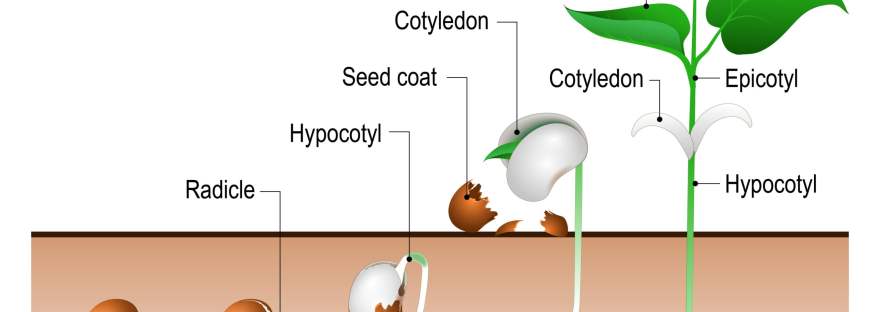
In a seed planted in the soil, who taught the radicle, the first organ to emerge from the seed to grow downwards, geotropism in search of water and mineral nutrients, and who taught the hypocotyl to grow upwards in search of light for photosynthesis? The process of a seed germinating into a seedling involves a sequence of physiological and structural changes, moving from dormancy to active plant growth:
Imbibition (Water Absorption): The dormant seed absorbs water rapidly through its seed coat. This hydration causes the seed to swell, breaking the outer coat open, and activates metabolic enzymes within the seed.
Enzyme Activation and Respiration: Absorbed water triggers the release of plant hormones (primarily gibberellins). These hormones signal the seed to produce enzymes (like amylase) that break down stored food reserves—such as starches, proteins, and lipids—into simple sugars and energy to power cell division.
Radicle Emergence (Root Formation): The radicle (embryonic root) is the first structure to break through the seed coat. It grows downward into the soil (geotropism) to anchor the plant and begin absorbing water and mineral nutrients.
Hypocotyl/Plumule Emergence (Shoot Growth): The hypocotyl (embryonic stem) grows upward toward light. As it pushes through the soil, it forms a protective hook shape (in many dicots) to shelter the delicate embryonic leaves (plumule) from damage.
Establishment of the Seedling: Once above ground, the shoot straightens. The primary leaves expand, turn green, and begin photosynthesis. As the plant starts producing its own energy rather than relying on stored seed reserves, the seed fully transitions into an independent seedling.
The term substrate refers to an underlying substance, surface, or layer on which something rests, grows, or acts. Its specific definition depends on the domain:
Biochemistry: The specific reactant molecule upon which an enzyme acts to produce a chemical reaction.
Biology and Ecology: the surface, soil, or material on or in which an organism (such as a plant, fungus, or animal) lives, anchors itself, or grows.
Materials Science and Engineering: A base material (like a silicon wafer, glass, or circuit board) on which additional layers, circuits, or coatings are deposited or attached.
Chemistry: The chemical species or base compound observed in a reaction that reacts with a reagent.
Knowledge is typically defined in philosophy and epistemology as justified true belief. To qualify as knowledge under this classic definition, a statement or idea must fulfill three key criteria:
Belief: A person must hold the idea or claim to be true.
Truth: The claim must correspond to objective reality or fact.
Justification: The person must have adequate evidence, sound reasoning, or reliable grounds for believing it, rather than just guessing correctly.
Beyond this formal philosophical definition, knowledge is broadly categorized into a few distinct types:
Propositional Knowledge (Know-that): Declarative facts, concepts, and information (e.g., knowing that water boils at 100°C).
Procedural Knowledge (Know-how): Practical skills and technical abilities (e.g., knowing how to ride a bicycle or code software).
Knowledge by Acquaintance: Direct perceptual experience or personal familiarity with a person, place, or sensation (e.g., knowing the taste of an apple or knowing a city well).
Understanding is a psychological and cognitive process that goes beyond merely knowing or holding information. While knowledge is the awareness or possession of facts (“knowing that“), understanding is the ability to perceive how those facts connect, why they work, and how to apply them (“knowing why and how“).
Key dimensions of understanding include:
Comprehension of Relationships: Recognizing underlying patterns, cause-and-effect mechanisms, and structural connections between individual pieces of information.
Sense-Making and Context: Placing new concepts into a coherent mental framework or mental model, allowing you to interpret meaning rather than just memorize syntax or definitions.
Transfer and Application: The capacity to take abstract concepts learned in one scenario and successfully apply, adapt, or troubleshoot them in entirely new or unfamiliar situations.
Perspective-Taking: In social or psychological contexts (e.g., empathy), understanding involves grasping another person’s point of view, emotions, or motivations.
Wisdom is the ability to contemplate, evaluate, and act using a combination of knowledge, experience, deep understanding, common sense, and sound judgment.
While knowledge is knowing facts (“that”) and understanding is comprehending connections and causes (“why”), wisdom is knowing how to apply both appropriately in real-world, often complex or ambiguous situations (“what ought to be done”).
Key components of wisdom include:
Judgement and Discernment: The capacity to weigh values, navigate ethical dilemmas, foresee long-term consequences, and make sound decisions despite uncertainty.
Self-Reflection and Humility: Awareness of one’s own biases, emotional triggers, and intellectual limitations—acknowledging what you do not know.
Perspective and Synthesis: The ability to look beyond immediate circumstances, view problems from multiple viewpoints, and balance competing interests or trade-offs.
Action and Praxis: Unlike purely theoretical understanding, wisdom is inherently practical; it manifests in how one responds to life’s challenges and guides others.
There you have it, according to the Psalmist, the Lord teaches us, living organisms, human beings, animals, and plants, wisdom in the womb (be it the soil or substrate on which plants grow, or the womb in the case of mammals), actions and activities by the foetus/seed that ensures its survival into the next phase and environment of living life.
Disclaimer: This article can not change the reader’s nature, character attributes, behaviour, or belief systems.
The church/religious establishment is supposed to be ‘the body of Christ’, yet one of its doctrinal pillars directly contradicts or ignores the position of Jesus Christ, according to the gospel accounts.
In order to lay the ground for this article, the authorship of the Pentateuch is objectively approached. The academic position that the Pentateuch (the first five books of the Hebrew Bible: Genesis, Exodus, Leviticus, Numbers, and Deuteronomy) was written by multiple authors over several centuries is the overwhelming consensus in modern critical biblical scholarship.
Rather than viewing the text as a single, unified work dictated or written directly by Moses—the traditional view—scholars examine it as a composite document assembled from various distinct source materials, oral traditions, and editorial layers.
Core Evidence for Multiple Authorship
Scholars base the multi-author position on internal textual evidence within the narrative:
Textual Doublets and Triplets: The Pentateuch contains repeated accounts of the same event with different details, perspectives, or vocabulary. For instance, there are two distinct Creation accounts (Genesis 1 and Genesis 2), two woven narratives of Noah’s Flood, and multiple versions of God establishing a covenant with Abraham.
Variations in Divine Names: Different sections consistently use different terms for God—such as Elohim (a general Hebrew word for God/deity) versus Yahweh (the specific, proper name revealed in Israelite tradition).
Stylistic and Theological Shifts: Abrupt changes in vocabulary, sentence structure, and theological emphasis suggest different writer profiles. Some sections emphasize spontaneous, anthropomorphic interactions with God, while others focus heavily on formal rituals, laws, genealogies, and temple order.
Anachronisms: Passages reference events or realities that occurred long after the traditional time of Moses, such as lists of Edomite kings who ruled “before any king reigned over the Israelites” or references to the death of Moses at the end of Deuteronomy.
Key Models of Multiple Authorship
Over the last two centuries, several models have emerged to explain how these diverse texts came together:
1. The Classical Documentary Hypothesis (JEDP)
Formalized by German scholar Julius Wellhausen in the late 19th century, this model posits that the Pentateuch was compiled by combining four distinct, continuous source documents:
J (Yahwist / Jahwist): Originated in the Southern Kingdom of Judah (c. 10th–9th century BCE). Characterized by its anthropomorphic view of God and narrative-driven style.
E (Elohist): Originated in the Northern Kingdom of Israel (c. 9th–8th century BCE). Uses Elohim for God and focuses on prophets and fear of God.
D (Deuteronomist): Associated with the religious reforms under King Josiah in Jerusalem (c. 7th century BCE). Comprises most of Deuteronomy and emphasizes centralizing worship and covenant loyalty.
P (Priestly Source): Written by or after the Babylonian Exile (c. 6th–5th century BCE). Highly structured, focusing on genealogies, ritual laws, purity codes, and Sabbath practices.
According to this theory, these four documents were woven together over time by editors known as redactors (R).
2. Fragmentary and Supplementary Hypotheses
While the basic four-source model remains widely taught, modern scholars often modify or challenge the idea of four fully intact, independent documents:
Supplementary Model: Assumes there was a core original document (such as an early non-Priestly narrative) that was continually expanded by later authors who added new layers, stories, and legal codes.
Fragmentary Model: Proposes that the Pentateuch began not as long, continuous narrative sources (J or E), but as a collection of independent shorter texts, legends, and law codes that were later gathered into larger blocks during the Persian period.
Current Scholarly Consensus
While scholars still debate the exact dating of individual passages and the precise editorial processes used to combine them, the fundamental premise remains firm: the Pentateuch is an anthology created by multiple writers, priests, and editors working across different historical periods to synthesize Israel’s legal, liturgical, and historical traditions.
Jesus explicitly addresses the priority of caring for one’s parents over religious financial contributions—specifically vows, tithes, and offerings—in Matthew 15:1–9 and its parallel account in Mark 7:1–13.
In these passages, Jesus directly confronts the Pharisees and scribes for using religious traditions as a loophole to evade the moral obligation to support aging parents.
1. The Core Conflict: The Practice of Corban
In Mark 7:9–13, Jesus highlights a tradition where individuals dedicated their assets or income to God by declaring them Corban (a Hebrew/Aramaic term meaning a gift or offering set aside for God/the Temple):
“He said to them, ‘All too well you reject the commandment of God, that you may keep your tradition. For Moses said, “Honor your father and your mother”; and, “He who curses father or mother, let him be put to death.” But you say, “If a man says to his father or mother, ‘Whatever profit you might have received from me is Corban’—that is to say, an offering, then you no longer let him do anything for his father or his mother, making the word of God of no effect through your tradition which you have handed down.”‘” (Mark 7:9–13)
By declaring money or property as dedicated to religious purposes, individuals were considered legally exempt from using those funds to support their parents, even if the parents were in financial distress or poverty.
2. Jesus’ Alignment with the Decalogue Over Human Tradition
In Matthew 15:3–6, Jesus places the foundational commandment to “Honor your father and your mother” (Exodus 20:12; Deuteronomy 5:16) above man-made ceremonial rules and religious vows:
“He answered and said to them, ‘Why do you also transgress the commandment of God because of your tradition? For God commanded, saying, “Honor your father and your mother”… But you say, “Whoever says to his father or mother, ‘Whatever profit you might have received from me is a gift to God’—then he need not honour his father or mother.” Thus you have made the commandment of God of no effect by your tradition.'” (Matthew 15:3–6)
Jesus asserts that using religious offerings as a justification to abandon filial duty:
Hypocritical: It uses the pretence of piety to commit neglect.
Invalidating: It cancels out the direct, weightier command of God in favour of legalistic human traditions.
3. The Broader Context: Weightier Matters of the Law
This specific incident aligns with Jesus’ broader critique of religious authorities regarding tithes and offerings in Matthew 23:23 (and Luke 11:42):
“Woe to you, scribes and Pharisees, hypocrites! For you pay tithe of mint and anise and cummin, and have neglected the weightier matters of the law: justice and mercy and faith. These you ought to have done, without leaving the others undone.” (Matthew 23:23)
While Jesus does not abolish tithes or temple gifts outright, he establishes a strict hierarchy: moral and ethical duties rooted in love, mercy, and familial care (justice and mercy) hold absolute precedence over external ritual duties, temple vows, and financial offerings.
Conclusion
According to the Gospels, Jesus firmly prioritizes taking care of one’s parents over paying tithes or making religious vows/offerings. To him, any system that allows religious giving to undermine moral obligations to family is a distortion of divine law.