John 14:6-7; Jesus answered, “I am the way and the truth and the life. No one comes to the Father except through me. If you really know me, you will know my Father as well. From now on, you do know him and have seen him.” John 4:24; God is spirit, and his worshipers must worship in the Spirit and in truth.”
Below are excerpts from an article published by BBC.com
Chemistry Nobel awarded for solving mystery of life’s asymmetry
Heiner Linke, chair of the Nobel Committee for Chemistry, explained: “Henri Kagan and Kenso Soai have provided a solution to a chemical mystery that is over a century old: how homochirality – the selective production of the correct version of a molecule – can emerge spontaneously.
Kenso Soai from Tokyo University of Science took the next step in 1995. He published a scientific paper in the journal Nature, external describing the first ever chemical reaction that had the potential to be homochiral – producing only the desired version of an organic molecule.
In 2003, he finally succeeded in controlling a reaction in which only one of the two possible mirror images was formed.
“Other than life itself,” the Nobel Committee said in a statement, “no one had previously achieved this feat”.
Prof Angus Davison, from the University of Nottingham, studies the biology of chirality and said that the Nobel-winning chemistry could help reveal how and why life favours “one-handedness”.
“In ways that we don’t yet quite understand, the chirality of the basic building blocks of life ends up making bodies that are themselves also chiral,” he told BBC News.
This was the foundation, he explained, of our hearts being on left hand side of our bodies and snail shells that coil to the right.
Peter Somfai, a member of the Nobel Committee for Chemistry, said the research awarded this year’s prize has become part of “our basic understanding of how chemistry functions”.
He said showing how a mirror image is created is “probably the most fundamental question in life – because somehow that happened four billion years ago when life was created. And now we have, for the first time, mimicked that in the lab”.
The quote “The mystery of life isn’t a problem to solve, but a reality to experience” originates from Frank Herbert’s classic science fiction novel Dune.
Context and Meaning
Source: In the novel, Paul Atreides recounts that the Bene Gesserit Reverend Mother Mohiam shared this idea with him.
The First Law of Mentat: Paul replies to it by quoting, “A process cannot be understood by stopping it. Understanding must move with the flow of the process, must join it and flow with it.”
Core Philosophy: The text emphasizes that life is a dynamic flow. You cannot fully comprehend existence by trying to halt, dissect, or rigidly control it. Instead, true understanding comes from being present and moving along with life’s natural progression.
Human beings are physical entities, and all the particles, atoms, molecules, and chemical constituents that make up biological organisms are present in the Cosmos, the observable physical universe. If human beings have souls, then the soul of a human being is not a physical entity.
This brings us to the issue of Life; this is a mystery that science has not been able to unravel. Science may unravel the issue of chirality (see excerpts from the Nobel prize for Chemistry, above), but the science has not been able to create life in the laboratory from nothing. Maybe that is because creation of life (from nothing) is not a physiochemical occurrence. This brings us back to the starting text of this article from the words of Jesus Christ, a character from the Bible. Who claims to be ‘Life’, furthermore, He stated that ‘God is Spirit’ (a non-physical entity). So why are human beings who are physical entities searching for an ‘Entity’ that is non-physical. The use of physiochemical methods to search for a ‘non-physical entity’ seems to be a fruitless endeavour. Anyway, they can always hope, though technically, ‘hope’ is not a concept recognized by science. Scientifically, Life remains a mystery.
The wisdom of God – Jesus Christ. The phrase “we will dwell with him” (or “he will dwell with them”) touches the very core of the biblical narrative: the ultimate goal of scripture is not merely a distant heaven, but God making His home with humanity. Throughout the Bible, this theme progresses from paradise lost to paradise restored. The most direct and explicit fulfilment of this promise comes in the final vision of the Bible. Rather than humans escaping earth forever, God brings His dwelling place down to a renewed creation.
The statement “the kingdom of God is in your midst” (or “the kingdom of God is within you”) comes directly from the words of Jesus in Luke 17:20–21: “Once, on being asked by the Pharisees when the kingdom of God would come, Jesus replied, ‘The coming of the kingdom of God is not something that can be observed, nor will people say, “Here it is,” or “There it is,” because the kingdom of God is in your midst.’”
Revelation 21:3:“And I heard a loud voice from the throne saying, ‘Look! God’s dwelling place is now among the people, and he will dwell with them. They will be his people, and God himself will be with them and be their God.’”
Here, the word translated as “dwell” literally means to tabernacle or pitch a tent. It signifies permanent, intimate, unfiltered presence. The idea of God dwelling with His people runs through the entire biblical arc:
Eden: God walks and talks with humanity in the garden (Genesis 3:8)—unhindered fellowship before the fall.
The Tabernacle & Temple: In the Old Testament, God commands His people to build a sanctuary so He may “dwell among them” (Exodus 25:8). His presence inhabited the Holy of Holies.
The Incarnation: Jesus embodies this promise. John 1:14 states, “The Word became flesh and made his dwelling [tabernacled] among us.”
The Holy Spirit: Jesus promises that believers become the living temple: “If anyone loves me, he will keep my word, and my Father will love him, and we will come to him and make our home with him“ (John 14:23).
Eternity: The ultimate reality where sin and separation are removed, and humanity dwells face-to-face with God forever.
Job 28:12-28; But where can wisdom be found? Where does understanding dwell?No mortal comprehends its worth; it cannot be found in the land of the living.The deep says, “It is not in me”; the sea says, “It is not with me.”It cannot be bought with the finest gold, nor can its price be weighed out in silver.It cannot be bought with the gold of Ophir, with precious onyx or lapis lazuli. Neither gold nor crystal can compare with it, nor can it be had for jewels of gold. Coral and jasper are not worthy of mention; the price of wisdom is beyond rubies. The topaz of Cush cannot compare with it; it cannot be bought with pure gold. Where then does wisdom come from? Where does understanding dwell? It is hidden from the eyes of every living thing, concealed even from the birds in the sky.
Destruction and Death say, “Only a rumour of it has reached our ears.” God understands the way to it, and he alone knows where it dwells, for he views the ends of the earth and sees everything under the heavens. When he established the force of the wind and measured out the waters, when he made a decree for the rain and a path for the thunderstorm, then he looked at wisdom and appraised it; he confirmed it and tested it. And he said to the human race, “The fear of the Lord—that is wisdom, and to shun evil is understanding.”
The concept that “the fear of the Lord is the beginning of wisdom” (Proverbs 9:10) hinges entirely on how “fear” is defined in classical theology and biblical wisdom literature. It does not refer to terror, paralysis, or dread of harm. Instead, it refers to reverence, moral awe, and an accurate recognition of ultimate reality.
When “fear” is understood as proper alignment with reality, its translation into wisdom happens through several key psychological and ethical shifts:
1. It Corrects Intellectual Pride
To fear the Lord is to acknowledge that humans are not the ultimate authority on truth, morality, or existence. Wisdom begins when an individual recognizes the limits of their own knowledge. By placing God at the centre rather than the self, a person becomes teachable and receptive to correction—the foundational state required for acquiring wisdom.
2. It Provides an Absolute Moral Anchor
Without a grounding higher authority, moral standards tend to fluctuate based on personal convenience, cultural shifts, or emotional impulses. Revering God establishes an external standard for right and wrong. Wisdom is not merely knowing facts; it is knowing how to act rightly, and fear of the Lord anchors decision-making in long-term righteousness rather than short-term self-interest.
3. It Calms Secondary Earthly Fears
Paradoxically, holding a deep reverence for the ultimate source of existence diminishes the fear of earthly things—such as public opinion, failure, loss, or death. When a person aligns their values with what they view as eternal, they gain clarity and emotional stability, enabling them to make courageous, wise choices under pressure.
4. It Shifts Perspective from Temporal to Eternal
Dread or anxiety fixates on the immediate threat, whereas reverence considers the broader tapestry of existence. Fearing the Lord prompts individuals to consider the long-term consequences of their choices across time, guiding actions toward character, justice, and integrity over quick gratification.
Stage
Mechanism
Outcome in Wisdom
Awe & Recognition
Acknowledging a supreme, sovereign truth
Humility and teachability
Reverence & Duty
Submitting personal desire to moral law
Sound moral reasoning and discernment
Trust & Alignment
Relying on divine order over impulse
Clarity, emotional composure, and right action
To understand how “the fear of the Lord” translates into wisdom—a foundational principle in Hebrew wisdom literature (such as Proverbs, Job, and Psalms)—it helps to first strip away modern associations with the word fear.
In scripture, the phrase is translated from the Hebrew Yir’at Yahweh. Rather than panic, terror, or dread, yirah signifies deep awe, reverence, humility, and a clear-eyed recognition of reality.
The process by which this stance transforms into practical wisdom unfolds through a distinct psychological and spiritual progression:
1. Re-Orienting Reality (Surrendering Ego)
Wisdom cannot exist alongside severe self-delusion. When a person “fears the Lord,” they acknowledge that they are not the centre of the universe, nor the ultimate judge of truth, right, or wrong.
The Pivot: It shifts the baseline from “What do I desire or think is right?” to “What is actually true according to the Creator of reality?”
The Result: Pride makes a person unteachable. Humility—the natural byproduct of reverence—makes a person receptive to instruction, correction, and growth.
2. Establishing an Absolute Moral Baseline
Without an ultimate standard, “wisdom” often degrades into mere cleverness, pragmatism, or self-serving strategy.
Fearing God aligns human accountability with an eternal, unchanging standard rather than shifting social trends or personal conveniences.
Proverbs 8:13 notes that “The fear of the Lord is to hate evil.” True wisdom requires discerning constructive actions from destructive ones; honouring God grounds that distinction in moral objective truth.
3. Freedom from the “Fear of Man”
A major barrier to wise decision-making is the urge to appease others, conform to peer pressure, or avoid short-term conflict.
When your primary deference is to God, human opinions lose their tyrannical hold over your choices.
This dynamic grant the courage to make hard, principled, long-term decisions rather than expedient, foolish ones.
4. Aligning with the “Grain of the Universe”
Wisdom (Chokhmah in Hebrew) in the biblical sense is not just intellectual knowledge; it is skilful living—living in harmony with how life was designed to work.
If God designed the framework of reality, revering Him means paying attention to how that reality operates.
Just as respecting the laws of physics keeps an engineer from building a collapsing bridge, revering God keeps a person from building a life on choices that lead to ruin.
The Translation in Practice
Impetuous / Foolish Approach
The “Fear of the Lord” (Wise) Approach
Authority: “I am my own highest authority.”
Authority: “I am accountable to something greater than myself.”
Perspective: Driven by immediate feelings or short-term gains.
Perspective: Driven by ultimate truth and long-term fruit.
Reaction to Rebuke: Defensive, stubborn, arrogant.
Reaction to Rebuke: Humble, reflective, eager to adjust.
Decision-Making:“What benefits me right now?”
Decision-Making:“What aligns with righteousness, justice, and truth?”
Summary: The “fear of the Lord” is not a constraint that paralyzes; it is the fundamental calibration of the human mind. By putting God in His proper place, you put yourself in your proper place—and seeing things as they truly are is the precise definition of wisdom. In biblical literature, the wisdom of God is presented not as mere intellectual knowledge, but as the foundational framework of creation, a divine attribute, a personified guide, and ultimately a person—Jesus Christ.
Scripture draws a sharp contrast between human wisdom, which is finite and often self-serving, and divine wisdom, which is eternal, pure, and transformative. The Bible portrays God’s wisdom as the architecture behind the universe. God created everything not just through power, but through calculated, intelligent design.
Proverbs 3:19:“By wisdom the Lord laid the earth’s foundations, by understanding he set the heavens in place.”Jeremiah 10:12:“God made the earth by his power; he founded the world by his wisdom and stretched out the heavens by his understanding.” In the Book of Proverbs, wisdom is personified as a noble woman (“Lady Wisdom”) who stands at the city gates, calling people away from folly and toward life, righteousness, and order. Proverbs 8:22–30: Wisdom describes being present with God before the creation of the world, acting as a “craftsman at his side,” rejoicing in his inhabited world. The wisdom of God is totally different to human ‘wisdom’. Isaiah 55:8–9:“‘For my thoughts are not your thoughts, neither are your ways my ways,’ declares the Lord.” In the New Testament, the wisdom of God transitions from an abstract concept or personification into a concrete person, Jesus Christ.
Category
Human Wisdom
God’s Wisdom
Source
Self-reliance, observation, human reason
Eternal truth, divine revelation
Foundation
Pride, self-interest, temporal success
Fear (reverence) of the Lord, humility, love
Characteristics
Fickle, self-exalting, often foolish to God
Pure, peace-loving, eternal, proven by its fruit
You do not have to wait for the end of time to dwell with God. Through the Spirit, His presence dwells within believers today as a foretaste of eternal life. This solemn warning comes directly from Jesus in Matthew 10:28 (and its parallel in Luke 12:4–5):
“Do not be afraid of those who kill the body but cannot kill the soul. Rather, be afraid of the One who can destroy both soul and body in hell.”
This verse forms a vital link between everything discussed so far—fear, wisdom, the kingdom of God, and dwelling with Him. It brings into sharp focus what right fear actually looks like and how it reorders human priorities.
1. A Reordering of Fear
Jesus delivers this statement while sending His disciples out to preach the Kingdom of God, knowing they will face persecution, rejection, and physical threat. His point is not to induce terror, but to offer a perspective shift:
Temporal Power is Limited: Earthly powers, tyrants, disease, or circumstance can only harm physical life (the body). Their authority stops at the grave.
Ultimate Reality Belongs to God: God alone holds ultimate authority over eternal destiny (body and soul).
By contrasting the finite power of human threats with the infinite sovereignty of God, Jesus effectively neutralizes earthly fear. Fearing the ultimate Judge removes the power of temporary threats.
2. Fear as Protection, Not Paranoia
In biblical teaching, holy fear acts as a protective boundary. Fearing God keeps a person from placing short-term self-preservation above eternal truth and integrity.
Crucially, Jesus does not leave His hearers in dread. Just two verses later in Matthew 10:29–31, He grounds this severe warning in profound comfort and value:
“Are not two sparrows sold for a penny? Yet not one of them will fall to the ground outside your Father’s care… So don’t be afraid; you are worth more than many sparrows.”
The One who holds sovereign power over eternity is the very same Father who knows the number of hairs on your head. Healthy fear acknowledges His supreme authority, while faith rests in His care.
3. Connecting the Arc Reflection
Scripture / Concept
The Core Insight
Fear of the Lord & Wisdom
True wisdom recognizes who holds real authority, freeing you from being governed by lesser, earthly anxieties.
“The Kingdom in Your Midst”
God’s sovereign rule is not a distant theory; it is present now, inviting a choice of alignment with His truth over worldly pressures.
“We Will Dwell with Him”
The ultimate goal is eternal fellowship with God—a destiny that human opposition can never steal from you.
There are texts in the Bible that states that the Lord reveals His secrets, however, how do the secrets remain a secret?
Deuteronomy 29:29; The secret things belong to the Lord our God, but the things revealed belong to us and to our children forever, that we may follow all the words of this law. [And yet the Jews(‘our children’) in the time of Jesus Christ, and today, (right-wing Israelis surely do not ‘love their neighbours, Palestinians, like themselves)including many so-called Christians, and therefore do not know nor understand the hidden things of the Lord.]
Amos 3:7; Surely the Sovereign Lord does nothing without revealing his plan to his servants the prophets. [‘servants’/and today’s so-called men of God, this is not according to Acts 17:24-25; “The God who made the world and everything in it is the Lord of heaven and earth and does not live in temples built by human hands. And he is NOT SERVED BY HUMAN HANDS, as if he needed anything. Rather, he himself gives everyone life and breath and everything else.]
Psalm 25:14; The Lord confides in those who fear him; he makes his covenant known to them.
Jesus stated that attributing His miraculous works to the devil (Beelzebub) is a severe spiritual offense known as blasphemy against the Holy Spirit, which he declared to be an eternal sin that will not be forgiven. In the gospels (found in Matthew 12:31-32, Mark 3: 28-30, and Luke 12:10), Jesus says that while people can be forgiven for many sins and insults – even spoken words against Himself (the Son of Man)- blaspheming against the Holy Spirit has no forgiveness, neither in this age nor in the one to come. The Gospel writers explicitly note that Jesus said this because the religious leaders (the Pharisees and scribes) looked at His undeniable miracles of casting out demons and claimed, “He has an unclean spirit” or operates by the power of Satan. Before issuing this warning, Jesus argued logically that Satan would not cast out Satan, because a kingdom divided against itself cannot stand. By calling clear divine goodness and the work of God’s Spirit “evil” the accusers showed a hardened state of the heart that completely rejects God’s mercy and leaves no room for repentance.
The secrets of the Lord are kept secret according to Jesus Christ through the analogy of the Parable of the Sower.
Matthew 13:11-15; He replied, “Because the knowledge of the secrets of the kingdom of heaven has been given to you, but not to them. Whoever has will be given more, and they will have an abundance. Whoever does not have, even what they have will be taken from them. This is why I speak to them in parables: “Though seeing, they do not see; though hearing, they do not hear or understand. In them is fulfilled the prophecy of Isaiah: “‘You will be ever hearing but never understanding; you will be ever seeing but never perceiving. For this people’s heart has become calloused; they hardly hear with their ears, and they have closed their eyes. Otherwise they might see with their eyes, hear with their ears, understand with their hearts and turn, and I would heal them.’
Mark 4:11-12; He told them, “The secret of the kingdom of God has been given to you. But to those on the outside everything is said in parables so that, “‘they may be ever seeing but never perceiving, and ever hearing but never understanding; otherwise they might turn and be forgiven!
Isaiah 6:9-10; He said, “Go and tell this people: “‘Be ever hearing, but never understanding; be ever seeing, but never perceiving.’ Make the heart of this people calloused; make their ears dull and close their eyes. Otherwise they might see with their eyes, hear with their ears, understand with their hearts, and turn and be healed.” Many theologians note that parables acted as a filter. They revealed deeper truth to those with a genuine desire to learn and engage, while concealing it from the casual, critical, or hostile crowds who refused to repent. Scholars also suggest that speaking in veiled stories helped manage public expectations, preventing premature political uprisings or conflicts with authorities before Jesus’s mission was completed. However, God is always in control of everything, the revelation of deeper truths or secrets of the Lord does not have anything to do with an individual’s desire to learn or the human intellectual capacity, given the truth that the scriptures states that, ‘He makes their hearts calloused or hardened’, it is impossible for such hearts to understand the word of God. And therefore, in order to have an understanding heart, God states in Ezekiel 36:26-27; I will give you a new heart and put a new spirit in you; I will remove from you your heart of stone and give you a heart of flesh. And I will put my Spirit in you and move you to follow my decrees and be careful to keep my laws. Similarly in Ezekiel 11:19; I will give them an undivided heart and put a new spirit in them; I will remove from them their heart of stone and give them a heart of flesh. Of course the individual could try to proof God wrong, and try using their own intellectual capacity, to find out the secrets of the Lord by studying the Scriptures using their own initiative. Good luck with that.
Is there a physical demonstration of the majesty of the Lord? Does God have integrity? Will God go back on His words, or change His words because of reverse psychology, or reminder of ‘good works done by man’, or playing the favouritism card, or bias on the basis of skin colour, or being born in Asia or Europe or Africa or the Americas(indigenous native Americans), or by praising Him in a sycophantic manner not rooted in spirit and truth based on evidence, and other forms of logic and factors employed by man in prayers.
Leviticus 19:33–34 (The “Native-Born” Commandment)
“When a foreigner resides among you in your land, do not mistreat them. The foreigner residing among you must be treated as your native-born. Love them as yourself, for you were foreigners in Egypt. I am the Lord your God.”
While this verse specifically addresses resident aliens/foreigners (gerim), many of these non-native residents worked as hired labourers or servants in Israelite households.
Related Laws for Servants & Household Members
Equal Inclusion in Sabbath Rest:
Exodus 20:10 / Deuteronomy 5:14: The Sabbath commandment explicitly states that enslaved workers, hired servants, and resident aliens must be given the exact same rest as household family members.
Equal Treatment for Poor Hebrew Servants:
Leviticus 25:39–40: If an Israelite falls into poverty and becomes a servant, the Law mandates: “Do not make them work as a slave. They are to be treated as a hired worker or a temporary resident among you; they are to work for you until the Year of Jubilee.”
Inclusion in Sacred Feasts:
Deuteronomy 16:11: In the Feast of Weeks, household servants and foreign residents are instructed to rejoice alongside sons, daughters, and family members as equals in celebration.
Prohibition Against Oppressing Workers:
Deuteronomy 24:14–15:“Do not take advantage of a hired worker who is poor and needy, whether that worker is a fellow Israelite or a foreigner residing in one of your towns.”
John 13:34–35
“A new commandment I give to you, that you love one another: just as I have loved you, you also are to love one another. By this all people will know that you are my disciples, if you have love for one another.”
The Old Testament commanded loving one’s neighbour as oneself (Leviticus 19:18). Jesus’ commandment was “new” because it raised the standard of love: believers are instructed to love others “as I have loved you”—modelling their love after Christ’s sacrificial, self-giving example.
The “strength” of a law(commandment) refers to its effectiveness, authority, and ability to influence behaviour within a society. In legal philosophy and jurisprudence, the strength of a law is measured across three primary dimensions:
1. Legal Enforceability (Coercive Power)
A law derives immediate operational strength from the state’s capacity to enforce it and punish non-compliance.
State Monopoly on Force: The government possesses the official authority and resources (police, courts, regulatory bodies) to compel adherence.
Weakness point: If a law is technically on the books but never enforced, it loses its functional strength and becomes a “dead letter.”
2. Institutional Legitimacy & Clarity
A law’s structural strength depends on how well it is drafted and integrated into the broader legal system.
Procedural Validity: A law is stronger if created strictly through recognised, constitutional processes.
Clarity & Predictability: Vague or ambiguous laws are structurally weak because courts may strike them down, and citizens cannot easily predict how to comply.
Higher Authority Alignment: A statute must align with higher-ranking laws, such as a country’s constitution or international treaties. If it conflicts, it can be invalidated.
3. Social Legitimacy & Moral Authority
A law is strongest when citizens obey it voluntarily because they believe it is fair and necessary, rather than purely out of fear of punishment.
Alignment with Norms: Laws that reflect a society’s shared ethical values enjoy widespread compliance.
Public Perception: When citizens perceive the legal system as unbiased and legitimate, compliance rates rise significantly.
Weakness point: Laws that lack social backing (such as Prohibition in the US during the 1920s) face massive non-compliance, pushing the state to rely entirely on costly coercion.
A law reaches its maximum strength when it is procedurally sound (clearly written and constitutional), socially accepted (seen as fair and moral), and effectively backed by reliable enforcement.
Did the physical universe come into existence 13.8 billion years ago, as a result of the Big Bang, or was it created by God? This is a fundamental question that has to be answered, before there can be a discussion about the laws of an entity whose existence is under question/debate. There is abstraction, and there is objective reality. There has been no currently living human being that can provide incontrovertible evidence, such as video, photographs, and or audio, that God exists. About 30 years ago, a Dutch person said to me that if God exists why did He let so many people die during the second world war; An estimated 70 million to 85 million people died during World War II, representing roughly 3% of the world’s 1940 population. Civilian casualties significantly outnumbered military deaths.
Casualty Breakdown
Civilians: ~50 million to 55 million (includes 19–28 million deaths from war-related famine and disease, as well as 6 million Jews and millions of others targeted in the Holocaust).
Military: ~21 million to 25 million (includes around 5 million prisoners of war who died in captivity).
When considering the existence of God in conjunction with disasters and evil being perpetrated, then the question of free will being possesses by human being should also be addressed, in conjunction with what God said in Isaiah 45: 5-7; I am the Lord, and there is no other; apart from me there is no God. I will strengthen you, though you have not acknowledged me, so that from the rising of the sun to the place of its setting, people may know there is none besides me. I am the Lord, and there is no other. I form the light and create darkness, I bring prosperity and create disaster; I, the Lord, do all these things. Scripture presents a dual perspective: humankind possesses genuine moral agency and choice, yet these choices exist alongside God’s supreme sovereignty and humanity’s fallen nature.
While the modern philosophical term “free will” does not explicitly appear in the Bible, scripture consistently teaches that people make real decisions for which they are held morally responsible. At the same time, it outlines clear limits to that freedom.
1. Evidence for Choice & Moral Responsibility
Scripture assumes throughout that human beings can choose between options, particularly regarding obedience, repentance, and faith.
A Direct Choice Offered:
Deuteronomy 30:19:“I have set before you, life and death, blessing and curse. Therefore choose life, that you and your offspring may live.”
Joshua 24:15:“Choose this day whom you will serve… But as for me and my house, we will serve the Lord.”
Responsibility for Sin: God repeatedly holds people accountable for their actions. In Ezekiel 18:20, scripture states, “The soul who sins shall die… The righteousness of the righteous shall be upon himself, and the wickedness of the wicked shall be upon himself.”
Voluntary Offerings: The Old Testament frequently refers to “freewill offerings” (e.g., Leviticus 22:18), which were sacrifices given purely out of voluntary desire rather than by commandment.
Universal Invitation: Passages like Revelation 22:17 (“let the one who desires take the water of life without price”) and 2 Peter 3:9 (“not wishing that any should perish, but that all should reach repentance”) imply that the offer to turn to God requires a genuine human response.
2. Biblical Limits on Human Free Will
While humans have the ability to choose according to their desires, scripture teaches that human choices are not completely unbound.
The Bondage of Sin: The Bible describes fallen humanity as morally impaired or bound by a sinful nature/spirit(spirit of death).
Jesus states in John 8:34:“Everyone who practices sin is a slave to sin.”
Romans 6:17–18 echoes that people are either “slaves to sin” or “slaves to righteousness.”
In this view, a person can choose what they desire, but without divine intervention, their natural desires lean away from God (Romans 8:7–8).
The Need for Divine Initiative: Scripture indicates that no one can choose God entirely on their own merit.
John 6:44:“No one can come to me unless the Father who sent me draws him.”
Ephesians 2:1–5: Describes people as “dead in trespasses,” requiring God to make them spiritually alive before they can respond.
3. Divine Sovereignty vs. Human Agency
A major theme in the Bible is the interplay between God’s ultimate control (sovereignty/predestination) and human agency. Biblical writers often portray both working simultaneously without contradiction:
Genesis 50:20: Joseph tells his brothers, “As for you, you meant evil against me, but God meant it for good.” The brothers exercised their own wills to commit a sinful act, yet God orchestrated the outcome for His overarching purpose.
Proverbs 16:9:“The heart of man plans his way, but the Lord establishes his steps.”
Proverbs 21:1:“The king’s heart is a stream of water in the hand of the Lord; he turns it wherever he will.”
Acts 2:23: Peter explains that Jesus was killed according to “the definite plan and foreknowledge of God,” yet he tells the crowd that they were responsible for putting Him to death.
Historically, different Christian traditions interpret these scriptures in distinct ways:
Arminian / Free Will view: Emphasises verses about universal invitations and human choice, arguing that God gives everyone “prevenient grace” so they have the genuine free power to accept or reject salvation.
Reformed / Calvinist view: Emphasises verses about divine sovereignty and human depravity, arguing that while humans make voluntary choices, their wills are corrupt until God sovereignly regenerates them (giving them a new heart to choose Him).
Scripture teaches that humans have an active, responsible will to make real choices, but that this will is spiritually constrained by sin and operates beneath the overarching sovereignty of God. Jesus Christ taught believers how to pray in Matthew 6: 9-10; “This, then, is how you should pray: “‘Our Father in heaven, hallowed be your name, your kingdom come, your WILL be done, on earth as it is in heaven. If God created the physical universe, with the inherent force of gravity exerted by cosmic bodies, and quantum mechanics (the motions of all physical bodies, in space and time), then the physical manifestation of the works of the hand of the Creator is mind-boggling, MAJESTIC. Ephesians 2: 8-9; For it is by grace you have been saved, through faith—and this is not from yourselves, it is the gift of God— not by works, so that no one can boast. Isaiah 26:10; But when grace is shown to the wicked, they do not learn righteousness; even in a land of uprightness they go on doing evil and do not regard the MAJESTY of the Lord. Grace is not for all people. The integrity of God is addressed in Isaiah 55: 8-11; “For my thoughts are not your thoughts, neither are your ways my ways,” declares the Lord. “As the heavens are higher than the earth, so are my ways higher than your ways and my thoughts than your thoughts. As the rain and the snow come down from heaven, and do not return to it without watering the earth and making it bud and flourish, so that it yields seed for the Sower and bread for the eater, so is my word that goes out from my mouth: It will not return to me empty, but will accomplish what I desire and achieve the purpose for which I sent it.
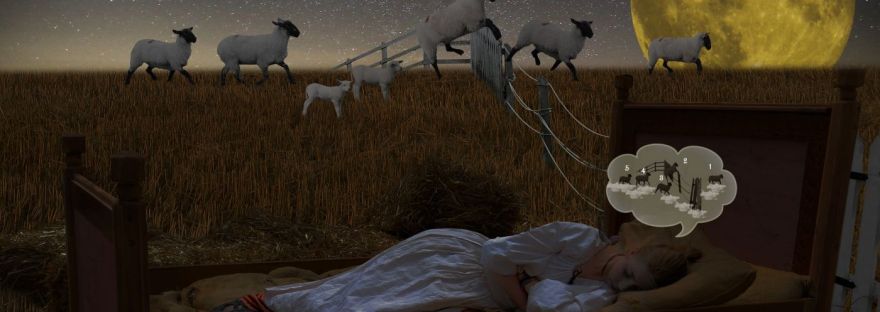
Psalm 3:5:“I lie down and sleep; I wake again, because the Lord sustains me.” (NIV)
A few other closely related passages include:
Psalm 4:8:“In peace I will lie down and sleep, for you alone, Lord, make me dwell in safety.” (NIV) / “I will both lie down in peace, and sleep; for You alone, O Lord, make me dwell in safety.” (NKJV)
Proverbs 3:24:“When you lie down, you will not be afraid; when you lie down, your sleep will be sweet.” (NIV)
The circadian clock is an internal, 24-hour biological timer located in the brain that regulates the body’s daily sleep-wake cycle and physiological processes. The circadian rhythm refers to the natural physical, mental, and behavioural changes that follow this daily cycle, responding primarily to light and darkness.
Key Components & Functions
The Master Clock: Located in the suprachiasmatic nucleus (SCN) within the brain’s hypothalamus, this master clock receives direct signals from the eyes regarding environmental light.
Hormone Regulation: Daylight signals the SCN to trigger the release of cortisol to promote alertness. Darkness prompts the production of melatonin, which signals the body to prepare for sleep.
Peripheral Clocks: Virtually every organ and tissue (such as the liver, heart, and gut) has its own cell-level clock synchronised by the master clock.
What It Influences
Biological Process
Peak Activity Time
Alertness & Core Body Temp
High during the day, drops significantly late at night
Digestion & Metabolism
Most efficient during typical daylight eating windows
Immune System Activity
Shifts repair and tissue restoration to overnight hours
Melatonin Production
Begins rising in early evening, peaking around 2–4 AM
Common Disruptions
Environmental Shift: Jet lag, night-shift work, and excessive exposure to blue light (screens) after sunset confuse the master clock.
Health Impact: Chronic misalignment between your schedule and your clock increases the risk of insomnia, metabolic disorders, depression, and cardiovascular issues.
Consistent sleep schedules, daily morning sunlight, and limiting bright screens before bed help keep the circadian rhythm aligned.
Comparing sleep and death is one of humanity’s oldest concepts, spanning neuroscience, literature, and theology. While sleep is an active biological repair process and death is a permanent cessation of life, they share deep physical, perceptual, and philosophical overlaps.
1. Physiological & Neurological Levels
Reduced Responsiveness: Both states involve a drastic drop in sensory awareness, muscle tone, and reaction to external stimuli.
Metabolic Slowdown: During deep, non-REM sleep, your core body temperature drops, heart rate slows, and breathing becomes long and shallow, mimicking the body’s physical presentation just before biological death.
Brain Activity Waves: Severe unconsciousness (such as a coma or general anaesthesia) sits on a continuum between sleep and brain death. In fact, general anaesthesia is often described as a medically induced, reversible coma rather than “true” sleep, serving as a physiological bridge between the two states.
2. Cognitive & Perceptual Levels
The “Lapse” of Consciousness: From the subjective perspective of the person, falling asleep involves a complete loss of ego and time perception. You do not experience the passage of hours while asleep; you simply wake up. Death, perceptually, is the permanent extension of that sudden non-experience.
Loss of Voluntary Control: In both states, the conscious self, surrenders control over the body, thoughts, and environment.
3. Linguistic & Cultural Levels
Euphemisms and Metaphors: Across languages, sleep is the primary euphemism for death. Phrases like “putting a pet to sleep,” “at rest,” or “rest in peace” rely entirely on this comparison to soften the reality of mortality.
Mythology: In Greek mythology, Hypnos (the god of sleep) and Thanatos (the god of death) were portrayed as twin brothers, highlighting how ancient cultures viewed the two conditions as mirror images.
Scriptural & Religious Texts: Many religious traditions treat sleep as a temporary form of death. In Christian scripture, death is frequently referred to as “falling asleep” (e.g., John 11:11, 1 Thessalonians 4:14), framing resurrection as an “awakening”.
The Key Difference
The fundamental divergence is reversibility and metabolic activity. Sleep is an essential, highly active neural state where the brain clears toxins, consolidates memories, and repairs tissue. Death is the irreversible breakdown of those metabolic and cellular processes. Sleep is a temporary withdrawal from consciousness to sustain life; death is the permanent end of it.
When a person goes to bed at night as a result of physical and or mental activities during the day, and falls asleep, subsequently after four to eight hours later, wakes up using an alarm clock, or not, is it possible to apply the scripture text, “I lie down and sleep; I wake again, because the Lord sustains me.”? Or is this simply a case of belief, in contrast to Knowledge of God or from God? How is it possible to know this? Since from the subjective perspective of the person, falling asleep involves a complete loss of ego and time perception. Interesting conundrums for everybody, including psychologist, psychiatrist, sleep therapist, and neurosciences.