
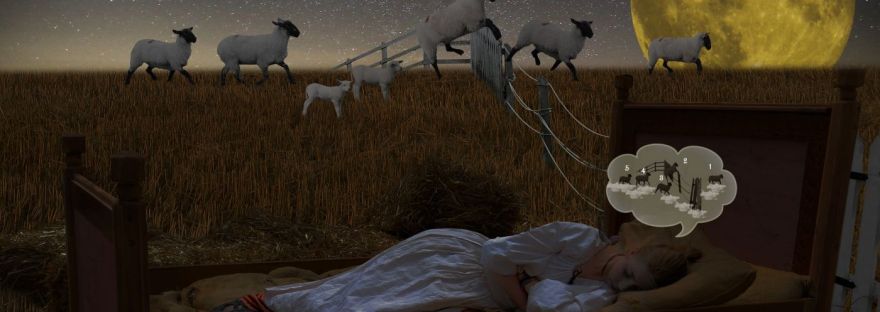
- Psalm 3:5: “I lie down and sleep; I wake again, because the Lord sustains me.” (NIV)
A few other closely related passages include:
- Psalm 4:8: “In peace I will lie down and sleep, for you alone, Lord, make me dwell in safety.” (NIV) / “I will both lie down in peace, and sleep; for You alone, O Lord, make me dwell in safety.” (NKJV)
- Proverbs 3:24: “When you lie down, you will not be afraid; when you lie down, your sleep will be sweet.” (NIV)
The circadian clock is an internal, 24-hour biological timer located in the brain that regulates the body’s daily sleep-wake cycle and physiological processes. The circadian rhythm refers to the natural physical, mental, and behavioural changes that follow this daily cycle, responding primarily to light and darkness.
Key Components & Functions
- The Master Clock: Located in the suprachiasmatic nucleus (SCN) within the brain’s hypothalamus, this master clock receives direct signals from the eyes regarding environmental light.
- Hormone Regulation: Daylight signals the SCN to trigger the release of cortisol to promote alertness. Darkness prompts the production of melatonin, which signals the body to prepare for sleep.
- Peripheral Clocks: Virtually every organ and tissue (such as the liver, heart, and gut) has its own cell-level clock synchronised by the master clock.
What It Influences
| Biological Process | Peak Activity Time |
| Alertness & Core Body Temp | High during the day, drops significantly late at night |
| Digestion & Metabolism | Most efficient during typical daylight eating windows |
| Immune System Activity | Shifts repair and tissue restoration to overnight hours |
| Melatonin Production | Begins rising in early evening, peaking around 2–4 AM |
Common Disruptions
- Environmental Shift: Jet lag, night-shift work, and excessive exposure to blue light (screens) after sunset confuse the master clock.
- Health Impact: Chronic misalignment between your schedule and your clock increases the risk of insomnia, metabolic disorders, depression, and cardiovascular issues.
Consistent sleep schedules, daily morning sunlight, and limiting bright screens before bed help keep the circadian rhythm aligned.
Comparing sleep and death is one of humanity’s oldest concepts, spanning neuroscience, literature, and theology. While sleep is an active biological repair process and death is a permanent cessation of life, they share deep physical, perceptual, and philosophical overlaps.
1. Physiological & Neurological Levels
- Reduced Responsiveness: Both states involve a drastic drop in sensory awareness, muscle tone, and reaction to external stimuli.
- Metabolic Slowdown: During deep, non-REM sleep, your core body temperature drops, heart rate slows, and breathing becomes long and shallow, mimicking the body’s physical presentation just before biological death.
- Brain Activity Waves: Severe unconsciousness (such as a coma or general anaesthesia) sits on a continuum between sleep and brain death. In fact, general anaesthesia is often described as a medically induced, reversible coma rather than “true” sleep, serving as a physiological bridge between the two states.
2. Cognitive & Perceptual Levels
- The “Lapse” of Consciousness: From the subjective perspective of the person, falling asleep involves a complete loss of ego and time perception. You do not experience the passage of hours while asleep; you simply wake up. Death, perceptually, is the permanent extension of that sudden non-experience.
- Loss of Voluntary Control: In both states, the conscious self, surrenders control over the body, thoughts, and environment.
3. Linguistic & Cultural Levels
- Euphemisms and Metaphors: Across languages, sleep is the primary euphemism for death. Phrases like “putting a pet to sleep,” “at rest,” or “rest in peace” rely entirely on this comparison to soften the reality of mortality.
- Mythology: In Greek mythology, Hypnos (the god of sleep) and Thanatos (the god of death) were portrayed as twin brothers, highlighting how ancient cultures viewed the two conditions as mirror images.
- Scriptural & Religious Texts: Many religious traditions treat sleep as a temporary form of death. In Christian scripture, death is frequently referred to as “falling asleep” (e.g., John 11:11, 1 Thessalonians 4:14), framing resurrection as an “awakening”.
The Key Difference
The fundamental divergence is reversibility and metabolic activity. Sleep is an essential, highly active neural state where the brain clears toxins, consolidates memories, and repairs tissue. Death is the irreversible breakdown of those metabolic and cellular processes. Sleep is a temporary withdrawal from consciousness to sustain life; death is the permanent end of it.
When a person goes to bed at night as a result of physical and or mental activities during the day, and falls asleep, subsequently after four to eight hours later, wakes up using an alarm clock, or not, is it possible to apply the scripture text, “I lie down and sleep; I wake again, because the Lord sustains me.”? Or is this simply a case of belief, in contrast to Knowledge of God or from God? How is it possible to know this? Since from the subjective perspective of the person, falling asleep involves a complete loss of ego and time perception. Interesting conundrums for everybody, including psychologist, psychiatrist, sleep therapist, and neurosciences.

