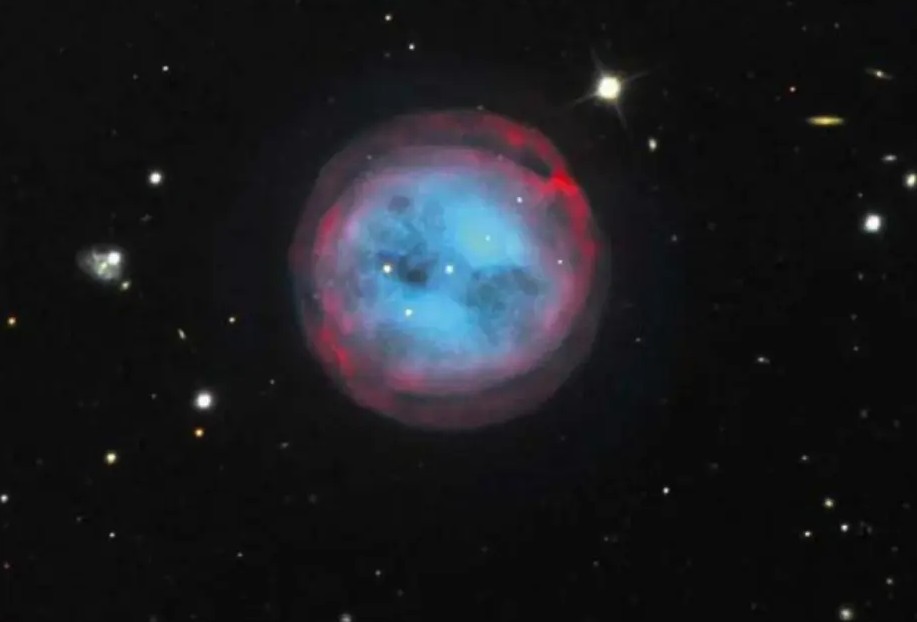
The Majesty of the Lord and His Integrity

Is there a physical demonstration of the majesty of the Lord? Does God have integrity? Will God go back on His words, or change His words because of reverse psychology, or reminder of ‘good works done by man’, or playing the favouritism card, or bias on the basis of skin colour, or being born in Asia or Europe or Africa or the Americas(indigenous native Americans), or by praising Him in a sycophantic manner not rooted in spirit and truth based on evidence, and other forms of logic and factors employed by man in prayers.

Leviticus 19:33–34 (The “Native-Born” Commandment)

“When a foreigner resides among you in your land, do not mistreat them. The foreigner residing among you must be treated as your native-born. Love them as yourself, for you were foreigners in Egypt. I am the Lord your God.”

While this verse specifically addresses resident aliens/foreigners (gerim), many of these non-native residents worked as hired labourers or servants in Israelite households.

Related Laws for Servants & Household Members

  • Equal Inclusion in Sabbath Rest:
    • Exodus 20:10 / Deuteronomy 5:14: The Sabbath commandment explicitly states that enslaved workers, hired servants, and resident aliens must be given the exact same rest as household family members.
  • Equal Treatment for Poor Hebrew Servants:
    • Leviticus 25:39–40: If an Israelite falls into poverty and becomes a servant, the Law mandates: “Do not make them work as a slave. They are to be treated as a hired worker or a temporary resident among you; they are to work for you until the Year of Jubilee.”
  • Inclusion in Sacred Feasts:
    • Deuteronomy 16:11: In the Feast of Weeks, household servants and foreign residents are instructed to rejoice alongside sons, daughters, and family members as equals in celebration.
  • Prohibition Against Oppressing Workers:
    • Deuteronomy 24:14–15: “Do not take advantage of a hired worker who is poor and needy, whether that worker is a fellow Israelite or a foreigner residing in one of your towns.”

John 13:34–35

  • “A new commandment I give to you, that you love one another: just as I have loved you, you also are to love one another. By this all people will know that you are my disciples, if you have love for one another.”

The Old Testament commanded loving one’s neighbour as oneself (Leviticus 19:18). Jesus’ commandment was “new” because it raised the standard of love: believers are instructed to love others “as I have loved you”—modelling their love after Christ’s sacrificial, self-giving example.

The “strength” of a law(commandment) refers to its effectiveness, authority, and ability to influence behaviour within a society. In legal philosophy and jurisprudence, the strength of a law is measured across three primary dimensions:

1. Legal Enforceability (Coercive Power)

A law derives immediate operational strength from the state’s capacity to enforce it and punish non-compliance.

  • Sanctions & Penalties: Clear consequences (fines, imprisonment, civil liabilities) deter violations.
  • State Monopoly on Force: The government possesses the official authority and resources (police, courts, regulatory bodies) to compel adherence.
  • Weakness point: If a law is technically on the books but never enforced, it loses its functional strength and becomes a “dead letter.”

2. Institutional Legitimacy & Clarity

A law’s structural strength depends on how well it is drafted and integrated into the broader legal system.

  • Procedural Validity: A law is stronger if created strictly through recognised, constitutional processes.
  • Clarity & Predictability: Vague or ambiguous laws are structurally weak because courts may strike them down, and citizens cannot easily predict how to comply.
  • Higher Authority Alignment: A statute must align with higher-ranking laws, such as a country’s constitution or international treaties. If it conflicts, it can be invalidated.

3. Social Legitimacy & Moral Authority

A law is strongest when citizens obey it voluntarily because they believe it is fair and necessary, rather than purely out of fear of punishment.

  • Alignment with Norms: Laws that reflect a society’s shared ethical values enjoy widespread compliance.
  • Public Perception: When citizens perceive the legal system as unbiased and legitimate, compliance rates rise significantly.
  • Weakness point: Laws that lack social backing (such as Prohibition in the US during the 1920s) face massive non-compliance, pushing the state to rely entirely on costly coercion.

A law reaches its maximum strength when it is procedurally sound (clearly written and constitutional), socially accepted (seen as fair and moral), and effectively backed by reliable enforcement.

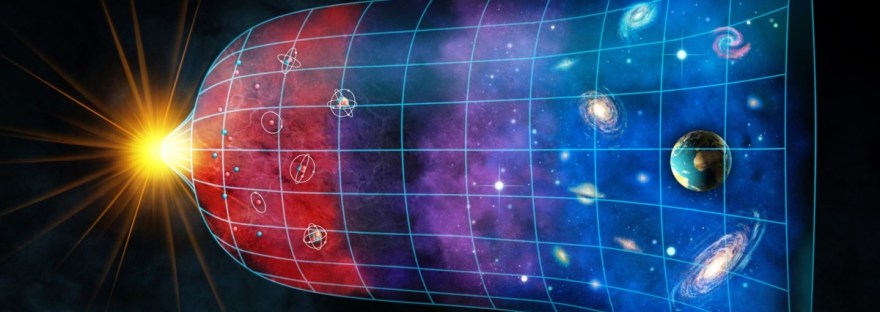
Did the physical universe come into existence 13.8 billion years ago, as a result of the Big Bang, or was it created by God? This is a fundamental question that has to be answered, before there can be a discussion about the laws of an entity whose existence is under question/debate. There is abstraction, and there is objective reality. There has been no currently living human being that can provide incontrovertible evidence, such as video, photographs, and or audio, that God exists. About 30 years ago, a Dutch person said to me that if God exists why did He let so many people die during the second world war; An estimated 70 million to 85 million people died during World War II, representing roughly 3% of the world’s 1940 population. Civilian casualties significantly outnumbered military deaths.

Casualty Breakdown

  • Civilians: ~50 million to 55 million (includes 19–28 million deaths from war-related famine and disease, as well as 6 million Jews and millions of others targeted in the Holocaust).
  • Military: ~21 million to 25 million (includes around 5 million prisoners of war who died in captivity).

When considering the existence of God in conjunction with disasters and evil being perpetrated, then the question of free will being possesses by human being should also be addressed, in conjunction with what God said in Isaiah 45: 5-7; I am the Lord, and there is no other; apart from me there is no God. I will strengthen you, though you have not acknowledged me, so that from the rising of the sun to the place of its setting, people may know there is none besides me. I am the Lord, and there is no other. I form the light and create darkness, I bring prosperity and create disaster; I, the Lord, do all these things. Scripture presents a dual perspective: humankind possesses genuine moral agency and choice, yet these choices exist alongside God’s supreme sovereignty and humanity’s fallen nature.

While the modern philosophical term “free will” does not explicitly appear in the Bible, scripture consistently teaches that people make real decisions for which they are held morally responsible. At the same time, it outlines clear limits to that freedom.

1. Evidence for Choice & Moral Responsibility

Scripture assumes throughout that human beings can choose between options, particularly regarding obedience, repentance, and faith.

  • A Direct Choice Offered:
    • Deuteronomy 30:19: “I have set before you, life and death, blessing and curse. Therefore choose life, that you and your offspring may live.”
    • Joshua 24:15: “Choose this day whom you will serve… But as for me and my house, we will serve the Lord.”
  • Responsibility for Sin: God repeatedly holds people accountable for their actions. In Ezekiel 18:20, scripture states, “The soul who sins shall die… The righteousness of the righteous shall be upon himself, and the wickedness of the wicked shall be upon himself.”
  • Voluntary Offerings: The Old Testament frequently refers to “freewill offerings” (e.g., Leviticus 22:18), which were sacrifices given purely out of voluntary desire rather than by commandment.
  • Universal Invitation: Passages like Revelation 22:17 (“let the one who desires take the water of life without price”) and 2 Peter 3:9 (“not wishing that any should perish, but that all should reach repentance”) imply that the offer to turn to God requires a genuine human response.

2. Biblical Limits on Human Free Will

While humans have the ability to choose according to their desires, scripture teaches that human choices are not completely unbound.

  • The Bondage of Sin: The Bible describes fallen humanity as morally impaired or bound by a sinful nature/spirit(spirit of death).
    • Jesus states in John 8:34: “Everyone who practices sin is a slave to sin.”
    • Romans 6:17–18 echoes that people are either “slaves to sin” or “slaves to righteousness.”
    • In this view, a person can choose what they desire, but without divine intervention, their natural desires lean away from God (Romans 8:7–8).
  • The Need for Divine Initiative: Scripture indicates that no one can choose God entirely on their own merit.
    • John 6:44: “No one can come to me unless the Father who sent me draws him.”
    • Ephesians 2:1–5: Describes people as “dead in trespasses,” requiring God to make them spiritually alive before they can respond.

3. Divine Sovereignty vs. Human Agency

A major theme in the Bible is the interplay between God’s ultimate control (sovereignty/predestination) and human agency. Biblical writers often portray both working simultaneously without contradiction:

  • Genesis 50:20: Joseph tells his brothers, “As for you, you meant evil against me, but God meant it for good.” The brothers exercised their own wills to commit a sinful act, yet God orchestrated the outcome for His overarching purpose.
  • Proverbs 16:9: “The heart of man plans his way, but the Lord establishes his steps.”
  • Proverbs 21:1: “The king’s heart is a stream of water in the hand of the Lord; he turns it wherever he will.”
  • Acts 2:23: Peter explains that Jesus was killed according to “the definite plan and foreknowledge of God,” yet he tells the crowd that they were responsible for putting Him to death.

Historically, different Christian traditions interpret these scriptures in distinct ways:

  1. Arminian / Free Will view: Emphasises verses about universal invitations and human choice, arguing that God gives everyone “prevenient grace” so they have the genuine free power to accept or reject salvation.
  2. Reformed / Calvinist view: Emphasises verses about divine sovereignty and human depravity, arguing that while humans make voluntary choices, their wills are corrupt until God sovereignly regenerates them (giving them a new heart to choose Him).

Scripture teaches that humans have an active, responsible will to make real choices, but that this will is spiritually constrained by sin and operates beneath the overarching sovereignty of God. Jesus Christ taught believers how to pray in Matthew 6: 9-10; “This, then, is how you should pray: “‘Our Father in heaven, hallowed be your name, your kingdom come, your WILL be done, on earth as it is in heaven. If God created the physical universe, with the inherent force of gravity exerted by cosmic bodies, and quantum mechanics (the motions of all physical bodies, in space and time), then the physical manifestation of the works of the hand of the Creator is mind-boggling, MAJESTIC. Ephesians 2: 8-9; For it is by grace you have been saved, through faith—and this is not from yourselves, it is the gift of God— not by works, so that no one can boast. Isaiah 26:10; But when grace is shown to the wicked, they do not learn righteousness; even in a land of uprightness they go on doing evil and do not regard the MAJESTY of the Lord. Grace is not for all people. The integrity of God is addressed in Isaiah 55: 8-11; “For my thoughts are not your thoughts, neither are your ways my ways,” declares the Lord. “As the heavens are higher than the earth, so are my ways higher than your ways and my thoughts than your thoughts. As the rain and the snow come down from heaven, and do not return to it without watering the earth and making it bud and flourish, so that it yields seed for the Sower and bread for the eater, so is my word that goes out from my mouth: It will not return to me empty, but will accomplish what I desire and achieve the purpose for which I sent it.
Everything under the Heaven

Physical universe, cosmic web, galaxies, black holes, stars, planets (rocky planets and gas giants), asteroids, and comets. All of these bodies are under the Heaven.

Isaiah 45: 5-7; I am the Lord, and there is no other; apart from me there is no God.
I will strengthen you, though you have not acknowledged me, so that from the rising of the sun to the place of its setting people may know there is none besides me. I am the Lord, and there is no other. I form the light and create darkness, I bring prosperity and create disaster; I, the Lord, do all these things.

Psalm 24:1, “The earth is the Lord’s, and everything in it, the world, and all who live in it.”

Other Related Verses

  • Psalm 50:12: “If I were hungry I would not tell you, for the world is mine, and all that is in it.”
  • Job 41:11: “Who has a claim against me that I must pay? Everything under heaven belongs to me.”

Everything under Heaven belongs to God

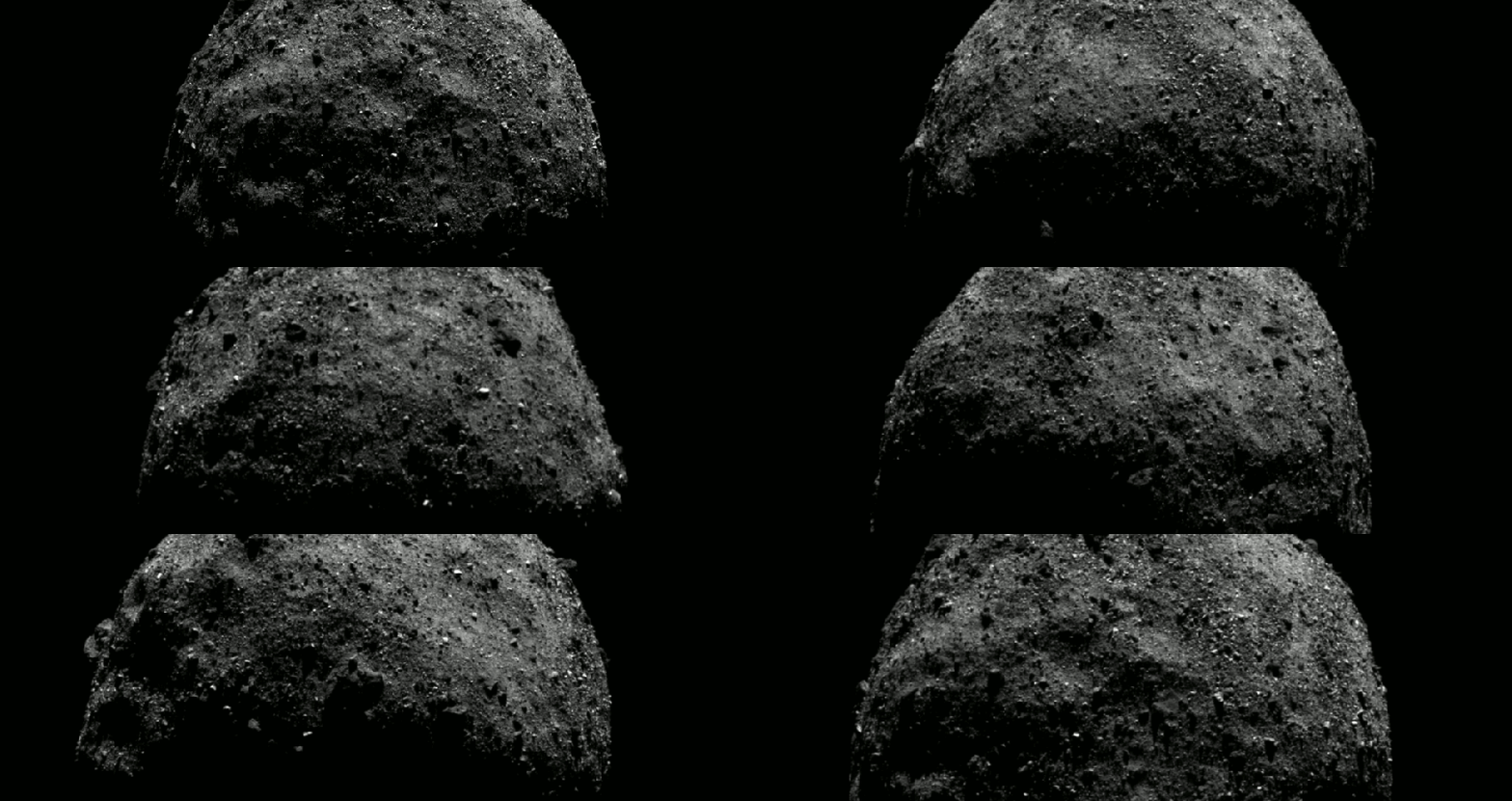
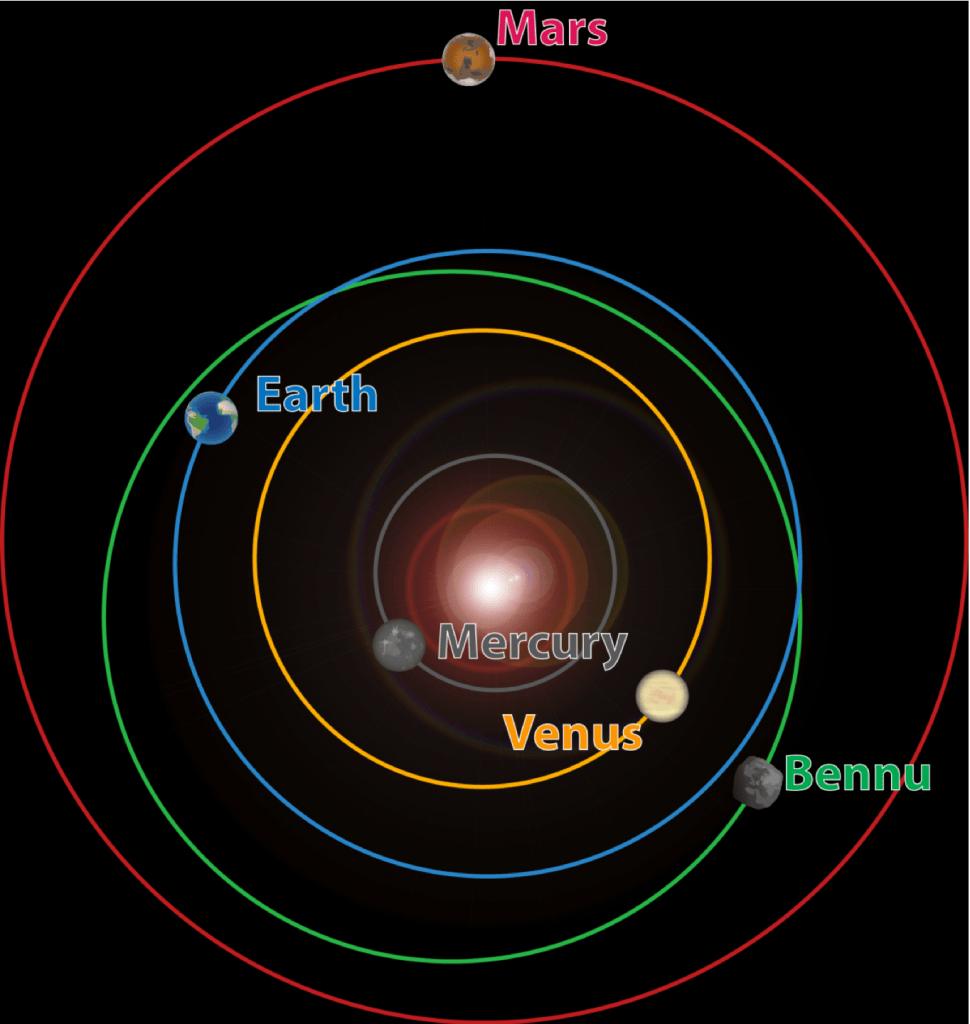
Asteroid 101955 Bennu is classified as an Apollo asteroid—a category of near-Earth objects whose orbits cross Earth’s orbit as they travel around the Sun.

Orbital Layout & Path

  • Orbit Shape: Bennu travels in an elliptical path with an average distance from the Sun of about 1.13 Astronomical Units (AU).
  • Earth Crossing: At its closest point to the Sun (perihelion), Bennu moves inside Earth’s orbit (around 0.90 AU). At its farthest point (aphelion), it swings out past Earth toward Mars (around 1.36 AU).
  • Orbital Period: It completes one full trip around the Sun every 1.2 years (about 437 days), meaning its position relative to Earth changes continuously.

Distance & Periodic Flybys

  • Variable Distance: Depending on where both Earth and Bennu are in their respective orbits, the distance between them ranges from a few hundred thousand kilometres up to over 300 million kilometres. Currently, Bennu is roughly 280 million kilometres (1.88 AU) away from Earth.
  • Close Approaches: Bennu makes a relatively close approach to Earth roughly every 6 years. Its next major close flyby will occur on September 23, 2060, when it passes within about 750,000 kilometres (466,000 miles) of Earth—roughly twice the distance from Earth to the Moon.

Analysis of the 120-gram sample collected from asteroid 101955 Bennu by NASA’s OSIRIS-REx mission (returned to Earth in September 2023) revealed crucial findings about the origins of our solar system and the precursor ingredients for life:

1. Key Ingredients for Life

  • Organic Carbon and Nitrogen: The sample contains unusually high concentrations of carbon and organic compounds.
  • Amino Acids & Nucleobases: Scientists identified 14 of the 20 amino acids used by life on Earth, along with all five nucleobases (adenine, guanine, cytosine, thymine, uracil) essential for storing genetic information in RNA and DNA.
  • Chirality (Handedness): The amino acids present are an equal mixture of “left-handed” and “right-handed” molecules. Because Earth life almost exclusively uses left-handed amino acids, this demonstrates that extraterrestrial organics started as balanced mixes before life emerged on Earth.

2. Evidence of an Ancient Ocean World

  • Hydrated Clay Minerals: Around 80% of the sample’s minerals contain water locked inside their interior structures, formed when melted ice reacted with dust billions of years ago.
  • Evaporite Salts & Water-Soluble Phosphates: Researchers detected magnesium-sodium phosphate, carbonates, halite, and sylvite. These salt crusts indicate that Bennu’s parent body hosted salty, liquid-water brines that dried up over time—similar to hydrothermal environments or ocean crusts on Earth.

3. Mixed Galactic Origins

  • Presolar Stardust: The samples contain pristine “presolar grains” created by dying stars before our solar system formed 4.5 billion years ago.
  • Diverse Assembly: Bennu’s parent body was a “rubble pile” assembled from materials across different regions—high-temperature solids formed close to the Sun, cold icy material from the outer solar system, and organic matter from interstellar space.

4. Rapid Space Weathering

  • Scanning reveals micro-craters and tiny splashes of impact-melted rock caused by micrometeorite bombardments and solar radiation, showing that asteroids without atmospheres weather faster than previously predicted.

The findings strongly support the hypothesis that asteroids like Bennu delivered essential organic precursors and water to early Earth, creating the environment necessary for life to form. However, interestingly enough we have the Holy Spirit speaking through the Psalmist in Psalm 24 verse 1, The earth is the Lord’s, and everything in it, the world, and all who live in it. Furthermore, in the scripture quoted at the head of this article, Isaiah 45 verse 7, the Lord stated through prophet Isaiah, that He created light and darkness (was the Lord talking about the Big Bang, and dark matter, dark energy, and black holes? I suppose the only witness to that would be any entity that was present 13.8 billion years or more ago.).

Luke 13 verses 1-5; Now there were some present at that time who told Jesus about the Galileans whose blood Pilate had mixed with their sacrifices. Jesus answered, “Do you think that these Galileans were worse sinners than all the other Galileans because they suffered this way? I tell you, no! But unless you repent, you too will all perish. Or those eighteen who died when the tower in Siloam fell on them—do you think they were more guilty than all the others living in Jerusalem? I tell you, no! But unless you repent, you too will all perish.”

John 9:1–3 (NIV)

1 As he went along, he saw a man blind from birth.

2 His disciples asked him, “Rabbi, who sinned, this man or his parents, that he was born blind?”

3 “Neither this man nor his parents sinned,” said Jesus, “but this happened so that the works of God might be displayed in him.”

Context

In ancient Jewish culture, it was a widespread assumption that severe physical suffering or disabilities were a direct divine punishment for specific personal or ancestral sins.

When the disciples saw the man, they treated his condition as a theological debate: Was it his fault, or his parents’? Jesus rejected that premise entirely. By clarifying that neither party was to blame for the blindness, He challenged the idea that every misfortune is tied to personal sin and shifted the focus from cause to purpose—using the man’s situation to reveal God’s healing power. The Holy Spirit did state through prophet Isaiah in Isaiah 45 verse 7, that He brings prosperity and disaster. Are there parallels between scriptures and physical cosmology? In any case, there is free will, and freedom of expression, be it that of an atheist, or a religious bigot/zealot, or a naturalist, or that of an intelligent designer, or an evidence-based(faith) realist world/universe view. Just keep an open mind.

Infinite Monkey Cage Heliosphere Hades

The Parable of the Rich Man and Lazarus, found in Luke 16:19–31.

The story, briefly:
A rich man lives in luxury while a poor beggar named Lazarus lies at his gate, covered in sores, longing for scraps from his table. Both die. Lazarus is carried by angels to “Abraham’s side” (often rendered “Abraham’s bosom” in older translations), while the rich man ends up in torment in Hades.

The chasm shows up when the rich man, in agony, begs Abraham to send Lazarus to dip his finger in water and cool his tongue. Abraham refuses, explaining that Lazarus had suffering in life and the rich man had comfort, and now their situations are reversed. Then comes the key verse, Luke 16:26, where Abraham says a great chasm has been fixed between them, so that no one can cross from one side to the other in either direction.

The rich man then asks Abraham to send Lazarus back to warn his five brothers so they don’t end up in the same place. Abraham replies that they have Moses and the Prophets to listen to — and if they won’t listen to those, they won’t be convinced even if someone rises from the dead (a line often read as a foreshadowing of the resistance Jesus’s own resurrection would meet).

A few notes on how this parable is read:

  • Some scholars treat it as a straightforward parable using imagery familiar to Jesus’s audience, not a detailed cartography of the afterlife.
  • Others read it more literally, as a real depiction of the intermediate state of the dead.
  • The term “Abraham’s bosom” became, in later Jewish and Christian tradition, associated with a place of comfort for the righteous dead.

The phrase infinite monkey cage came from Professor Brian Cox. The title of Professor Brian Cox’s BBC Radio 4 show and podcast, The Infinite Monkey Cage (co-hosted with comedian Robin Ince), directly plays on a famous mathematical concept known as the Infinite Monkey Theorem.

1. The Core Concept (The Infinite Monkey Theorem)

The theorem states that a monkey pressing keys at random on a typewriter keyboard for an infinite amount of time will almost surely eventually produce a given text, such as the complete works of William Shakespeare.

  • Probability & Infinity: The idea is that given infinite time or infinite attempts, even an extremely improbable event becomes a certainty.

2. How Cox and the Show Apply the Phrase

Professor Brian Cox and his team adapted this concept to frame their show’s philosophy and format:

  • The “Cage” / Setup: Rather than literal monkeys typing, the show places a mix of physicists, scientists, experts, and comedians in a room together.
  • The “Infinite” Experiment: By throwing diverse minds together—some asking high-level academic questions and others asking simple or nonsensical ones—the show explores whether, through endless discussion and curiosity, profound scientific understanding will naturally emerge out of the chatter.
  • Humour Meets Science: Cox often points out that while comedians and scientists seem like opposite ends of the spectrum, placing them in the same room creates an “anarchic” atmosphere that breaks down complex science into accessible, humorous, and insightful ideas.

In short, Cox’s premise behind The Infinite Monkey Cage is a light-hearted nod to probability: if you gather curious, quirky minds and let them talk about the universe long enough, you’ll inevitably hit on deep scientific truths—and have fun doing it.

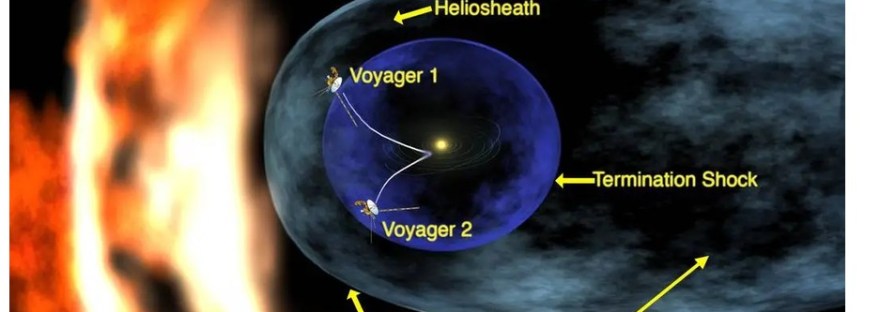
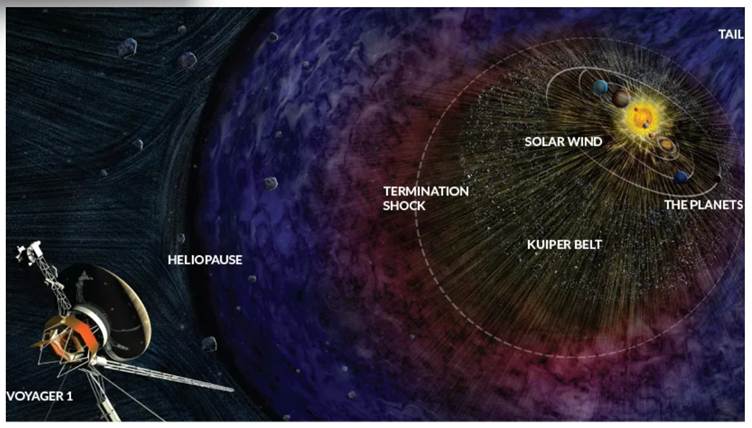
However, when the infinite monkey theorem is applied to man travelling in space and time, then we realize that man is trapped on this star called the Sun. Take the case of the current man-made space crafts at the farthest distance from the earth, Voyager 1 and Voyager 2.

They are continuously hurtling through space and Earth is constantly orbiting the Sun, their exact distances fluctuate second by second.

As of August 2026, their approximate distances from Earth are:

Voyager 1

  • Distance from Earth: ~25.59 billion km (~15.90 billion miles)
  • Astronomical Units (AU): ~171.05 AU (1 AU is the average distance from Earth to the Sun)
  • One-Way Signal Time: It takes light/radio signals about 23 hours and 42 minutes to travel one way between Voyager 1 and Earth.

Fun fact: Voyager 1 is fast approaching a historic milestone—in November 2026, it will become the first human-made object to be a full light-day (about 25.9 billion km) away from Earth.

Voyager 2

  • Distance from Earth: ~21.39 billion km (~13.29 billion miles)
  • Astronomical Units (AU): ~142.96 AU
  • One-Way Signal Time: It takes about 19 hours and 49 minutes for signals to travel one way between Voyager 2 and Earth.

Both probes are travelling through interstellar space (having crossed the heliopause years ago) and are maintained by NASA’s Deep Space Network. Neither Voyager is actually aimed at Proxima Centauri, the nearest star to us — their trajectories were set by planetary flybys decades ago, not by a destination star. But here’s what the numbers look like if you just ask “at their current speed, how long to cover the distance to the nearest star?”

The distance
Proxima Centauri, the nearest star to the Sun, is about 4.24 light-years away — roughly 268,000 AU. Both Voyagers are only around 140–170 AU from the Sun right now, which is a rounding error against that distance, so it barely matters where exactly they are today.

Their speeds

  • Voyager 1: ~17 km/s (~3.6 AU/year) — the faster of the two, currently the most distant human-made object at about 166 AU from the Sun.
  • Voyager 2: ~15.4 km/s (~3.25 AU/year) — currently around 139 AU out.

Travel time to Proxima Centauri

  • Voyager 1: ≈ 268,000 AU ÷ 3.6 AU/yr ≈ 74,000–75,000 years
  • Voyager 2: ≈ 268,000 AU ÷ 3.25 AU/yr ≈ 82,000–83,000 years

A couple of caveats worth keeping in mind:

  1. They’re not headed there. Voyager 1 is drifting roughly toward the constellation Ophiuchus/Camelopardalis direction; Voyager 2 toward Sagittarius/Pavo. Neither path passes anywhere near Proxima Centauri.
  2. The “40,000 years” figure you may have seen refers to a different fact: Voyager 1 will pass within about 1.6 light-years of the star Gliese 445 in roughly 40,000 years — not because it’s heading there on purpose, but because that star happens to be moving toward the general area Voyager 1 is drifting through. Gliese 445 isn’t the nearest star to us today, but it will be closer to Voyager 1’s future path than Proxima Centauri is.
  3. Both spacecraft will run out of power for their instruments and transmitters by around the early-to-mid 2030s, so they’ll be silent, coasting relics for the vast majority of that 74,000–83,000-year journey.

Indeed, the physical man on the planet earth orbiting around the star called the Sun, is trapped in space and time, an infinite monkey cage, that deviates fundamentally from the Infinite Monkey mathematical theorem of a monkey typing the text ‘the complete works of William Shakespeare’, since neither a specific monkey nor a specific man exists ad infinitum. In addition to which, our star, the Sun at the edge of its heliosphere/heliopause is surrounded by the Oort Cloud, Interstellar space filled with gas, mostly hydrogen and helium, dust, radiation, and nebulae. The Oort Cloud is made of trillions of icy space rocks and debris left over from when our solar system formed 4.6 billion years ago. These frozen chunks are mostly made of water ice, methane ice, and ammonia ice, along with small amounts of rocky dust.

The Pillars of creation, Physical cosmology, Biology, Big Bang, Evolution and Faith

This is the crossroad of physical cosmology, biology, big bang, evolution and faith. The reader is advised to keep an open mind, do a comparative analysis of the facts, and subsequently form their own opinion. Isaiah 45: 6-8; That they may know from the rising of the sun to its setting That there is none besides Me. I am the Lord, and there is no other;I form the light and create darkness, I make peace and create calamity; I, the Lord, do all these things.’ “Rain down, you heavens, from above, And let the skies pour down righteousness; Let the earth open, let them bring forth salvation, And let righteousness spring up together. I, the Lord, have created it.

All living organisms have pulses; algae, viruses, bacteria, plants, and animals. Their life span differs, the truly amazing truth is that cosmic bodies; the planet earth, and other planetary bodies, the stars (such as our star, the Sun), black holes that are usually at the centre of each galaxy, our native galaxy, the Milky way has a black hole known as Sagittarius A, at its centre, all also have pulses. Our Sun has an eleven year cycle (pulse), our planet has a 200000 years to one million years pulse (do the research on the breakaway of the Eastern section of the African continent: East Africa rift valley). Though the frequency of volcanic eruption in various parts of the planet indicate birth pains (formation of new material) on a shorter time span frequency. It’s counter intuitive to our comprehension that cosmic bodies have pulses just like us.

Major characteristics of living organisms: All living organisms share a set of key characteristics that distinguish them from non-living matter. Biologists generally define life through the following major traits:

1. Cellular Organisation

All living things are composed of one or more cells. The cell is the fundamental unit of life.

  • Unicellular organisms (like bacteria) consist of a single cell.
  • Multicellular organisms (like humans and trees) are composed of complex networks of specialised cells.

2. Metabolism

Living organisms undergo continuous chemical reactions to sustain life. This total of all chemical reactions is called metabolism, which includes:

  • Anabolism: Building up complex molecules (e.g., photosynthesis in plants).
  • Catabolism: Breaking down molecules to release energy (e.g., cellular respiration).

3. Homeostasis

Organisms must maintain a stable, constant internal environment despite changes in their external surroundings. Examples include regulating body temperature, water balance, and pH levels.

4. Growth and Development

All living things grow (increase in size or cell number) and develop (mature through a defined life cycle governed by their genetic material).

5. Reproduction

Living organisms have the ability to produce offspring to ensure the continuation of their species. This can happen in two ways:

  • Asexual reproduction: A single organism produces an exact genetic copy of itself.
  • Sexual reproduction: Two parents contribute genetic material to produce unique offspring.

6. Response to Stimuli

Organisms can detect and react to changes in their environment (stimuli). These responses can be behavioural (like a plant bending toward light) or physiological (like a person sweating when hot).

7. Adaptation through Evolution

Over generations, populations of living organisms adapt to their environments. Changes in DNA allow species to evolve via natural selection, ensuring survival in changing world conditions.

Characteristics of living entities exhibited by cosmic bodies. Cosmic bodies (stars, planets, galaxies) don’t actually meet the biological definition of “living,” but they can superficially display a few characteristics we associate with life. Here’s a breakdown of where the comparison holds up and where it breaks down:

Characteristics of Life (Biological Standard)

Living things generally show: growth, reproduction, metabolism, response to stimuli, homeostasis, organisation (cells), and evolution/adaptation.

Where Cosmic Bodies “Mimic” Life-like Traits

1. Growth

  • Stars accumulate mass from surrounding gas and dust clouds, growing over millions of years.
  • Planets form and grow through accretion of smaller bodies (planetesimals).
  • Black holes “grow” by consuming matter and merging with other black holes.

2. Birth and Death (Life Cycles)

  • Stars are “born” in nebulae, go through a main sequence “life,” and “die” as white dwarfs, neutron stars, or supernovae.
  • This life-cycle terminology (protostar → main sequence → red giant → death) closely parallels biological life stages, which is why it’s used colloquially.

3. Energy Consumption/Metabolism (loose analogy)

  • Stars convert hydrogen to helium via fusion, releasing energy — vaguely resembling metabolic energy conversion, though it’s a nuclear process, not a chemical/biological one.

4. Reproduction (very loose analogy)

  • Supernovae scatter heavy elements that seed the formation of new stars and planetary systems — sometimes called “stellar reproduction,” though it’s not self-directed or genetically informed.

5. Response to Environment

  • Planetary and stellar systems respond to gravitational influences (e.g., tidal locking, orbital resonance), but this is passive physics, not a biological “response to stimuli.”

6. Structure/Organization

  • Cosmic bodies have internal layered structure (core, mantle, crust for planets; core, radiative zone, convective zone for stars) — analogous to organised biological systems, but not cellular.

Key Missing Criteria

Cosmic bodies lack:

  • Self-replication with genetic information
  • Homeostasis (active self-regulation)
  • Evolution by natural selection
  • Response to stimuli in a purposeful/adaptive sense
  • Metabolism in the biochemical sense

Bottom Line

The similarities are largely metaphorical and process-based (growth, cycles, transformation) rather than functional in the biological sense. Scientists use “life cycle” language for stars and galaxies as a useful analogy for teaching and visualisation — not because these bodies are literally alive.

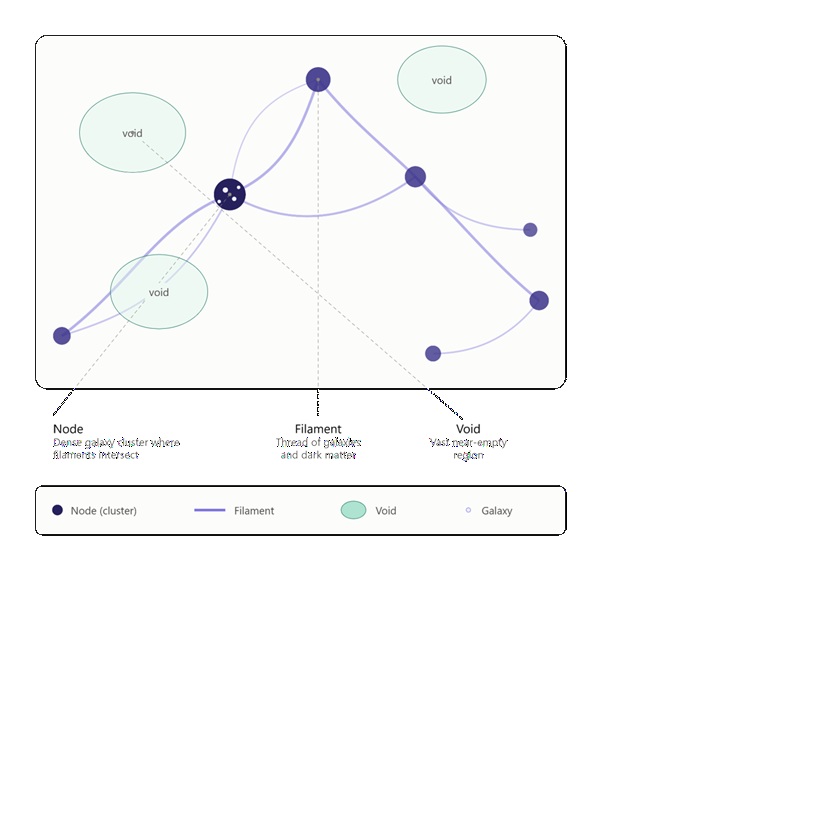
The cosmic web is the large-scale structure of the universe — the way matter (both visible and dark matter) is arranged across space on the grandest scales, forming a pattern that resembles a three-dimensional spiderweb or a sponge-like network.

Structure of the Cosmic Web

It has four main components:

1. Filaments

  • Long, thread-like structures made of galaxies, gas, and dark matter.
  • These are the “strands” of the web, often hundreds of millions of light-years long.
  • Galaxies tend to flow along these filaments, pulled by gravity.

2. Nodes (Clusters)

  • Dense regions where filaments intersect.
  • These host massive galaxy clusters — some of the largest gravitationally bound structures in the universe.

3. Walls (Sheets)

  • Flattened, sheet-like structures of galaxies, less dense than filaments but denser than voids.
  • An example is the “Great Wall,” a massive sheet-like arrangement of galaxies.

4. Voids

  • Enormous, roughly spherical regions that are nearly empty of galaxies and matter.
  • Voids can span tens to hundreds of millions of light-years and make up most of the universe’s volume.

How It Formed

The cosmic web originated from tiny density fluctuations in the early universe (visible in the Cosmic Microwave Background). Over billions of years:

  1. Regions with slightly more matter attracted more matter via gravity.
  2. Dark matter, which vastly outweighs normal matter, formed the initial gravitational scaffolding.
  3. Normal (baryonic) matter — gas and eventually galaxies — fell into this scaffolding, tracing out the filaments, nodes, and walls we observe today.

Why It Matters

  • It reveals the role of dark matter (reference Isaiah 45: 6-8), since the web’s structure is shaped predominantly by dark matter’s gravity, even though we can’t see it directly.
  • It helps cosmologists test models of the universe’s evolution (e.g., using simulations like the Millennium Simulation or Illustris).
  • Studying the cosmic web helps explain how galaxies form, migrate, and cluster over cosmic time.
  • That’s the basic layout: filaments (the purple threads) carry galaxies along them like beads on a string, converging at nodes — the densest points, where massive galaxy clusters form. Between the filaments and walls are the voids, vast nearly-empty bubbles that make up most of the universe’s volume.
  • A useful way to picture it: imagine soap bubbles packed together. The thin films and edges where bubbles meet are the filaments and walls (matter concentrates there), while the hollow interior of each bubble is a void. The whole pattern is invisible in normal light on this scale — what actually holds the shape together is dark matter’s gravity, with visible galaxies just tracing the underlying scaffold.

Expansion of the universe refers to the observation that the space between galaxies (on large scales) is continuously stretching over time — galaxies aren’t just moving through space, but the fabric of space itself is growing.

Key Points

1. It’s not an explosion into empty space

  • A common misconception is that the universe expanded like a bomb going off, with galaxies flying outward from a central point into pre-existing empty space.
  • In reality, space itself is stretching everywhere, uniformly. There is no center and no edge — every point moves away from every other point.

2. The raisin bread analogy

  • Picture raisin bread dough rising in an oven. Each raisin (galaxy) doesn’t move through the dough — but as the dough expands, every raisin gets farther from every other raisin.
  • The farther apart two raisins start, the faster they separate as the loaf expands — this mirrors what we observe with galaxies.

3. Discovered through redshift

  • In the 1920s, Edwin Hubble observed that light from distant galaxies is shifted toward longer (redder) wavelengths — called redshift.
  • This happens because space stretches while light travels through it, stretching the light’s wavelength too.
  • Crucially, more distant galaxies show greater redshift, meaning they’re receding faster — this relationship is Hubble’s Law.

4. Hubble’s Law

  • Recession velocity = H₀ × distance (where H₀ is the Hubble constant, roughly 70 km/s per megaparsec).
  • This means space is expanding at a consistent rate everywhere — it’s not that galaxies are “running away” from a specific spot.

5. Accelerating expansion

  • Observations in the late 1990s (using distant supernovae) revealed the expansion isn’t slowing down due to gravity, as expected — it’s actually speeding up.
  • This acceleration is attributed to dark energy, a mysterious force that makes up roughly 68% of the universe’s total energy content, though its nature is still not well understood.

6. What isn’t expanding

  • Locally bound systems — galaxies, solar systems, planets, even you — don’t expand, because gravity (and other forces) hold them together tightly enough to resist the stretching of space.
  • Expansion only becomes significant on very large scales, between galaxies and galaxy clusters that aren’t gravitationally bound to each other.

Bottom Line

Expansion means the space between cosmic structures is growing over time, carrying galaxies apart from one another — not because they’re moving through a fixed space, but because the space itself is stretching, and this stretching is accelerating due to dark energy. Psalm 19: 1-6; The heavens declare the glory of God; And the firmament shows His handiwork. Day unto day utters speech, And night unto night reveals knowledge. There is no speech nor language Where their voice is not heard. Their line has gone out through all the earth, And their words to the end of the world. In them He has set a tabernacle for the sun,Which is like a bridegroom coming out of his chamber, And rejoices like a strong man to run its race. Its rising is from one end of heaven, And its circuit to the other end; And there is nothing hidden from its heat. What do we have here, faith in God who says, He created light and darkness, physical cosmology that says there is matter and anti-matter, light/stars, galaxies and dark energy, cosmic web, is there a parallel to be seen, well the rest is up to the reader to form their opinion on this piece.

Stars, Constellations and Galaxies mentioned in the Bible

Fun fact, the Sun does not depend on planet earth, while planet earth depends on the Sun. Without the Sun, no planet earth, while without planet earth, the Sun continues to tow 7 planets and countless space rocks in its orbit. Planet earth relies on the Sun, which is our Star, in the Milky Way galaxy. Cosmologist states that water is essential for life, however, there is water on the moon, but no life.

There is a song, sung by people from Southwestern Nigeria, with parts of its lyrics as follow “The King that we do not see, but whose handiwork we see”, whenever you ask the people to list some of the handiwork of the King; they talk about miracles such as, parting of the Red Sea, and Jesus Christ walking on water. There is a disconnect between the concept of God and the reality of the physical universe of which Man and all living organisms are a part thereof. Which means to most religious people, God is abstract, and not real, like their friends and family. They cannot see or perceive God physically.

Genesis 1:14-18;

And God said, “Let there be lights in the vault of the sky to separate the day from the night, and let them serve as signs to mark sacred times, and days and years, and let them be lights in the vault of the sky to give light on the earth.” And it was so. God made two great lights—the greater light to govern the day and the lesser light to govern the night. He also made the stars. God set them in the vault of the sky to give light on the earth,to govern the day and the night, and to separate light from darkness. And God saw that it was good.

Psalm 19: 1-6;

The heavens declare the glory of God; the skies proclaim the work of his hands. Day after day they pour forth speech; night after night they reveal knowledge.They have no speech, they use no words; no sound is heard from them.Yet their voicegoes out into all the earth, their words to the ends of the world. In the heavens God has pitched a tent for the sun. It is like a bridegroom coming out of his chamber, like a champion rejoicing to run his course. It rises at one end of the heavens and makes its circuit to the other; nothing is deprived of its warmth. (The black hole at the centre of the Milky Way is called Sagittarius A*, which is a supermassive black hole with an estimated mass of about 4.3 million times that of the Sun. It is located approximately 26,000 light-years from Earth in the constellation Sagittarius.)

Job 38: 7;

While the morning stars sang together and all the angelsshouted for joy?

Job 38:31-33;

 “Can you bind the chainsof the Pleiades? Can you loosen Orion’s belt? Can you bring forth the constellations in their seasons or lead out the Bearwith its cubs?Do you know the laws of the heavens? Can you set up God’sdominion over the earth?

Job 9: 7-9;

He speaks to the sun and it does not shine; he seals off the light of the stars. He alone stretches out the heavens and treads on the waves of the sea. He is the Maker of the Bearand Orion, the Pleiades and the constellations of the south.

The book of Job is the oldest book in the Bible. It is not surprising, therefore, that it contains a number of references to creation and the Flood, for these great events were still relatively fresh in the thinking of Job and his contemporaries. The first of these creation references in Job is the text above, and it is remarkable that it centres especially on the stars and their constellations. Still another constellation is mentioned in Job 26:13: “By his spirit he hath garnished the heavens; his hand hath formed the crooked serpent.”

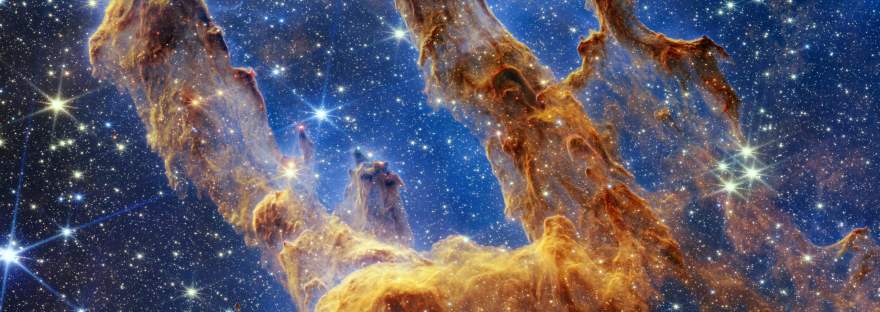
Job 26: 5-14; “The dead are in deep anguish, those beneath the waters and all that live in them.The realm of the dead is naked before God; Destructionlies uncovered.He spreads out the northern skies over empty space; he suspends the earth over nothing. He wraps up the waters in his clouds, yet the clouds do not burst under their weight. He covers the face of the full moon, spreading his clouds over it. He marks out the horizon on the face of the waters for a boundary between light and darkness.The pillars of the heavens quake (The star-forming region known as the Pillars of Creation is located in the Eagle Nebula, approximately 6,500 to 7,000 light-years from Earth. This region is famous for its stunning columns of interstellar gas and dust that are actively creating new stars.), aghast at his rebuke.By his power he churned up the sea; by his wisdom he cut Rahab to pieces.By his breath the skies became fair; his hand pierced the gliding serpent. And these are but the OUTER FRINGE of his works; how faint the whisper we hear of him! Who then can understand the thunder of his power?”

Finally: “Canst thou bind the sweet influences of Pleiades, or loose the bands of Orion? Canst thou bring forth Mazzaroth in his season? or canst thou guide Arcturus with his sons? Knowest thou the ordinances of heaven? canst thou set the dominion thereof in the earth?” (Job 38: 31-33). The term “Mazzaroth” actually means the 12 constellations of the Zodiac.

Thus, God not only created the stars but arranged them in star groupings that could be used for “signs, and for seasons” (Genesis 1:14;). Since God does nothing without a holy purpose, we can be sure that these sidereal signs were not to be used as astrological signs. God’s Word, in fact, forbids the practice of astrology (Isaiah 47: 12-14; “Keep on, then, with your magic spells and with your many sorceries, which you have laboured at since childhood. Perhaps you will succeed, perhaps you will cause terror. All the counsel you have received has only worn you out! Let your astrologers come forward, those stargazers who make predictions month by month, let them save you from what is coming upon you. Surely they are like stubble; the fire will burn them up. They cannot even save themselves from the power of the flame. These are not coals for warmth; this is not a fire to sit by.). The constellations must all in some way have testified of the coming Savior.

Location of Constellations

Pleiades

  • Constellation: Taurus
  • Description: The Pleiades, also known as the Seven Sisters, is an open star cluster located approximately 444 light-years from Earth. It is one of the most recognizable star clusters in the night sky.

Orion

  • Constellation: Orion
  • Description: Orion is a prominent constellation known for its three-star belt. It is visible in the night sky and is often associated with various myths and stories across cultures.

Bear

  • Constellations: Ursa Major and Ursa Minor
  • Description:
    • Ursa Major (Great Bear): Contains the well-known asterism called the Big Dipper.
    • Ursa Minor (Little Bear): Includes Polaris, the North Star, which is located near the north celestial pole.

Crooked Serpent

  • Constellation: Draco
  • Description: Draco winds around the north celestial pole and is known for its distinctive shape resembling a serpent. It is located between the constellations Ursa Major and Ursa Minor.
ConstellationLocationNotable Features
PleiadesTaurusOpen star cluster, visible to the naked eye
OrionOrionThree-star belt, prominent in the night sky
Ursa MajorNorthern HemisphereBig Dipper, Great Bear
Ursa MinorNorthern HemisphereContains Polaris, the North Star
DracoNorthern HemisphereWinds around the north celestial pole