
Most people do not fear God. How can you fear what or whom you do not know or have not seen. Unless God has manifested Himself to you as ‘The Fear of Isaac’, you do not fear Him. Psalm 130: 4; But there is forgiveness with You, That You may be feared and worshipped [with submissive wonder].
Genesis 31:42: Jacob uses the title while confronting his father-in-law, Laban. Jacob states that if the God of Abraham and the “Fear of Isaac” had not been with him, Laban would have sent him away empty-handed. If the God of my father, the God of Abraham, and [the Feared One] of Isaac, had not been with me, most certainly you would have sent me away now empty-handed. God has seen my affliction and humiliation and the [exhausting] labour of my hands, so He rendered judgement and rebuked you last night.”
Genesis 31:53: Jacob makes a solemn covenant oath with Laban. Instead of swearing by idols or ordinary terms, Jacob swears by the “Fear of his father Isaac”. The God of Abraham [your father] and the God of Nahor [my father], and the god [the image of worship] of their father [Terah, an idolater], judge between us.” But Jacob swore [only] by [the one true God] the Fear of his father Isaac.
Meaning of the Title
Reverence and Awe: The Hebrew word used (pahad) translates to dread, trembling, or deep reverential awe.
Personal Faith: It highlights the profound, personal relationship and deep respect that Isaac had for God, which Jacob claimed as his own family heritage rather than relying on Laban’s household idols.
The Unforgivable Sin: Jesus warned about “blasphemy against the Holy Spirit” being an unforgivable sin (Matthew 12:31-32, Mark 3:29, Luke 12:10). While this severe warning brings deep reverence and solemnity, Jesus issued it as a warning against hardening one’s heart and attributing God’s goodness to evil, rather than a command to be afraid of the Spirit Himself. Mathew 12: 30-31; “Therefore I say to you, every sin and blasphemy [every evil, abusive, injurious speaking, or indignity against sacred things] will be forgiven people, but blasphemy against the [Holy] Spirit will not be forgiven. Whoever speaks a word against the Son of Man will be forgiven; but whoever speaks against the Holy Spirit [by attributing the miracles done by Me to Satan] will not be forgiven, either in this age or in the age to come.
“And do not fear those who kill the body but cannot kill the soul. Rather fear Him who can destroy both soul and body in hell.”
Matthew 10:28 (ESV)
Context: Jesus is instructing His twelve apostles before sending them out to preach. He warns them of persecution and opposition, urging them to prioritize eternal spiritual integrity over physical safety.
Gospel of Luke
“I tell you, my friends, do not fear those who kill the body, and after that have nothing more that they can do. But I will warn you whom to fear: fear Him who, after He has killed, has authority to cast into hell. Yes, I tell you, fear Him!”
Luke 12:4–5 (ESV)
Context: Jesus speaks to a crowd of thousands, teaching His disciples to beware of hypocrisy and to stand bold in their faith without fear of human judgement or physical harm.
The statement “the fear of the Lord is the beginning of wisdom” appears directly in two main places in the Old Testament, with closely related phrasing appearing in a third.
Proverbs 9:10
“The fear of the Lord is the beginning of wisdom,
and the knowledge of the Holy One is insight.”
— Proverbs 9:10 (ESV)
Psalm 111:10
“The fear of the Lord is the beginning of wisdom;
all those who practice it have a good understanding.
His praise endures forever!”
— Psalm 111:10 (ESV)
Related Passages
Proverbs 1:7: “The fear of the Lord is the beginning of knowledge; fools despise wisdom and instruction.”
Job 28:28: “And he said to man, ‘Behold, the fear of the Lord, that is wisdom, and to turn away from evil is understanding.’”
The Spirit of the Fear of the Lord: Old Testament prophecy in Isaiah 11:2 lists “the Spirit of the fear of the Lord” as one of the manifestations of the Holy Spirit. In biblical terms, the “fear of the Lord” means profound reverence, awe, and respect for God’s holiness, not a paralyzing dread or terror. Isaiah 11: 1-5; Then a Shoot (the Messiah) will spring from the stock of Jesse [David’s father], And a Branch from his roots will bear fruit. And the Spirit of the Lord will rest on Him— The Spirit of wisdom and understanding, The Spirit of counsel and strength, The Spirit of knowledge and of the [reverential and obedient] FEAR of the Lord— And He will delight in the fear of the Lord, And He will not judge by what His eyes see, Nor make decisions by what His ears hear; But with righteousness and justice He will judge the poor, And decide with fairness for the downtrodden of the earth; And He shall strike the earth with the rod of His mouth, And with the breath of His lips He shall slay the wicked. And righteousness will be the belt around His loins, And faithfulness the belt around His waist.
Psalm 34: 7-11; The angel of the Lord encamps around those who fear Him [with awe-inspired reverence and worship Him with obedience],
And He rescues [each of] them. O taste and see that the Lord [our God] is good; How blessed [fortunate, prosperous, and favoured by God] is the man who takes refuge in Him.O [reverently] fear the Lord, you His saints (believers, holy ones); For to those who fear Him there is no want. The young lions lack [food] and grow hungry, But they who seek the Lord will not lack any good thing. Come, you children, listen to me; I will teach you to fear the Lord [with awe-inspired reverence and worship Him with obedience].
The Helper and Comforter: Jesus consistently described the Holy Spirit as a helper, counsellor, and comforter who would dwell with and in believers, guiding them into truth rather than frightening them (John 14:16-26). This does not imply a contradiction in terms and understanding. The two truths are not mutually exclusive. When the Spirit of the Lord has manifested Himself as ‘The Fear of Isaac’ to you, then He will Comfort you(Do not Fear, if you have not been given a reason to fear, then there is no point in comforting you with ‘do not fear’). Without the manifestation of the Spirit Himself, there is no reason to fear Him. In conclusion, if the Spirit of the Lord has not manifested Himself to you yet, take comfort in Jesus’ interaction with Thomas which occurs eight days after His resurrection, recorded in John 20:26–29.
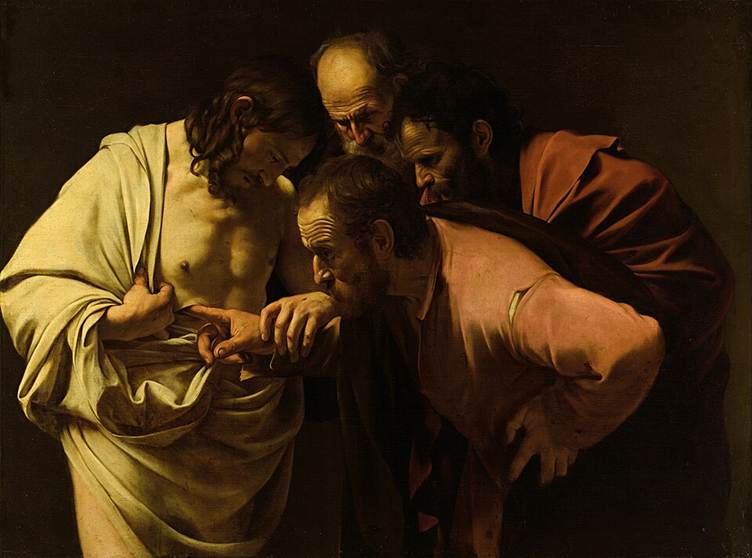
When Jesus appeared in the locked room where the disciples were gathered, He spoke directly to Thomas: The Greeting to the Group
“Peace be with you.”
John 20:26
The Invitation to Thomas
Addressing Thomas’s previous declaration that he would not believe unless he touched the nail marks and the side wound, Jesus said:
“Put your finger here, and see my hands; and put out your hand, and place it in my side. Do not disbelieve, but believe.”
John 20:27 (ESV)
Thomas’s Response
Thomas immediately worshipped Him, saying:
“My Lord and my God!”
John 20:28
The Final Blessing
Jesus concluded with a beatitude for future believers:“Have you believed because you have seen me? Blessed are those who have not seen and yet have believed.”John 20:29


