
Faith is the evidence given by the Object/Entity in whom it resides to those/subjects that have placed their trust, belief therein. Hebrews 11v1; Now faith is confidence in what we hope for and assurance about what we do not see. Exodus 33:20; “But,” he said, “you cannot see my face, for no one may see me and live.” Context: Moses asks to see God’s full glory. God protects Moses by placing him in the crevice of a rock, covering him with His hand as He passes by, and only letting Moses see His “back” so he wouldn’t be destroyed by the full magnitude of God’s presence. John 1:18; “No one has ever seen God, but the one and only Son, who is himself God and is in closest relationship with the Father, has made him known.” 1 John 4:12; “No one has ever seen God; but if we love one another, God lives in us and his love is made complete in us.”
An allusion is a brief, indirect reference to a well-known person, place, event, literary work, or piece of art. Instead of explaining something in detail, the writer or speaker assumes you’ll recognize the connection and get the point instantly (think of dreams and visions). Perception is the mental process of organizing, interpreting, and making sense of sensory information from your environment.
While sensation is the raw data collected by your senses (lights, sounds, textures), perception is how your brain decodes that data to give it meaning.
The Two-Step Process
- Sensation (The Input): Your eyes detect light waves reflecting off a furry, four-legged animal.
- Perception (The Interpretation): Your brain compares that visual data to past experiences and concludes, “That’s a friendly dog.”
Key Factors That Shape Perception
Perception isn’t an exact recording of reality—it’s an interpretation heavily influenced by several factors:
- Context: A loud bang at a fireworks display feels normal; the same bang in a quiet library triggers fear.
- Expectations & Bias: We often perceive what we expect to see or hear based on prior beliefs (think of self-fulfilling prophecies).
- Past Experience: A mechanic hears a subtle engine rattle that a passenger completely misses.
- Emotional State: When you’re anxious, neutral faces can easily be perceived as hostile or judgemental.
In Short: Sensation is receiving the signal; perception is understanding the message.
Reality is the state of things as they actually exist, independent of human beliefs, concepts, or perceptions.
It encompasses everything that is real—objects, forces, events, and truths—regardless of whether we can see, measure, or understand them.
The Two Dimensions of Reality
When discussing reality, philosophers and scientists generally divide it into two main lenses:
1. Objective Reality (The Physical Universe)
This is reality as it exists on its own. A tree falling in an empty forest makes physical sound waves, whether anyone is around to hear it or not.
- Key feature: It stays the same regardless of who observes it.
- Examples: Gravity, light, chemical reactions, the passage of time.
2. Subjective Reality (The Human Experience)
This is reality as filtered through your mind, senses, and personal context. Because no two brains interpret sensory data identically, everyone experiences a slightly different version of the world.
- Key feature: It depends entirely on individual perception, mood, culture, and memory.
- Examples: Pain, beauty, taste, personal beliefs, emotional experiences.
Reality vs. Perception
The main tension with reality is that humans never experience pure objective reality directly.
The Bridge: Objective reality is the raw signal (atoms, energy, physical laws). Perception is the map your brain builds to navigate it. The map is useful, but it isn’t the physical territory itself.
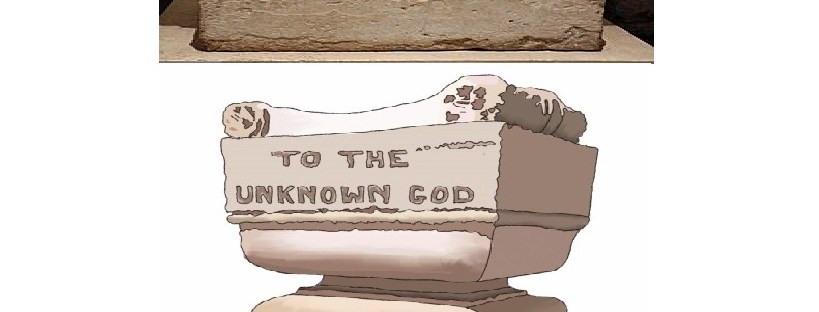
The evidence of a creator Entity lies in the practical demonstration of authority over mind and matter. The Unknown God, this addressing was postulated by Paul to the Athenians in Acts 17:v23; For as I walked around and looked carefully at your objects of worship, I even found an altar with this inscription: to an unknown god. So you are ignorant of the very thing you worship—and this is what I am going to proclaim to you.
Jeremiah 23:16; “Do not listen to what the prophets are prophesying to you; they fill you with false hopes. They speak visions from their own minds, not from the mouth of the Lord.” God warns the people that these prophets are simply projecting their own wishful thinking. They were telling the people “You will have peace” and “No harm will come to you” even while Jerusalem was on the brink of judgment, because that was what people wanted to hear.
Jeremiah 23:28; “‘The prophet who has a dream may tell his dream, but the one who has my word should speak my word faithfully. What has straw in common with wheat?’ declares the Lord.” God draws a sharp contrast between human dreams and His actual Word: Human Dreams (The Chaff/Straw): Lightweight, hollow, and offering zero spiritual nourishment. God’s True Word (The Wheat): Solid, pure, and life-sustaining. God tells them that if someone wants to share a subjective dream, fine—call it a dream. But they must stop dressing up their personal thoughts as absolute divine revelation.
Immediately following the wheat vs. straw comparison, God describes what a real message from Him actually feels like— Jeremiah 23:29:“‘Is not my word like fire,’ declares the Lord, ‘and like a hammer that breaks a rock in pieces?’” While the false prophets used comforting, fake dreams to lull people to sleep, God’s true Word cuts through deception, purifies like fire, and breaks down hard hearts. Jeremiah 23:32; “‘I am against those who prophesy false dreams,’ declares the Lord. ‘They tell them and lead my people astray with their reckless lies, yet I did not send or appoint them.’” God specifically warns that these self-proclaimed dreamers were making the nation forget God’s true laws and character, leading them into spiritual laziness.
In Jeremiah, God makes a clear distinction between subjective human experiences (dreams, internal feelings, personal impressions) and divine truth. He demands that those who claim to speak for Him speak with total integrity rather than passing off their own desires or dreams as a message from God.
Job 19:25-27; “For I know that my Redeemer lives, and at the last he will stand upon the earth. And after my skin has been thus destroyed, yet in my flesh I shall see God, whom I shall see for myself, and my eyes shall behold, and not another.” Psalm 27:13; “I believe that I shall look upon the goodness of the Lord in the land of the living!” Because both Job 19 and Psalm 27 express an intense hope of seeing God despite suffering, Christians have frequently combined them over the centuries in worship and liturgy. A famous example is the traditional Catholic burial hymn/antiphon “I Know That My Redeemer Lives” (Credo quod Redemptor meus vivit), which pairs Job’s declaration of his Redeemer with Psalm 27’s expectation of seeing God’s goodness in the land of the living.
God appeared to Abraham, Moses (Exodus 33:20;), and Elijah. The account regarding Abraham can be found in Genesis 18:1-15; While they appear as three men, the text makes it clear that this is a divine encounter. One of the figures is identified as the Lord (Yahweh) Himself—often interpreted in Christian theology as a theophany (a physical manifestation of God) or a christophany (an Old Testament appearance of Christ)—while the other two are angels (who later travel to Sodom in Genesis 19).
In the case of Elijah, the account can be found in 1 Kings 19:9-18; After his intense victory over the prophets of Baal on Mount Carmel, Elijah receives a death threat from Queen Jezebel and flees into the wilderness, exhausted and ready to give up. God provides him with food and strength to travel 40 days to Mount Horeb (also known as Mount Sinai), where he takes shelter in a cave. God instructs Elijah to go out and stand on the mountain, for the Lord is about to pass by: A Great Wind tears the mountain apart and shatters the rocks, but the Lord was not in the wind. An Earthquake shakes the ground, but the Lord was not in the earthquake. A Fire passes through, but the Lord was not in the fire. A Gentle Whisper (often translated as “a still small voice”) follows. When Elijah hears the quiet voice, he wraps his face in his cloak and steps to the entrance of the cave to speak with God. God gently reassures the worn-out prophet, reminds him that he is not alone, and gives him his next mission. Matthew 17:1–3 (New Testament): Elijah appears alongside Moses on the mountain during the Transfiguration, speaking directly with Jesus.
The Unknown God, according to Jesus Christ Himself in John 14:16-17; “And I will ask the Father, and he will give you another Helper, to be with you forever, even the Spirit of truth, whom the world cannot receive, because it neither sees him nor knows him. You know him, for he dwells with you and will be in you.” Physical vs. Spiritual Sight: The “world” relies strictly on material, physical senses. Because the Holy Spirit is an invisible, spiritual presence, non-believers who rely only on outward sight cannot perceive or recognize Him. Personal Experience: Jesus contrasts the world with His disciples. While the world lacks spiritual perception, believers “know” the Holy Spirit because He abides with them and lives inside them. John 3:16; For God so loved the world that he gave his one and only Son, that whoever believes in him shall not perish but have eternal life. John 14:12; “Very truly I tell you, whoever believes in me will do the works I have been doing. John 14:15; “If you love me, keep my commands.”John 15:14;“You are my friends if you do what I command.” Luke 6:46;“Why do you call me, ‘Lord, Lord,’ and do not do what I say?” Mathew 22:35-40;According to Jesus, the two most important commandments are to love God with all your heart and to love your neighbour as yourself.When a lawyer asks Jesus which commandment in the law is the greatest, Jesus answers: The First and Greatest Commandment: “‘Love the Lord your God with all your heart and with all your soul and with all your mind.’ This is the first and greatest commandment.” (v. 37–38) The Second Commandment: “And the second is like it: ‘Love your neighbour as yourself.’” (v. 39) Jesus then concludes with a powerful summary: “All the Law and the Prophets hang on these two commandments.” (v. 40) Jesus wasn’t creating brand-new laws from scratch here; He was quoting directly from the Hebrew Scriptures (the Old Testament): The First Commandment quotes Deuteronomy 6:5, part of the central Jewish prayer known as the Shema. The Second Commandment quotes Leviticus 19:18. By bringing these two together, Jesus showed that every other rule in Scripture—including the Ten Commandments—is simply a practical extension of loving God and loving other people. Is God abstract or real to you? If God is real to you, where is your evidence/proof (faith)? With whom lies the burden of proof? You or the One in whom you have faith?


