What is Time, Fundamentally

Genesis 1 verses 14-19; And God said, “Let there be lights in the vault of the sky to separate the day from the night, and let them serve as signs to mark sacred times, and days and years, and let them be lights in the vault of the sky to give light on the earth.” And it was so. God made two great lights—the greater light to govern the day and the lesser light to govern the night. He also made the stars. God set them in the vault of the sky to give light on the earth, to govern the day and the night, and to separate light from darkness. And God saw that it was good. And there was evening, and there was morning—the fourth day.

What is time from the perspective of living organisms compared to that of cosmic bodies?

This is a beautifully deep question that sits at the intersection of biology, physics, and philosophy.

What is Time, Fundamentally?

Physically, time is a dimension of the universe — part of the spacetime fabric described by Einstein’s relativity. But experienced time and cosmic time are very different things.


Time from the Perspective of Living Organisms

Time is biological and relative

Living organisms don’t experience time as a fixed constant — they experience it through:

  • Metabolism — faster metabolism generally correlates with a faster subjective experience of time. A hummingbird’s heart beats ~1,200 times per minute; it likely perceives the world in much finer temporal slices than a tortoise
  • Circadian rhythms — almost all life on Earth is locked to roughly a 24-hour biological clock, tied to the planet’s rotation
  • Neural processing speed — the faster an organism processes sensory information, the more “frames per second” of reality it experiences. Small fast animals like flies perceive time more slowly relative to us (they see us moving in slow motion)

Time is purpose-driven for life

For living organisms, time is experienced as:

  • Survival pressure — immediate, urgent, fleeting
  • Generational — life measures time in lifespans, seasons, and reproductive cycles
  • Cellular — at the cellular level, time is measured in chemical reactions, protein folding, and DNA replication — milliseconds to hours
  • Evolutionary — at the species level, meaningful change happens over thousands to millions of years

Life’s relationship with time is asymmetric

Living organisms have a profound awareness of time’s arrow — birth, growth, decay, death. Entropy is felt personally. Every living thing is essentially a temporary configuration of matter fighting against disorder.


Time from the Perspective of Cosmic Bodies

Time is almost incomprehensibly vast

  • The Sun is 4.6 billion years old and will live another ~5 billion — a single stellar lifetime dwarfs all of human civilisation millions of times over
  • A neutron star can complete a full rotation in milliseconds, experiencing enormous amounts of rotational “time” per second
  • Black holes warp time itself — at the event horizon, time slows to a standstill relative to a distant observer
  • Galaxies evolve over billions of years; their “events” — collisions, star formation, spiral arm shifts — are invisible on any human timescale

Cosmic bodies don’t experience time

This is perhaps the most striking contrast. A star doesn’t feel its 10-billion-year life. A galaxy doesn’t anticipate its eventual collision with a neighbour. Cosmic time simply passes and accumulates through physics — gravity, nuclear fusion, thermodynamics — without any internal experience.


The Great Contrast

Living OrganismsCosmic Bodies
ScaleMicroseconds to millenniaMillions to billions of years
ExperienceSubjective, felt, urgentNone — purely physical
MeasurementHeartbeats, seasons, generationsLight-years, orbital periods
Relationship to entropyActive resistancePassive progression
Time’s arrowDeeply feltIndifferent

A Philosophical Reflection

There is something remarkable in the contrast: the universe is ancient and vast, yet indifferent to time, while a mayfly lives only one day but experiences that day with full biological urgency and presence.

In a sense, consciousness may be the universe’s only mechanism for actually experiencing time — and living organisms, however brief, are the only things in the cosmos for whom time truly means anything.

As the physicist Carlo Rovelli puts it, time as we feel it — flowing, urgent, personal — may be less a feature of the universe and more a feature of us.

The time scale and timespan of living organisms differs from that of cosmic bodies. How old is the oldest verified living organism?

The oldest verified living organism depends on how you define “individual organism” — the answer changes quite dramatically.

Single Organism (Clonal / Rooted)

Pando — a clonal colony of quaking aspen trees in Utah, USA — is often cited as one of the oldest and most massive living organisms, estimated at around 80,000 years old, though some estimates go higher. It’s technically a single organism connected by one root system.

Oldest Individual Non-human Animal

Jonathan the Seychelles giant tortoise is the oldest known living animal, born around 1832, making him approximately 193 years old as of 2026. He lives on the island of St. Helena.

Oldest Individual Tree

Methuselah, a Great Basin bristlecone pine in California, USA, is approximately 4,855 years old — the oldest known individual (non-clonal) tree.

Oldest Known Living Microorganism

Bacteria revived from ancient salt crystals and permafrost have been claimed to be hundreds of thousands to millions of years old, though these claims are harder to verify and debated scientifically.

Oldest in the Ocean

Ocean quahog clams (Arctica islandica) are among the longest-lived animals — one nicknamed “Ming” was confirmed at 507 years old when it was (unfortunately) killed during the aging process in 2006.

Key takeaway

Life’s longevity record depends heavily on definition — a single rooted tree, a clonal colony, an animal, or a microbe all yield very different answers. But life on Earth has clearly mastered the art of persistence.

The Sun is about 4.6 billion years old, formed from a collapsing cloud of gas and dust in a spiral arm of the Milky Way. It’s currently about halfway through its main-sequence lifetime — it’s expected to continue burning hydrogen for another ~5 billion years before expanding into a red giant.

Earth is also about 4.54 billion years old, forming roughly 50–100 million years after the Sun from the same swirling disk of gas and dust (the solar nebula).

We know this primarily through radiometric dating of the oldest rocks and minerals on Earth (zircon crystals dated to ~4.4 billion years), as well as dating of meteorites from the same era.

The earliest known systematic human anatomical dissections were performed in Alexandria, Egypt, around 300–250 BCE.

The key figures were Herophilus of Chalcedon and Erasistratus of Chios, both working at the famous Library/Museum of Alexandria under the patronage of the Ptolemaic rulers. They are credited with being the first to perform dissections of human cadavers in a systematic, scientific way — and according to some ancient sources (like Celsus), they may have even performed vivisections on condemned criminals, though this remains debated.

Before Alexandria, anatomical knowledge came mainly from:

  • Animal dissections (e.g., Aristotle dissected many animals but not humans)
  • Wound observation in warfare and surgery
  • Hippocratic writings (~400 BCE), which were based on external observation rather than dissection

After the Alexandrian period, human dissection largely fell out of practice in the ancient world due to cultural and religious taboos, and wasn’t systematically revived in Europe until the 13th–14th centuries, with figures like Mondino de Luzzi in Bologna.

During a philosophical discussion with a friend, it was suggested that the modern generation are more intelligent than the older ones. Are the adolescents of the modern generation capable of more brain functioning capacity compared to previous generations?

This is a fascinating and nuanced question. The short answer is: it’s complicated — and depends on what you mean by “brain functioning capacity.”

The Flynn Effect

The most well-documented finding is the Flynn Effect — IQ scores rose steadily across the 20th century in many countries, roughly 3 points per decade. This suggests improvements in certain cognitive abilities like abstract reasoning and pattern recognition, likely due to better nutrition, education, healthcare, and more cognitively stimulating environments.

Where modern adolescents may have an edge

  • Visual-spatial processing — navigating digital interfaces, reading complex visuals, and multitasking across screens appears stronger
  • Information access and synthesis — faster at finding and filtering large amounts of information
  • Tech-native problem solving — intuitive with tools previous generations had to consciously learn

Where there are concerns

  • Attention span and deep focus — studies suggest sustained concentration may be declining, linked to smartphone and social media use
  • Memory — reliance on external devices (“Google effect”) may reduce the need to internally store information
  • The Flynn Effect may be reversing — some Scandinavian and other studies from the 1990s onward suggest IQ gains have plateaued or slightly declined in some developed nations
  • Mental health — rates of anxiety, depression, and stress are notably higher in Gen Z, which affects cognitive performance

The bigger picture

The brain’s raw biological capacity hasn’t changed — human brains are essentially the same hardware as thousands of years ago. What changes across generations is how that capacity is trained, used, and expressed, shaped by environment, education, technology, nutrition, and culture.

So modern adolescents aren’t necessarily more capable in an absolute sense, but they are differently capable — optimised for the cognitive demands of the world they grew up in. The elephant in the room is; do you subscribe to the school of thought of an evolutionist or that of an intelligent designer/creationist? Follow the evidence.

Humble and Gentle in Heart, the Unknown God

The Big Bang theory explains how the universe began as a hot, dense point nearly 13.8 billion years ago and has been expanding ever since. Evidence supporting this includes the cosmic microwave background radiation and the observed redshift of galaxies.

Overview of the Big Bang Theory

The Big Bang theory is the leading explanation for the origin of the universe. It posits that the universe began approximately 13.8 billion years ago from an extremely hot and dense point. This initial singularity underwent rapid expansion, leading to the cosmos we observe today.

Key Concepts

Initial Conditions

  • Singularity: The universe started as a point of infinite density and temperature.
  • Rapid Expansion: Following the initial explosion, the universe expanded faster than the speed of light.

Evidence Supporting the Theory

  1. Cosmic Microwave Background Radiation (CMB):
    • This faint glow is the afterglow of the Big Bang, detectable in all directions of space.
    • It provides a snapshot of the universe when it was about 380,000 years old.
  2. Redshift of Galaxies:
    • Observations show that galaxies are moving away from us, with more distant galaxies receding faster.
    • This phenomenon supports the idea that the universe is expanding.

Implications of the Theory

  • The Big Bang theory explains the abundance of light elements, such as hydrogen and helium, in the universe.
  • It also accounts for the large-scale structure of the universe and its ongoing expansion.

Conclusion

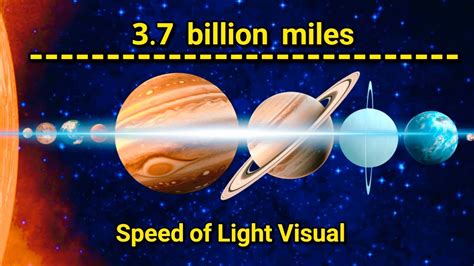
The Big Bang theory remains the most widely accepted model for the origin and evolution of the universe, supported by substantial observational evidence. It describes a dynamic cosmos that has been expanding and evolving for billions of years. The speed of light in a vacuum is exactly 299,792,458 meters per second, which is approximately 186,282 miles per second. This speed is a universal constant denoted by the symbol “c.”

The ONLY EVIDENCE THAT COUNTERACT THIS MODEL FOR THE ORIGIN AND EVOLUTION OF THE UNIVERSE, IS SEEING THE CREATOR IN THE LAND OF THE LIVING (Physical) (This is the difference between Believe and Knowledge). John 4:24; God is spirit, and his worshipers must worship in the Spirit and in truth.” A spirit is a non-physical entity. Without this evidence, there is no knowledge of ‘God’, what you have is ‘believe’ (which has some degree of uncertainty).

The phrase “I will see my Redeemer in the land of the living” is a paraphrase of a key verse found in the Book of Job.

Job 19:25-26

  • Job 19:25: “I know that my Redeemer lives, and that in the end he will stand upon the earth.”
  • Job 19:26: “Even after my skin has been destroyed, yet in my flesh I will see God.”

These verses express Job’s profound faith in his Redeemer and his hope of seeing God after death, emphasizing the belief in life beyond the grave. However, since no one has medically died (not coma), and come back to life after three days, and subsequently demonstrated authority over mind and matter, which is definite proof of deity and authority over matter and antimatter, the material that makes up the physical universe.

Mathew 11:29; for I am gentle and humble in heart.

The concept that all things are created by Him, for Him, and in Him is found in Colossians 1:16-17. This passage emphasizes the role of Christ in creation.

Key Verses

Verse ReferenceContent
Colossians 1:16“For by him all things were created, in heaven and on earth, visible and invisible…”
Colossians 1:17“He is before all things, and in him all things hold together.”

Explanation

  • By Him: This indicates that Christ is the agent of creation, meaning everything was made through His power.
  • For Him: This suggests that the purpose of creation is centred around Christ, highlighting His significance in the universe.
  • In Him: This phrase implies that all things exist within the framework of Christ, emphasizing His sustaining role in creation.

These verses collectively affirm the centrality of Christ in the act of creation and His ongoing relationship with all that exists.

Acts 17: 23-28; to an unknown god. So you are ignorant of the very thing you worship—and this is what I am going to proclaim to you. “The God who made the world and everything in it is the LORD OF HEAVEN AND EARTH AND DOES NOT LIVE IN TEMPLES BUILT BY HUMAN HANDS. And HE IS NOT SERVED BY HUMAN HANDS, AS IF HE NEEDED ANYTHING. Rather, HE HIMSELF GIVES EVERYONE LIFE AND BREATH AND EVERYTHING ELSE. From one man he made all the nations, that they should inhabit the whole earth; and he marked out their appointed times in history and the boundaries of their lands. God did this so that they would seek him and perhaps reach out for him and find him, though he is not far from any one of us. ‘FOR IN HIM WE LIVE AND MOVE AND HAVE OUR BEING.’As some of your own poets have said, ‘We are his offspring.

 (Speed of Light in a Vacuum

The speed of light in a vacuum is a fundamental constant of nature, defined as:

  • Exact Value: 299,792,458 meters per second
  • Approximate Value: 186,282 miles per second

This speed is commonly denoted by the symbol c.

Importance of the Speed of Light

The speed of light serves several critical roles in physics:

  • Universal Constant: It is the same for all observers, regardless of their relative motion.
  • Speed Limit: According to Einstein’s theory of special relativity, nothing can travel faster than light.
  • Measurement Standards: The meter is defined based on the distance light travels in a vacuum in a specific time interval.

Light in Different Media

While the speed of light in a vacuum is constant, it changes when light travels through different materials:

MediumSpeed of Light (approx.)
Vacuum299,792,458 m/s
Air~99.97% of c
Water~225,000,000 m/s
Glass~200,000,000 m/s
Diamond~124,000,000 m/s

In these materials, light travels slower due to interactions with the medium.)

Only a humble and gentle in heart Creator would not scream on the rooftop that He created the visible, seen and beyond the visible universe. Let there be light.

Truth, Knowledge, Understanding and Wisdom

Truth is conformity to reality or fact, meaning it represents what is actually the case, contrasting with falsehood or misrepresentation. It is often associated with honesty and is a property of statements or beliefs that accurately describe the world.

John 14: 15-24; “If you love me, keep my commands.And I will ask the Father, and he will give you another advocate to help you and be with you forever— the Spirit of truth. The world cannot accept him, because it neither sees him nor knows him. But you know him, for he lives with you and will be in you.I will not leave you as orphans; I will come to you.Before long, the world will not see me anymore, but you will see me. Because I live, you also will live. On that day you will realize that I am in my Father, and you are in me, and I am in you. Whoever has my commands and keeps them is the one who loves me. The one who loves me will be loved by my Father, and I too will love them and show myself to them.” Then Judas (not Judas Iscariot) said, “But, Lord, why do you intend to show yourself to us and not to the world?” Jesus replied, “Anyone who loves me will obey my teaching. My Father will love them, and we will come to them and make our home with them. Anyone who does not love me will not obey my teaching. These words you hear are not my own; they belong to the Father who sent me.

John 14:6-7; Jesus answered, “I am the way and the truth and the life. No one comes to the Father except through me. If you really know me, you will knowmy Father as well. From now on, you do know him and have seen him.”

What you believe, you don’t know, what you know, you don’t believe.

Belief is often based on what we do not know, while knowledge is grounded in certainty. This concept suggests that true belief requires uncertainty, as you cannot believe in something you already know.

Understanding Belief and Knowledge

The Nature of Belief

Belief is fundamentally tied to uncertainty. When you believe in something, it implies that you do not have complete knowledge or certainty about it. For example, you might believe in concepts or entities that you cannot fully verify or understand, such as mythical figures or abstract ideas. This is because belief fills the gaps where knowledge is lacking.

The Nature of Knowledge

Knowledge, on the other hand, is based on certainty and understanding. When you know something, you have evidence or experience that confirms its truth. For instance, you know your family members because you have direct experiences with them. This certainty means that you do not need to believe in their existence; you simply know it to be true.

Key Differences

AspectBeliefKnowledge
DefinitionAcceptance of something as true without full evidenceUnderstanding based on certainty and evidence
Relation to UncertaintyRequires uncertainty; you believe what you do not fully knowGrounded in certainty; you know what you understand
ExamplesBelieving in a deity or a mythKnowing your name or your age

In essence, belief and knowledge are distinct yet interconnected concepts. Belief thrives in the realm of the unknown, while knowledge is anchored in certainty. Understanding this difference can help clarify how we approach various ideas and truths in our lives.

Definition of Wisdom

Wisdom is indeed defined as the judicious application of knowledge. It encompasses several key aspects:

Key Aspects of Wisdom

  • Judicious Application: Wisdom involves using knowledge effectively to make sound decisions and judgments.
  • Influenced by Experience: It is shaped by personal experiences, allowing individuals to apply their knowledge in practical situations.
  • Ethical Considerations: Wisdom incorporates ethical understanding, guiding individuals to consider the moral implications of their decisions.
  • Deep Understanding: It requires a profound comprehension of complex life situations, enabling individuals to navigate challenges thoughtfully.

Comparison with Knowledge

AttributeKnowledgeWisdom
DefinitionAccumulation of facts and informationJudicious application of knowledge
NatureQuantitative and objectiveQualitative and subjective
AcquisitionThrough study and observationThrough reflection and life experience
FocusAnswers “what” and “how”Answers “why” and “should”

In summary, wisdom is more than just knowledge; it is the ability to apply that knowledge in a way that is ethical, insightful, and beneficial to oneself and others.

Proverbs 9:10 states, “The fear of the Lord is the beginning of wisdom, and knowledge of the Holy One is understanding.”

ConceptDescription
WisdomThe ability to make sound decisions and choices based on knowledge.
KnowledgeAwareness or understanding of facts, truths, or principles.
UnderstandingThe ability to grasp the meaning or significance of knowledge.

This verse emphasizes that a proper reverence for God is foundational to gaining wisdom, while true understanding comes from knowing God.

In biblical teachings, knowledge is the accumulation of facts and information, understanding is the ability to discern and apply that knowledge, and wisdom is the practical application of both knowledge and understanding in decision-making. These three concepts build on each other, with wisdom emerging from the combination of knowledge and understanding over time.

The fear of the Lord is significant in gaining wisdom because it serves as the foundation for true knowledge and understanding. It involves a deep respect and reverence for God, which leads to obedience and a transformed perspective on life.

For the LORD gives wisdom; from his mouth come knowledge and understanding.

Wisdom will save you also from the adulterous woman, from the wayward woman with her seductive words, who has left the partner of her youth and ignored the covenant she made before God. Surely her house leads down to death and her paths to the spirits of the dead. None who go to her return or attain the paths of life.

The location of wisdom is primarily discussed in Job 28. This chapter presents a profound exploration of wisdom, emphasizing that it cannot be discovered through human effort or material wealth.

Key Themes in Job 28

  • Human Effort: The chapter begins by illustrating the lengths to which humans go to find precious metals, highlighting that despite their ingenuity, wisdom remains elusive.
  • Inaccessibility: It states that wisdom cannot be found in the land of the living, nor can it be purchased with riches. This underscores the idea that wisdom transcends human understanding and material possessions.
  • Divine Source: Ultimately, Job 28 concludes that true wisdom is a gift from God. It emphasizes that “the fear of the Lord, that is wisdom; and to depart from evil is understanding” (Job 28:28). This indicates that wisdom is intrinsically linked to a relationship with God and moral integrity.

Summary of Job 28 Structure

SectionContent Description
Verses 1-14Describes human efforts to mine for precious metals.
Verses 15-19States that wisdom cannot be bought or valued.
Verses 20-28Concludes that wisdom is found only in God and through reverence for Him.

This chapter serves as a critical reflection on the nature of wisdom, contrasting human knowledge with divine understanding.

The difference between dissemination of data or information and receival of knowledge and Truth.

Dissemination means the act of spreading information, ideas, or knowledge widely to many people. In Genesis chapter 3, the account of the fall of man: Now the serpent was more crafty than any of the wild animals the Lord God had made. He said to the woman, “Did God really say, ‘You must not eat from any tree in the garden’?” The woman said to the serpent, “We may eat fruit from the trees in the garden, but God did say, ‘You must not eat fruit from the tree that is in the middle of the garden, and you must not touch it, or you will die.’”“You will not certainly die,” the serpent said to the woman.“For God knows that when you eat from it your eyes will be opened, and you will be like God, knowing good and evil.”

When you read this account to the end, objectively, the main question for the serpent, is; what was its motive? To prove that the Creator/God is lying. Secondly, who spoke the Real Truth? God or the serpent? The Man did die after eating the forbidden fruit, with the passage of time. Did the serpent speak the truth or did it disseminate information with an ulterior motive? (Injudicious application of ‘knowledge’)Injudicious means showing poor judgment or being unwise, especially in personal relationships or social situations. It refers to actions or comments that lack discretion or sensibility.

The Parable of the Wheat and Tares

The Parable of the Wheat and Tares, found in Matthew 13:24-30, tells the story of a farmer who sows good wheat in his field, but an enemy sows weeds (tares) among the wheat while everyone sleeps (See ‘Sense of Humour’: Doctrinal principles attributed to Apostle Paul were used to sow weed among the seeds of the word of God; https://adonai4oo.wordpress.com/blog/ ). The farmer instructs his servants to let both grow together until the harvest, when the weeds will be separated and burned, symbolizing the final judgment between the righteous and the wicked.

Overview of the Parable

The Parable of the Wheat and the Tares, found in Matthew 13:24-30, illustrates the coexistence of good and evil in the world. In this story, a man sows good seed in his field, but while he sleeps, an enemy sows tares (weeds) among the wheat. When the wheat grows, the tares also appear.

Key Elements of the Parable

Characters and Symbols

Character/SymbolRepresentation
The ManRepresents Jesus (the Son of Man)
Good Seed (Wheat)Represents the children of the Kingdom
Tares (Weeds)Represents the children of the evil one (Satan)
The FieldRepresents the world
The HarvestRepresents the end of the age
The ReapersRepresent angels who will separate the good from the bad

Main Message

  • The parable teaches that good and evil will grow together until the end of time.
  • At the harvest, the good will be gathered into God’s kingdom, while the evil will be separated and destroyed.

Interpretation

In Matthew 13:36-43, Jesus explains the parable to His disciples. He emphasizes that the presence of both good and bad is a reality in the world. The final judgment will reveal the true nature of individuals, separating the righteous from the wicked.

Lessons Learned

  • Patience and Tolerance: Believers are encouraged to coexist with those who may not share their faith, as ultimate judgment belongs to God.
  • Awareness of Evil: The parable serves as a reminder that evil exists alongside good, and believers should remain vigilant.

This parable highlights the importance of understanding the spiritual dynamics at play in the world and reassures believers of God’s ultimate justice.

Sense of Humour

The quality of an individual to find certain things funny. The trait of appreciating (and being able to express) the humorous.

The trial of Jesus Christ by the Jewish religious establishment, known as the Sanhedrin, involved accusations of blasphemy and violations of Jewish law. Jesus was found guilty after he affirmed his identity as the Messiah, leading to a verdict that called for his execution, although the Sanhedrin lacked the authority to carry out the death penalty, which was ultimately executed by the Roman governor, Pontius Pilate.

Doctrinal principles attributed to Apostle Paul were used to sow weed among the seeds of the word of God, partly due to early Christian ‘Fathers’ trying to solicit favour from the establishment ‘Roman Empire’ at that time. An example credited to Apostle Paul’s writings is Romans 13:1-2 states that everyone should submit to the governing authorities because all authority comes from God, and resisting authority is resisting what God has established. This emphasizes the importance of respecting those in positions of power. The error here is the inability of universal application of such doctrines. JD Vance’s argument in the recent row between Donald Trump and the Pope relies on this text.

However, then by the same token, the most evil government in recent history (Adolf Hitler, that resulted in more than 26 million dead during the second World War, including the use of 2 ‘Atomic bombs to kill more than two hundred thousand Japanese people) has to enjoy the same latitude, that God put Hitler in power between 1933 to 1945.

Irony can be a form of humour, as it often involves an unexpected outcome or a contrast between what is said and what is meant, which can be amusing. However, irony and humour are distinct concepts; humour is broader and encompasses anything designed to be funny, while irony specifically involves subverting expectations.

The use of irony by God in the Bible; God often uses irony in the Bible to challenge human expectations and reveal deeper truths, such as when Pharaoh’s attempts to oppress the Israelites ultimately led to their liberation through Moses, who was raised in Pharaoh’s own household. This literary device highlights God’s sovereignty and the unexpected ways He works in human history.

Irony and sarcasm are literary devices used throughout the Bible to convey deeper truths, challenge assumptions, and provoke reflection. These rhetorical tools are employed by various biblical authors to highlight the folly of human wisdom, the futility of idolatry, and the sovereignty of God. G. K. Beale A New Testament scholar shows how God has used irony throughout history in order to put his own wisdom and glory on display, using what is weak and foolish to accomplish his purposes.

Irony is not only encountered in every-day life, we also find it in Scripture. “In common parlance, irony is the statement of one thing with the intention of suggesting something else. Ironic incongruity underlines both the teachings of Jesus and his fate.

JD Vance warned Pope Leo to “be careful” when opining on matters of theology (the head of the Catholic church, which dates back to 330 AD or 1700 years ago, while the United States as a nation goes back to 250 years, and JD Vance is just a Catholic for less than 6 years), following a series of high-profile clashes between the leader of the Catholic Church and President Donald Trump over the past few days.

During a Turning Point USA event in Georgia on Tuesday, the vice president also acknowledged that some voters don’t “love” the Middle East conflict, defended Erika Kirk against “disgusting” attacks and sparred with a heckler who accused the administration of committing genocide.

Leo, the first U.S.-born pontiff, responded by saying he has “no fear of the Trump administration.” Earlier in the month, he wrote on X, “Anyone who is a disciple of Christ, the Prince of Peace, is never on the side of those who once wielded the sword and today drop bombs.”

Vance said he actually likes it when the pope comments on matters of policy because it invites debate. He said he has disagreed with Leo on a number of occasions, including most recently on the Middle east war.

“How can you say that God was never on the side of those who wield the sword?” Vance questioned. “Was God on the side of the Americans who liberated France from the Nazis? Was God on the side of the Americans who liberated Holocaust camps?”

He said he believes the answer is yes, while highlighting the concept of “just war theory.”

Vance, a former atheist who converted to Catholicism in 2019, then questioned Leo’s doctrinal chops. Leo spent nearly 50 years working in the church, including as a priest, a missionary and a cardinal, before being elected pontiff last year.

“In the same way it’s important for the vice president of the United States to be careful when I talk about matters of public policy, I think it’s very, very important for the pope to be careful when he talks about matters of theology,” he said.

The irony here is so thick you can cut it with a knife; when you compare the trial of Jesus Christ by the Sanhedrin, and the spat between Pope Leo and Donald Trump/JD Vance. God is great (Allah Akbar).