The Fear of God the Holy Spirit 

Most people do not fear God. How can you fear what or whom you do not know or have not seen. Unless God has manifested Himself to you as ‘The Fear of Isaac’, you do not fear Him. Psalm 130: 4; But there is forgiveness with You, That You may be feared and worshipped [with submissive wonder].

Genesis 31:42: Jacob uses the title while confronting his father-in-law, Laban. Jacob states that if the God of Abraham and the “Fear of Isaac” had not been with him, Laban would have sent him away empty-handed. If the God of my father, the God of Abraham, and [the Feared One] of Isaac, had not been with me, most certainly you would have sent me away now empty-handed. God has seen my affliction and humiliation and the [exhausting] labour of my hands, so He rendered judgement and rebuked you last night.”

Genesis 31:53: Jacob makes a solemn covenant oath with Laban. Instead of swearing by idols or ordinary terms, Jacob swears by the “Fear of his father Isaac”. The God of Abraham [your father] and the God of Nahor [my father], and the god [the image of worship] of their father [Terah, an idolater], judge between us.” But Jacob swore [only] by [the one true God] the Fear of his father Isaac.

Meaning of the Title

Reverence and Awe: The Hebrew word used (pahad) translates to dread, trembling, or deep reverential awe.

Personal Faith: It highlights the profound, personal relationship and deep respect that Isaac had for God, which Jacob claimed as his own family heritage rather than relying on Laban’s household idols.

The Unforgivable Sin: Jesus warned about “blasphemy against the Holy Spirit” being an unforgivable sin (Matthew 12:31-32, Mark 3:29, Luke 12:10). While this severe warning brings deep reverence and solemnity, Jesus issued it as a warning against hardening one’s heart and attributing God’s goodness to evil, rather than a command to be afraid of the Spirit Himself. Mathew 12: 30-31; “Therefore I say to you, every sin and blasphemy [every evil, abusive, injurious speaking, or indignity against sacred things] will be forgiven people, but blasphemy against the [Holy] Spirit will not be forgiven. Whoever speaks a word against the Son of Man will be forgiven; but whoever speaks against the Holy Spirit [by attributing the miracles done by Me to Satan] will not be forgiven, either in this age or in the age to come.

“And do not fear those who kill the body but cannot kill the soul. Rather fear Him who can destroy both soul and body in hell.”

Matthew 10:28 (ESV)

Context: Jesus is instructing His twelve apostles before sending them out to preach. He warns them of persecution and opposition, urging them to prioritize eternal spiritual integrity over physical safety.

Gospel of Luke

“I tell you, my friends, do not fear those who kill the body, and after that have nothing more that they can do. But I will warn you whom to fear: fear Him who, after He has killed, has authority to cast into hell. Yes, I tell you, fear Him!”

Luke 12:4–5 (ESV)

Context: Jesus speaks to a crowd of thousands, teaching His disciples to beware of hypocrisy and to stand bold in their faith without fear of human judgement or physical harm.
The statement “the fear of the Lord is the beginning of wisdom” appears directly in two main places in the Old Testament, with closely related phrasing appearing in a third.

Proverbs 9:10

“The fear of the Lord is the beginning of wisdom,

and the knowledge of the Holy One is insight.”

— Proverbs 9:10 (ESV)

Psalm 111:10

“The fear of the Lord is the beginning of wisdom;

all those who practice it have a good understanding.

His praise endures forever!”

— Psalm 111:10 (ESV)

Related Passages

Proverbs 1:7: “The fear of the Lord is the beginning of knowledge; fools despise wisdom and instruction.”

Job 28:28: “And he said to man, ‘Behold, the fear of the Lord, that is wisdom, and to turn away from evil is understanding.’”

The Spirit of the Fear of the Lord: Old Testament prophecy in Isaiah 11:2 lists “the Spirit of the fear of the Lord” as one of the manifestations of the Holy Spirit. In biblical terms, the “fear of the Lord” means profound reverence, awe, and respect for God’s holiness, not a paralyzing dread or terror. Isaiah 11: 1-5; Then a Shoot (the Messiah) will spring from the stock of Jesse [David’s father], And a Branch from his roots will bear fruit. And the Spirit of the Lord will rest on Him— The Spirit of wisdom and understanding, The Spirit of counsel and strength, The Spirit of knowledge and of the [reverential and obedient] FEAR of the Lord— And He will delight in the fear of the Lord, And He will not judge by what His eyes see, Nor make decisions by what His ears hear; But with righteousness and justice He will judge the poor, And decide with fairness for the downtrodden of the earth; And He shall strike the earth with the rod of His mouth, And with the breath of His lips He shall slay the wicked. And righteousness will be the belt around His loins, And faithfulness the belt around His waist.

Psalm 34: 7-11; The angel of the Lord encamps around those who fear Him [with awe-inspired reverence and worship Him with obedience],
And He rescues [each of] them. O taste and see that the Lord [our God] is good; How blessed [fortunate, prosperous, and favoured by God] is the man who takes refuge in Him.O [reverently] fear the Lord, you His saints (believers, holy ones); For to those who fear Him there is no want. The young lions lack [food] and grow hungry, But they who seek the Lord will not lack any good thing. Come, you children, listen to me; I will teach you to fear the Lord [with awe-inspired reverence and worship Him with obedience].

The Helper and Comforter: Jesus consistently described the Holy Spirit as a helper, counsellor, and comforter who would dwell with and in believers, guiding them into truth rather than frightening them (John 14:16-26). This does not imply a contradiction in terms and understanding. The two truths are not mutually exclusive. When the Spirit of the Lord has manifested Himself as ‘The Fear of Isaac’ to you, then He will Comfort you(Do not Fear, if you have not been given a reason to fear, then there is no point in comforting you with ‘do not fear’). Without the manifestation of the Spirit Himself, there is no reason to fear Him. In conclusion, if the Spirit of the Lord has not manifested Himself to you yet, take comfort in Jesus’ interaction with Thomas which occurs eight days after His resurrection, recorded in John 20:26–29.
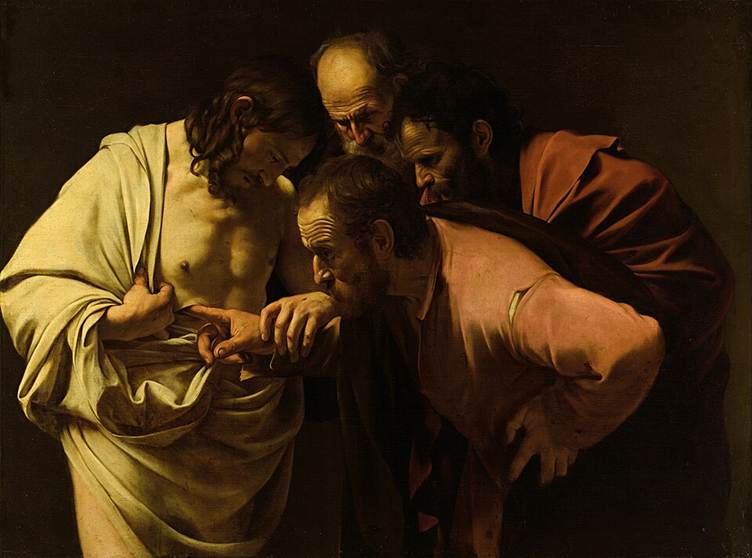
When Jesus appeared in the locked room where the disciples were gathered, He spoke directly to Thomas: The Greeting to the Group

“Peace be with you.”

John 20:26

The Invitation to Thomas

Addressing Thomas’s previous declaration that he would not believe unless he touched the nail marks and the side wound, Jesus said:

“Put your finger here, and see my hands; and put out your hand, and place it in my side. Do not disbelieve, but believe.”

John 20:27 (ESV)

Thomas’s Response

Thomas immediately worshipped Him, saying:

“My Lord and my God!”

John 20:28

The Final Blessing

Jesus concluded with a beatitude for future believers:“Have you believed because you have seen me? Blessed are those who have not seen and yet have believed.”John 20:29
The Temple of God Spirit and Non-physical

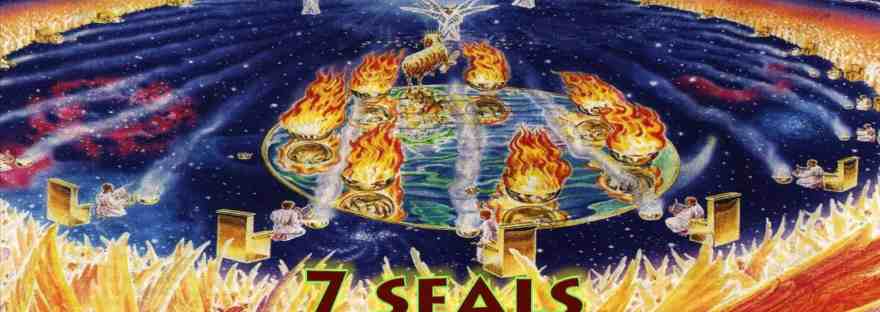
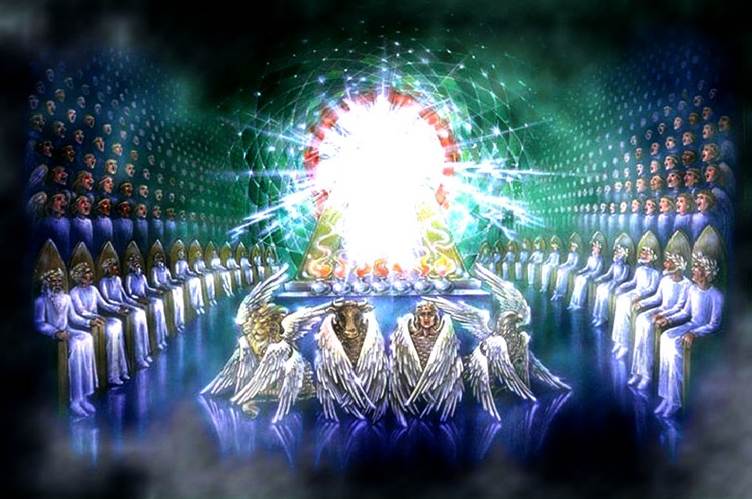
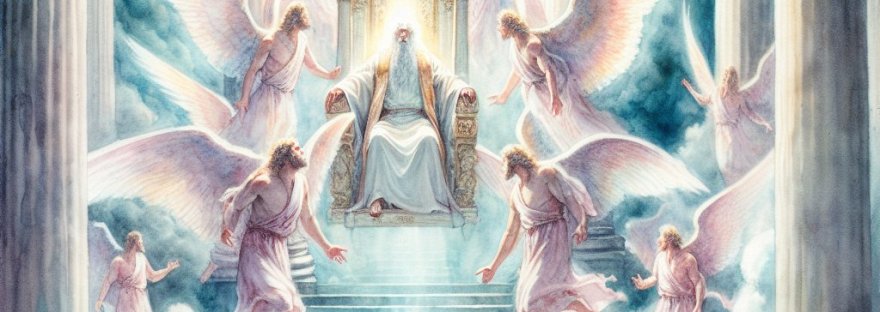
Isaiah 6: 1-4; In the year that King Uzziah died, I saw the Lord sitting upon his throne, high and exalted. The train of his robe filled the Temple. The seraphim stood above him. Each had six wings: with two he covered his face, and with two he covered his feet, and with two he was flying. They kept on calling to each other: “Holy, holy, holy is the Lord of the Heavenly Armies! The whole earth is full of his glory!” The foundations of the thresholds quaked at the sound of those who kept calling out, and the Temple was filled with smoke.

John 4: 24; God is spirit, and those who worship him must worship in spirit and truth.” When it is said that God is transcendental, at its core, transcendental describes anything that goes beyond, surpasses, or exists independent of normal human experience or physical limits. It would therefore be a contradiction of terms, and understanding, to postulate that the temple of God is located within space and time. Physical man is part of the physical universe, subjected to birth, temporal existence, and entropy/death. Therefore to suggest that God the Spirit’s temple is located within a temporal physical object, that is subject to entropy, is implying that the Eternal being has a temple that is not eternal.

Where is God? Is God in the Temple of Jerusalem? Is God in the Vatican? Is God in your local church or Temple? Is God on a particular mountain or hill? Is God in a particular river, stream or valley?

Whenever I ask people this particular question, I get two different answers; some point to the skies, while others point to the area of their heart. There is nothing wrong with both answers. However, the answer as stated by God the Son, Jesus Christ, is [Mathew 6:9], ‘Our Father in heaven’. So God is in Heaven. Furthermore, according to Acts 17:24; The God who made the world and everything in it is the Lord of heaven and earth and does not live in temples built by human hands.

A relative of mine once said “I beg you in the name of God”, I responded by saying; “Never say that to me”. Leave God out of it, God is in Heaven, you and I are here on earth. How can I say that, you may ask. When we take a look at the Scriptures as taught to us by Jesus Christ, in Mathew 5:33-37; “Again, you have heard that it was said to the people long ago, ‘Do not break your oath, but fulfill to the Lord the vows you have made.’ But I tell you, do not swear an oath at all: either by heaven, for it is God’s throne; or by the earth, for it is his footstool; or by Jerusalem, for it is the city of the Great King. And do not swear by your head, for you cannot make even one hair white or black. All you need to say is simply ‘Yes’ or ‘No’; anything beyond this comes from the evil one.

Therefore, this leads us to the next and entirely different question: Where is Heaven? Is Heaven a physical place? The answer to the latter question is; Heaven is not a physical place. While the answer to the former can be found in the Scriptures, as answered by Jesus Christ in Luke 17:20-21; Once, on being asked by the Pharisees when the kingdom of God would come, Jesus replied, “The coming of the kingdom of God is not something that can be observed, nor will people say, ‘Here it is,’ or ‘There it is,’ because the kingdom of God is in your midst [or is within you].” The Kingdom of God or the House of God or Heaven is not a physical place, however it is in our midst. God is omnipresent, Omnipresent means present everywhere at the same time. It comes from the Latin prefix omni- (meaning “all”) and praesens (meaning “present”).In most monotheistic religions (such as Christianity, Judaism, and Islam), omnipresence is one of the classic attributes of God, alongside omniscience (all-knowing) and omnipotence (all-powerful). It implies that the divine nature is not restricted by physical boundaries, location, or time, but is fully present throughout all of creation simultaneously. The temple of God (and is in Heaven where His throne is, not a physical entity, but in the spiritual realm), is a distinct and separate concept from the omnipresence nature of God. God’s house/temple is in Heaven, and not at the Vatican, or any other physical location, that you (a physical being)choose to worship Him. God is spirit, and those that worship Him do so in spirit and in truth. When you peddle in lies and falsehood, you do not worship Him.

Allusions, Perceptions, Reality, and the Unknown God

Faith is the evidence given by the Object/Entity in whom it resides to those/subjects that have placed their trust, belief therein. Hebrews 11v1; Now faith is confidence in what we hope for and assurance about what we do not see. Exodus 33:20; “But,” he said, “you cannot see my face, for no one may see me and live.” Context: Moses asks to see God’s full glory. God protects Moses by placing him in the crevice of a rock, covering him with His hand as He passes by, and only letting Moses see His “back” so he wouldn’t be destroyed by the full magnitude of God’s presence. John 1:18; “No one has ever seen God, but the one and only Son, who is himself God and is in closest relationship with the Father, has made him known.” 1 John 4:12; “No one has ever seen God; but if we love one another, God lives in us and his love is made complete in us.”

An allusion is a brief, indirect reference to a well-known person, place, event, literary work, or piece of art. Instead of explaining something in detail, the writer or speaker assumes you’ll recognize the connection and get the point instantly (think of dreams and visions). Perception is the mental process of organizing, interpreting, and making sense of sensory information from your environment.

While sensation is the raw data collected by your senses (lights, sounds, textures), perception is how your brain decodes that data to give it meaning.

The Two-Step Process

  1. Sensation (The Input): Your eyes detect light waves reflecting off a furry, four-legged animal.
  2. Perception (The Interpretation): Your brain compares that visual data to past experiences and concludes, “That’s a friendly dog.”

Key Factors That Shape Perception

Perception isn’t an exact recording of reality—it’s an interpretation heavily influenced by several factors:

  • Context: A loud bang at a fireworks display feels normal; the same bang in a quiet library triggers fear.
  • Expectations & Bias: We often perceive what we expect to see or hear based on prior beliefs (think of self-fulfilling prophecies).
  • Past Experience: A mechanic hears a subtle engine rattle that a passenger completely misses.
  • Emotional State: When you’re anxious, neutral faces can easily be perceived as hostile or judgemental.

In Short: Sensation is receiving the signal; perception is understanding the message.

Reality is the state of things as they actually exist, independent of human beliefs, concepts, or perceptions.

It encompasses everything that is real—objects, forces, events, and truths—regardless of whether we can see, measure, or understand them.

The Two Dimensions of Reality

When discussing reality, philosophers and scientists generally divide it into two main lenses:

1. Objective Reality (The Physical Universe)

This is reality as it exists on its own. A tree falling in an empty forest makes physical sound waves, whether anyone is around to hear it or not.

  • Key feature: It stays the same regardless of who observes it.
  • Examples: Gravity, light, chemical reactions, the passage of time.

2. Subjective Reality (The Human Experience)

This is reality as filtered through your mind, senses, and personal context. Because no two brains interpret sensory data identically, everyone experiences a slightly different version of the world.

  • Key feature: It depends entirely on individual perception, mood, culture, and memory.
  • Examples: Pain, beauty, taste, personal beliefs, emotional experiences.

Reality vs. Perception

The main tension with reality is that humans never experience pure objective reality directly.

The Bridge: Objective reality is the raw signal (atoms, energy, physical laws). Perception is the map your brain builds to navigate it. The map is useful, but it isn’t the physical territory itself.

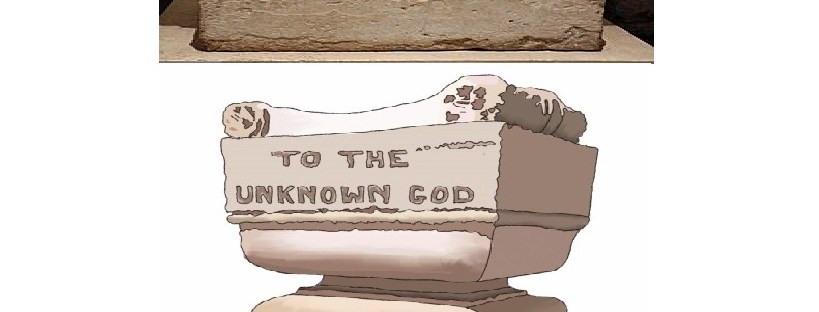
The evidence of a creator Entity lies in the practical demonstration of authority over mind and matter. The Unknown God, this addressing was postulated by Paul to the Athenians in Acts 17:v23; For as I walked around and looked carefully at your objects of worship, I even found an altar with this inscription: to an unknown god. So you are ignorant of the very thing you worship—and this is what I am going to proclaim to you.

Jeremiah 23:16; “Do not listen to what the prophets are prophesying to you; they fill you with false hopes. They speak visions from their own minds, not from the mouth of the Lord.” God warns the people that these prophets are simply projecting their own wishful thinking. They were telling the people “You will have peace” and “No harm will come to you” even while Jerusalem was on the brink of judgment, because that was what people wanted to hear.

Jeremiah 23:28; “‘The prophet who has a dream may tell his dream, but the one who has my word should speak my word faithfully. What has straw in common with wheat?’ declares the Lord.” God draws a sharp contrast between human dreams and His actual Word: Human Dreams (The Chaff/Straw): Lightweight, hollow, and offering zero spiritual nourishment. God’s True Word (The Wheat): Solid, pure, and life-sustaining. God tells them that if someone wants to share a subjective dream, fine—call it a dream. But they must stop dressing up their personal thoughts as absolute divine revelation.

Immediately following the wheat vs. straw comparison, God describes what a real message from Him actually feels like— Jeremiah 23:29:“‘Is not my word like fire,’ declares the Lord, ‘and like a hammer that breaks a rock in pieces?’” While the false prophets used comforting, fake dreams to lull people to sleep, God’s true Word cuts through deception, purifies like fire, and breaks down hard hearts. Jeremiah 23:32; “‘I am against those who prophesy false dreams,’ declares the Lord. ‘They tell them and lead my people astray with their reckless lies, yet I did not send or appoint them.’” God specifically warns that these self-proclaimed dreamers were making the nation forget God’s true laws and character, leading them into spiritual laziness.

In Jeremiah, God makes a clear distinction between subjective human experiences (dreams, internal feelings, personal impressions) and divine truth. He demands that those who claim to speak for Him speak with total integrity rather than passing off their own desires or dreams as a message from God.

Job 19:25-27; “For I know that my Redeemer lives, and at the last he will stand upon the earth. And after my skin has been thus destroyed, yet in my flesh I shall see God, whom I shall see for myself, and my eyes shall behold, and not another.”  Psalm 27:13; “I believe that I shall look upon the goodness of the Lord in the land of the living!” Because both Job 19 and Psalm 27 express an intense hope of seeing God despite suffering, Christians have frequently combined them over the centuries in worship and liturgy. A famous example is the traditional Catholic burial hymn/antiphon “I Know That My Redeemer Lives” (Credo quod Redemptor meus vivit), which pairs Job’s declaration of his Redeemer with Psalm 27’s expectation of seeing God’s goodness in the land of the living.

God appeared to Abraham, Moses (Exodus 33:20;), and Elijah. The account regarding Abraham can be found in Genesis 18:1-15; While they appear as three men, the text makes it clear that this is a divine encounter. One of the figures is identified as the Lord (Yahweh) Himself—often interpreted in Christian theology as a theophany (a physical manifestation of God) or a christophany (an Old Testament appearance of Christ)—while the other two are angels (who later travel to Sodom in Genesis 19).

In the case of Elijah, the account can be found in 1 Kings 19:9-18; After his intense victory over the prophets of Baal on Mount Carmel, Elijah receives a death threat from Queen Jezebel and flees into the wilderness, exhausted and ready to give up. God provides him with food and strength to travel 40 days to Mount Horeb (also known as Mount Sinai), where he takes shelter in a cave. God instructs Elijah to go out and stand on the mountain, for the Lord is about to pass by: A Great Wind tears the mountain apart and shatters the rocks, but the Lord was not in the wind. An Earthquake shakes the ground, but the Lord was not in the earthquake. A Fire passes through, but the Lord was not in the fire. A Gentle Whisper (often translated as “a still small voice”) follows. When Elijah hears the quiet voice, he wraps his face in his cloak and steps to the entrance of the cave to speak with God. God gently reassures the worn-out prophet, reminds him that he is not alone, and gives him his next mission. Matthew 17:1–3 (New Testament): Elijah appears alongside Moses on the mountain during the Transfiguration, speaking directly with Jesus.

The Unknown God, according to Jesus Christ Himself in John 14:16-17; “And I will ask the Father, and he will give you another Helper, to be with you forever, even the Spirit of truth, whom the world cannot receive, because it neither sees him nor knows him. You know him, for he dwells with you and will be in you.” Physical vs. Spiritual Sight: The “world” relies strictly on material, physical senses. Because the Holy Spirit is an invisible, spiritual presence, non-believers who rely only on outward sight cannot perceive or recognize Him. Personal Experience: Jesus contrasts the world with His disciples. While the world lacks spiritual perception, believers “know” the Holy Spirit because He abides with them and lives inside them. John 3:16; For God so loved the world that he gave his one and only Son, that whoever believes in him shall not perish but have eternal life. John 14:12; “Very truly I tell you, whoever believes in me will do the works I have been doing. John 14:15; “If you love me, keep my commands.”John 15:14;“You are my friends if you do what I command.” Luke 6:46;“Why do you call me, ‘Lord, Lord,’ and do not do what I say?” Mathew 22:35-40;According to Jesus, the two most important commandments are to love God with all your heart and to love your neighbour as yourself.When a lawyer asks Jesus which commandment in the law is the greatest, Jesus answers: The First and Greatest Commandment: “‘Love the Lord your God with all your heart and with all your soul and with all your mind.’ This is the first and greatest commandment.” (v. 37–38) The Second Commandment: “And the second is like it: ‘Love your neighbour as yourself.’” (v. 39) Jesus then concludes with a powerful summary: “All the Law and the Prophets hang on these two commandments.” (v. 40) Jesus wasn’t creating brand-new laws from scratch here; He was quoting directly from the Hebrew Scriptures (the Old Testament): The First Commandment quotes Deuteronomy 6:5, part of the central Jewish prayer known as the Shema. The Second Commandment quotes Leviticus 19:18. By bringing these two together, Jesus showed that every other rule in Scripture—including the Ten Commandments—is simply a practical extension of loving God and loving other people. Is God abstract or real to you? If God is real to you, where is your evidence/proof (faith)? With whom lies the burden of proof? You or the One in whom you have faith?

The Throne and the difference between information and Knowledge

In a philosophical/theological discussion that incorporates the efficacy of prayer, and with whom lies the initiative of being born again by the Holy Spirit, a school of thought strongly advocates persistent prayer (see doctrines advocated by Paul), and suggests that the initiative lies with man. However, this contradicts the teachings of Christ, and the summation of the prophets in the Hebrew Bible (Old Testament). In the opposing schools of thought between Pauline doctrine, and the teachings of Christ, the tie-breaker lies in the scriptures in Proverbs 2:6; For the Lord gives wisdom; from his mouth come knowledge and understanding.

Let us dive in, Jesus Christ is quoted in Matthew 7: 7-8; “Ask and it will be given to you; seek and you will find; knock and the door will be opened to you.For everyone who asks receives; the one who seeks finds; and to the one who knocks, the door will be opened. This was pointed out by the party espousing that the initiative lies with man, to seek, and to knock. Furthermore, in Matthew 6:33; But seek first his kingdom and his righteousness, and all these things will be given to you as well. However, there is a caveat, Jesus Christ taught that prayers should be short, concise, and sincere, in Mark 12: 38-40; As he taught, Jesus said, “Watch out for the teachers of the law. They like to walk around in flowing robes and be greeted with respect in the marketplaces, and have the most important seats in the synagogues and the places of honour at banquets. They devour widows’ houses and for a show make lengthy prayers. These men will be punished most severely.” In Matthew 6:5-8; “And when you pray, do not be like the hypocrites, for they love to pray standing in the synagogues and on the street corners to be seen by others. Truly I tell you, they have received their reward in full. But when you pray, go into your room, close the door and pray to your Father, who is unseen. Then your Father, who sees what is done in secret, will reward you. And when you pray, do not keep on babbling like pagans, for they think they will be heard because of their many words. Do not be like them, for your Father knows what you need before you ask him.

In approaching the issue of seeking God, the Holy Spirit in the Book of Psalms, Psalm 24: 3-6; Who may ascend the mountain of the Lord? Who may stand in his holy place? The one who has clean hands and a pure heart, who does not trust in an idol or swear by a false god. They will receive blessing from the Lord and vindication from God their Saviour. Such is the generation of those who seek him, who seek your face, God of Jacob. This brings us to a conundrum, where is the man, whose hands are clean, and whose heart is pure. Where is the man, who has never had an impure thought? Because as Christ said even our thoughts will be judged. Therefore, who is the man who by his own volition can seek God, and appear in His presence. And before we start engaging in tautology generated by Christ being the Son of God (though Christ mostly refer to himself as Son of Man), it is the Holy Spirit who gives birth to new spirit beings, and not beings that are dead or separated from God the Holy Spirit, that calls forth their own spiritual birth. So what is the way out of this spiritual and philosophical cul-de-sac?

The word of God, informs us in Jeremiah 31: 34-35; “Behold, the days are coming, says the Lord, when I will make a new covenant with the house of Israel and with the house of Judah— not according to the covenant that I made with their fathers in the day that I took them by the hand to lead them out of the land of Egypt, My covenant which they broke, though I was a husband to them, says the Lord.But this is the covenant that I will make with the house of Israel after those days, says the Lord: I will put My law in their minds, and write it on their hearts; and I will be their God, and they shall be My people. No more shall every man teach his neighbour, and every man his brother, saying, ‘Know the Lord,’ for they all shall know Me, from the least of them to the greatest of them, says the Lord. For I will forgive their iniquity, and their sin I will remember no more.”

However, before God writes on man’s heart, we are informed in Ezekiel 11:19; “I will give them an undivided heart and put a new spirit in them; I will remove from them their heart of stone and give them a heart of flesh.” This is a clear statement from Jesus Christ, the Holy Spirit, that the initiative lies with the Holy Spirit, and not with man. This perspective is leading us out of the cul-de-sac, in John 3: 3-6; Jesus answered and said to him, “Most assuredly, I say to you, unless one is born again, he cannot see the kingdom of God.” Nicodemus said to Him, “How can a man be born when he is old? Can he enter a second time into his mother’s womb and be born?” Jesus answered, “Most assuredly, I say to you, unless one is born of water and the Spirit, he cannot enter the kingdom of God. That which is born of the flesh is flesh (cue, the pastors, prophets, and church leaders baptising with water, citing literal and specific instructions given by Jesus Christ to specific disciples), and that which is born of the Spirit is spirit.

Finally, in John 3:13; No one has ascended to heaven but He who came down from heaven, that is, the Son of Man who is in heaven. Does this mean that Jesus Christ, the Son of Man is God the Father, God the Son, and God the Holy Spirit? In Matthew 5: 34-35; But I say to you, do not swear at all: neither by heaven, for it is God’s throne;nor by the earth, for it is His footstool; nor by Jerusalem, for it is the city of the great King. I suppose those who seek Him out of their own volition, would have to pose the question to Him, when they find Him. This publisher is not advocating not seeking God.

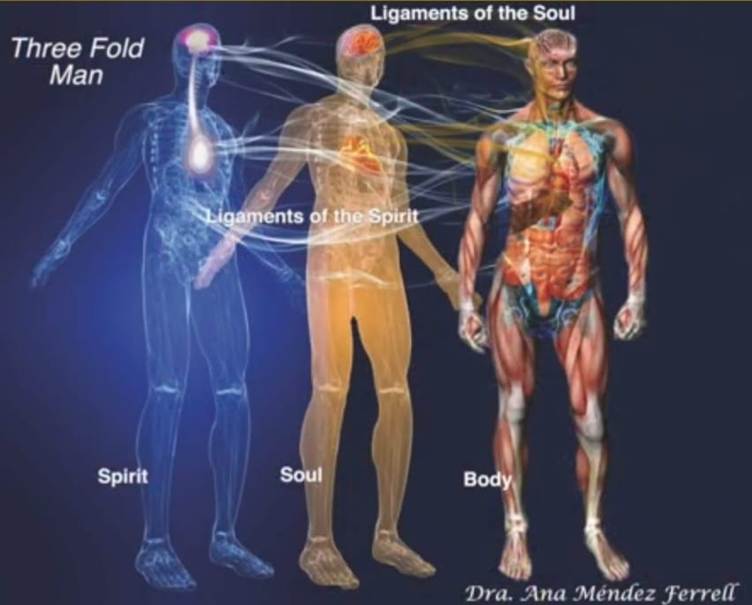
The ‘Anatomy’ of Man; Body, Soul and spirit

Genesis chapter 3 verse 21; The Lord God made garments of skin for Adam and his wife and clothed them. What is the garment of skin and why did God make it? Is it the  skin of lambs or goat? Is this text to be taken literarily or metaphorically? What is the nature of a man? Can the nature of a man be transmitted or inherited by its offspring? Do men possess a soul and or a spirit? Did Adam and Eve spiritually died (metaphorically) with the fall in the garden of Eden?

Is the soul and or the spirit, a physical entity? What is Hell? Does Hell mean separation from God? Does Hell mean lack of communion with God? John chapter 4 verse 24; God is spirit, and his worshippers must worship in the Spirit and in truth.”

1. The Body (Physical)

  • Function: The material vehicle that interacts with the physical world.
  • Connection: Uses the five physical senses (sight, hearing, smell, taste, touch) to experience the environment.
  • Concept: Often referred to in scripture as the “vessel” or “earth suit” that houses the soul and spirit.

2. The Soul (Immaterial – Psychological)

  • Function: The command centre of human personality, self-awareness, and intellect.
  • Connection: Composed of the mind (reasoning and imagination), will (decision-making), and emotions (feelings and desires).
  • Concept: It is the bridge between the physical body and the unseen spiritual realm.

3. The Spirit (Immaterial – Spiritual)

  • Function: The innermost, deepest part of a human that relates directly to the spiritual realm and to God.
  • Connection: Operates through spiritual faculties like conscience (knowing right from wrong), intuition (knowing without reasoning), and communion (worship and prayer).
  • Concept: In many traditions, it is considered dormant or dead to God until a spiritual awakening occurs, but becomes the dwelling place for the Holy Spirit for believers.
  • Interaction and Harmony
  • These three parts form a unified whole. The spirit contacts God, the soul governs your personality and mental state, and the body expresses these inward realities to the physical world. Imbalance in one area—such as neglecting physical health or experiencing emotional turmoil—often negatively impacts the other components.

Here’s a clear breakdown of what Jesus said in the Gospel accounts regarding the soul and spirit of man:


The Soul (psychē in Greek)

Jesus spoke about the soul quite frequently. Key references include:

  • Matthew 10:28 — He warned not to fear those who kill the body but cannot kill the soul, but rather to fear God who can destroy both soul and body.
  • Matthew 16:26 — “What does it profit a man if he gains the whole world but forfeits his soul?” This is one of his most famous sayings.
  • Mark 8:36–37 — A parallel passage to the above, emphasising the soul’s supreme value.
  • Matthew 11:29 — “You will find rest for your souls.” Here Jesus uses soul to refer to the deep inner life of a person.
  • Luke 12:19–20 — In the Parable of the Rich Fool, God addresses the man: “You fool! This very night your soul will be required of you.” Jesus uses psychē to mean the life/soul that belongs to God.
  • John 10:11, 15, 17 — Jesus repeatedly says he lays down his psychē (soul/life) for the sheep, showing the soul as the seat of sacrificial self-giving.
  • John 12:27 — “Now my soul (psychē) is troubled.” Jesus speaks of his own soul in anguish before the crucifixion.

The Spirit (pneuma in Greek)

Jesus spoke less frequently about the spirit of man specifically, but there are notable instances:

  • Matthew 5:3 — “Blessed are the poor in spirit” — referring to humility and dependence on God in one’s inner spirit.
  • Matthew 26:41 — “The spirit is willing, but the flesh is weak.” Here Jesus acknowledges the human spirit as capable of godly desire, yet still limited.
  • Luke 23:46 — On the cross, Jesus cried, “Father, into your hands I commit my spirit” (pneuma) — using the word for his own departing spirit at death.
  • John 3:5–6 — In his conversation with Nicodemus, Jesus distinguishes between being born of the flesh and born of the Spirit, touching on the spirit’s role in spiritual rebirth.
  • John 4:23–24 — Jesus tells the Samaritan woman that true worshippers will worship the Father “in spirit and in truth,” pointing to the human spirit as the organ of true worship.
  • John 11:33; 13:21 — Jesus is described as being “troubled in spirit” (pneuma), showing the spirit as the seat of deep emotion.

Summary

TermGreekJesus’ Emphasis
SoulpsychēThe eternal inner life; its value surpasses all earthly things; can be lost or saved
SpiritpneumaThe God-ward faculty; the organ of worship, prayer, and spiritual rebirth

Jesus spoke about both, but referenced the soul more often in ethical and eschatological contexts (what you risk, what you must save), while spirit appeared more in contexts of worship, prayer, and new birth. The two concepts are closely related but NOT IDENTICAL in his teaching.

The major character attributes of man that are not coded for biologically in the genes: This is a profound and wide-ranging question that can be approached from theological, philosophical, and anthropological perspectives. Here’s a comprehensive breakdown:


The Major Character Attributes of Man


1. Trichotomy vs. Dichotomy — The Makeup of Man

Many theologians and philosophers understand man as composed of distinct but interrelated dimensions:

Trichotomous view (three parts):

  • Body — the physical, material aspect
  • Soul (psychē) — the seat of personality, emotion, will, and individual identity
  • Spirit (pneuma) — the God-ward faculty; the part that communes with God

Dichotomous view (two parts):

  • Body — the material/physical nature
  • Soul/Spirit — treated as one immaterial inner nature

Both views are widely held among theologians, but the distinction matters when understanding how man relates to God, to others, and to himself.


2. The Intellectual Attribute — The Mind

Man is a rational, thinking being. This sets him apart from all other creatures:

  • Capable of reason, logic, and abstract thought
  • Able to reflect on himself (self-awareness)
  • Capable of language, philosophy, science, and theology
  • Able to know God — not just instinctively, but consciously and personally
  • Possesses conscience — an inner moral faculty that evaluates right and wrong

This is why in Scripture, man is called to love God with all his mind (Matthew 22:37).


3. The Moral Attribute — Conscience and Free Will

Man is a moral agent:

  • Endowed with free will — the capacity to choose between good and evil
  • Possesses a conscience that bears witness to moral law (Romans 2:15)
  • Capable of guilt, shame, repentance, and moral growth
  • Accountable for his actions — unlike animals, man can be held morally responsible

This moral dimension is central to every major religious and philosophical tradition.


4. The Emotional Attribute — The Heart

Man is a feeling, passionate being:

  • Experiences love, joy, grief, anger, fear, hope, and despair
  • The heart in biblical terms is the centre of emotion, desire, and motivation
  • Capable of deep compassion and also deep hatred
  • Emotions drive much of human behaviour and relationship

5. The Volitional Attribute — The Will

Man possesses willpower and intentionality:

  • Ability to set goals and pursue them
  • Capacity for self-discipline and self-denial
  • Can choose loyalty, commitment, and perseverance
  • The will is what makes man responsible for his choices

6. The Social Attribute — Relational Nature

Man is fundamentally a social being:

  • Created for community and relationship — “It is not good for man to be alone” (Genesis 2:18)
  • Needs love, belonging, and meaningful connection
  • Organises into families, tribes, societies, and nations
  • Capable of friendship, loyalty, sacrifice, and covenant

7. The Spiritual Attribute — God-Consciousness

Man is uniquely a spiritual being:

  • Has an innate awareness of God or a higher power (what theologians call the sensus divinitatis)
  • Experiences a longing for transcendence — for meaning beyond the material world
  • Capable of worship, prayer, and faith
  • Has a deep inner awareness that death is not the end

As Augustine famously wrote: “Our heart is restless until it rests in Thee.”


8. The Creative Attribute — Image of God (Imago Dei)

In the Judeo-Christian tradition, man is made in the image of God (Genesis 1:26–27):

  • Capable of creativity — art, music, architecture, language, invention
  • Has a sense of beauty and aesthetic appreciation
  • Able to subdue and cultivate the earth (stewardship)
  • This image is what gives man inherent dignity and worth

9. The Fallen Attribute — The Sinful Nature

No honest account of man’s character can ignore his tendency toward evil:

  • Prone to selfishness, pride, and deception
  • Capable of great cruelty and injustice
  • Experiences inner conflict between good desires and destructive ones (Romans 7:15–24)
  • In theological terms, man is fallen — his original nature corrupted by sin

This explains the paradox of man: capable of extraordinary nobility and tremendous wickedness at the same time.


10. The Immortal Attribute — Eternal Destiny

Man alone among earthly creatures has eternal significance:

  • The soul/spirit survives physical death
  • Man faces judgement and eternal consequence
  • Capable of eternal fellowship with God — or eternal separation
  • This gives every human life ultimate, irreducible worth

Summary Table

AttributeFacultyKey Expression
IntellectualMindReason, knowledge, conscience
MoralWill + ConscienceRight/wrong, accountability
EmotionalHeartLove, grief, joy, desire
VolitionalWillChoice, purpose, discipline
SocialRelationshipsCommunity, love, covenant
SpiritualSpiritWorship, prayer, God-awareness
CreativeImaginationArt, invention, stewardship
FallenSin naturePride, selfishness, brokenness
ImmortalSoulEternal destiny

Man is therefore the most complex, dignified, and conflicted of all earthly creatures — made for God, capable of great good, yet deeply broken, and in need of redemption. This tension runs through all of human history, literature, philosophy, and religion.