How does the Lord keeps the secrets that He reveals

There are texts in the Bible that states that the Lord reveals His secrets, however, how do the secrets remain a secret?

Deuteronomy 29:29; The secret things belong to the Lord our God, but the things revealed belong to us and to our children forever, that we may follow all the words of this law. [And yet the Jews(‘our children’) in the time of Jesus Christ, and today, (right-wing Israelis surely do not ‘love their neighbours, Palestinians, like themselves)including many so-called Christians, and therefore do not know nor understand the hidden things of the Lord.]

Amos 3:7; Surely the Sovereign Lord does nothing without revealing his plan to his servants the prophets. [‘servants’/and today’s so-called men of God, this is not according to Acts 17:24-25; “The God who made the world and everything in it is the Lord of heaven and earth and does not live in temples built by human hands. And he is NOT SERVED BY HUMAN HANDS, as if he needed anything. Rather, he himself gives everyone life and breath and everything else.]

Psalm 25:14; The Lord confides in those who fear him; he makes his covenant known to them.

Jesus stated that attributing His miraculous works to the devil (Beelzebub) is a severe spiritual offense known as blasphemy against the Holy Spirit, which he declared to be an eternal sin that will not be forgiven. In the gospels (found in Matthew 12:31-32, Mark 3: 28-30, and Luke 12:10), Jesus says that while people can be forgiven for many sins and insults – even spoken words against Himself (the Son of Man)- blaspheming against the Holy Spirit has no forgiveness, neither in this age nor in the one to come. The Gospel writers explicitly note that Jesus said this because the religious leaders (the Pharisees and scribes) looked at His undeniable miracles of casting out demons and claimed, “He has an unclean spirit” or operates by the power of Satan. Before issuing this warning, Jesus argued logically that Satan would not cast out Satan, because a kingdom divided against itself cannot stand. By calling clear divine goodness and the work of God’s Spirit “evil” the accusers showed a hardened state of the heart that completely rejects God’s mercy and leaves no room for repentance.

The secrets of the Lord are kept secret according to Jesus Christ through the analogy of the Parable of the Sower.

Matthew 13:11-15; He replied, “Because the knowledge of the secrets of the kingdom of heaven has been given to you, but not to them. Whoever has will be given more, and they will have an abundance. Whoever does not have, even what they have will be taken from them. This is why I speak to them in parables: “Though seeing, they do not see; though hearing, they do not hear or understand. In them is fulfilled the prophecy of Isaiah: “‘You will be ever hearing but never understanding; you will be ever seeing but never perceiving. For this people’s heart has become calloused; they hardly hear with their ears, and they have closed their eyes. Otherwise they might see with their eyes, hear with their ears, understand with their hearts and turn, and I would heal them.’

Mark 4:11-12; He told them, “The secret of the kingdom of God has been given to you. But to those on the outside everything is said in parables so that, “‘they may be ever seeing but never perceiving, and ever hearing but never understanding; otherwise they might turn and be forgiven!

Isaiah 6:9-10; He said, “Go and tell this people: “‘Be ever hearing, but never understanding; be ever seeing, but never perceiving.’ Make the heart of this people calloused; make their ears dull and close their eyes. Otherwise they might see with their eyes, hear with their ears, understand with their hearts, and turn and be healed.” Many theologians note that parables acted as a filter. They revealed deeper truth to those with a genuine desire to learn and engage, while concealing it from the casual, critical, or hostile crowds who refused to repent. Scholars also suggest that speaking in veiled stories helped manage public expectations, preventing premature political uprisings or conflicts with authorities before Jesus’s mission was completed. However, God is always in control of everything, the revelation of deeper truths or secrets of the Lord does not have anything to do with an individual’s desire to learn or the human intellectual capacity, given the truth that the scriptures states that, ‘He makes their hearts calloused or hardened’, it is impossible for such hearts to understand the word of God. And therefore, in order to have an understanding heart, God states in Ezekiel 36:26-27;  I will give you a new heart and put a new spirit in you; I will remove from you your heart of stone and give you a heart of flesh. And I will put my Spirit in you and move you to follow my decrees and be careful to keep my laws. Similarly in Ezekiel 11:19;  I will give them an undivided heart and put a new spirit in them; I will remove from them their heart of stone and give them a heart of flesh. Of course the individual could try to proof God wrong, and try using their own intellectual capacity, to find out the secrets of the Lord by studying the Scriptures using their own initiative. Good luck with that.

The Majesty of the Lord and His Integrity

Is there a physical demonstration of the majesty of the Lord? Does God have integrity? Will God go back on His words, or change His words because of reverse psychology, or reminder of ‘good works done by man’, or playing the favouritism card, or bias on the basis of skin colour, or being born in Asia or Europe or Africa or the Americas(indigenous native Americans), or by praising Him in a sycophantic manner not rooted in spirit and truth based on evidence, and other forms of logic and factors employed by man in prayers.

Leviticus 19:33–34 (The “Native-Born” Commandment)

“When a foreigner resides among you in your land, do not mistreat them. The foreigner residing among you must be treated as your native-born. Love them as yourself, for you were foreigners in Egypt. I am the Lord your God.”

While this verse specifically addresses resident aliens/foreigners (gerim), many of these non-native residents worked as hired labourers or servants in Israelite households.

Related Laws for Servants & Household Members

  • Equal Inclusion in Sabbath Rest:
    • Exodus 20:10 / Deuteronomy 5:14: The Sabbath commandment explicitly states that enslaved workers, hired servants, and resident aliens must be given the exact same rest as household family members.
  • Equal Treatment for Poor Hebrew Servants:
    • Leviticus 25:39–40: If an Israelite falls into poverty and becomes a servant, the Law mandates: “Do not make them work as a slave. They are to be treated as a hired worker or a temporary resident among you; they are to work for you until the Year of Jubilee.”
  • Inclusion in Sacred Feasts:
    • Deuteronomy 16:11: In the Feast of Weeks, household servants and foreign residents are instructed to rejoice alongside sons, daughters, and family members as equals in celebration.
  • Prohibition Against Oppressing Workers:
    • Deuteronomy 24:14–15: “Do not take advantage of a hired worker who is poor and needy, whether that worker is a fellow Israelite or a foreigner residing in one of your towns.”

John 13:34–35

  • “A new commandment I give to you, that you love one another: just as I have loved you, you also are to love one another. By this all people will know that you are my disciples, if you have love for one another.”

The Old Testament commanded loving one’s neighbour as oneself (Leviticus 19:18). Jesus’ commandment was “new” because it raised the standard of love: believers are instructed to love others “as I have loved you”—modelling their love after Christ’s sacrificial, self-giving example.

The “strength” of a law(commandment) refers to its effectiveness, authority, and ability to influence behaviour within a society. In legal philosophy and jurisprudence, the strength of a law is measured across three primary dimensions:

1. Legal Enforceability (Coercive Power)

A law derives immediate operational strength from the state’s capacity to enforce it and punish non-compliance.

  • Sanctions & Penalties: Clear consequences (fines, imprisonment, civil liabilities) deter violations.
  • State Monopoly on Force: The government possesses the official authority and resources (police, courts, regulatory bodies) to compel adherence.
  • Weakness point: If a law is technically on the books but never enforced, it loses its functional strength and becomes a “dead letter.”

2. Institutional Legitimacy & Clarity

A law’s structural strength depends on how well it is drafted and integrated into the broader legal system.

  • Procedural Validity: A law is stronger if created strictly through recognised, constitutional processes.
  • Clarity & Predictability: Vague or ambiguous laws are structurally weak because courts may strike them down, and citizens cannot easily predict how to comply.
  • Higher Authority Alignment: A statute must align with higher-ranking laws, such as a country’s constitution or international treaties. If it conflicts, it can be invalidated.

3. Social Legitimacy & Moral Authority

A law is strongest when citizens obey it voluntarily because they believe it is fair and necessary, rather than purely out of fear of punishment.

  • Alignment with Norms: Laws that reflect a society’s shared ethical values enjoy widespread compliance.
  • Public Perception: When citizens perceive the legal system as unbiased and legitimate, compliance rates rise significantly.
  • Weakness point: Laws that lack social backing (such as Prohibition in the US during the 1920s) face massive non-compliance, pushing the state to rely entirely on costly coercion.

A law reaches its maximum strength when it is procedurally sound (clearly written and constitutional), socially accepted (seen as fair and moral), and effectively backed by reliable enforcement.

Did the physical universe come into existence 13.8 billion years ago, as a result of the Big Bang, or was it created by God? This is a fundamental question that has to be answered, before there can be a discussion about the laws of an entity whose existence is under question/debate. There is abstraction, and there is objective reality. There has been no currently living human being that can provide incontrovertible evidence, such as video, photographs, and or audio, that God exists. About 30 years ago, a Dutch person said to me that if God exists why did He let so many people die during the second world war; An estimated 70 million to 85 million people died during World War II, representing roughly 3% of the world’s 1940 population. Civilian casualties significantly outnumbered military deaths.

Casualty Breakdown

  • Civilians: ~50 million to 55 million (includes 19–28 million deaths from war-related famine and disease, as well as 6 million Jews and millions of others targeted in the Holocaust).
  • Military: ~21 million to 25 million (includes around 5 million prisoners of war who died in captivity).

When considering the existence of God in conjunction with disasters and evil being perpetrated, then the question of free will being possesses by human being should also be addressed, in conjunction with what God said in Isaiah 45: 5-7; I am the Lord, and there is no other; apart from me there is no God. I will strengthen you, though you have not acknowledged me, so that from the rising of the sun to the place of its setting, people may know there is none besides me. I am the Lord, and there is no other. I form the light and create darkness, I bring prosperity and create disaster; I, the Lord, do all these things. Scripture presents a dual perspective: humankind possesses genuine moral agency and choice, yet these choices exist alongside God’s supreme sovereignty and humanity’s fallen nature.

While the modern philosophical term “free will” does not explicitly appear in the Bible, scripture consistently teaches that people make real decisions for which they are held morally responsible. At the same time, it outlines clear limits to that freedom.

1. Evidence for Choice & Moral Responsibility

Scripture assumes throughout that human beings can choose between options, particularly regarding obedience, repentance, and faith.

  • A Direct Choice Offered:
    • Deuteronomy 30:19: “I have set before you, life and death, blessing and curse. Therefore choose life, that you and your offspring may live.”
    • Joshua 24:15: “Choose this day whom you will serve… But as for me and my house, we will serve the Lord.”
  • Responsibility for Sin: God repeatedly holds people accountable for their actions. In Ezekiel 18:20, scripture states, “The soul who sins shall die… The righteousness of the righteous shall be upon himself, and the wickedness of the wicked shall be upon himself.”
  • Voluntary Offerings: The Old Testament frequently refers to “freewill offerings” (e.g., Leviticus 22:18), which were sacrifices given purely out of voluntary desire rather than by commandment.
  • Universal Invitation: Passages like Revelation 22:17 (“let the one who desires take the water of life without price”) and 2 Peter 3:9 (“not wishing that any should perish, but that all should reach repentance”) imply that the offer to turn to God requires a genuine human response.

2. Biblical Limits on Human Free Will

While humans have the ability to choose according to their desires, scripture teaches that human choices are not completely unbound.

  • The Bondage of Sin: The Bible describes fallen humanity as morally impaired or bound by a sinful nature/spirit(spirit of death).
    • Jesus states in John 8:34: “Everyone who practices sin is a slave to sin.”
    • Romans 6:17–18 echoes that people are either “slaves to sin” or “slaves to righteousness.”
    • In this view, a person can choose what they desire, but without divine intervention, their natural desires lean away from God (Romans 8:7–8).
  • The Need for Divine Initiative: Scripture indicates that no one can choose God entirely on their own merit.
    • John 6:44: “No one can come to me unless the Father who sent me draws him.”
    • Ephesians 2:1–5: Describes people as “dead in trespasses,” requiring God to make them spiritually alive before they can respond.

3. Divine Sovereignty vs. Human Agency

A major theme in the Bible is the interplay between God’s ultimate control (sovereignty/predestination) and human agency. Biblical writers often portray both working simultaneously without contradiction:

  • Genesis 50:20: Joseph tells his brothers, “As for you, you meant evil against me, but God meant it for good.” The brothers exercised their own wills to commit a sinful act, yet God orchestrated the outcome for His overarching purpose.
  • Proverbs 16:9: “The heart of man plans his way, but the Lord establishes his steps.”
  • Proverbs 21:1: “The king’s heart is a stream of water in the hand of the Lord; he turns it wherever he will.”
  • Acts 2:23: Peter explains that Jesus was killed according to “the definite plan and foreknowledge of God,” yet he tells the crowd that they were responsible for putting Him to death.

Historically, different Christian traditions interpret these scriptures in distinct ways:

  1. Arminian / Free Will view: Emphasises verses about universal invitations and human choice, arguing that God gives everyone “prevenient grace” so they have the genuine free power to accept or reject salvation.
  2. Reformed / Calvinist view: Emphasises verses about divine sovereignty and human depravity, arguing that while humans make voluntary choices, their wills are corrupt until God sovereignly regenerates them (giving them a new heart to choose Him).

Scripture teaches that humans have an active, responsible will to make real choices, but that this will is spiritually constrained by sin and operates beneath the overarching sovereignty of God. Jesus Christ taught believers how to pray in Matthew 6: 9-10; “This, then, is how you should pray: “‘Our Father in heaven, hallowed be your name, your kingdom come, your WILL be done, on earth as it is in heaven. If God created the physical universe, with the inherent force of gravity exerted by cosmic bodies, and quantum mechanics (the motions of all physical bodies, in space and time), then the physical manifestation of the works of the hand of the Creator is mind-boggling, MAJESTIC. Ephesians 2: 8-9; For it is by grace you have been saved, through faith—and this is not from yourselves, it is the gift of God— not by works, so that no one can boast. Isaiah 26:10; But when grace is shown to the wicked, they do not learn righteousness; even in a land of uprightness they go on doing evil and do not regard the MAJESTY of the Lord. Grace is not for all people. The integrity of God is addressed in Isaiah 55: 8-11; “For my thoughts are not your thoughts, neither are your ways my ways,” declares the Lord. “As the heavens are higher than the earth, so are my ways higher than your ways and my thoughts than your thoughts. As the rain and the snow come down from heaven, and do not return to it without watering the earth and making it bud and flourish, so that it yields seed for the Sower and bread for the eater, so is my word that goes out from my mouth: It will not return to me empty, but will accomplish what I desire and achieve the purpose for which I sent it.

Honesty versus Transparency re Absolute Authority of God

The concept of Honesty depends on questions being asked and answers being given truthfully. While transparency implies redundancy or irrelevance of questions being asked, since nothing is hidden, everything is in the open. Given the omniscience nature of God, who knows the end from the beginning, knows everything, and that nothing is hidden from His gaze. Why would God ask His creations questions about any given situation or circumstances, since He knows everything. Unless one is dealing with a deity that does not know everything. Jesus Christ reassure us about the Most High God knowing everything, to the extent that every single hair on our head is numbered:The exact phrase combining those concepts spans a few key passages in the Gospels, as well as an Old Testament idiom.

1. Luke 21:18

Jesus explicitly links the preservation of a hair on your head to ultimate spiritual protection:

“But not a hair of your head will perish.”

2. Matthew 10:29–30 (and Luke 12:6–7)

Jesus addresses God’s complete awareness of every single hair falling or existing:

“Are not two sparrows sold for a penny? Yet not one of them will fall to the ground outside your Father’s care. And even the very hairs of your head are all numbered.” Demons and or evil spirits inhabit the realm of the dead. Since Jesus Christ said in John 14:6; that He is the way, the truth, and Life, all entities separated from Christ are dead. In the book of Job 26:6, we have an expression about the truth, and circumstances and situation in the Kingdom of God concerning the realm of the dead being transparent before God. While the exact phrase “transparent before him” is a modern phrasing or paraphrase of the idea, the underlying Hebrew text uses imagery describing the realm of the dead as completely uncovered and exposed to God’s sight.

Here is how major translations render Job 26:6:

  • New International Version (NIV): “The realm of the dead is naked before God; Destruction lies uncovered.”
  • Good News Translation (GNT): “The world of the dead lies open to God; no covering shields it from his sight.”
  • English Standard Version (ESV): “Sheol is naked before God, and Abaddon has no covering.”
  • New Living Translation (NLT): “The underworld is naked in God’s presence. The place of destruction is uncovered.”

Context:

In this chapter, Job is describing the majesty and absolute authority of God. His point is that even Sheol (the Hebrew term for the realm of the dead) and Abaddon (the place of destruction/decay), which are hidden and mysterious to human eyes, are completely transparent and fully exposed to God.

James 2:19;

  • New International Version (NIV): “You believe that there is one God. Good! Even the demons believe that—and shudder.”
  • English Standard Version (ESV): “You believe that God is one; you do well. Even the demons believe—and shudder!”
  • King James Version (KJV): “Thou believest that there is one God; thou doest well: the devils also believe, and tremble.”

Context of the passage: In this chapter, James is making the point that intellectual belief alone is not enough to save someone. He points out that even demons acknowledge the reality and power of God with fear, but their belief does not lead to allegiance or righteous action.

John 14:17.

In this passage, Jesus is comforting His disciples during the Last Supper and promising to send the Holy Spirit (the “Spirit of truth”).

Different Bible translations phrase the concept similarly:

  • English Standard Version (ESV): “…even the Spirit of truth, whom the world cannot receive, because it neither sees him nor knows him. You know him, for he dwells with you and will be in you.”
  • New International Version (NIV): “…the Spirit of truth. The world cannot accept him, because it neither sees him nor knows him. But you know him, for he lives with you and will be in you.”
  • King James Version (KJV): “Even the Spirit of truth; whom the world cannot receive, because it seeth him not, neither knoweth him: but ye know him; for he dwelleth with you, and shall be in you.”

Context of the passage: Jesus is explaining to His followers that while the physical world (people detached from God) cannot perceive or understand the Holy Spirit because spiritual truths require spiritual discernment, those who follow Christ already experience His presence.

Related Passage: A similar theme regarding the world not knowing God/Jesus appears earlier in the same gospel:

  • John 1:10: “He was in the world, and the world was made through Him, and the world did not know Him.”

Other inhabitants and or potential inhabitants of the realm of the dead include corrupt people who wrong others without care, such as ill treating widows and orphans, and are referenced in scriptures as devouring God’s people. The text “those who devour my people” appears in Psalm 14:4 and Psalm 53:4 in the Bible. Both passages use the phrase “eat up my people as they eat bread” or “devour my people like bread” to describe corrupt people who wrong others without care.

Psalm 14:4-6; Do all these evildoers know nothing? They devour my people as though eating bread; they never call on the Lord. But there they are, overwhelmed with dread, for God is present in the company of the righteous. You evildoers frustrate the plans of the poor, but the Lord is their refuge.

Psalm 53:4-5; Do all these evildoers know nothing? They devour my people as though eating bread; they never call on God. But there they are, overwhelmed with dread, where there was nothing to dread. God scattered the bones of those who attacked you; you put them to shame, for God despised them.

Verse Details

  • Found in Psalm 14:4 (and repeated almost word-for-word in Psalm 53:4).
  • Part of a song by David about human choices and God.

Key Meanings

  • Evildoers: People who do bad things and ignore God.
  • Like bread: Doing harm as easily and naturally as eating a daily meal.
  • No call on God: Refusing to pray or look to God for right living.

In short, demons, evil spirits, and evil doers, all have one thing in common, they all dread the Lord, plus the truth that evil doers are going to end up in the same place as demons and evil spirits, that is in the realm of the dead, separated from God the Son, God the Holy Spirit, God the Father/the One in whose Hands lies Life and death. There is no contradiction between the text found in the book of James, and what is elsewhere in the scriptures. James talked about demons believing in one God, this does not mean that the demons know God. What you believe, you do not know, while what you know, you do not believe. When an adult individual with a child, is asked whether or not he/she has a child, he/she does not answer with the phrase ‘I believe, I have a child’, therefore what you know, you do not believe. Knowledge is entirely different from belief, knowledge is backed up by facts/truth, and evidences, while belief operate in the realm of abstraction. Therefore there is consistency in the scriptures, entities may believe that there is one God, and at the same time, do not know the True God and cannot see Him, according to Jesus Christ.

Everything under the Heaven

Physical universe, cosmic web, galaxies, black holes, stars, planets (rocky planets and gas giants), asteroids, and comets. All of these bodies are under the Heaven.

Isaiah 45: 5-7; I am the Lord, and there is no other; apart from me there is no God.
I will strengthen you, though you have not acknowledged me, so that from the rising of the sun to the place of its setting people may know there is none besides me. I am the Lord, and there is no other. I form the light and create darkness, I bring prosperity and create disaster; I, the Lord, do all these things.

Psalm 24:1, “The earth is the Lord’s, and everything in it, the world, and all who live in it.”

Other Related Verses

  • Psalm 50:12: “If I were hungry I would not tell you, for the world is mine, and all that is in it.”
  • Job 41:11: “Who has a claim against me that I must pay? Everything under heaven belongs to me.”

Everything under Heaven belongs to God

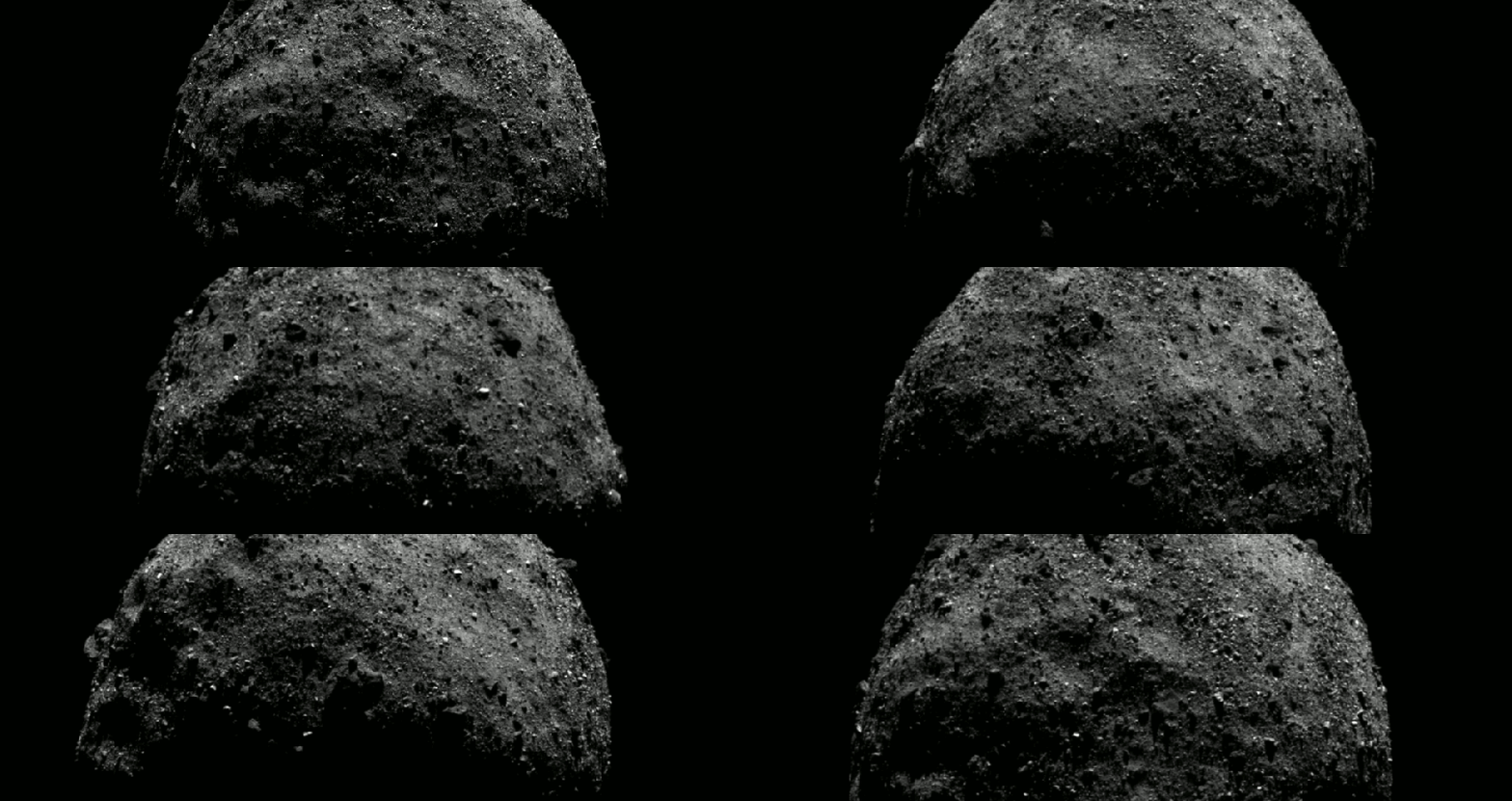
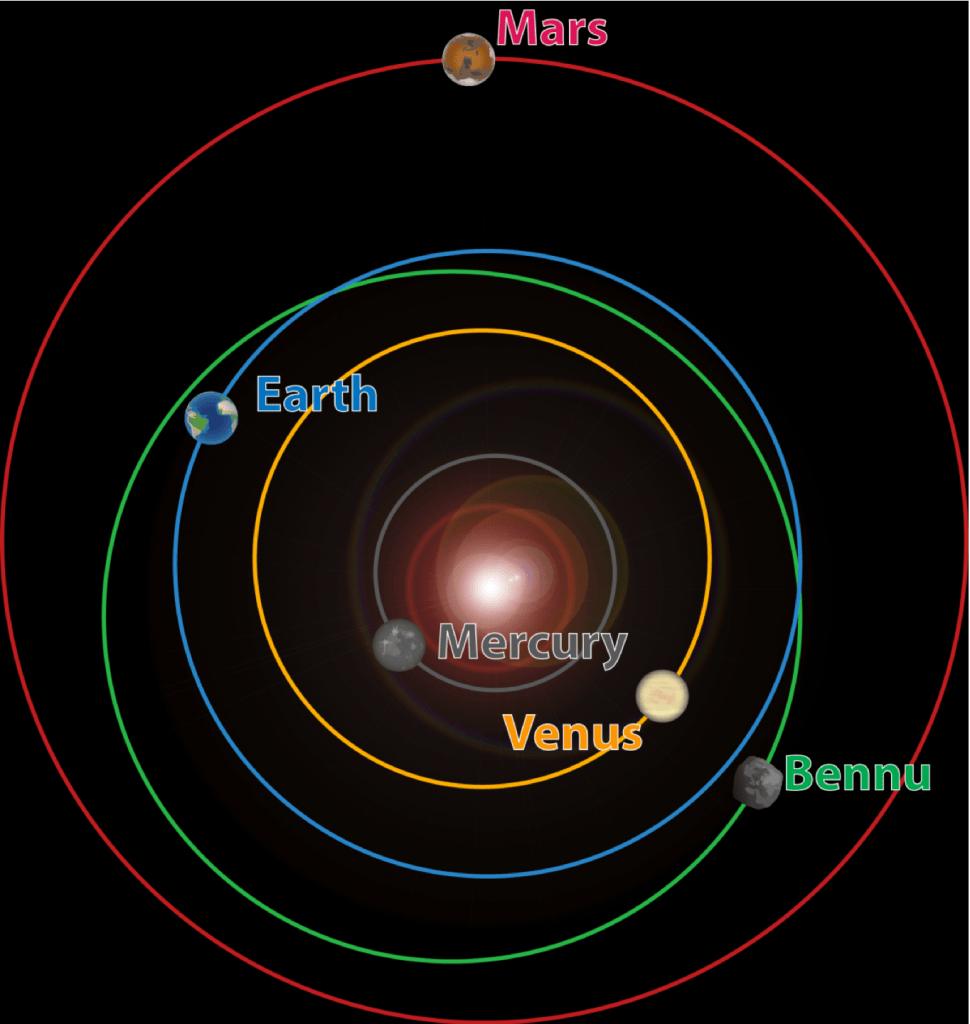
Asteroid 101955 Bennu is classified as an Apollo asteroid—a category of near-Earth objects whose orbits cross Earth’s orbit as they travel around the Sun.

Orbital Layout & Path

  • Orbit Shape: Bennu travels in an elliptical path with an average distance from the Sun of about 1.13 Astronomical Units (AU).
  • Earth Crossing: At its closest point to the Sun (perihelion), Bennu moves inside Earth’s orbit (around 0.90 AU). At its farthest point (aphelion), it swings out past Earth toward Mars (around 1.36 AU).
  • Orbital Period: It completes one full trip around the Sun every 1.2 years (about 437 days), meaning its position relative to Earth changes continuously.

Distance & Periodic Flybys

  • Variable Distance: Depending on where both Earth and Bennu are in their respective orbits, the distance between them ranges from a few hundred thousand kilometres up to over 300 million kilometres. Currently, Bennu is roughly 280 million kilometres (1.88 AU) away from Earth.
  • Close Approaches: Bennu makes a relatively close approach to Earth roughly every 6 years. Its next major close flyby will occur on September 23, 2060, when it passes within about 750,000 kilometres (466,000 miles) of Earth—roughly twice the distance from Earth to the Moon.

Analysis of the 120-gram sample collected from asteroid 101955 Bennu by NASA’s OSIRIS-REx mission (returned to Earth in September 2023) revealed crucial findings about the origins of our solar system and the precursor ingredients for life:

1. Key Ingredients for Life

  • Organic Carbon and Nitrogen: The sample contains unusually high concentrations of carbon and organic compounds.
  • Amino Acids & Nucleobases: Scientists identified 14 of the 20 amino acids used by life on Earth, along with all five nucleobases (adenine, guanine, cytosine, thymine, uracil) essential for storing genetic information in RNA and DNA.
  • Chirality (Handedness): The amino acids present are an equal mixture of “left-handed” and “right-handed” molecules. Because Earth life almost exclusively uses left-handed amino acids, this demonstrates that extraterrestrial organics started as balanced mixes before life emerged on Earth.

2. Evidence of an Ancient Ocean World

  • Hydrated Clay Minerals: Around 80% of the sample’s minerals contain water locked inside their interior structures, formed when melted ice reacted with dust billions of years ago.
  • Evaporite Salts & Water-Soluble Phosphates: Researchers detected magnesium-sodium phosphate, carbonates, halite, and sylvite. These salt crusts indicate that Bennu’s parent body hosted salty, liquid-water brines that dried up over time—similar to hydrothermal environments or ocean crusts on Earth.

3. Mixed Galactic Origins

  • Presolar Stardust: The samples contain pristine “presolar grains” created by dying stars before our solar system formed 4.5 billion years ago.
  • Diverse Assembly: Bennu’s parent body was a “rubble pile” assembled from materials across different regions—high-temperature solids formed close to the Sun, cold icy material from the outer solar system, and organic matter from interstellar space.

4. Rapid Space Weathering

  • Scanning reveals micro-craters and tiny splashes of impact-melted rock caused by micrometeorite bombardments and solar radiation, showing that asteroids without atmospheres weather faster than previously predicted.

The findings strongly support the hypothesis that asteroids like Bennu delivered essential organic precursors and water to early Earth, creating the environment necessary for life to form. However, interestingly enough we have the Holy Spirit speaking through the Psalmist in Psalm 24 verse 1, The earth is the Lord’s, and everything in it, the world, and all who live in it. Furthermore, in the scripture quoted at the head of this article, Isaiah 45 verse 7, the Lord stated through prophet Isaiah, that He created light and darkness (was the Lord talking about the Big Bang, and dark matter, dark energy, and black holes? I suppose the only witness to that would be any entity that was present 13.8 billion years or more ago.).

Luke 13 verses 1-5; Now there were some present at that time who told Jesus about the Galileans whose blood Pilate had mixed with their sacrifices. Jesus answered, “Do you think that these Galileans were worse sinners than all the other Galileans because they suffered this way? I tell you, no! But unless you repent, you too will all perish. Or those eighteen who died when the tower in Siloam fell on them—do you think they were more guilty than all the others living in Jerusalem? I tell you, no! But unless you repent, you too will all perish.”

John 9:1–3 (NIV)

1 As he went along, he saw a man blind from birth.

2 His disciples asked him, “Rabbi, who sinned, this man or his parents, that he was born blind?”

3 “Neither this man nor his parents sinned,” said Jesus, “but this happened so that the works of God might be displayed in him.”

Context

In ancient Jewish culture, it was a widespread assumption that severe physical suffering or disabilities were a direct divine punishment for specific personal or ancestral sins.

When the disciples saw the man, they treated his condition as a theological debate: Was it his fault, or his parents’? Jesus rejected that premise entirely. By clarifying that neither party was to blame for the blindness, He challenged the idea that every misfortune is tied to personal sin and shifted the focus from cause to purpose—using the man’s situation to reveal God’s healing power. The Holy Spirit did state through prophet Isaiah in Isaiah 45 verse 7, that He brings prosperity and disaster. Are there parallels between scriptures and physical cosmology? In any case, there is free will, and freedom of expression, be it that of an atheist, or a religious bigot/zealot, or a naturalist, or that of an intelligent designer, or an evidence-based(faith) realist world/universe view. Just keep an open mind.

The Fear of God the Holy Spirit 

Most people do not fear God. How can you fear what or whom you do not know or have not seen. Unless God has manifested Himself to you as ‘The Fear of Isaac’, you do not fear Him. Psalm 130: 4; But there is forgiveness with You, That You may be feared and worshipped [with submissive wonder].

Genesis 31:42: Jacob uses the title while confronting his father-in-law, Laban. Jacob states that if the God of Abraham and the “Fear of Isaac” had not been with him, Laban would have sent him away empty-handed. If the God of my father, the God of Abraham, and [the Feared One] of Isaac, had not been with me, most certainly you would have sent me away now empty-handed. God has seen my affliction and humiliation and the [exhausting] labour of my hands, so He rendered judgement and rebuked you last night.”

Genesis 31:53: Jacob makes a solemn covenant oath with Laban. Instead of swearing by idols or ordinary terms, Jacob swears by the “Fear of his father Isaac”. The God of Abraham [your father] and the God of Nahor [my father], and the god [the image of worship] of their father [Terah, an idolater], judge between us.” But Jacob swore [only] by [the one true God] the Fear of his father Isaac.

Meaning of the Title

Reverence and Awe: The Hebrew word used (pahad) translates to dread, trembling, or deep reverential awe.

Personal Faith: It highlights the profound, personal relationship and deep respect that Isaac had for God, which Jacob claimed as his own family heritage rather than relying on Laban’s household idols.

The Unforgivable Sin: Jesus warned about “blasphemy against the Holy Spirit” being an unforgivable sin (Matthew 12:31-32, Mark 3:29, Luke 12:10). While this severe warning brings deep reverence and solemnity, Jesus issued it as a warning against hardening one’s heart and attributing God’s goodness to evil, rather than a command to be afraid of the Spirit Himself. Mathew 12: 30-31; “Therefore I say to you, every sin and blasphemy [every evil, abusive, injurious speaking, or indignity against sacred things] will be forgiven people, but blasphemy against the [Holy] Spirit will not be forgiven. Whoever speaks a word against the Son of Man will be forgiven; but whoever speaks against the Holy Spirit [by attributing the miracles done by Me to Satan] will not be forgiven, either in this age or in the age to come.

“And do not fear those who kill the body but cannot kill the soul. Rather fear Him who can destroy both soul and body in hell.”

Matthew 10:28 (ESV)

Context: Jesus is instructing His twelve apostles before sending them out to preach. He warns them of persecution and opposition, urging them to prioritize eternal spiritual integrity over physical safety.

Gospel of Luke

“I tell you, my friends, do not fear those who kill the body, and after that have nothing more that they can do. But I will warn you whom to fear: fear Him who, after He has killed, has authority to cast into hell. Yes, I tell you, fear Him!”

Luke 12:4–5 (ESV)

Context: Jesus speaks to a crowd of thousands, teaching His disciples to beware of hypocrisy and to stand bold in their faith without fear of human judgement or physical harm.

The statement “the fear of the Lord is the beginning of wisdom” appears directly in two main places in the Old Testament, with closely related phrasing appearing in a third.

Proverbs 9:10

“The fear of the Lord is the beginning of wisdom,

and the knowledge of the Holy One is insight.”

— Proverbs 9:10 (ESV)

Psalm 111:10

“The fear of the Lord is the beginning of wisdom;

all those who practice it have a good understanding.

His praise endures forever!”

— Psalm 111:10 (ESV)

Related Passages

Proverbs 1:7: “The fear of the Lord is the beginning of knowledge; fools despise wisdom and instruction.”

Job 28:28: “And he said to man, ‘Behold, the fear of the Lord, that is wisdom, and to turn away from evil is understanding.’”

The Spirit of the Fear of the Lord: Old Testament prophecy in Isaiah 11:2 lists “the Spirit of the fear of the Lord” as one of the manifestations of the Holy Spirit. In biblical terms, the “fear of the Lord” means profound reverence, awe, and respect for God’s holiness, not a paralyzing dread or terror. Isaiah 11: 1-5; Then a Shoot (the Messiah) will spring from the stock of Jesse [David’s father], And a Branch from his roots will bear fruit. And the Spirit of the Lord will rest on Him— The Spirit of wisdom and understanding, The Spirit of counsel and strength, The Spirit of knowledge and of the [reverential and obedient] FEAR of the Lord— And He will delight in the fear of the Lord, And He will not judge by what His eyes see, Nor make decisions by what His ears hear; But with righteousness and justice He will judge the poor, And decide with fairness for the downtrodden of the earth; And He shall strike the earth with the rod of His mouth, And with the breath of His lips He shall slay the wicked. And righteousness will be the belt around His loins, And faithfulness the belt around His waist.

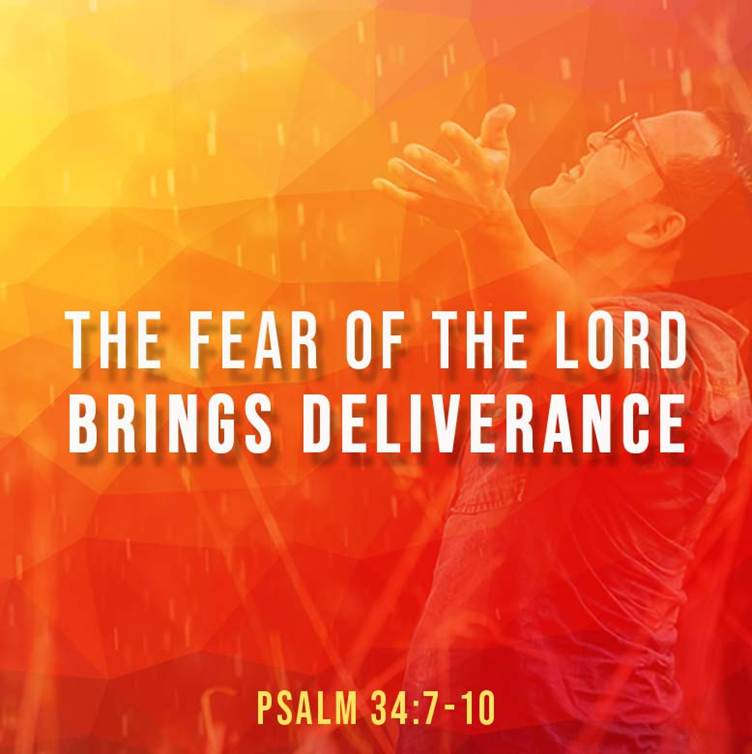
Psalm 34: 7-11; The angel of the Lord encamps around those who fear Him [with awe-inspired reverence and worship Him with obedience],
And He rescues [each of] them. O taste and see that the Lord [our God] is good; How blessed [fortunate, prosperous, and favoured by God] is the man who takes refuge in Him.O [reverently] fear the Lord, you His saints (believers, holy ones); For to those who fear Him there is no want. The young lions lack [food] and grow hungry, But they who seek the Lord will not lack any good thing. Come, you children, listen to me; I will teach you to fear the Lord [with awe-inspired reverence and worship Him with obedience].

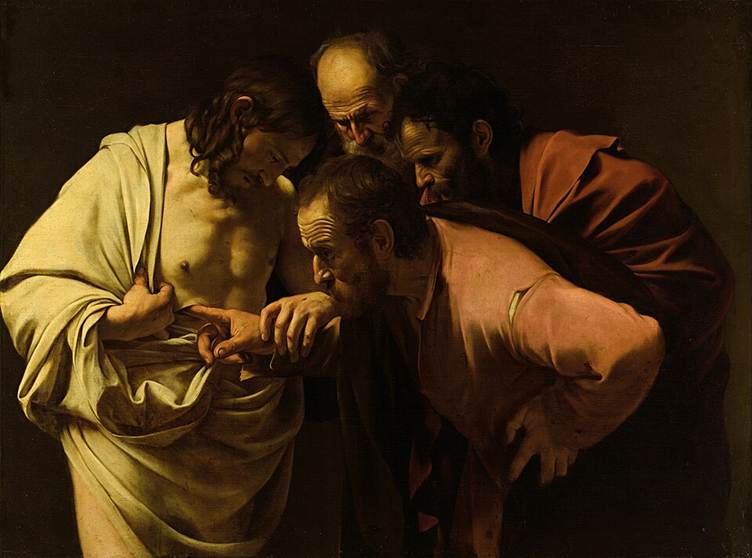
The Helper and Comforter: Jesus consistently described the Holy Spirit as a helper, counsellor, and comforter who would dwell with and in believers, guiding them into truth rather than frightening them (John 14:16-26). This does not imply a contradiction in terms and understanding. The two truths are not mutually exclusive. When the Spirit of the Lord has manifested Himself as ‘The Fear of Isaac’ to you, then He will Comfort you(Do not Fear, if you have not been given a reason to fear, then there is no point in comforting you with ‘do not fear’). Without the manifestation of the Spirit Himself, there is no reason to fear Him. In conclusion, if the Spirit of the Lord has not manifested Himself to you yet, take comfort in Jesus’ interaction with Thomas which occurs eight days after His resurrection, recorded in John 20:26–29.

When Jesus appeared in the locked room where the disciples were gathered, He spoke directly to Thomas: The Greeting to the Group

“Peace be with you.”

John 20:26

The Invitation to Thomas

Addressing Thomas’s previous declaration that he would not believe unless he touched the nail marks and the side wound, Jesus said:

“Put your finger here, and see my hands; and put out your hand, and place it in my side. Do not disbelieve, but believe.”

John 20:27 (ESV)

Thomas’s Response

Thomas immediately worshipped Him, saying:

“My Lord and my God!”

John 20:28

The Final Blessing

Jesus concluded with a beatitude for future believers:“Have you believed because you have seen me? Blessed are those who have not seen and yet have believed.”John 20:29