Honesty versus Transparency re Absolute Authority of God

The concept of Honesty depends on questions being asked and answers being given truthfully. While transparency implies redundancy or irrelevance of questions being asked, since nothing is hidden, everything is in the open. Given the omniscience nature of God, who knows the end from the beginning, knows everything, and that nothing is hidden from His gaze. Why would God ask His creations questions about any given situation or circumstances, since He knows everything. Unless one is dealing with a deity that does not know everything. Jesus Christ reassure us about the Most High God knowing everything, to the extent that every single hair on our head is numbered:The exact phrase combining those concepts spans a few key passages in the Gospels, as well as an Old Testament idiom.

1. Luke 21:18

Jesus explicitly links the preservation of a hair on your head to ultimate spiritual protection:

“But not a hair of your head will perish.”

2. Matthew 10:29–30 (and Luke 12:6–7)

Jesus addresses God’s complete awareness of every single hair falling or existing:

“Are not two sparrows sold for a penny? Yet not one of them will fall to the ground outside your Father’s care. And even the very hairs of your head are all numbered.” Demons and or evil spirits inhabit the realm of the dead. Since Jesus Christ said in John 14:6; that He is the way, the truth, and Life, all entities separated from Christ are dead. In the book of Job 26:6, we have an expression about the truth, and circumstances and situation in the Kingdom of God concerning the realm of the dead being transparent before God. While the exact phrase “transparent before him” is a modern phrasing or paraphrase of the idea, the underlying Hebrew text uses imagery describing the realm of the dead as completely uncovered and exposed to God’s sight.

Here is how major translations render Job 26:6:

  • New International Version (NIV): “The realm of the dead is naked before God; Destruction lies uncovered.”
  • Good News Translation (GNT): “The world of the dead lies open to God; no covering shields it from his sight.”
  • English Standard Version (ESV): “Sheol is naked before God, and Abaddon has no covering.”
  • New Living Translation (NLT): “The underworld is naked in God’s presence. The place of destruction is uncovered.”

Context:

In this chapter, Job is describing the majesty and absolute authority of God. His point is that even Sheol (the Hebrew term for the realm of the dead) and Abaddon (the place of destruction/decay), which are hidden and mysterious to human eyes, are completely transparent and fully exposed to God.

James 2:19;

  • New International Version (NIV): “You believe that there is one God. Good! Even the demons believe that—and shudder.”
  • English Standard Version (ESV): “You believe that God is one; you do well. Even the demons believe—and shudder!”
  • King James Version (KJV): “Thou believest that there is one God; thou doest well: the devils also believe, and tremble.”

Context of the passage: In this chapter, James is making the point that intellectual belief alone is not enough to save someone. He points out that even demons acknowledge the reality and power of God with fear, but their belief does not lead to allegiance or righteous action.

John 14:17.

In this passage, Jesus is comforting His disciples during the Last Supper and promising to send the Holy Spirit (the “Spirit of truth”).

Different Bible translations phrase the concept similarly:

  • English Standard Version (ESV): “…even the Spirit of truth, whom the world cannot receive, because it neither sees him nor knows him. You know him, for he dwells with you and will be in you.”
  • New International Version (NIV): “…the Spirit of truth. The world cannot accept him, because it neither sees him nor knows him. But you know him, for he lives with you and will be in you.”
  • King James Version (KJV): “Even the Spirit of truth; whom the world cannot receive, because it seeth him not, neither knoweth him: but ye know him; for he dwelleth with you, and shall be in you.”

Context of the passage: Jesus is explaining to His followers that while the physical world (people detached from God) cannot perceive or understand the Holy Spirit because spiritual truths require spiritual discernment, those who follow Christ already experience His presence.

Related Passage: A similar theme regarding the world not knowing God/Jesus appears earlier in the same gospel:

  • John 1:10: “He was in the world, and the world was made through Him, and the world did not know Him.”

Other inhabitants and or potential inhabitants of the realm of the dead include corrupt people who wrong others without care, such as ill treating widows and orphans, and are referenced in scriptures as devouring God’s people. The text “those who devour my people” appears in Psalm 14:4 and Psalm 53:4 in the Bible. Both passages use the phrase “eat up my people as they eat bread” or “devour my people like bread” to describe corrupt people who wrong others without care.

Psalm 14:4-6; Do all these evildoers know nothing? They devour my people as though eating bread; they never call on the Lord. But there they are, overwhelmed with dread, for God is present in the company of the righteous. You evildoers frustrate the plans of the poor, but the Lord is their refuge.

Psalm 53:4-5; Do all these evildoers know nothing? They devour my people as though eating bread; they never call on God. But there they are, overwhelmed with dread, where there was nothing to dread. God scattered the bones of those who attacked you; you put them to shame, for God despised them.

Verse Details

  • Found in Psalm 14:4 (and repeated almost word-for-word in Psalm 53:4).
  • Part of a song by David about human choices and God.

Key Meanings

  • Evildoers: People who do bad things and ignore God.
  • Like bread: Doing harm as easily and naturally as eating a daily meal.
  • No call on God: Refusing to pray or look to God for right living.

In short, demons, evil spirits, and evil doers, all have one thing in common, they all dread the Lord, plus the truth that evil doers are going to end up in the same place as demons and evil spirits, that is in the realm of the dead, separated from God the Son, God the Holy Spirit, God the Father/the One in whose Hands lies Life and death. There is no contradiction between the text found in the book of James, and what is elsewhere in the scriptures. James talked about demons believing in one God, this does not mean that the demons know God. What you believe, you do not know, while what you know, you do not believe. When an adult individual with a child, is asked whether or not he/she has a child, he/she does not answer with the phrase ‘I believe, I have a child’, therefore what you know, you do not believe. Knowledge is entirely different from belief, knowledge is backed up by facts/truth, and evidences, while belief operate in the realm of abstraction. Therefore there is consistency in the scriptures, entities may believe that there is one God, and at the same time, do not know the True God and cannot see Him, according to Jesus Christ.
Everything under the Heaven

Physical universe, cosmic web, galaxies, black holes, stars, planets (rocky planets and gas giants), asteroids, and comets. All of these bodies are under the Heaven.

Isaiah 45: 5-7; I am the Lord, and there is no other; apart from me there is no God.
I will strengthen you, though you have not acknowledged me, so that from the rising of the sun to the place of its setting people may know there is none besides me. I am the Lord, and there is no other. I form the light and create darkness, I bring prosperity and create disaster; I, the Lord, do all these things.

Psalm 24:1, “The earth is the Lord’s, and everything in it, the world, and all who live in it.”

Other Related Verses

  • Psalm 50:12: “If I were hungry I would not tell you, for the world is mine, and all that is in it.”
  • Job 41:11: “Who has a claim against me that I must pay? Everything under heaven belongs to me.”

Everything under Heaven belongs to God

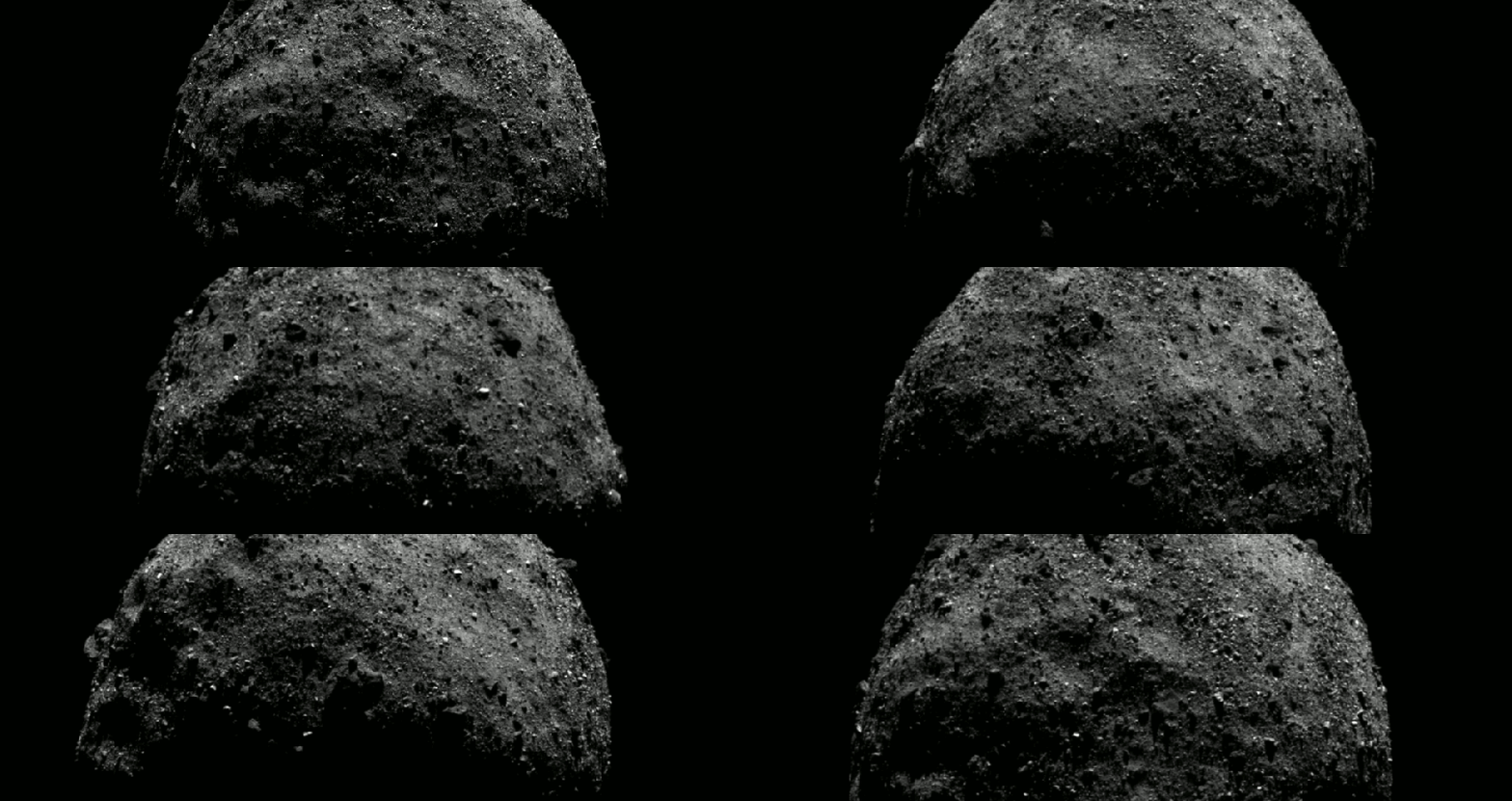
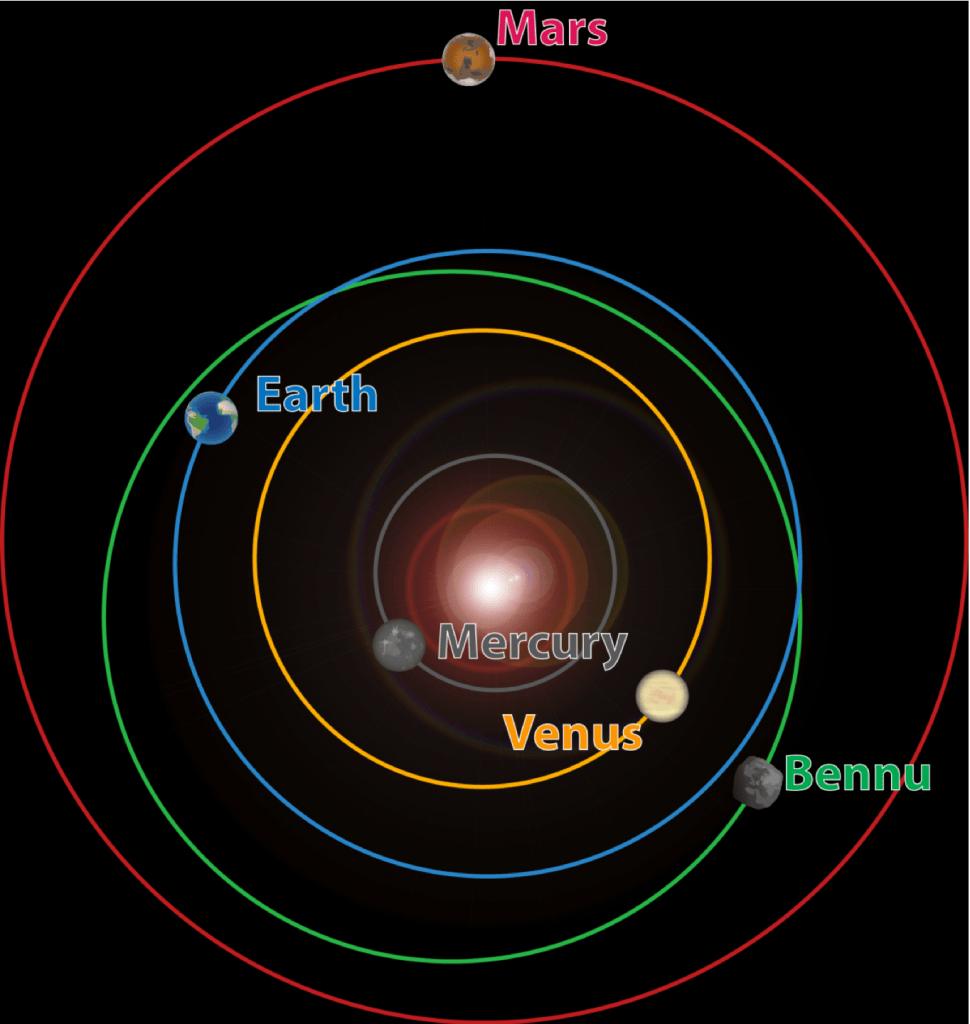
Asteroid 101955 Bennu is classified as an Apollo asteroid—a category of near-Earth objects whose orbits cross Earth’s orbit as they travel around the Sun.

Orbital Layout & Path

  • Orbit Shape: Bennu travels in an elliptical path with an average distance from the Sun of about 1.13 Astronomical Units (AU).
  • Earth Crossing: At its closest point to the Sun (perihelion), Bennu moves inside Earth’s orbit (around 0.90 AU). At its farthest point (aphelion), it swings out past Earth toward Mars (around 1.36 AU).
  • Orbital Period: It completes one full trip around the Sun every 1.2 years (about 437 days), meaning its position relative to Earth changes continuously.

Distance & Periodic Flybys

  • Variable Distance: Depending on where both Earth and Bennu are in their respective orbits, the distance between them ranges from a few hundred thousand kilometres up to over 300 million kilometres. Currently, Bennu is roughly 280 million kilometres (1.88 AU) away from Earth.
  • Close Approaches: Bennu makes a relatively close approach to Earth roughly every 6 years. Its next major close flyby will occur on September 23, 2060, when it passes within about 750,000 kilometres (466,000 miles) of Earth—roughly twice the distance from Earth to the Moon.

Analysis of the 120-gram sample collected from asteroid 101955 Bennu by NASA’s OSIRIS-REx mission (returned to Earth in September 2023) revealed crucial findings about the origins of our solar system and the precursor ingredients for life:

1. Key Ingredients for Life

  • Organic Carbon and Nitrogen: The sample contains unusually high concentrations of carbon and organic compounds.
  • Amino Acids & Nucleobases: Scientists identified 14 of the 20 amino acids used by life on Earth, along with all five nucleobases (adenine, guanine, cytosine, thymine, uracil) essential for storing genetic information in RNA and DNA.
  • Chirality (Handedness): The amino acids present are an equal mixture of “left-handed” and “right-handed” molecules. Because Earth life almost exclusively uses left-handed amino acids, this demonstrates that extraterrestrial organics started as balanced mixes before life emerged on Earth.

2. Evidence of an Ancient Ocean World

  • Hydrated Clay Minerals: Around 80% of the sample’s minerals contain water locked inside their interior structures, formed when melted ice reacted with dust billions of years ago.
  • Evaporite Salts & Water-Soluble Phosphates: Researchers detected magnesium-sodium phosphate, carbonates, halite, and sylvite. These salt crusts indicate that Bennu’s parent body hosted salty, liquid-water brines that dried up over time—similar to hydrothermal environments or ocean crusts on Earth.

3. Mixed Galactic Origins

  • Presolar Stardust: The samples contain pristine “presolar grains” created by dying stars before our solar system formed 4.5 billion years ago.
  • Diverse Assembly: Bennu’s parent body was a “rubble pile” assembled from materials across different regions—high-temperature solids formed close to the Sun, cold icy material from the outer solar system, and organic matter from interstellar space.

4. Rapid Space Weathering

  • Scanning reveals micro-craters and tiny splashes of impact-melted rock caused by micrometeorite bombardments and solar radiation, showing that asteroids without atmospheres weather faster than previously predicted.

The findings strongly support the hypothesis that asteroids like Bennu delivered essential organic precursors and water to early Earth, creating the environment necessary for life to form. However, interestingly enough we have the Holy Spirit speaking through the Psalmist in Psalm 24 verse 1, The earth is the Lord’s, and everything in it, the world, and all who live in it. Furthermore, in the scripture quoted at the head of this article, Isaiah 45 verse 7, the Lord stated through prophet Isaiah, that He created light and darkness (was the Lord talking about the Big Bang, and dark matter, dark energy, and black holes? I suppose the only witness to that would be any entity that was present 13.8 billion years or more ago.).

Luke 13 verses 1-5; Now there were some present at that time who told Jesus about the Galileans whose blood Pilate had mixed with their sacrifices. Jesus answered, “Do you think that these Galileans were worse sinners than all the other Galileans because they suffered this way? I tell you, no! But unless you repent, you too will all perish. Or those eighteen who died when the tower in Siloam fell on them—do you think they were more guilty than all the others living in Jerusalem? I tell you, no! But unless you repent, you too will all perish.”

John 9:1–3 (NIV)

1 As he went along, he saw a man blind from birth.

2 His disciples asked him, “Rabbi, who sinned, this man or his parents, that he was born blind?”

3 “Neither this man nor his parents sinned,” said Jesus, “but this happened so that the works of God might be displayed in him.”

Context

In ancient Jewish culture, it was a widespread assumption that severe physical suffering or disabilities were a direct divine punishment for specific personal or ancestral sins.

When the disciples saw the man, they treated his condition as a theological debate: Was it his fault, or his parents’? Jesus rejected that premise entirely. By clarifying that neither party was to blame for the blindness, He challenged the idea that every misfortune is tied to personal sin and shifted the focus from cause to purpose—using the man’s situation to reveal God’s healing power. The Holy Spirit did state through prophet Isaiah in Isaiah 45 verse 7, that He brings prosperity and disaster. Are there parallels between scriptures and physical cosmology? In any case, there is free will, and freedom of expression, be it that of an atheist, or a religious bigot/zealot, or a naturalist, or that of an intelligent designer, or an evidence-based(faith) realist world/universe view. Just keep an open mind.

Infinite Monkey Cage Heliosphere Hades

The Parable of the Rich Man and Lazarus, found in Luke 16:19–31.

The story, briefly:
A rich man lives in luxury while a poor beggar named Lazarus lies at his gate, covered in sores, longing for scraps from his table. Both die. Lazarus is carried by angels to “Abraham’s side” (often rendered “Abraham’s bosom” in older translations), while the rich man ends up in torment in Hades.

The chasm shows up when the rich man, in agony, begs Abraham to send Lazarus to dip his finger in water and cool his tongue. Abraham refuses, explaining that Lazarus had suffering in life and the rich man had comfort, and now their situations are reversed. Then comes the key verse, Luke 16:26, where Abraham says a great chasm has been fixed between them, so that no one can cross from one side to the other in either direction.

The rich man then asks Abraham to send Lazarus back to warn his five brothers so they don’t end up in the same place. Abraham replies that they have Moses and the Prophets to listen to — and if they won’t listen to those, they won’t be convinced even if someone rises from the dead (a line often read as a foreshadowing of the resistance Jesus’s own resurrection would meet).

A few notes on how this parable is read:

  • Some scholars treat it as a straightforward parable using imagery familiar to Jesus’s audience, not a detailed cartography of the afterlife.
  • Others read it more literally, as a real depiction of the intermediate state of the dead.
  • The term “Abraham’s bosom” became, in later Jewish and Christian tradition, associated with a place of comfort for the righteous dead.

The phrase infinite monkey cage came from Professor Brian Cox. The title of Professor Brian Cox’s BBC Radio 4 show and podcast, The Infinite Monkey Cage (co-hosted with comedian Robin Ince), directly plays on a famous mathematical concept known as the Infinite Monkey Theorem.

1. The Core Concept (The Infinite Monkey Theorem)

The theorem states that a monkey pressing keys at random on a typewriter keyboard for an infinite amount of time will almost surely eventually produce a given text, such as the complete works of William Shakespeare.

  • Probability & Infinity: The idea is that given infinite time or infinite attempts, even an extremely improbable event becomes a certainty.

2. How Cox and the Show Apply the Phrase

Professor Brian Cox and his team adapted this concept to frame their show’s philosophy and format:

  • The “Cage” / Setup: Rather than literal monkeys typing, the show places a mix of physicists, scientists, experts, and comedians in a room together.
  • The “Infinite” Experiment: By throwing diverse minds together—some asking high-level academic questions and others asking simple or nonsensical ones—the show explores whether, through endless discussion and curiosity, profound scientific understanding will naturally emerge out of the chatter.
  • Humour Meets Science: Cox often points out that while comedians and scientists seem like opposite ends of the spectrum, placing them in the same room creates an “anarchic” atmosphere that breaks down complex science into accessible, humorous, and insightful ideas.

In short, Cox’s premise behind The Infinite Monkey Cage is a light-hearted nod to probability: if you gather curious, quirky minds and let them talk about the universe long enough, you’ll inevitably hit on deep scientific truths—and have fun doing it.

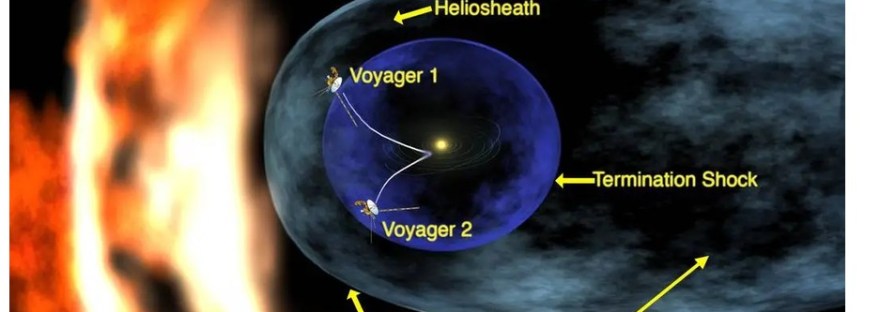
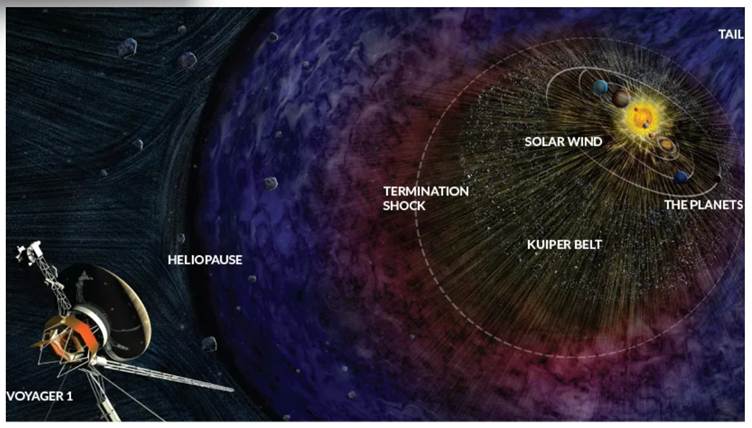
However, when the infinite monkey theorem is applied to man travelling in space and time, then we realize that man is trapped on this star called the Sun. Take the case of the current man-made space crafts at the farthest distance from the earth, Voyager 1 and Voyager 2.

They are continuously hurtling through space and Earth is constantly orbiting the Sun, their exact distances fluctuate second by second.

As of August 2026, their approximate distances from Earth are:

Voyager 1

  • Distance from Earth: ~25.59 billion km (~15.90 billion miles)
  • Astronomical Units (AU): ~171.05 AU (1 AU is the average distance from Earth to the Sun)
  • One-Way Signal Time: It takes light/radio signals about 23 hours and 42 minutes to travel one way between Voyager 1 and Earth.

Fun fact: Voyager 1 is fast approaching a historic milestone—in November 2026, it will become the first human-made object to be a full light-day (about 25.9 billion km) away from Earth.

Voyager 2

  • Distance from Earth: ~21.39 billion km (~13.29 billion miles)
  • Astronomical Units (AU): ~142.96 AU
  • One-Way Signal Time: It takes about 19 hours and 49 minutes for signals to travel one way between Voyager 2 and Earth.

Both probes are travelling through interstellar space (having crossed the heliopause years ago) and are maintained by NASA’s Deep Space Network. Neither Voyager is actually aimed at Proxima Centauri, the nearest star to us — their trajectories were set by planetary flybys decades ago, not by a destination star. But here’s what the numbers look like if you just ask “at their current speed, how long to cover the distance to the nearest star?”

The distance
Proxima Centauri, the nearest star to the Sun, is about 4.24 light-years away — roughly 268,000 AU. Both Voyagers are only around 140–170 AU from the Sun right now, which is a rounding error against that distance, so it barely matters where exactly they are today.

Their speeds

  • Voyager 1: ~17 km/s (~3.6 AU/year) — the faster of the two, currently the most distant human-made object at about 166 AU from the Sun.
  • Voyager 2: ~15.4 km/s (~3.25 AU/year) — currently around 139 AU out.

Travel time to Proxima Centauri

  • Voyager 1: ≈ 268,000 AU ÷ 3.6 AU/yr ≈ 74,000–75,000 years
  • Voyager 2: ≈ 268,000 AU ÷ 3.25 AU/yr ≈ 82,000–83,000 years

A couple of caveats worth keeping in mind:

  1. They’re not headed there. Voyager 1 is drifting roughly toward the constellation Ophiuchus/Camelopardalis direction; Voyager 2 toward Sagittarius/Pavo. Neither path passes anywhere near Proxima Centauri.
  2. The “40,000 years” figure you may have seen refers to a different fact: Voyager 1 will pass within about 1.6 light-years of the star Gliese 445 in roughly 40,000 years — not because it’s heading there on purpose, but because that star happens to be moving toward the general area Voyager 1 is drifting through. Gliese 445 isn’t the nearest star to us today, but it will be closer to Voyager 1’s future path than Proxima Centauri is.
  3. Both spacecraft will run out of power for their instruments and transmitters by around the early-to-mid 2030s, so they’ll be silent, coasting relics for the vast majority of that 74,000–83,000-year journey.

Indeed, the physical man on the planet earth orbiting around the star called the Sun, is trapped in space and time, an infinite monkey cage, that deviates fundamentally from the Infinite Monkey mathematical theorem of a monkey typing the text ‘the complete works of William Shakespeare’, since neither a specific monkey nor a specific man exists ad infinitum. In addition to which, our star, the Sun at the edge of its heliosphere/heliopause is surrounded by the Oort Cloud, Interstellar space filled with gas, mostly hydrogen and helium, dust, radiation, and nebulae. The Oort Cloud is made of trillions of icy space rocks and debris left over from when our solar system formed 4.6 billion years ago. These frozen chunks are mostly made of water ice, methane ice, and ammonia ice, along with small amounts of rocky dust.

Faith the size of a mustard seed moving a mountain into the Sea

1. Faith the size of a mustard seed moving a mountain

Matthew 17:20 “He replied, ‘Because you have so little faith. Truly I tell you, if you have faith as small as a mustard seed, you can say to this mountain, “Move from here to there,” and it will move. Nothing will be impossible for you.'”

2. Moving a mountain into the sea

Mark 11:23 “Truly I tell you, if anyone says to this mountain, ‘Be lifted up and thrown into the sea,’ and does not doubt in their heart but believes that what they say will happen, it will be done for them.”

Matthew 21:21 “Jesus replied, ‘Truly I tell you, if you have faith and do not doubt… even if you say to this mountain, “Be lifted up and thrown into the sea,” it will happen.‘”

3. Faith like a mustard seed moving something into the sea

Luke 17:6 “He replied, ‘If you have faith as small as a mustard seed, you can say to this mulberry tree, “Be uprooted and planted in the sea,” and it will obey you.'”

Summary

  • Matthew 17:20  “faith the size of a mustard seed… tell a mountain to move”.
  • Mark 11:23 & Matthew 21:21 give you the specific imagery of moving a mountain “into the sea”.

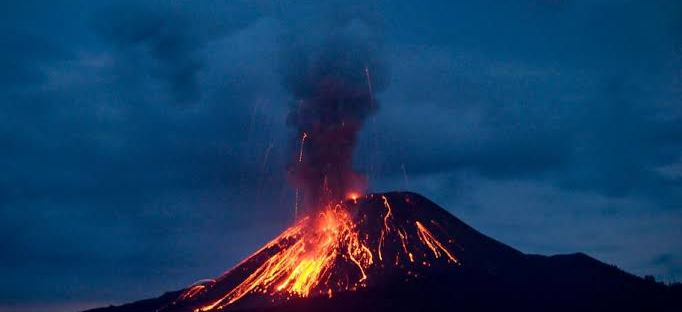
The cataclysmic 1883 eruption of Krakatoa (located in the Sunda Strait between Java and Sumatra) remains one of the deadliest and most powerful volcanic events in modern history. Krakatoa, holds the distinction for the loudest sound ever recorded in history. Because its mountain collapsed into the sea, it displaced massive amounts of water, generating catastrophic tsunamis across the Indian Ocean.

Rated a 6 on the Volcanic Explosivity Index (VEI-6), its violent climax destroyed over 70% of the island and triggered global environmental shifts.

Timeline of the 1883 Cataclysm

Initial Activity Begins

May 19 – August 25, 1883

Venting began on the volcanic peak Perboewatan. Eruptions intensified over summer, launching ash plumes over 6 miles into the air and generating continuous earthquakes.

The Paroxysmal Phase

August 26, 1883

At 1:00 PM, the volcano entered its most violent state. By 2:00 PM, a black plume of ash reached 17 miles (27 km) into the stratosphere, blocking out the sun.

The Peak Explosions

August 27, 1883

A series of four gigantic explosions occurred between 5:30 AM and 10:02 AM. The 10:02 AM blast collapsed the island into its magma chamber, generating colossal tsunamis up to 135 feet (41 meters) high.

Global Environmental Aftermath

1883 – 1888

Aerosols spread worldwide. The planet experienced vibrant blood-red sunsets and a global temperature reduction of ~1.2°C (~2.2°F) that lasted for several years.

Notable Impacts & Phenomena

  • Loudest Sound in Recorded History: The 10:02 AM detonation was heard nearly 3,000 miles (4,800 km) away in Perth, Australia, and the island of Rodrigues near Mauritius. Sailors 40 miles away suffered ruptured eardrums.
  • Atmospheric Pressure Waves: The acoustic shock-wave was so immense that barographs recorded it circling the entire globe seven times over five days.
  • Devastating Casualties: Over 36,000 people lost their lives, predominantly from the massive tsunamis and scorching pyroclastic flows that swept across coastal Java and Sumatra.
  • Lurid “Blood-Red” Sunsets: Fine ash and sulphur particles trapped in the stratosphere scattered sunlight, creating vivid, electric sunsets worldwide for months—inspiring artists and scientists alike.

Modern Legacy: Anak Krakatau

In 1927, new volcanic activity emerged from the caldera created during the 1883 collapse. A new island volcano named Anak Krakatau (“Child of Krakatoa”) broke the water’s surface. It remains highly active today, famously causing a major lateral collapse and deadly tsunami in December 2018.

While the 1883 Krakatoa eruption is more widely recognised in modern culture, the 1815 Mount Tambora eruption was significantly larger, far more destructive, and significantly deadliest in recorded human history.

Direct Comparison

Metric1815 Mount Tambora1883 Krakatoa
LocationSumbawa, IndonesiaSunda Strait, Indonesia
Volcanic Explosivity Index (VEI)VEI 7 (Super-colossal)VEI 6 (Colossal)
Ejecta Volume~100–160 km³~20–45 km³
Direct Death Toll~10,000–11,000 (pyroclastic flows/ash)~36,400+ (primarily tsunamis)
Total Death Toll71,000 – 100,000+ (famine/disease)~36,400 – 40,000
Climate ImpactSevere: “Year Without a Summer” (1816)Moderate: ~0.5°C cooling & vivid sunsets
Primary Lethal HazardPyroclastic flows & post-eruption famineMassive tsunamis (up to 135 ft high)

Key Differences

1. Scale & Power

  • Tambora was roughly 4 to 10 times more powerful than Krakatoa. As a VEI-7 eruption, it spewed over 100 cubic kilometres of gas, rock, and ash—ejecta volumes far exceeding Krakatoa’s ~25–45 cubic kilometres.
  • Krakatoa, while smaller in volume, holds the distinction for the loudest sound ever recorded in history. Because its mountain collapsed into the sea, it displaced massive amounts of water, generating catastrophic tsunamis across the Indian Ocean.

2. Death Toll & Human Toll

  • Tambora (1815): Directly killed roughly 10,000 inhabitants on Sumbawa. However, the vast majority of its estimated 71,000 to 100,000+ casualties died from the post-eruption collapse of local agriculture, leading to widespread famine and epidemic diseases across Sumbawa, Lombok, and Bali.
  • Krakatoa (1883): Most of the 36,000+ fatalities were caused instantly or within hours by giant 120+ foot tsunamis crashing into coastal Java and Sumatra, alongside scorching pyroclastic flows travelling across the ocean surface.

3. Global Climate & Environmental Aftermath

  • Tambora disrupted global weather so severely that 1816 became known as the “Year Without a Summer”. Snow fell in New England in June, global crop yields collapsed, and resulting famines indirectly claimed tens of thousands of lives across Asia, Europe, and North America.
  • Krakatoa caused a milder global cooling effect (~0.5°C) and injected aerosol sulphur into the stratosphere. Its climate impact was noticeable mainly as vibrant, lurid “blood-red” sunsets worldwide for several years rather than continent-wide famine.

Why is Krakatoa often more famous?

By 1883, transoceanic underwater telegraph cables and global news networks had been established. News of Krakatoa’s destruction was telegraphed around the globe almost instantly, making it the world’s first modern real-time news event. In contrast, in 1815, news of Tambora travelled slowly by ship over weeks and months, leaving its global impact poorly understood until much later.

Having faith the size of a mustard seed, one should pause before telling a mountain to move into the sea, because one should ask the question why do you want the mountain to move into the sea (is the mountain standing in your way? If so, is the best solution to tell it to move into the sea), and most important of all, have you thought about all the consequences of the mountain moving into the sea, such as death, destruction, and collateral damage to others. Of course Jesus Christ could be speaking metaphorically or literally or both, which depends on whether you have faith or not. If you do not have faith, it is a moot point, be it metaphor and or literal. If only those alive during the Tambora and or the Krakatoa episode had been asked if they had faith, and had asked the mountain to move into the sea. I suppose we will never know.

The Fear of God the Holy Spirit 

Most people do not fear God. How can you fear what or whom you do not know or have not seen. Unless God has manifested Himself to you as ‘The Fear of Isaac’, you do not fear Him. Psalm 130: 4; But there is forgiveness with You, That You may be feared and worshipped [with submissive wonder].

Genesis 31:42: Jacob uses the title while confronting his father-in-law, Laban. Jacob states that if the God of Abraham and the “Fear of Isaac” had not been with him, Laban would have sent him away empty-handed. If the God of my father, the God of Abraham, and [the Feared One] of Isaac, had not been with me, most certainly you would have sent me away now empty-handed. God has seen my affliction and humiliation and the [exhausting] labour of my hands, so He rendered judgement and rebuked you last night.”

Genesis 31:53: Jacob makes a solemn covenant oath with Laban. Instead of swearing by idols or ordinary terms, Jacob swears by the “Fear of his father Isaac”. The God of Abraham [your father] and the God of Nahor [my father], and the god [the image of worship] of their father [Terah, an idolater], judge between us.” But Jacob swore [only] by [the one true God] the Fear of his father Isaac.

Meaning of the Title

Reverence and Awe: The Hebrew word used (pahad) translates to dread, trembling, or deep reverential awe.

Personal Faith: It highlights the profound, personal relationship and deep respect that Isaac had for God, which Jacob claimed as his own family heritage rather than relying on Laban’s household idols.

The Unforgivable Sin: Jesus warned about “blasphemy against the Holy Spirit” being an unforgivable sin (Matthew 12:31-32, Mark 3:29, Luke 12:10). While this severe warning brings deep reverence and solemnity, Jesus issued it as a warning against hardening one’s heart and attributing God’s goodness to evil, rather than a command to be afraid of the Spirit Himself. Mathew 12: 30-31; “Therefore I say to you, every sin and blasphemy [every evil, abusive, injurious speaking, or indignity against sacred things] will be forgiven people, but blasphemy against the [Holy] Spirit will not be forgiven. Whoever speaks a word against the Son of Man will be forgiven; but whoever speaks against the Holy Spirit [by attributing the miracles done by Me to Satan] will not be forgiven, either in this age or in the age to come.

“And do not fear those who kill the body but cannot kill the soul. Rather fear Him who can destroy both soul and body in hell.”

Matthew 10:28 (ESV)

Context: Jesus is instructing His twelve apostles before sending them out to preach. He warns them of persecution and opposition, urging them to prioritize eternal spiritual integrity over physical safety.

Gospel of Luke

“I tell you, my friends, do not fear those who kill the body, and after that have nothing more that they can do. But I will warn you whom to fear: fear Him who, after He has killed, has authority to cast into hell. Yes, I tell you, fear Him!”

Luke 12:4–5 (ESV)

Context: Jesus speaks to a crowd of thousands, teaching His disciples to beware of hypocrisy and to stand bold in their faith without fear of human judgement or physical harm.

The statement “the fear of the Lord is the beginning of wisdom” appears directly in two main places in the Old Testament, with closely related phrasing appearing in a third.

Proverbs 9:10

“The fear of the Lord is the beginning of wisdom,

and the knowledge of the Holy One is insight.”

— Proverbs 9:10 (ESV)

Psalm 111:10

“The fear of the Lord is the beginning of wisdom;

all those who practice it have a good understanding.

His praise endures forever!”

— Psalm 111:10 (ESV)

Related Passages

Proverbs 1:7: “The fear of the Lord is the beginning of knowledge; fools despise wisdom and instruction.”

Job 28:28: “And he said to man, ‘Behold, the fear of the Lord, that is wisdom, and to turn away from evil is understanding.’”

The Spirit of the Fear of the Lord: Old Testament prophecy in Isaiah 11:2 lists “the Spirit of the fear of the Lord” as one of the manifestations of the Holy Spirit. In biblical terms, the “fear of the Lord” means profound reverence, awe, and respect for God’s holiness, not a paralyzing dread or terror. Isaiah 11: 1-5; Then a Shoot (the Messiah) will spring from the stock of Jesse [David’s father], And a Branch from his roots will bear fruit. And the Spirit of the Lord will rest on Him— The Spirit of wisdom and understanding, The Spirit of counsel and strength, The Spirit of knowledge and of the [reverential and obedient] FEAR of the Lord— And He will delight in the fear of the Lord, And He will not judge by what His eyes see, Nor make decisions by what His ears hear; But with righteousness and justice He will judge the poor, And decide with fairness for the downtrodden of the earth; And He shall strike the earth with the rod of His mouth, And with the breath of His lips He shall slay the wicked. And righteousness will be the belt around His loins, And faithfulness the belt around His waist.

Psalm 34: 7-11; The angel of the Lord encamps around those who fear Him [with awe-inspired reverence and worship Him with obedience],
And He rescues [each of] them. O taste and see that the Lord [our God] is good; How blessed [fortunate, prosperous, and favoured by God] is the man who takes refuge in Him.O [reverently] fear the Lord, you His saints (believers, holy ones); For to those who fear Him there is no want. The young lions lack [food] and grow hungry, But they who seek the Lord will not lack any good thing. Come, you children, listen to me; I will teach you to fear the Lord [with awe-inspired reverence and worship Him with obedience].

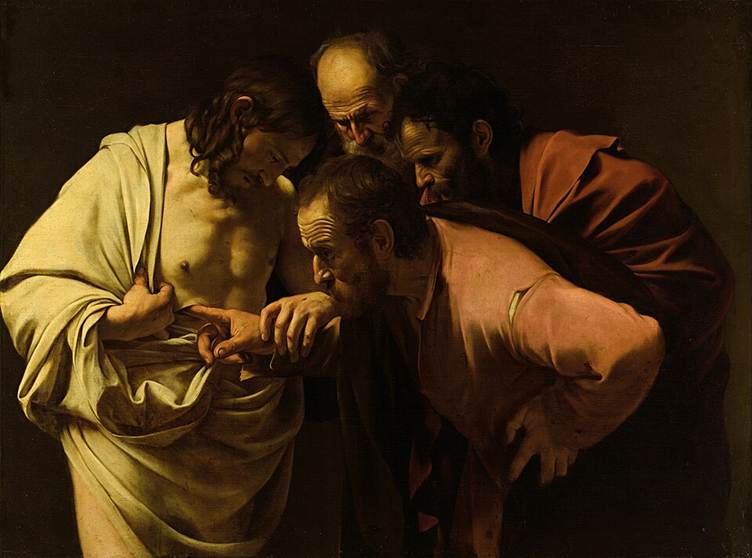
The Helper and Comforter: Jesus consistently described the Holy Spirit as a helper, counsellor, and comforter who would dwell with and in believers, guiding them into truth rather than frightening them (John 14:16-26). This does not imply a contradiction in terms and understanding. The two truths are not mutually exclusive. When the Spirit of the Lord has manifested Himself as ‘The Fear of Isaac’ to you, then He will Comfort you(Do not Fear, if you have not been given a reason to fear, then there is no point in comforting you with ‘do not fear’). Without the manifestation of the Spirit Himself, there is no reason to fear Him. In conclusion, if the Spirit of the Lord has not manifested Himself to you yet, take comfort in Jesus’ interaction with Thomas which occurs eight days after His resurrection, recorded in John 20:26–29.

When Jesus appeared in the locked room where the disciples were gathered, He spoke directly to Thomas: The Greeting to the Group

“Peace be with you.”

John 20:26

The Invitation to Thomas

Addressing Thomas’s previous declaration that he would not believe unless he touched the nail marks and the side wound, Jesus said:

“Put your finger here, and see my hands; and put out your hand, and place it in my side. Do not disbelieve, but believe.”

John 20:27 (ESV)

Thomas’s Response

Thomas immediately worshipped Him, saying:

“My Lord and my God!”

John 20:28

The Final Blessing

Jesus concluded with a beatitude for future believers:“Have you believed because you have seen me? Blessed are those who have not seen and yet have believed.”John 20:29